



What Do Black Robes Mean in Zen Buddhism?
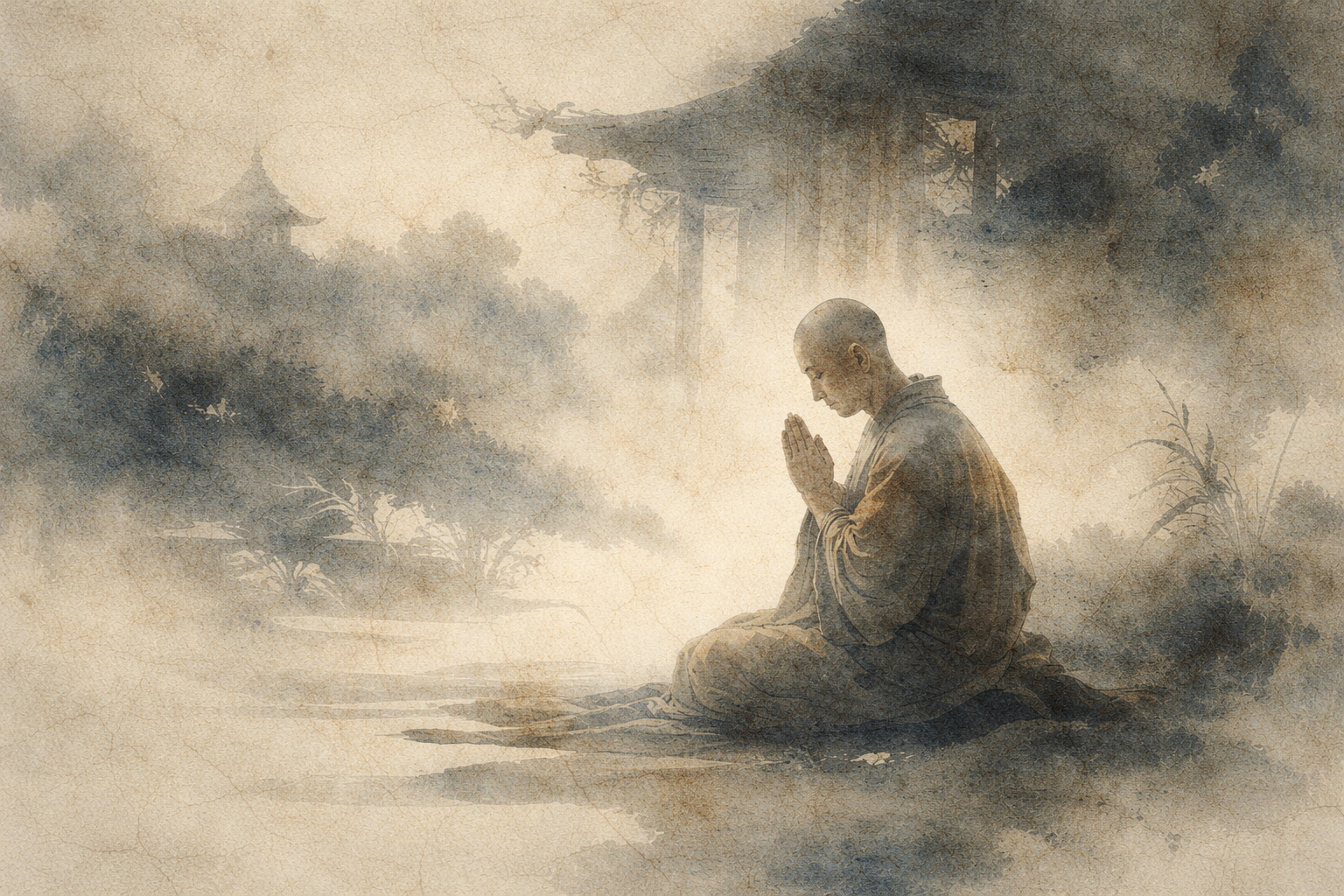
What Do Black Robes Mean in Zen Buddhism?
Quick Summary
- In Zen Buddhism, black robes are primarily about function, simplicity, and reducing distraction—not “mystical power.”
- Black often signals formality and commitment to practice, but meaning depends on context and community.
- Robes can support humility by de-emphasizing personal style and social status.
- Wearing black doesn’t automatically indicate ordination; some lay practitioners wear black garments in certain settings.
- Robes can be a “container” for attention: you feel the body, posture, and behavior more clearly.
- Misunderstandings are common: black robes are not a costume, a rank badge, or a sign of superiority.
- The most useful question isn’t “What does it mean?” but “How does it shape conduct right now?”
Introduction
If you see black robes in Zen Buddhism and feel unsure what you’re looking at—monk, priest, teacher, or simply someone dressed for ceremony—you’re not alone, and the confusion is understandable. Black can look severe, authoritative, even theatrical, but in most Zen contexts it’s meant to be plain, practical, and quietly corrective to the ego’s need to stand out. Gassho writes about Zen practice in everyday language, grounded in lived experience rather than insider jargon.
It also helps to name what robes are not: they are not a shortcut to credibility, and they are not a guarantee of wisdom. Clothing can communicate role and responsibility, but it can’t replace the basics—attention, restraint, and care in how someone speaks and acts.
So what do black robes mean in Zen Buddhism? Think of them as a visible commitment to a certain kind of simplicity: fewer signals, fewer personal messages, fewer opportunities to perform a self.
GASSHO
Ask and learn about Buddhism in daily life.
GASSHO is a Buddhist community app where you can learn Buddhist teachings and ask questions to the head priest of Kongosanmaiin Temple on Mount Koya.
A Practical Lens for Understanding Black Robes
A helpful way to understand black robes in Zen Buddhism is to treat them as a tool for shaping conditions. When conditions are simpler, the mind has fewer hooks: fewer comparisons, fewer judgments, fewer “How do I look?” loops. The robe isn’t the practice, but it can support practice by making the environment and the body feel more settled and less negotiable.
Black, in particular, tends to read as understated and uniform. That uniformity matters: it reduces the social noise of fashion, wealth, attractiveness, and personal branding. In a room where many people are dressed similarly, attention can shift from “Who is that?” to “What is happening right now?”—breath, posture, sound, silence, work.
Another part of the lens is responsibility. In many communities, robes indicate that someone has accepted certain duties: showing up reliably, keeping forms, serving the group, and being accountable to the practice setting. That doesn’t make the person “better,” but it does suggest they are taking on a role that is meant to be bigger than personal preference.
Finally, robes can be understood as a reminder of restraint. Not repression—restraint. The robe is a gentle boundary: it asks for fewer gestures, less fidgeting, less self-display. It points the body toward steadiness, which often makes the mind’s restlessness easier to notice without immediately acting it out.
How the Robe Changes What You Notice
Put on a black robe and one of the first things you may notice is weight and texture. The body feels “held” a little differently. That physical sensation can make posture more obvious: slumping is clearer, tension in the shoulders is clearer, and small habits—like rushing—stand out.
In ordinary interactions, the robe can change the reflex to perform. When you’re not signaling personality through clothes, you may feel a small discomfort: “Who am I without my usual cues?” That discomfort is useful data. It shows how quickly identity tries to reassert itself through appearance.
During quiet moments, black robes can reduce visual busyness. You see fewer bright patterns in your peripheral vision, fewer reminders of individual taste. The mind still produces stories, but there are fewer external prompts to feed them. What remains is often simpler: sound, breath, and the urge to comment on everything.
In group settings, uniform clothing can soften comparison. You may still compare—humans do—but the comparison has less material to work with. Instead of “They look more spiritual than me,” it becomes “I’m comparing again.” That shift matters because it turns comparison into something observable rather than something you must obey.
Black robes can also highlight intention. When you bow, serve tea, wash dishes, or enter a hall, the robe makes the action feel more deliberate. Not because the action is grand, but because the clothing is less casual. The body receives a message: “Do this fully.”
At the same time, the robe can trigger self-consciousness. You might worry about wearing it “correctly,” looking like an impostor, or being judged. That’s not a failure; it’s a clear view of the mind’s social sensitivity. The practice is to notice the tightening, feel it in the body, and return to the next simple task.
Over time, many people find the robe becomes less about “meaning” and more about behavior. It quietly asks: Can you move without hurry? Can you speak without extra edge? Can you be ordinary without needing to be special?
Common Misreadings of Black Robes
One common misunderstanding is that black robes in Zen Buddhism are a symbol of secret knowledge or spiritual authority. In reality, robes are often closer to work clothes for a practice environment: durable, simple, and designed to support a certain kind of conduct. Authority, where it exists, should come from accountability and care, not fabric.
Another misunderstanding is that black robes automatically mean “monk.” Different communities use different terms and roles, and clothing alone rarely tells the whole story. Some places reserve certain garments for ordained clergy; others allow lay practitioners to wear black robes during ceremonies or formal practice periods. If you need clarity, asking respectfully is usually better than guessing.
A third misunderstanding is that robes are about rejecting the world. The deeper point is not rejection but simplification. The robe reduces choices so attention can be used elsewhere. It’s less “I’m above ordinary life” and more “I’m trying to stop feeding distraction for a while.”
Finally, some people assume the robe is a badge of purity. That can become harmful fast. Zen practice is about seeing clearly, including seeing one’s own blind spots. If a robe becomes a shield against feedback or a way to demand special treatment, it’s being used against its intended purpose.
Why This Symbol Still Matters Off the Cushion
Even if you never wear black robes, understanding their role in Zen Buddhism can clarify what practice is aiming at: fewer unnecessary signals, more direct contact with what’s happening. In daily life, that might look like choosing simpler routines, speaking more plainly, or noticing when you’re dressing, posting, or performing mainly to manage other people’s impressions.
The robe also points to the value of container and commitment. Most people don’t struggle because they lack insight; they struggle because attention is constantly pulled apart. A stable container—regular practice time, a code of conduct, a community expectation—can be the difference between “I intend to” and “I actually do.” The robe is one visible expression of that container.
There’s also a quiet ethical dimension. When you represent a practice space, your behavior affects others. Black robes can function as a reminder: your tone matters, your patience matters, your small choices matter. Not as moral pressure, but as a nudge toward care.
And finally, the robe invites a question you can carry anywhere: What happens when I stop trying to be interesting? In a meeting, at home, in conflict—dropping the extra performance often reveals the next sane action.
Conclusion
In Zen Buddhism, black robes usually mean simplicity, function, and a commitment to a practice container that reduces distraction. They can support humility by lowering the volume of self-expression, and they can support attention by making conduct feel more deliberate. If you’re trying to interpret what you see, remember: the most reliable meaning of the robe is how it’s used—whether it helps someone show up with steadiness, restraint, and care.
Ask a Buddhist priest
Have a question about Buddhism?
In the GASSHO app, you can ask questions about Buddhist teachings, daily concerns, and how to understand Buddhism in everyday life.
Frequently Asked Questions
- FAQ 1: What do black robes mean in Zen Buddhism?
- FAQ 2: Are black robes in Zen Buddhism only for monks?
- FAQ 3: Why is black a common robe color in Zen Buddhism?
- FAQ 4: Do black robes in Zen Buddhism indicate rank or spiritual attainment?
- FAQ 5: Is it disrespectful for a beginner to wear black robes in Zen Buddhism?
- FAQ 6: What is the difference between black robes and other Zen garments?
- FAQ 7: Are black robes in Zen Buddhism meant to symbolize emptiness or nothingness?
- FAQ 8: Why do some Zen teachers wear black robes?
- FAQ 9: Can black robes in Zen Buddhism be worn outside the temple?
- FAQ 10: Do black robes in Zen Buddhism have rules for how they should be worn?
- FAQ 11: Are black robes in Zen Buddhism connected to funerals or mourning?
- FAQ 12: What should I wear if everyone else is in black robes at a Zen center?
- FAQ 13: Are black robes in Zen Buddhism a sign of renouncing ordinary life?
- FAQ 14: Is it appropriate to buy and wear black robes for Zen Buddhism on your own?
- FAQ 15: How should I interpret black robes in Zen Buddhism if I’m visiting for the first time?
FAQ 1: What do black robes mean in Zen Buddhism?
Answer: Black robes in Zen Buddhism generally point to simplicity, uniformity, and a formal practice context where personal display is minimized. They often indicate a role or responsibility within a community, but the exact meaning depends on the temple or group.
Takeaway: Black robes usually signal simplicity and formality more than personal status.
FAQ 2: Are black robes in Zen Buddhism only for monks?
Answer: Not always. Some communities reserve black robes for ordained clergy, while others may have lay practitioners wear black robes during ceremonies or formal training periods. The same garment can function differently depending on local custom.
Takeaway: Black robes don’t universally equal “monk.”
FAQ 3: Why is black a common robe color in Zen Buddhism?
Answer: Black is visually quiet, practical, and less likely to draw attention. In many Zen settings, that supports the intention to reduce distraction and emphasize conduct, routine, and presence over appearance.
Takeaway: Black is often chosen because it’s understated and functional.
FAQ 4: Do black robes in Zen Buddhism indicate rank or spiritual attainment?
Answer: Black robes can indicate a role (such as leading forms or serving in ceremonies), but they are not reliable proof of attainment. Zen communities typically emphasize practice and accountability over outward symbols.
Takeaway: A robe may reflect responsibility, not realization.
FAQ 5: Is it disrespectful for a beginner to wear black robes in Zen Buddhism?
Answer: It depends on the community’s guidelines. Some groups prefer beginners to dress simply in everyday dark clothing; others provide or allow robes for certain events. The respectful approach is to ask what is appropriate for that setting.
Takeaway: Follow local guidance; when unsure, ask.
FAQ 6: What is the difference between black robes and other Zen garments?
Answer: “Black robes” usually refers to the main outer garment worn in formal practice, while other garments may be worn over or under it depending on ceremony and role. Different items can mark different functions, but the overall aim is typically simplicity and consistency.
Takeaway: The robe is one part of a broader set of formal practice clothing.
FAQ 7: Are black robes in Zen Buddhism meant to symbolize emptiness or nothingness?
Answer: People sometimes interpret black symbolically, but in many Zen contexts the more grounded meaning is practical: reducing visual noise and supporting a uniform practice environment. Symbolic readings may exist, but they’re not required to understand the robe’s purpose.
Takeaway: Practical function is often more central than abstract symbolism.
FAQ 8: Why do some Zen teachers wear black robes?
Answer: In many communities, teachers wear black robes because teaching is a formal role carried within a tradition of ceremony, responsibility, and service. The robe helps keep the focus on the practice container rather than personal style.
Takeaway: Teachers may wear black robes to reflect formality and responsibility.
FAQ 9: Can black robes in Zen Buddhism be worn outside the temple?
Answer: Some people wear them only during formal practice, while others may wear them when traveling to or from ceremonies. Many choose not to wear robes casually in public to avoid confusion or unintended authority signals.
Takeaway: Wearing robes outside formal contexts is a community and personal judgment call.
FAQ 10: Do black robes in Zen Buddhism have rules for how they should be worn?
Answer: Most communities have basic expectations: clean, neat, worn in a consistent way, and handled respectfully. The point of “rules” is usually to support mindfulness and uniformity, not to create fashion standards.
Takeaway: Guidelines exist mainly to support attention and respect.
FAQ 11: Are black robes in Zen Buddhism connected to funerals or mourning?
Answer: Black clothing can be associated with mourning in some cultures, but Zen black robes are typically not “funeral clothes.” They are standard formal garments used across many kinds of practice and ceremony, including but not limited to memorial services.
Takeaway: Zen black robes are broader than a mourning symbol.
FAQ 12: What should I wear if everyone else is in black robes at a Zen center?
Answer: If you don’t have robes, simple, modest clothing in subdued colors is usually acceptable. Many centers expect newcomers to dress plainly and comfortably and will tell you if anything specific is required for a ceremony.
Takeaway: Plain, respectful clothing is typically fine if you don’t wear robes.
FAQ 13: Are black robes in Zen Buddhism a sign of renouncing ordinary life?
Answer: They can reflect a commitment to a practice role, but they don’t necessarily mean rejecting ordinary life. Often the robe is about simplifying conditions so ordinary activities—walking, working, speaking—can be done with more care and less self-display.
Takeaway: The robe often points to simplification, not withdrawal.
FAQ 14: Is it appropriate to buy and wear black robes for Zen Buddhism on your own?
Answer: It’s usually better to connect with a community first and follow their guidance. Wearing robes privately isn’t inherently wrong, but robes can carry social meaning, and many people prefer to receive clear instruction about when and how they’re used.
Takeaway: Robes are best approached with community context and guidance.
FAQ 15: How should I interpret black robes in Zen Buddhism if I’m visiting for the first time?
Answer: Interpret them as a sign that the setting is formal and that participants are supporting a shared container of practice. Rather than guessing someone’s status, focus on the atmosphere: quiet, consistency, and respectful conduct—and ask questions at an appropriate time if you’re curious.
Takeaway: Read the robe as “formal practice context,” not as a personal label.