



The Story of Angulimala: Can Even a Violent Person Change?
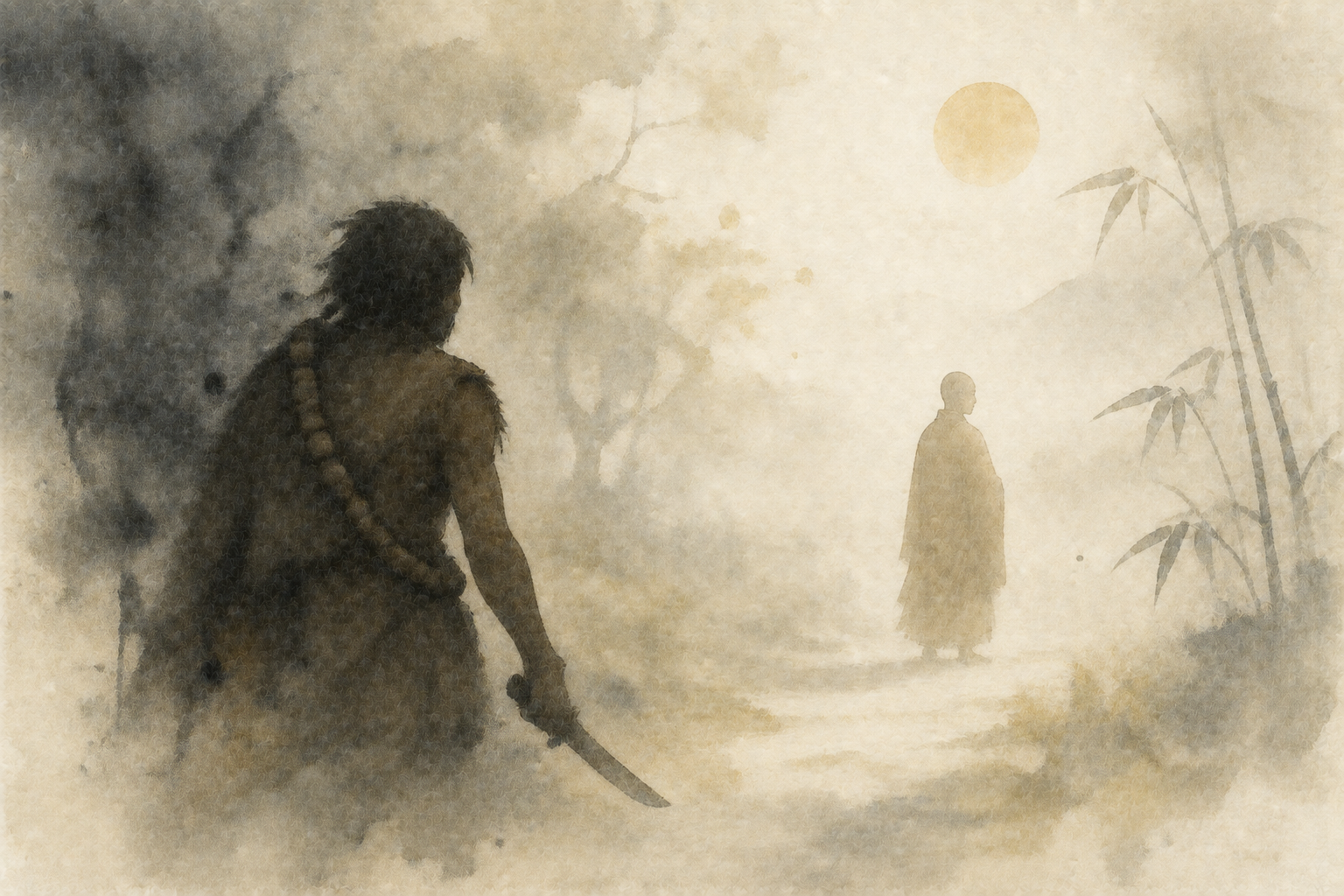
Quick Summary
- The Angulimala story is a direct challenge to the idea that “violent people never change.”
- It shows transformation beginning with a single moment of clear seeing, not a long speech or a miracle.
- The story doesn’t erase harm; it holds accountability and compassion in the same frame.
- Angulimala’s change is portrayed as a shift in intention and action, not a new identity to hide behind.
- Even after changing, consequences still arrive—social distrust, pain, and the need to live carefully.
- The practical lesson is about interrupting momentum: noticing, stopping, and choosing the next step.
- For daily life, it’s a template for working with anger, shame, and the urge to justify ourselves.
Introduction
If you’re drawn to the Angulimala story, you’re probably stuck on one sharp question: how can a person who has done terrible harm genuinely change without the story turning into cheap forgiveness or moral fantasy? It’s a fair discomfort—because most of us have seen “I’ve changed” used as a way to dodge responsibility, and we don’t want spirituality to become another excuse. I write for Gassho, a Zen/Buddhism site focused on grounded practice and clear ethics.
The story of Angulimala is often told in a few dramatic beats: a feared killer meets the Buddha, something flips, and the killer becomes a monk. But the power of the story isn’t in the drama—it’s in the psychological realism of how momentum breaks, how remorse matures, and how consequences still have their say.
Read carefully and you’ll notice the story doesn’t ask you to approve of violence, minimize victims, or pretend the past didn’t happen. It asks you to look at the mechanics of change: what makes a person stop, what makes them keep stopping, and what it costs to live differently.
A Lens for Understanding the Angulimala Story
A helpful way to approach the Angulimala story is to treat it as a lens on human behavior rather than a claim that “anything is fine if you repent.” The lens is simple: actions have momentum, and momentum can be interrupted. People often don’t do harmful things because they carefully chose evil; they do them because a chain of fear, pride, confusion, and reinforcement keeps rolling forward.
In the story, Angulimala is not portrayed as “fixed.” He’s portrayed as caught—by a narrative about who he is, by the pressure of past choices, and by the belief that there’s no way back. The turning point comes when that narrative is challenged in a direct, experiential way: he meets someone who doesn’t respond with panic or hatred, and the usual script fails to run.
This lens also refuses a common trap: thinking that transformation means becoming “pure” overnight. The story points to a more ordinary truth—change is a shift in intention expressed through repeated, concrete restraint. The inner shift matters, but it has to show up as different behavior, especially when the old impulses return.
Finally, the lens includes consequences. Even after Angulimala changes, the world doesn’t instantly trust him, and the pain he set in motion doesn’t vanish. That’s not a flaw in the story; it’s part of its honesty. Change is real, and consequences are real, and mature compassion can hold both.
GASSHO
Ask and learn about Buddhism in daily life.
GASSHO is a Buddhist community app where you can learn Buddhist teachings and ask questions to the head priest of Kongosanmaiin Temple on Mount Koya.
What Change Looks Like in Ordinary Moments
Most of us won’t relate to the outer events of the Angulimala story, but we can recognize the inner machinery: the feeling of being carried by a reaction that seems bigger than choice. It might be anger that surges before you can think, a defensive lie that appears before you can pause, or a familiar urge to punish someone with words.
In lived experience, “momentum” often feels like speed. Your body tightens, your attention narrows, and the mind starts producing one-sided evidence: why you’re right, why they deserve it, why there’s no other option. The story becomes a mirror when you notice that speed and admit, quietly, that you’re not seeing clearly.
The first practical shift is not becoming saintly; it’s creating a gap. A gap might be one breath, one unclenching of the jaw, one decision not to hit send, one step away from the doorway. The gap is small, but it changes the physics of the moment: now there is room for a different next action.
Then comes the uncomfortable part: staying with what you were trying to avoid. Often we lash out to escape shame, fear, or helplessness. When you don’t discharge that energy outward, you feel it inward—heat in the chest, a buzzing in the arms, a restless need to justify yourself. The Angulimala story points to the possibility of bearing that discomfort without converting it into harm.
Another ordinary place this shows up is in how we relate to our past. When you’ve hurt someone, the mind tends to swing between two extremes: “I’m irredeemable” and “It wasn’t that bad.” Neither extreme repairs anything. A more workable stance is: “I did harm; I won’t deny it; I will live in a way that reduces harm now.” That’s not self-hatred, and it’s not self-excuse.
Over time, the “new life” is built out of small refusals to repeat the old pattern. You notice the first spark of contempt and you don’t feed it. You feel the urge to dominate a conversation and you soften your voice. You want to punish someone with silence and you choose one honest sentence instead. None of this requires a dramatic identity change—just repeated, humble course-corrections.
And even when you do choose better, you may still face consequences: distrust, distance, or the slow rebuilding of relationships. The story’s realism is that consequences aren’t a sign that change failed; they’re part of what makes change sincere. You keep practicing restraint and honesty even when you don’t get immediate relief or applause.
Misreadings That Flatten the Angulimala Story
One common misunderstanding is to treat the Angulimala story as proof that compassion means removing boundaries. It doesn’t. Compassion can include saying “stop,” involving protection, and refusing to enable harm. The story’s turning point is not permissiveness; it’s interruption.
Another misreading is that the story asks victims (or society) to forgive on command. It doesn’t. Forgiveness is personal, complex, and never owed. The story focuses more on the perpetrator’s responsibility to stop harming and to live with the results of what they’ve done.
A third misunderstanding is to imagine that a single insight erases a lifetime of conditioning. Even in traditional tellings, Angulimala’s life after the turning point is not portrayed as easy. He meets hostility and pain. The story doesn’t glamorize redemption; it shows that change is tested in the real world.
Finally, some people use the story to bypass ethics: “If even Angulimala could be accepted, then anything I do is fine.” That’s the opposite of the lesson. The story highlights the seriousness of harm by showing that the only way forward is to stop, to restrain, and to live differently—without demanding that the world pretend nothing happened.
Why This Story Still Matters for How We Live
The Angulimala story matters because it refuses two lazy conclusions: “people never change” and “change means no consequences.” In daily life, those conclusions show up as cynicism on one side and naivety on the other. The story offers a third option: clear-eyed accountability paired with the possibility of genuine transformation.
It also matters because it gives a practical model for working with aggression before it becomes violence. Most harm begins earlier than we admit—at the level of contempt, dehumanizing thoughts, and the pleasure of “winning.” If you can learn to notice that early, you can interrupt the chain before it hardens into action.
For people carrying guilt, the story points to a way that isn’t self-destruction and isn’t denial: make amends where possible, accept what can’t be undone, and commit to non-harm now. That commitment isn’t a feeling; it’s a pattern of choices that others can actually experience.
For people who fear others can’t change, the story offers a cautious hope that doesn’t require you to be naive. You can support rehabilitation while still valuing safety. You can believe in transformation while still insisting on boundaries, restitution, and time.
And for anyone trying to live with integrity, the story is a reminder that the most important moment is often the smallest one: the moment you stop feeding the impulse and choose the next action carefully.
Conclusion
The story of Angulimala isn’t comforting because it’s “nice.” It’s challenging because it suggests that even extreme harm doesn’t make change impossible—and that change, if it’s real, will be measured by restraint, honesty, and the willingness to face consequences.
If you take one thing from the Angulimala story, let it be this: transformation begins when the momentum is interrupted, and it continues when you keep choosing non-harm in ordinary moments—especially when no one is praising you for it.
Ask a Buddhist priest
Have a question about Buddhism?
In the GASSHO app, you can ask questions about Buddhist teachings, daily concerns, and how to understand Buddhism in everyday life.
Frequently Asked Questions
- FAQ 1: What is the Angulimala story in Buddhism?
- FAQ 2: Why was Angulimala killing people in the story?
- FAQ 3: What does the name “Angulimala” mean in the Angulimala story?
- FAQ 4: What happens when Angulimala meets the Buddha?
- FAQ 5: What is the meaning of “I have stopped” in the Angulimala story?
- FAQ 6: Does the Angulimala story teach that anyone can change?
- FAQ 7: Does the Angulimala story excuse Angulimala’s crimes?
- FAQ 8: What consequences does Angulimala face after he changes?
- FAQ 9: Is the Angulimala story meant to be taken literally or as a teaching story?
- FAQ 10: What is the central lesson of the Angulimala story?
- FAQ 11: How does the Angulimala story relate to karma?
- FAQ 12: What does the Angulimala story suggest about forgiveness?
- FAQ 13: Why is the Angulimala story important for understanding compassion?
- FAQ 14: What practical takeaway can I apply from the Angulimala story in my own life?
- FAQ 15: Where can I find the Angulimala story in Buddhist texts?
FAQ 1: What is the Angulimala story in Buddhism?
Answer: The Angulimala story tells of a feared killer who encounters the Buddha, is stopped in the midst of violence, renounces harming others, and later lives as a monk while still facing the consequences of his past actions.
Takeaway: It’s a story about interrupting harm and living differently afterward.
FAQ 2: Why was Angulimala killing people in the story?
Answer: Traditional tellings describe Angulimala as driven by a distorted obligation and a corrupted plan that pushed him into murder, showing how confusion and manipulation can escalate into extreme wrongdoing.
Takeaway: The story highlights how delusion and pressure can fuel violent momentum.
FAQ 3: What does the name “Angulimala” mean in the Angulimala story?
Answer: “Angulimala” is commonly explained as “garland of fingers,” referring to the grim trophy he collected, which symbolizes the depth of his violence and the fear he inspired.
Takeaway: The name functions as a stark marker of harm, not a romantic detail.
FAQ 4: What happens when Angulimala meets the Buddha?
Answer: In the Angulimala story, Angulimala tries to pursue the Buddha, but cannot catch him; the encounter culminates in a decisive exchange that breaks Angulimala’s momentum and leads him to stop harming and ask for a new way to live.
Takeaway: The turning point is an interruption of momentum, not a reward for violence.
FAQ 5: What is the meaning of “I have stopped” in the Angulimala story?
Answer: The line is often understood as pointing to inner stopping: the end of compulsive harm, the end of being driven by craving and hatred, and the beginning of restraint and responsibility.
Takeaway: “Stopping” means ending the pattern at its root, not just pausing outward behavior.
FAQ 6: Does the Angulimala story teach that anyone can change?
Answer: The Angulimala story strongly suggests that change is possible even for someone with a violent past, but it does not imply that change is easy, instant, or free of consequences.
Takeaway: The story supports possibility without denying accountability.
FAQ 7: Does the Angulimala story excuse Angulimala’s crimes?
Answer: No. The Angulimala story does not frame his past as acceptable; it emphasizes the seriousness of harm and shows that even after renunciation, he must live with social backlash and the results of his actions.
Takeaway: Compassion in the story does not equal excusing harm.
FAQ 8: What consequences does Angulimala face after he changes?
Answer: In the Angulimala story, he is often depicted as being mistrusted, insulted, and even attacked by people who remember his past, illustrating that inner change doesn’t automatically erase external consequences.
Takeaway: Transformation is real, and consequences can still be real.
FAQ 9: Is the Angulimala story meant to be taken literally or as a teaching story?
Answer: Many readers approach the Angulimala story as a teaching narrative: whether read as historical, symbolic, or both, its main function is to illuminate how harmful momentum can be interrupted and redirected toward non-harm.
Takeaway: The practical lesson remains even when readers differ on literal details.
FAQ 10: What is the central lesson of the Angulimala story?
Answer: The central lesson of the Angulimala story is that even entrenched violence can be stopped through a clear interruption of delusion and a commitment to non-harm, paired with the willingness to face consequences and live responsibly.
Takeaway: The story teaches stopping harm and sustaining that stop.
FAQ 11: How does the Angulimala story relate to karma?
Answer: The Angulimala story is often used to show that actions have results: Angulimala’s past brings painful outcomes, yet his present choices also matter, demonstrating that karma is not fatalism but a call to change what you do next.
Takeaway: Past actions condition life, but present restraint still counts.
FAQ 12: What does the Angulimala story suggest about forgiveness?
Answer: The Angulimala story does not demand that victims forgive; it emphasizes the perpetrator’s responsibility to stop harming and to live in a way that reduces harm, while acknowledging that others may not feel safe or ready to forgive.
Takeaway: Forgiveness is not owed; responsibility is required.
FAQ 13: Why is the Angulimala story important for understanding compassion?
Answer: The Angulimala story presents compassion as the willingness to meet a violent person without hatred while still stopping harm—compassion as clarity and courage, not permissiveness.
Takeaway: Compassion can be firm, protective, and non-enabling.
FAQ 14: What practical takeaway can I apply from the Angulimala story in my own life?
Answer: A practical takeaway from the Angulimala story is to practice “interrupting momentum”: notice the first signs of a harmful reaction, pause long enough to regain choice, and commit to the next action that reduces harm rather than escalates it.
Takeaway: Change begins with a pause and a different next step.
FAQ 15: Where can I find the Angulimala story in Buddhist texts?
Answer: The Angulimala story is found in early Buddhist sources, most famously in the Angulimala Sutta, and it also appears in later retellings that emphasize its ethical and psychological lessons.
Takeaway: Look for the Angulimala Sutta for a primary version, then compare retellings thoughtfully.