



Why Do We Feel Hurt When Others Disagree? A Buddhist Explanation
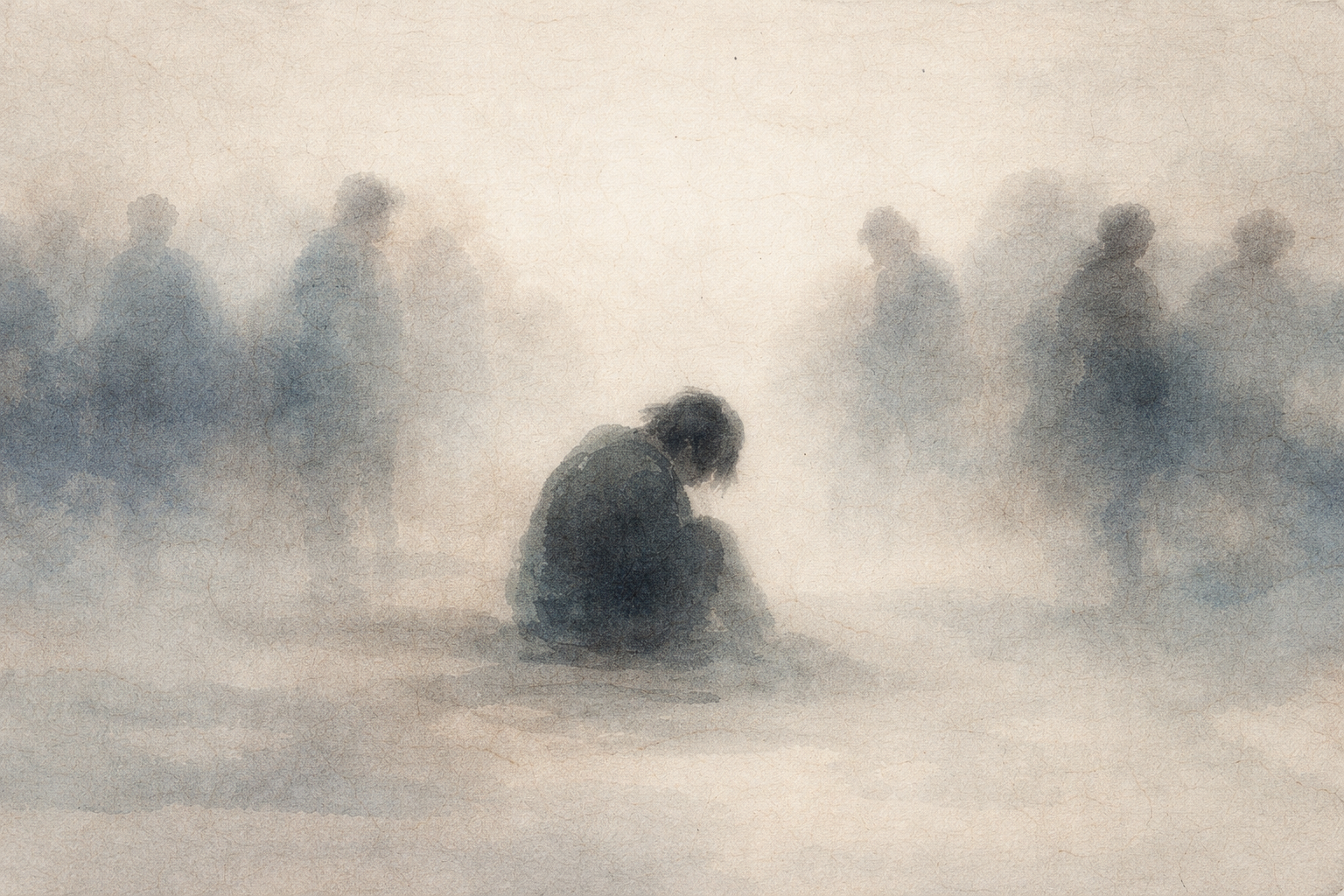
- Disagreement often hurts because the mind treats it like a threat to belonging, competence, or identity.
- A Buddhist lens points to clinging: we grip our views to feel stable, then feel pain when that grip is challenged.
- The sting is usually a mix of fear, pride, and the wish to be seen as “good” or “right.”
- Noticing the body’s reaction (tightness, heat, urgency) helps you respond rather than react.
- You can disagree without self-abandoning by separating “my view” from “my worth.”
- Skillful speech is less about winning and more about reducing harm—internally and externally.
- With practice, disagreement becomes information, not a verdict on you.
It’s confusing how a simple “I don’t agree” can land like a personal rejection, even when the other person isn’t trying to be cruel. One moment you’re discussing something ordinary, and the next your chest tightens, your mind starts building a case, and you feel smaller—or angrier—than you meant to. At Gassho, we approach this kind of everyday suffering through a practical Buddhist lens: not as a doctrine to adopt, but as a way to see what’s actually happening in the mind.
A Buddhist Lens on Why Disagreement Feels Personal
From a Buddhist perspective, the hurt of disagreement often comes from clinging: the mind grabs onto a view, a role, or an image of “me” to feel secure. A viewpoint can start as a simple preference or conclusion, but once it becomes tied to identity—“I’m the kind of person who knows,” “I’m reasonable,” “I’m good”—it stops being just an idea. It becomes a support beam for the self.
When someone disagrees, the mind may interpret it as more than a difference in information. It can feel like a threat to belonging (“Will I be excluded?”), competence (“Am I foolish?”), or moral worth (“Am I wrong as a person?”). The pain isn’t proof that the other person attacked you; it’s often proof that the mind fused your position with your safety.
This lens doesn’t require you to believe anything mystical. It simply invites you to notice a pattern: the stronger the attachment to being right, being understood, or being validated, the sharper the sting when that attachment is challenged. Disagreement becomes a mirror that reveals where the mind is gripping.
In this view, the goal isn’t to become someone who never feels hurt. It’s to understand the mechanics of the hurt—so you can meet it with clarity, reduce unnecessary suffering, and choose a response that aligns with your values rather than your reflexes.
GASSHO
Ask and learn about Buddhism in daily life.
GASSHO is a Buddhist community app where you can learn Buddhist teachings and ask questions to the head priest of Kongosanmaiin Temple on Mount Koya.
What the Hurt Looks Like in Real Time
Disagreement often begins as a small moment of friction: a pause, a raised eyebrow, a different conclusion. Before you even form a sentence, the body may react—tight throat, warm face, clenched jaw, a subtle forward lean. The body is frequently the first place you can detect that the mind has labeled the moment as “danger.”
Then attention narrows. Instead of hearing the full meaning of what the other person is saying, the mind starts scanning for threats: tone, implication, status. You may notice an urge to interrupt, to correct, to defend, or to deliver the “perfect” line that restores your position.
At the same time, a story forms quickly: “They don’t respect me,” “They’re implying I’m ignorant,” “I’m being dismissed.” Sometimes the story is accurate; often it’s a protective guess. The mind would rather have a painful certainty than an open question.
Another layer is the wish to be seen. Many of us carry an unspoken hope that our thoughts will be received as reasonable and our intentions will be recognized as good. When disagreement arrives, it can feel like that hope is being denied. The hurt is not only about the topic; it’s about the longing to be understood.
Afterward, the mind may replay the conversation. You might draft better arguments in your head, imagine how you “should have” responded, or feel a dull shame that lingers longer than the discussion deserved. This replay is often the mind trying to repair a threatened self-image.
In quieter moments, you may notice something even more tender: the fear of not mattering. Disagreement can touch old conditioning—times you were ignored, corrected harshly, or only praised when you were “right.” The present moment borrows emotional weight from the past.
Seen this way, the pain makes sense. It’s not weakness; it’s a protective system doing its job a little too aggressively. The practice is learning to recognize the system without letting it drive the conversation.
Misunderstandings That Make Disagreement Hurt More
One common misunderstanding is assuming that hurt means the other person did something wrong. Sometimes they did—people can be dismissive or unkind—but the presence of pain alone doesn’t prove harm. Pain can also come from your own clinging: the mind’s insistence that agreement equals safety.
Another misunderstanding is thinking you must eliminate hurt to be “spiritual” or emotionally mature. That expectation adds a second arrow: you feel hurt, then you judge yourself for feeling hurt. A Buddhist approach is gentler: notice the reaction, name it, and work with it without self-contempt.
It’s also easy to confuse disagreement with disrespect. People can disagree while still valuing you, and people can agree while quietly dismissing you. Respect is shown through listening, honesty, and care—not through matching opinions.
Finally, many of us assume that being right will bring peace. But even when you “win” an argument, the mind often stays tense, scanning for the next challenge. If peace depends on constant validation, it will always be fragile. The more reliable peace comes from loosening the grip on needing to be confirmed.
Why This Understanding Changes Everyday Conversations
When you see that the hurt is often about identity and belonging, you gain options. Instead of rushing to defend, you can pause and silently note what’s happening: “tightness,” “heat,” “urge to prove.” That small act of recognition creates space between the trigger and the response.
You can also practice separating your view from your worth. A helpful internal reminder is: “A view can be questioned; I don’t have to be.” This doesn’t make you passive. It makes you steadier, which often leads to clearer thinking and more honest speech.
In practical terms, this steadiness supports better listening. You can ask, “What are they actually saying?” before deciding what it means about you. You can reflect back their point to confirm understanding, which reduces needless conflict and helps you feel less alone in the conversation.
It also changes how you disagree. Instead of aiming to win, you can aim to reduce harm: speak to the issue, name your uncertainty, and avoid turning the exchange into a verdict on character. This is not about being “nice.” It’s about not feeding the cycle that makes you suffer.
Over time, disagreement becomes less like a courtroom and more like weather: sometimes intense, sometimes mild, always changing. You still care about truth and values, but you don’t need every conversation to certify your identity.
Conclusion: Disagreement Doesn’t Have to Decide Your Worth
We feel hurt when others disagree because the mind often treats disagreement as a threat to the self—our belonging, competence, and goodness. A Buddhist explanation points to clinging: when we fuse our views with our identity, any challenge feels personal. The relief isn’t found in forcing agreement; it’s found in seeing the reaction clearly, loosening the grip, and responding with steadiness and care.
Ask a Buddhist priest
Have a question about Buddhism?
In the GASSHO app, you can ask questions about Buddhist teachings, daily concerns, and how to understand Buddhism in everyday life.
Frequently Asked Questions
- FAQ 1: Why do we feel hurt when others disagree even about small things?
- FAQ 2: Why does disagreement feel like rejection?
- FAQ 3: Why do we feel hurt when others disagree with our values or beliefs?
- FAQ 4: Why do we feel hurt when others disagree even if we know they mean well?
- FAQ 5: Why do we feel hurt when others disagree with us in public?
- FAQ 6: Why do we feel hurt when others disagree with our decisions?
- FAQ 7: Why do we feel hurt when others disagree and we can’t explain ourselves well?
- FAQ 8: Why do we feel hurt when others disagree and then we obsess about it later?
- FAQ 9: Why do we feel hurt when others disagree with us more than when they criticize us directly?
- FAQ 10: Why do we feel hurt when others disagree with us online?
- FAQ 11: Why do we feel hurt when others disagree with us even when we’re not sure we’re right?
- FAQ 12: Why do we feel hurt when others disagree with us but they don’t seem bothered?
- FAQ 13: Why do we feel hurt when others disagree with us in close relationships?
- FAQ 14: Why do we feel hurt when others disagree and we immediately get angry?
- FAQ 15: Why do we feel hurt when others disagree, and what is one Buddhist-style way to respond?
FAQ 1: Why do we feel hurt when others disagree even about small things?
Answer: Small disagreements can still touch big needs—being respected, included, or seen as competent. When your mind links a minor opinion to your sense of self, the body reacts as if something important is at stake.
Takeaway: The intensity often comes from what the disagreement symbolizes, not the topic itself.
FAQ 2: Why does disagreement feel like rejection?
Answer: The mind can interpret “I disagree” as “I don’t accept you,” especially if you learned that approval equals safety. This is a common mental shortcut: it collapses difference in views into difference in relationship.
Takeaway: Disagreement is often about ideas, but the nervous system may hear it as social exclusion.
FAQ 3: Why do we feel hurt when others disagree with our values or beliefs?
Answer: Values and beliefs can become identity: “This is who I am.” When someone challenges them, it can feel like they’re challenging your character or your place in the world, not just your reasoning.
Takeaway: The more a belief is fused with identity, the more disagreement can sting.
FAQ 4: Why do we feel hurt when others disagree even if we know they mean well?
Answer: Good intentions don’t always prevent threat responses. Your body may still register disagreement as danger, especially if you’re tired, stressed, or sensitive to status and tone.
Takeaway: Hurt can be a nervous-system reaction, not a rational judgment about the other person.
FAQ 5: Why do we feel hurt when others disagree with us in public?
Answer: Public disagreement can trigger shame and fear of losing face. The mind imagines an audience deciding your worth, which amplifies the emotional charge and the urge to defend.
Takeaway: Public settings add a “status threat” layer that makes disagreement feel sharper.
FAQ 6: Why do we feel hurt when others disagree with our decisions?
Answer: Decisions are tied to responsibility. If someone disagrees, it can feel like they’re saying you’re unreliable or unsafe to trust, which hits pride and fear at the same time.
Takeaway: Disagreement about decisions often threatens your sense of competence and trustworthiness.
FAQ 7: Why do we feel hurt when others disagree and we can’t explain ourselves well?
Answer: When words don’t come, the mind may panic: “I’m losing,” “I look foolish,” “I won’t be understood.” The hurt is often the mix of frustration and the fear of being misread.
Takeaway: Struggling to articulate can turn disagreement into a threat to self-image.
FAQ 8: Why do we feel hurt when others disagree and then we obsess about it later?
Answer: Rumination is the mind trying to restore control and repair identity. Replaying the conversation can feel like preparation, but it often keeps the wound active and reinforces the idea that your worth is on trial.
Takeaway: Obsessing is usually a self-protection strategy that accidentally prolongs the pain.
FAQ 9: Why do we feel hurt when others disagree with us more than when they criticize us directly?
Answer: Disagreement can feel ambiguous: you may not know whether you’re being judged, dismissed, or simply met with a different view. That uncertainty can be more activating than clear criticism because the mind fills in worst-case meanings.
Takeaway: Uncertainty around what disagreement “means” can intensify the hurt.
FAQ 10: Why do we feel hurt when others disagree with us online?
Answer: Online disagreement often lacks warmth, context, and repair. Short messages can read as contempt, and the public nature of comments can trigger status anxiety and defensiveness.
Takeaway: Less human context and more visibility can make online disagreement feel harsher.
FAQ 11: Why do we feel hurt when others disagree with us even when we’re not sure we’re right?
Answer: The hurt may not be about correctness; it may be about being seen as capable or respectable. Even uncertainty can be defended if the mind is protecting an image of “I should know.”
Takeaway: The sting can come from protecting identity, not from confidence in the view.
FAQ 12: Why do we feel hurt when others disagree with us but they don’t seem bothered?
Answer: People have different sensitivity to conflict, different histories, and different levels of attachment to being right. If your mind equates disagreement with danger, you’ll feel more impact than someone who treats it as neutral information.
Takeaway: Different reactions don’t prove someone is cold; they often reflect different conditioning.
FAQ 13: Why do we feel hurt when others disagree with us in close relationships?
Answer: In close relationships, agreement can feel like connection and safety. Disagreement may trigger fears of distance, misunderstanding, or not being cherished, especially if you rely on the relationship for emotional grounding.
Takeaway: The closer the bond, the more disagreement can touch attachment and security needs.
FAQ 14: Why do we feel hurt when others disagree and we immediately get angry?
Answer: Anger often arrives to cover vulnerability. If disagreement triggers shame, fear, or helplessness, anger can surge as a quick way to feel strong and regain control.
Takeaway: Anger after disagreement is frequently a protector for a more tender feeling underneath.
FAQ 15: Why do we feel hurt when others disagree, and what is one Buddhist-style way to respond?
Answer: The hurt often comes from clinging to a view as “me” or “mine.” One simple response is to pause, feel the body sensations for a breath or two, and silently label what’s present (“defending,” “tightness,” “wanting approval”) before speaking.
Takeaway: A brief pause to notice clinging can turn disagreement from a threat into a workable moment.