



Why Japanese Buddhism Uses Ritual So Much
Quick Summary
- Japanese Buddhism uses ritual to make invisible values visible through the body, voice, and environment.
- Ritual is less about “believing” and more about training attention, humility, and care in real time.
- Repetition is a feature, not a flaw: it stabilizes the mind when feelings and circumstances change.
- Many rituals are designed for community life—grief, gratitude, remembrance, and reconciliation.
- Objects, gestures, and chanting work like cues that reduce overthinking and support steady presence.
- Ritual can be meaningful even when you don’t “feel spiritual,” because it carries you when you’re tired.
- Understanding japanese buddhism rituals starts by seeing them as practical forms of embodied ethics.
Why Japanese Buddhism Uses Ritual So Much
You might look at japanese buddhism rituals—bowing, chanting, incense, bells, formal phrases—and feel a specific kind of confusion: why so much form when the point is supposed to be awakening, clarity, and freedom? It can seem like extra steps, or even like performance, especially if you’re used to spirituality being private and spontaneous. At Gassho, we focus on how Buddhist practice actually works in lived life, not how it looks from the outside.
Ritual in Japanese Buddhism isn’t mainly there to impress anyone or to “prove” devotion. It’s there because human attention is unreliable, emotions are persuasive, and good intentions evaporate under stress. Form gives practice a shape you can return to when you don’t know what to do next.
Once you see ritual as a technology of attention and relationship—rather than a test of belief—many of the pieces start to make sense. The question shifts from “Do I agree with this?” to “What does this do to the mind, the body, and the way I treat people?”
GASSHO
Ask and learn about Buddhism in daily life.
GASSHO is a Buddhist community app where you can learn Buddhist teachings and ask questions to the head priest of Kongosanmaiin Temple on Mount Koya.
A Practical Lens for Understanding Ritual
A useful way to understand japanese buddhism rituals is to treat them as a lens for experience: they organize perception and behavior so that certain qualities become easier to enact. When you bow, you’re not only “showing respect.” You’re also interrupting self-importance, softening the body, and acknowledging that you’re part of something larger than your current mood.
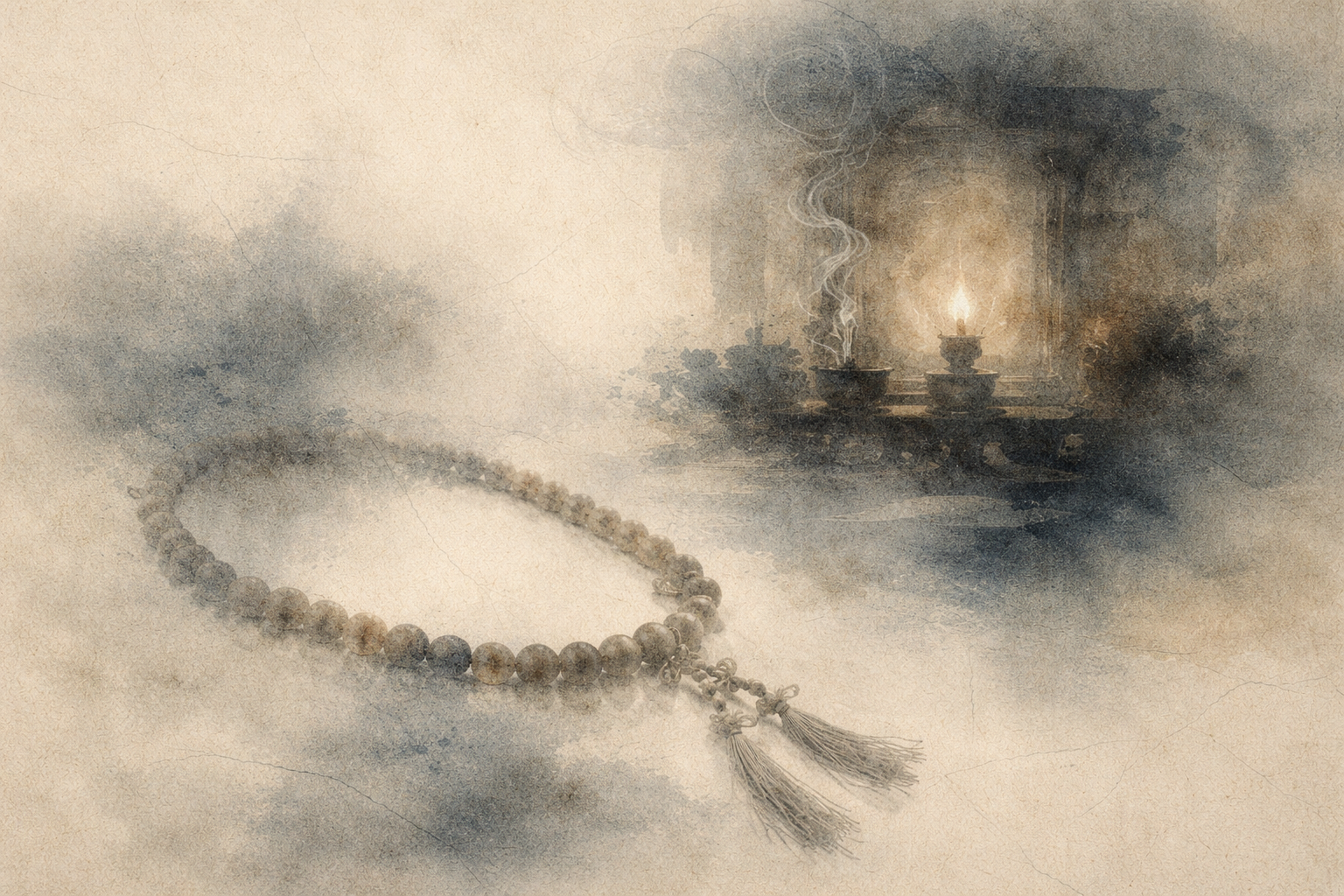
Ritual also externalizes intention. The mind can say, “I’m grateful,” while the body stays tense and the voice stays sharp. A small, repeated form—lighting incense carefully, offering water, reciting a verse—puts gratitude into the hands and breath. It becomes harder to hide from yourself.
Another key point is that ritual reduces decision fatigue. In daily life, we burn energy choosing what to do, what to say, how to respond. A stable form removes some of that friction. You don’t have to invent reverence, remorse, or remembrance from scratch; you step into a pattern that has carried those human needs for a long time.
Finally, ritual is relational. Even when done alone, it assumes you’re in relationship—to ancestors, to teachers, to community, to the people you’ve harmed, to the people you rely on. The form keeps that relational field present, which quietly reshapes how you act when no one is watching.
How Ritual Feels in Ordinary Moments
In everyday life, the mind tends to run on commentary: judging, comparing, rehearsing, defending. A simple ritual sequence gives the mind fewer places to hide. When you stand, bow, and chant, attention is pulled from abstract rumination into posture, sound, and timing.
Chanting is a good example. You may not feel “inspired,” and the words may not land emotionally. Still, the act of voicing something steady can smooth out inner agitation. The breath lengthens, the throat relaxes, and the nervous system gets a cue: right now, we are not fighting.
Gestures work similarly. Bringing hands together, offering, or bowing can reveal resistance you didn’t know you had. You might notice a subtle tightening—an inner voice saying, “This is silly,” or “I don’t want to submit.” The ritual doesn’t argue with that voice; it simply makes it visible.
Ritual also changes how you meet grief and gratitude. When someone dies, the mind can swing between numbness and overwhelm. A memorial service, a name recitation, or an offering provides a container where feelings can arise without needing to be solved. The form holds what the mind cannot organize.
In community settings, ritual can reduce social friction. People don’t have to negotiate every detail of “how we do this.” The shared form creates a temporary equality: everyone bows, everyone chants, everyone follows the same rhythm. That doesn’t erase differences, but it can soften them.
Over time, repetition can feel less like monotony and more like returning. You notice small variations: today the bell sounds sharper, today the bow is rushed, today the chant is gentle. The ritual becomes a mirror for the day’s mind without requiring a dramatic interpretation.
And on days when you feel nothing at all, ritual can still function. You can show up with a dull mind, a busy mind, or a skeptical mind and still complete the form. That’s part of the point: practice that doesn’t depend on being in the “right” mood.
Common Misreadings of Japanese Buddhist Rituals
One misunderstanding is that ritual is “just superstition.” Some people assume incense, bells, and chanting are meant to manipulate unseen forces. While individuals may hold many views, ritual can be understood more simply: it trains attention, expresses values, and supports communal life. You don’t need a magical explanation to see its psychological and ethical effects.
Another misunderstanding is that ritual equals blind obedience. But form can be a way to practice consent and care: you choose to enter the form, you learn it, you notice your reactions, and you refine your conduct. The structure is not necessarily about control; it can be about reliability.
A third misunderstanding is that ritual replaces inner work. In practice, ritual often exposes inner work. If you’re impatient, the slowness of a bow shows it. If you’re self-conscious, chanting with others shows it. The form doesn’t fix those reactions automatically, but it brings them into the light.
Finally, people sometimes think ritual is only for temples or “religious” people. Many japanese buddhism rituals are domestic and ordinary: small offerings, brief recitations, moments of remembrance. They can be scaled to your life rather than requiring a perfect setting.
Why Ritual Still Matters in Modern Life
Modern life trains speed, personalization, and constant choice. That sounds like freedom, but it often produces restlessness and thin attention. Ritual offers the opposite training: steadiness, shared language, and a willingness to do the same simple thing again with care.
Ritual also supports ethics in a non-preachy way. Instead of telling you to be humble, it gives you a humble posture. Instead of telling you to be grateful, it gives you a concrete act of offering. Instead of telling you to remember the dead, it gives you a time and a form to do it.
For relationships, ritual can be a repair tool. When you’ve been careless, a formal apology or a memorial act can carry sincerity when your everyday words feel inadequate. The form doesn’t guarantee healing, but it can create a dignified space where healing is more possible.
And for the mind, ritual is a gentle boundary. It says: for these few minutes, we are not optimizing, scrolling, or performing. We are attending. That boundary is increasingly rare—and increasingly valuable.
Conclusion
Japanese Buddhism uses ritual so much because ritual is a practical way to shape attention, express care, and carry human life events that don’t fit neatly into private thought. It’s not mainly about adding “religious extras.” It’s about giving the body and voice a reliable path when the mind is scattered, defensive, grieving, or simply tired.
If you approach japanese buddhism rituals as embodied training—rather than as a belief test—you can evaluate them by their effects: Do they soften reactivity? Do they support gratitude and responsibility? Do they help you show up for others? That’s a grounded place to start.
Ask a Buddhist priest
Have a question about Buddhism?
In the GASSHO app, you can ask questions about Buddhist teachings, daily concerns, and how to understand Buddhism in everyday life.
Frequently Asked Questions
- FAQ 1: What counts as japanese buddhism rituals?
- FAQ 2: Why are japanese buddhism rituals so repetitive?
- FAQ 3: Are japanese buddhism rituals mainly about faith or belief?
- FAQ 4: What is the purpose of chanting in japanese buddhism rituals?
- FAQ 5: Why do japanese buddhism rituals use incense?
- FAQ 6: What role do bells play in japanese buddhism rituals?
- FAQ 7: Why is bowing so common in japanese buddhism rituals?
- FAQ 8: Are japanese buddhism rituals different at home versus at a temple?
- FAQ 9: What are memorial services in japanese buddhism rituals meant to do?
- FAQ 10: Do japanese buddhism rituals require special clothing?
- FAQ 11: Is it disrespectful to join japanese buddhism rituals if I don’t know the words?
- FAQ 12: Are japanese buddhism rituals meant to produce a specific feeling?
- FAQ 13: How do japanese buddhism rituals relate to ethics in daily life?
- FAQ 14: Can japanese buddhism rituals be adapted for a busy schedule?
- FAQ 15: What is a respectful way to learn japanese buddhism rituals as a beginner?
FAQ 1: What counts as japanese buddhism rituals?
Answer: Japanese buddhism rituals commonly include bowing, chanting or recitation, incense offering, bell ringing, formal greetings, memorial services, and home altar practices. They can be short daily forms or longer temple ceremonies.
Takeaway: Ritual includes both temple ceremonies and simple daily forms.
FAQ 2: Why are japanese buddhism rituals so repetitive?
Answer: Repetition stabilizes attention and reduces the need to “invent” the right mindset each time. The same form can meet different moods—grief, gratitude, distraction—without requiring you to feel a certain way first.
Takeaway: Repetition is designed to support consistency, not boredom.
FAQ 3: Are japanese buddhism rituals mainly about faith or belief?
Answer: Many rituals function as embodied practice: posture, breath, voice, and attention are trained through doing. People may hold beliefs, but the ritual itself can be approached as a method for cultivating care, steadiness, and remembrance.
Takeaway: You can understand ritual as practice even without focusing on belief.
FAQ 4: What is the purpose of chanting in japanese buddhism rituals?
Answer: Chanting coordinates breath and attention, provides shared language in community settings, and supports remembrance and dedication. It can also reduce mental noise by giving the mind a single, steady task.
Takeaway: Chanting is a practical tool for attention and communal practice.
FAQ 5: Why do japanese buddhism rituals use incense?
Answer: Incense often serves as an offering and a sensory cue that marks a shift into a more attentive mode. The scent and visible smoke can help anchor the moment and signal respect and care.
Takeaway: Incense is both symbolic offering and practical attention cue.
FAQ 6: What role do bells play in japanese buddhism rituals?
Answer: Bells are used to begin, end, or punctuate a ritual, helping participants synchronize and return attention to the present moment. The sound can function like a clear boundary around the practice period.
Takeaway: Bells structure time and help gather attention.
FAQ 7: Why is bowing so common in japanese buddhism rituals?
Answer: Bowing expresses respect and gratitude, but it also trains the body in humility and receptivity. As a repeated gesture, it can interrupt self-centered momentum and reset how you relate to others and to the practice space.
Takeaway: Bowing is both relational etiquette and embodied training.
FAQ 8: Are japanese buddhism rituals different at home versus at a temple?
Answer: Yes. Temple rituals are often longer and coordinated for groups, while home rituals tend to be shorter and simpler—such as a brief offering, a bow, or a short recitation. Both aim to cultivate steadiness and remembrance in their setting.
Takeaway: Home practice is usually simpler, but it follows the same logic of care and attention.
FAQ 9: What are memorial services in japanese buddhism rituals meant to do?
Answer: Memorial rituals provide a structured way to honor the deceased, support the living in grief, and express ongoing connection through remembrance and dedication. The form helps people show care when words feel insufficient.
Takeaway: Memorial rituals are containers for grief, respect, and remembrance.
FAQ 10: Do japanese buddhism rituals require special clothing?
Answer: Many lay participants attend rituals in ordinary, modest clothing, especially at public services. Some ceremonies may have recommended attire or temple-provided garments for specific roles, but participation often focuses more on respectful conduct than on clothing.
Takeaway: Modesty and respect matter more than specialized outfits for most visitors.
FAQ 11: Is it disrespectful to join japanese buddhism rituals if I don’t know the words?
Answer: Usually not. Many temples expect newcomers and provide guidance; you can participate quietly by standing, sitting, or bowing when others do. Observing respectfully is often considered a valid way to join until you learn the forms.
Takeaway: Respectful observation is commonly acceptable when you’re new.
FAQ 12: Are japanese buddhism rituals meant to produce a specific feeling?
Answer: Not necessarily. Rituals can support calm, gratitude, or clarity, but they’re often designed to be done regardless of mood. The emphasis is on showing up and enacting care, not on chasing a particular emotional state.
Takeaway: Ritual is about reliable practice, not guaranteed feelings.
FAQ 13: How do japanese buddhism rituals relate to ethics in daily life?
Answer: Rituals embody ethical intentions through action—respect, gratitude, restraint, and responsibility—so those qualities become easier to remember and enact outside the ritual space. The form is like rehearsal for how to behave under pressure.
Takeaway: Ritual can function as embodied ethics training.
FAQ 14: Can japanese buddhism rituals be adapted for a busy schedule?
Answer: Many people keep a short, consistent form—one offering, one bow, a brief recitation—rather than trying to replicate full temple services. The key is regularity and sincerity, not length or complexity.
Takeaway: Small, consistent rituals can be more sustainable than occasional long ones.
FAQ 15: What is a respectful way to learn japanese buddhism rituals as a beginner?
Answer: Start by observing carefully, following basic cues (standing, bowing, silence), and asking simple questions after the service if appropriate. Learning one element at a time—such as how to bow or when to offer incense—helps you participate without feeling overwhelmed.
Takeaway: Learn by observing first, then add one ritual element at a time.