



Buddha Poses Meaning: Common Postures and What They Symbolize
Quick Summary
- “Buddha poses” are visual shorthand: hand gestures (mudras), seated postures, and facial expressions that point to inner qualities like steadiness, clarity, and compassion.
- The same pose can carry different meanings depending on context—what’s in the other hand, the seat, the attendants, and the story being referenced.
- Common hand gestures include meditation (dhyana), earth-touching (bhumisparsha), fearlessness (abhaya), teaching (dharmachakra), and giving (varada).
- Seated positions (cross-legged, lotus-like, or on a throne) often emphasize stability and presence rather than athletic flexibility.
- Standing and walking Buddhas tend to highlight responsiveness—meeting the world without being pulled around by it.
- Small details matter: right vs left hand, palm direction, finger placement, and whether the eyes are lowered or open.
- The most useful “meaning” is practical: what the image reminds you to notice in your own mind in ordinary moments.
Introduction
You’re looking at a Buddha statue and the pose feels important, but the explanations online are either overly mystical or reduced to a one-line label that doesn’t really help you see what’s going on. The confusion usually comes from treating Buddha poses like a secret code, when they’re closer to a calm visual language—simple signals about attention, fear, generosity, and steadiness that show up in daily life. This guide is written for readers who want clear, grounded meanings without turning the image into a trivia quiz, and it’s edited to match how museums, iconography references, and long-standing temple conventions describe these forms.
When people say “buddha poses meaning,” they’re often mixing three things together: the body posture (seated, standing, walking), the hand gesture (mudra), and the scene (what the figure is sitting on, holding, or accompanied by). A single change—like the palm facing outward instead of downward—can shift the emphasis from reassurance to generosity. That’s why two statues can look almost identical and still point to different qualities.
It also helps to remember that these images weren’t designed to be “explained” in a modern, argumentative way. They were designed to be recognized. Like a stop sign or a wedding ring, the meaning isn’t hidden in a puzzle; it’s carried by repeated use, shared context, and the human tendency to learn through seeing.
A Clear Lens for Understanding Buddha Poses
A helpful way to read Buddha poses is to treat them as reminders of inner orientation rather than as claims about supernatural power. The statue isn’t asking you to believe something; it’s presenting a mood of mind—settled, awake, unthreatened, generous—and showing it through the body. Even if you don’t know the formal name of a gesture, you can often feel the direction it points.
In ordinary life, posture communicates before words do. A relaxed open hand can calm a tense conversation. A grounded seat can change how you listen in a meeting. Buddha poses use that same human literacy: the body expresses what the mind is doing. The “meaning” is less about decoding and more about recognizing what steadiness looks like.
This lens also keeps you from getting stuck on perfection. Many people assume the meaning depends on exact finger geometry, as if one wrong angle ruins the message. But the core signals are broad: a hand raised outward reads as reassurance; a hand extended downward reads as offering; hands resting together reads as collectedness. The details refine the emphasis, but the basic language stays accessible.
Context matters because life has context. A gesture that looks like “teaching” in one statue might be “discussion” or “turning toward” in another, depending on what else is present. That’s not a flaw; it’s how symbols work in real situations—like the same silence meaning respect in one room and tension in another.
GASSHO
Ask and learn about Buddhism in daily life.
GASSHO is a Buddhist community app where you can learn Buddhist teachings and ask questions to the head priest of Kongosanmaiin Temple on Mount Koya.
How the Meanings Show Up in Everyday Experience
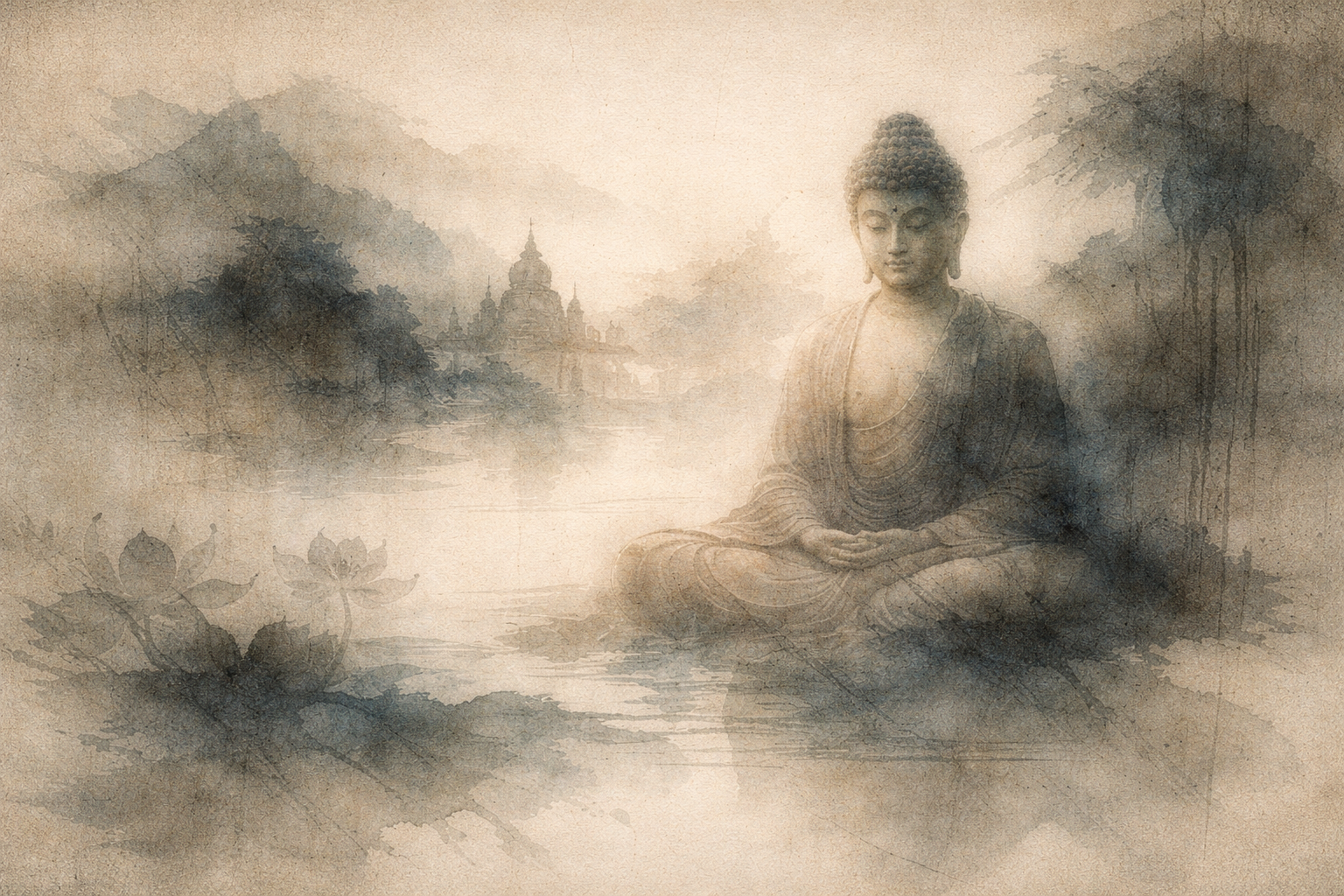
Consider the meditation gesture: hands resting in the lap, one palm on the other, thumbs lightly touching or simply relaxed. The meaning isn’t “you should meditate more.” It’s the feeling of being gathered. In a workday, that same quality appears when you stop multitasking for ten seconds and let your attention become one thing instead of five.
The earth-touching gesture—one hand reaching down—often gets explained as a dramatic moment, but its everyday echo is quieter. It resembles the moment you stop arguing with your own mind and return to what is actually happening: the email in front of you, the dishes, the tiredness, the tone of a conversation. Not as resignation, but as contact with reality.
The fearlessness gesture—palm outward—can look like a command, yet it often lands as permission. In relationships, fearlessness is not bravado; it’s the ability to stay present when someone is upset, without immediately defending, fixing, or fleeing. The raised hand reads as “nothing needs to be forced right now.”
The giving gesture—palm down, fingers extended—points to generosity, but not only in the obvious sense of money or gifts. It can look like giving someone time without checking your phone, giving a colleague the benefit of the doubt, or giving yourself a little space when you’re running on fumes. The pose suggests an open channel rather than a clenched fist.
The teaching gesture—hands near the chest, fingers forming a circle or meeting—often gets treated like a lecture. In lived experience, “teaching” can be as simple as clarity taking shape. You notice what you’re doing while you’re doing it. You see the pattern of irritation before it becomes a sentence. The meaning is less “information” and more “orientation.”
Even the seated posture itself carries meaning. A stable seat doesn’t imply stiffness; it implies not being pushed around by every internal weather change. On a day when you’re fatigued, stability might look like doing one task at a time. In silence, it might look like letting the room be the room without needing to fill it.
Standing and walking Buddhas can feel more active, but the meaning is often responsiveness without hurry. Think of the moment you pause before replying to a sharp message. The body is upright, the mind is not collapsed, and the next step is taken without drama. The pose becomes a mirror for that kind of ordinary dignity.
Misreadings That Make the Symbols Feel Far Away
A common misunderstanding is to treat Buddha poses as a ranking system—this gesture is “higher,” that posture is “advanced.” That habit comes from how the mind compares everything: careers, relationships, even calmness. But the images usually point to qualities that can appear in any moment, including messy ones, like patience in a traffic jam or honesty in a difficult conversation.
Another misreading is to assume every statue must have one fixed meaning, as if there’s a single correct answer. In real life, the same outward gesture can carry different shades depending on context. A hand raised can mean “don’t be afraid,” “wait,” or “I’m here.” Iconography works similarly: the surrounding details guide the emphasis.
Some people also over-focus on exoticism, as if the meaning must be mysterious to be authentic. That can make the symbols feel distant, like they belong to someone else’s world. But the body language is human. Open palm, grounded seat, relaxed shoulders—these are recognizable across cultures because they’re rooted in how nervous systems communicate safety and steadiness.
Finally, it’s easy to turn the pose into decoration only—pretty, calming, and empty of content. That’s natural in a visually saturated world. Yet even a decorative image can still function as a reminder, the way a simple photograph can bring you back to what matters without needing to explain itself.
Why These Meanings Still Matter in Modern Life
In a culture that rewards speed and performance, Buddha poses quietly emphasize a different kind of intelligence: the intelligence of not escalating. A raised palm can be a visual counterweight to the reflex to react. A settled lap can be a counterweight to the reflex to keep scrolling. The meaning isn’t separate from life; it’s woven into the moments when you notice you’re being pulled.
These images also offer a nonverbal vocabulary for inner states that are hard to name. Sometimes you can’t articulate what you need, but you can recognize what steadiness looks like. A statue on a shelf, a picture in a book, or an image in a museum can become a small reference point—less like an instruction and more like a quiet standard of composure.
And because the meanings are carried by the body, they meet you where you already live: in shoulders that tense during conflict, in hands that clench when you’re tired, in the way you sit when you feel judged. The “hidden meaning” is often not hidden at all; it’s the ordinary human capacity to soften, to steady, and to see clearly.
Conclusion
A Buddha pose is a quiet mirror. The hands and posture point back to the same place: the mind as it is, right now. Meanings don’t end in definitions; they continue in the next conversation, the next pause, the next moment of simple awareness.
Ask a Buddhist priest
Have a question about Buddhism?
In the GASSHO app, you can ask questions about Buddhist teachings, daily concerns, and how to understand Buddhism in everyday life.
Frequently Asked Questions
- FAQ 1: What does the Buddha’s meditation pose mean?
- FAQ 2: What is the meaning of the Buddha touching the earth?
- FAQ 3: What does the raised hand Buddha pose mean?
- FAQ 4: What does the Buddha’s open palm facing down mean?
- FAQ 5: What does the Buddha teaching pose mean?
- FAQ 6: Do Buddha poses have one fixed meaning?
- FAQ 7: Does it matter if the Buddha uses the right hand or left hand?
- FAQ 8: What does a reclining Buddha pose mean?
- FAQ 9: What does a standing Buddha pose mean compared to a seated Buddha?
- FAQ 10: What does a walking Buddha pose mean?
- FAQ 11: What does it mean when the Buddha’s hands form a circle?
- FAQ 12: What does a Buddha holding a bowl mean?
- FAQ 13: What does a Buddha holding a lotus flower mean?
- FAQ 14: Why do some Buddha statues have different finger positions?
- FAQ 15: How can I identify the meaning of a Buddha pose in a statue or picture?
FAQ 1: What does the Buddha’s meditation pose mean?
Answer: The meditation pose usually shows the Buddha seated with both hands resting in the lap (often one palm on the other). In traditional iconography, it points to collectedness, steadiness, and a mind that is not being dragged around by distraction. It’s less a claim about “special powers” and more a visual cue for calm attention.
Real result: The Metropolitan Museum of Art describes how hand gestures and postures in Buddhist art function as recognizable signs that communicate the figure’s state and role.
Takeaway: The meditation pose emphasizes inner steadiness expressed through a simple, settled body.
FAQ 2: What is the meaning of the Buddha touching the earth?
Answer: The earth-touching pose shows one hand reaching down toward the ground. It’s commonly associated with calling the earth to witness—symbolizing resolve, groundedness, and meeting reality directly rather than relying on mood or opinion. In images, it often appears with a seated Buddha and the right hand extended downward.
Real result: The Victoria and Albert Museum notes that Buddhist imagery uses established visual conventions (including gestures) to convey specific narrative moments and qualities.
Takeaway: Earth-touching points to grounded resolve and contact with what is real.
FAQ 3: What does the raised hand Buddha pose mean?
Answer: A raised hand with the palm facing outward is commonly read as reassurance, protection, or fearlessness. The gesture communicates “stop” in the sense of stopping fear or aggression, not stopping life. Small variations—hand height, finger spacing, and whether the other hand is also raised—can shift the nuance.
Real result: The British Museum explains that Buddhist sculptures often rely on standardized gestures to convey meaning to viewers across time and place.
Takeaway: The outward-facing palm is a visual language of calm reassurance.
FAQ 4: What does the Buddha’s open palm facing down mean?
Answer: An open hand extended downward, palm facing outward or down, is often associated with giving, generosity, or granting. In many depictions it suggests offering support, compassion, or help—an unforced openness rather than a grasping posture. The exact meaning can depend on what the other hand is doing and the overall scene.
Real result: The Smithsonian’s National Museum of Asian Art discusses how gestures in Buddhist art communicate roles and virtues through consistent visual forms.
Takeaway: The downward open palm commonly signals generosity and offering.
FAQ 5: What does the Buddha teaching pose mean?
Answer: The teaching pose often shows the hands held near the chest with fingers forming a circle or meeting in a precise way. It’s commonly linked with teaching, explanation, or “turning the wheel” of the Dharma in visual terms. Rather than implying debate, the gesture usually emphasizes clarity being shared.
Real result: The Metropolitan Museum of Art outlines how mudras (hand gestures) in Buddhist art identify specific functions such as teaching and meditation.
Takeaway: The teaching gesture points to clarity communicated through calm presence.
FAQ 6: Do Buddha poses have one fixed meaning?
Answer: Not always. Many poses have a widely recognized “core” meaning, but the full reading can change with context—objects held, accompanying figures, the seat (lotus, throne), and even regional artistic conventions. It’s similar to how the same facial expression can mean different things depending on the situation.
Real result: Museum catalog notes (such as those from the V&A) regularly emphasize that iconography is interpreted through both standardized signs and the specific narrative context of an artwork.
Takeaway: A pose often has a central theme, but details shape the final meaning.
FAQ 7: Does it matter if the Buddha uses the right hand or left hand?
Answer: Yes, it can matter. In many depictions, the right hand is used for key gestures like earth-touching, while the left hand may rest in the lap or hold an object. However, artists and regions vary, so it’s best to read right/left together with the rest of the statue’s features rather than treating it as an absolute rule.
Real result: The Smithsonian’s Asian Art learning resources highlight how multiple visual elements—hands, objects, posture—work together to identify meaning in Buddhist images.
Takeaway: Right vs left can be meaningful, but context is what makes it reliable.
FAQ 8: What does a reclining Buddha pose mean?
Answer: A reclining Buddha is commonly associated with the Buddha’s final passing (parinirvana) and can symbolize impermanence and peace. The expression is typically calm, emphasizing composure rather than tragedy. As with other poses, surrounding details in the artwork often clarify the intended scene.
Real result: The Encyclopaedia Britannica describes the reclining Buddha as a major iconographic type linked to the Buddha’s final moments and the theme of release.
Takeaway: Reclining images often point to impermanence held with calmness.
FAQ 9: What does a standing Buddha pose mean compared to a seated Buddha?
Answer: Seated Buddhas often emphasize stillness, stability, and inward collectedness, while standing Buddhas frequently emphasize presence in the world—readiness, protection, blessing, or teaching. The specific meaning depends heavily on the hand gesture being shown while standing.
Real result: The Met Museum’s Heilbrunn Timeline of Art History explains how posture and gesture together communicate the figure’s role and message in Buddhist sculpture.
Takeaway: Standing vs seated often shifts the emphasis from settledness to responsiveness.
FAQ 10: What does a walking Buddha pose mean?
Answer: A walking Buddha commonly suggests movement guided by awareness—composure in action rather than only in stillness. In some traditions and regions, walking images highlight the Buddha’s presence among people and the idea that clarity is not limited to seated quiet.
Real result: Collections and interpretive notes from institutions such as the British Museum show how regional Buddhist art developed distinct emphases, including dynamic standing and walking forms.
Takeaway: The walking pose points to steadiness that continues while moving through life.
FAQ 11: What does it mean when the Buddha’s hands form a circle?
Answer: When the fingers form a circle (often thumb and index finger touching), it commonly appears within teaching-related gestures and can suggest completeness, continuity, or the act of explaining. The meaning is not only the circle itself but the whole configuration: hand position, symmetry, and proximity to the chest.
Real result: The Metropolitan Museum of Art notes that specific finger and hand arrangements are used to identify particular mudras and their associated meanings.
Takeaway: A finger-circle often supports a “teaching/clarity” reading, shaped by the full hand position.
FAQ 12: What does a Buddha holding a bowl mean?
Answer: A bowl (often an alms bowl) commonly points to simplicity, sustenance, and the everyday life of a mendicant. In images, it can emphasize humility and the practical side of spiritual life—eating, receiving, and living with enough rather than excess.
Real result: The Encyclopaedia Britannica discusses the alms bowl as a recognizable monastic object with established cultural meaning in Buddhist contexts.
Takeaway: The bowl often symbolizes simplicity and a life oriented around “enough.”
FAQ 13: What does a Buddha holding a lotus flower mean?
Answer: The lotus is widely used in Buddhist art as a symbol of purity and clarity arising amid ordinary conditions. When a Buddha or bodhisattva holds a lotus, it often highlights the theme of untroubled clarity rather than literal botanical meaning. The lotus can also appear as a seat, reinforcing the same symbolic tone.
Real result: The Encyclopaedia Britannica describes the lotus as a long-standing symbol in Asian religions, including Buddhism, associated with purity and spiritual unfolding.
Takeaway: A lotus commonly points to clarity and purity expressed within everyday life.
FAQ 14: Why do some Buddha statues have different finger positions?
Answer: Finger positions vary because different mudras are defined by specific configurations, and because artists follow regional styles and workshop traditions. Sometimes the differences are intentional (to indicate a different gesture), and sometimes they reflect artistic interpretation, restoration, or wear over time.
Real result: Museum conservation and cataloging practices (for example at the Met’s conservation department) document how age, repair, and restoration can affect fine details like hands and fingers in sculpture.
Takeaway: Finger variations can be meaningful, stylistic, or simply the result of time.
FAQ 15: How can I identify the meaning of a Buddha pose in a statue or picture?
Answer: Start with three checks: (1) posture (seated, standing, reclining, walking), (2) primary hand gesture (palm outward, hand to earth, hands in lap, hands at chest), and (3) context (objects held, seat, attendants, halo, setting). If the meaning still feels unclear, compare it with museum descriptions of similar works, since they often note the gesture and its conventional reading.
Real result: Public-facing collection databases from institutions like the British Museum and the Met provide searchable examples with iconographic notes that help confirm a pose’s common interpretation.
Takeaway: Identify posture, gesture, and context together for the most reliable “buddha poses meaning.”