



The First Buddhist Council: Fact or Legend?
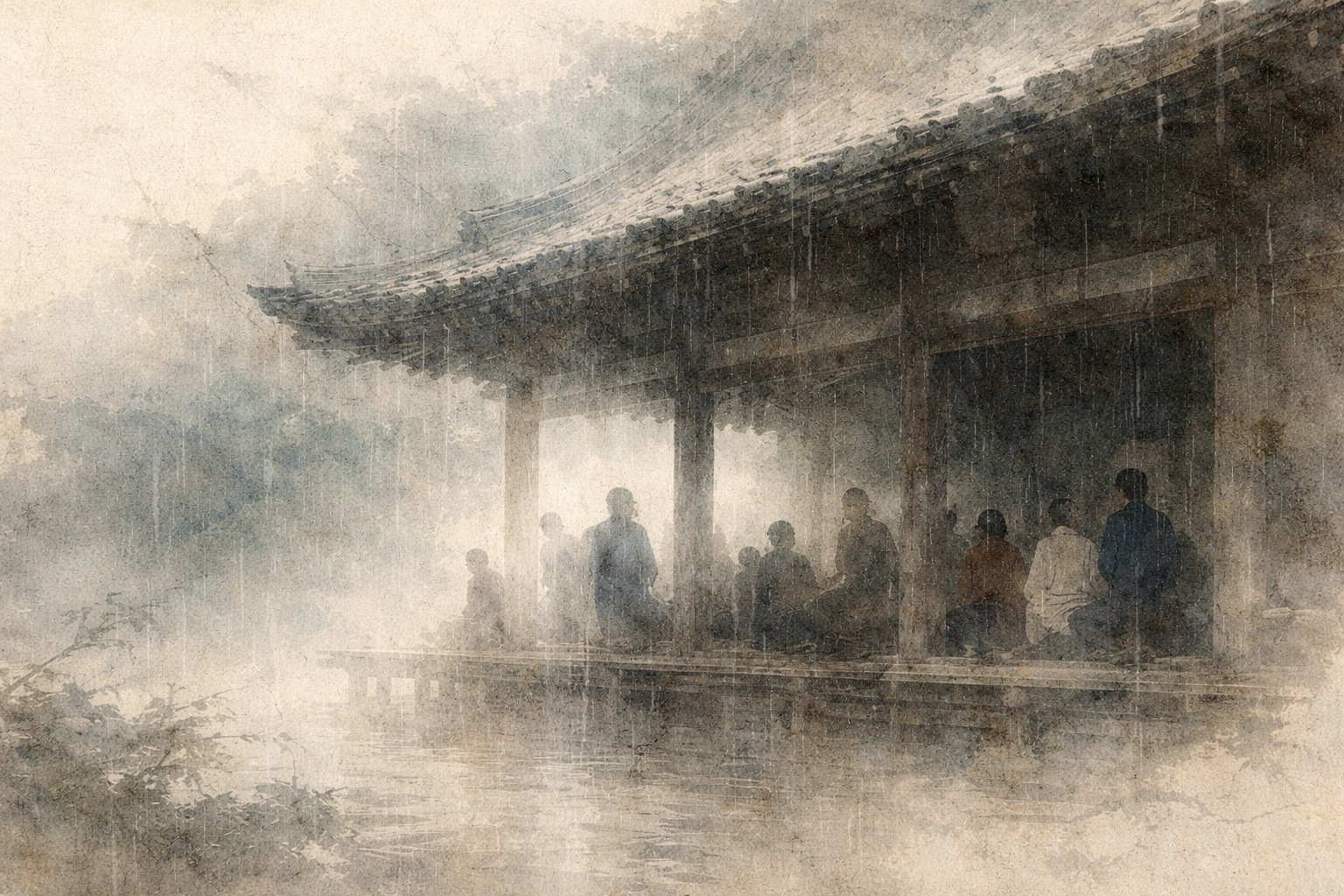
Quick Summary
- The first buddhist council is traditionally described as a meeting soon after the Buddha’s death to preserve teachings and monastic rules.
- It sits in a gray zone: meaningful as a memory of careful preservation, uncertain as a verifiable historical event.
- Most details (who attended, what was recited, exact location and date) are reported in later sources, not contemporary records.
- Even if parts are legendary, the story points to a real human concern: how words survive grief, time, and disagreement.
- Reading it as a “lens” helps: it’s less about proving a meeting and more about noticing how communities stabilize what matters.
- The council narrative highlights ordinary dynamics—memory, repetition, trust, and the pressure to “get it right.”
- For modern readers, the value is practical: it mirrors how we curate our own lives—what we repeat, what we drop, what we pass on.
Introduction
You keep running into confident claims about the first buddhist council—“it happened exactly like this,” or “it’s pure invention”—and neither extreme feels satisfying. The story reads like a careful handoff of teachings, yet the historical footing looks thin once you ask basic questions about dates, sources, and how oral memory actually works. This piece draws on widely discussed academic and textual issues around early Buddhist history without pretending the evidence is cleaner than it is.
The traditional account places the council shortly after the Buddha’s passing, often at Rājagaha, with senior monastics gathering to recite what would later be recognized as core teachings and the monastic discipline. In the story, the urgency is simple: if the words scatter, the path scatters. That urgency is believable in human terms, even before any debate about whether the meeting occurred in the tidy way later narratives describe.
So the question “fact or legend?” can be approached in two ways at once. Historically, it asks what can be supported by early evidence and what looks like later shaping. Practically, it asks why communities tell origin stories that emphasize careful recitation, agreement, and continuity—especially right after a loss.
A grounded way to read the council story
A useful lens is to treat the first buddhist council less like a courtroom claim and more like a portrait of a community under pressure. When something precious feels at risk, people naturally gather, repeat what they trust, and try to reduce uncertainty. Whether the meeting happened exactly as later texts say, the impulse behind it is ordinary and recognizable.
In everyday life, the same pattern shows up at work when a team loses a key person and suddenly writes down “how we do things.” It shows up in families after a death, when stories get repeated until they become the shared version everyone can carry. The council narrative has that same emotional logic: repetition as a way to steady what feels like it could disappear.
It also helps to notice how “preservation” is never purely mechanical. Any time people recite, select, and agree, they are also shaping. That isn’t necessarily deception; it’s the normal way memory works in groups. The story of the first buddhist council can be read as an image of that shaping—careful, sincere, and still human.
From this angle, the council becomes less about proving a single event and more about seeing the conditions that make continuity possible: trust in certain voices, shared rhythms of repetition, and the quiet fear of drift. Those conditions are not ancient curiosities; they are the same forces that organize conversations, relationships, and even the private narratives people repeat to themselves when tired or stressed.
GASSHO
Ask and learn about Buddhism in daily life.
GASSHO is a Buddhist community app where you can learn Buddhist teachings and ask questions to the head priest of Kongosanmaiin Temple on Mount Koya.
How the “fact vs legend” tension shows up in real life
When reading about the first buddhist council, attention often tightens around certainty. The mind wants a clean label—historical fact or later myth—because clean labels reduce the discomfort of not knowing. That tightening is familiar: it’s the same feeling that appears when an email thread gets confusing and someone insists, “Just tell me what really happened.”
Then the reaction comes: if the details can’t be proven, the whole thing can feel useless. But daily experience doesn’t work that way. People rely on plenty of things that are not perfectly documented—what a friend “meant,” what a colleague “usually does,” what a family story “has always been.” The reliance is real, even when the evidence is mixed.
In the council story, the emphasis on recitation can land as either reassuring or suspicious. Reassuring, because repetition suggests care. Suspicious, because repetition can also sound like control. In ordinary life, both are true: repeating a shared message can be a form of support, and it can also be a way to narrow what is allowed to be said.
Notice how quickly the mind assigns motives. If the council is framed as “guarding the teachings,” it can feel noble. If it’s framed as “standardizing doctrine,” it can feel political. The internal process is the same as in a relationship argument: one sentence is heard as protection, the next as manipulation, depending on the listener’s mood, fatigue, and history.
There is also the quieter experience of grief behind the narrative. A community loses its central figure, and suddenly the future feels unstable. In modern terms, it resembles the silence after a leader leaves a workplace, or the hush after a family elder dies—followed by a rush to preserve recipes, sayings, and “the right way” to do things. The council story carries that hush, even if later retellings polish it.
And there is the social experience of agreement. A group reciting together is not only transmitting content; it is creating cohesion. Anyone who has sat in a meeting where everyone repeats the same plan knows how calming that can feel, even when the plan is imperfect. The first buddhist council, read this way, is also about the human need to feel aligned when uncertainty is high.
Finally, the “fact or legend” question often mirrors a personal question: what do I trust when I can’t verify everything? In daily life, trust is rarely absolute; it’s negotiated moment by moment. The council narrative can be held in that same way—without forcing certainty, without dismissing meaning, and without turning ambiguity into a problem that must be solved immediately.
Where misunderstandings naturally arise
One common misunderstanding is to treat the first buddhist council as if it must be either a perfectly recorded conference or a complete fabrication. That all-or-nothing framing is a habit of mind: it prefers clean categories over messy human processes. But most communal memories are mixed—anchored in real concerns, shaped by later retelling, and simplified for clarity.
Another misunderstanding is to assume that if the story has legendary features, it has no value. In ordinary life, people learn from stories that are not literal transcripts—family anecdotes, workplace origin tales, even the way someone describes “how we met.” The value often lies in what the story emphasizes: what a group wants to protect, and what it fears losing.
It’s also easy to imagine the council as a moment of total agreement, as if everyone left with identical understanding. Yet anyone who has tried to align a small team on a simple project knows how quickly differences appear. The council narrative can be read as an aspiration toward coherence rather than proof that coherence was ever complete.
Finally, some readers assume the only honest stance is cynicism—“it’s just politics.” Others assume the only respectful stance is certainty—“it must be exactly true.” Both stances can be ways to avoid the discomfort of partial knowledge. In daily life, partial knowledge is normal: it’s how most conversations, memories, and relationships are actually held.
Why this old council still feels close to home
The first buddhist council matters today because it reflects a universal moment: the gap between a living voice and the stories that remain after it is gone. In that gap, people reach for stability. They repeat what they remember. They compare notes. They try to keep something from drifting.
That same movement appears in small, ordinary places. A team writes a handbook after chaos. A couple revisits “what we agreed on” after a misunderstanding. A tired mind repeats a familiar phrase to get through a difficult week. Continuity is built out of repetition, and repetition always carries a little shaping.
Even the question “fact or legend?” has a daily-life twin. People constantly decide how much certainty they need before they act, speak, forgive, or commit. The council story simply makes that tension visible: the wish for a reliable thread, and the reality that the thread is held by human hands.
Conclusion
Whether the first buddhist council is read as history, legend, or something in between, it points to the same quiet scene: people trying to remember clearly in the middle of change. What is repeated becomes familiar. What is familiar begins to feel true. In the ordinary moments of the day, that process can be noticed directly, without needing a final verdict.
Ask a Buddhist priest
Have a question about Buddhism?
In the GASSHO app, you can ask questions about Buddhist teachings, daily concerns, and how to understand Buddhism in everyday life.
Frequently Asked Questions
- FAQ 1: What was the first buddhist council?
- FAQ 2: When did the first buddhist council take place?
- FAQ 3: Where was the first buddhist council held?
- FAQ 4: Who is said to have convened the first buddhist council?
- FAQ 5: Why was the first buddhist council called?
- FAQ 6: What texts are traditionally linked to the first buddhist council?
- FAQ 7: Was the first buddhist council a historical fact or a later legend?
- FAQ 8: How do scholars evaluate sources about the first buddhist council?
- FAQ 9: What role does oral recitation play in the first buddhist council story?
- FAQ 10: Did the first buddhist council produce a written canon?
- FAQ 11: How many monks are said to have attended the first buddhist council?
- FAQ 12: What is the significance of Ānanda in accounts of the first buddhist council?
- FAQ 13: What is the significance of Upāli in accounts of the first buddhist council?
- FAQ 14: How does the first buddhist council relate to later Buddhist councils?
- FAQ 15: What is a balanced way to think about the first buddhist council today?
FAQ 1: What was the first buddhist council?
Answer: The first buddhist council is the traditional account of an early gathering of senior monastics shortly after the Buddha’s death, described as aiming to preserve teachings and monastic discipline through communal recitation. It functions as an origin story for how the community tried to keep a shared memory stable at a vulnerable moment.
Real result: Many standard reference works on Buddhism note that the council narratives are preserved in monastic-law (Vinaya) traditions and are central to how early communities explained textual preservation.
Takeaway: The story highlights preservation through shared recitation, whether or not every detail is historically verifiable.
FAQ 2: When did the first buddhist council take place?
Answer: Traditional accounts place the first buddhist council soon after the Buddha’s passing, often described as within the first year. Historically, exact dating is difficult because the narratives were written down later and depend on broader chronologies that are themselves debated.
Real result: Introductory academic surveys of early Buddhism commonly present the council’s date as approximate and note uncertainty around absolute timelines for the Buddha’s lifetime and immediate aftermath.
Takeaway: “Soon after” is clearer than any precise year.
FAQ 3: Where was the first buddhist council held?
Answer: The most common traditional location is Rājagaha (Rajgir), often associated with a site called Sattapaṇṇi Cave. As with other details, the location is part of a received narrative and is difficult to confirm with independent contemporary evidence.
Real result: Many Buddhist histories and guidebooks identify Rājagaha as the traditional setting while also noting that the account comes from later textual traditions rather than archaeological minutes of a meeting.
Takeaway: Rājagaha is the standard traditional answer, with historical caution attached.
FAQ 4: Who is said to have convened the first buddhist council?
Answer: Traditional narratives commonly say Mahākassapa played a leading role in convening or guiding the gathering. The emphasis is less on personal authority and more on seniority and the urgency to keep communal memory coherent after the Buddha’s death.
Real result: Council accounts in Vinaya-related sources frequently place Mahākassapa at the center of the convening story, though details vary across traditions.
Takeaway: The story typically frames leadership as stewardship during a fragile transition.
FAQ 5: Why was the first buddhist council called?
Answer: The traditional reason is preservation: to prevent confusion, loss, or distortion of teachings and rules once the Buddha was no longer alive to clarify disputes. In human terms, it reflects a common response to loss—gathering, repeating, and agreeing on what will be carried forward.
Real result: Buddhist textual traditions often present the council as a response to concerns about discipline and accurate transmission, showing how early communities valued consistency.
Takeaway: The council story is driven by the fear of drift and the need for continuity.
FAQ 6: What texts are traditionally linked to the first buddhist council?
Answer: The first buddhist council is commonly associated with the recitation of monastic discipline (Vinaya) and discourses (Sutta/Sūtra) as remembered by key reciters in the narrative. Exactly which collections were finalized at that time is debated, and later canons reflect long development rather than a single editorial moment.
Real result: Comparative studies of early Buddhist literature often describe canon formation as gradual, even when council stories present a more concentrated event.
Takeaway: The narrative links the council to recitation of rules and teachings, while history suggests a longer process.
FAQ 7: Was the first buddhist council a historical fact or a later legend?
Answer: It may be best described as a traditional account with uncertain historical details. Some kind of early effort to preserve teachings is plausible, but the polished story—specific roles, numbers, and formal proceedings—may reflect later shaping as communities explained how their texts gained authority.
Real result: Many historians of Buddhism treat the council narratives as important for understanding self-understanding and transmission, while remaining cautious about taking every detail as literal reportage.
Takeaway: The story can be meaningful without being a verbatim historical record.
FAQ 8: How do scholars evaluate sources about the first buddhist council?
Answer: Scholars typically compare parallel versions across different Vinaya traditions, look for internal signs of layering, and consider how oral transmission and later redaction affect narratives. They also weigh how well a story explains later institutional needs, since origin stories often legitimize present structures.
Real result: Academic methods in Buddhist studies frequently rely on comparative textual analysis because independent contemporary documentation for the earliest period is limited.
Takeaway: Evaluation is mostly comparative and critical, not based on a single definitive source.
FAQ 9: What role does oral recitation play in the first buddhist council story?
Answer: Oral recitation is central: the council is portrayed as a communal act of remembering and standardizing through repeated, agreed-upon wording. In oral cultures, repetition and group recitation are practical tools for stability, even though variation can still enter over time.
Real result: Studies of oral-formulaic transmission across cultures show that structured repetition supports preservation while still allowing gradual change, which helps explain why multiple versions of early material exist.
Takeaway: Recitation is both a stabilizer and a human process, not a perfect recording device.
FAQ 10: Did the first buddhist council produce a written canon?
Answer: Traditional accounts emphasize recitation rather than writing, and most historians describe early Buddhist transmission as primarily oral for a significant period. Written compilation of large collections is generally understood as later than the earliest council narratives.
Real result: Standard histories of Buddhist texts commonly place widespread writing and compilation after extended oral preservation, varying by region and tradition.
Takeaway: The first council is usually framed as oral preservation, not a publishing event.
FAQ 11: How many monks are said to have attended the first buddhist council?
Answer: Many traditional tellings mention 500 monks, a round number that also appears in other Indian religious and narrative contexts. Whether the figure is literal or symbolic is uncertain, and it may function to convey “a large, authoritative gathering.”
Real result: Textual scholars often note that rounded attendance numbers in ancient narratives can serve rhetorical purposes rather than precise headcounts.
Takeaway: “500” signals authority and scale more than it guarantees exact arithmetic.
FAQ 12: What is the significance of Ānanda in accounts of the first buddhist council?
Answer: Ānanda is commonly portrayed as the primary reciter of discourses because of his close attendance on the Buddha and strong memory in the narrative. His role highlights a practical concern: teachings survive through people who heard them, remembered them, and could repeat them consistently in a group setting.
Real result: Across multiple Buddhist textual traditions, Ānanda appears as a key transmitter figure, reflecting how communities personified the reliability of memory and access.
Takeaway: Ānanda represents the human bridge between a living voice and a remembered tradition.
FAQ 13: What is the significance of Upāli in accounts of the first buddhist council?
Answer: Upāli is often depicted as the reciter associated with monastic discipline (Vinaya). This pairing—discourses with one reciter, rules with another—reflects an early concern to keep communal life coherent, since rules shape daily conduct and reduce conflict in ordinary situations.
Real result: Vinaya narratives across traditions frequently assign Upāli a central role in transmitting disciplinary material, underscoring the importance of consistent communal standards.
Takeaway: Upāli’s role points to the everyday need for shared rules, not just inspiring teachings.
FAQ 14: How does the first buddhist council relate to later Buddhist councils?
Answer: Later councils are also described as gatherings to address preservation, disagreement, and communal stability, but they occur in different historical contexts and are reported with varying degrees of detail and plausibility. The first buddhist council functions as the template story: a foundational moment of “coming together to keep the tradition intact.”
Real result: Overviews of Buddhist history commonly present multiple councils as part of a broader pattern of institutional consolidation over time.
Takeaway: The first council is the narrative prototype for later efforts at standardization and continuity.
FAQ 15: What is a balanced way to think about the first buddhist council today?
Answer: A balanced view is to hold two truths together: the historical record is not clean enough to confirm every traditional detail, and the story still reveals something real about how communities preserve what they value. It can be read as a mirror for how memory, repetition, and agreement operate in any human group.
Real result: Many modern introductions to early Buddhism recommend distinguishing between the council’s narrative function (legitimizing transmission) and the limited evidence for precise reconstruction.
Takeaway: The council can be respected as a preservation story without forcing certainty.