



How We Create Our Own Hell in Daily Life
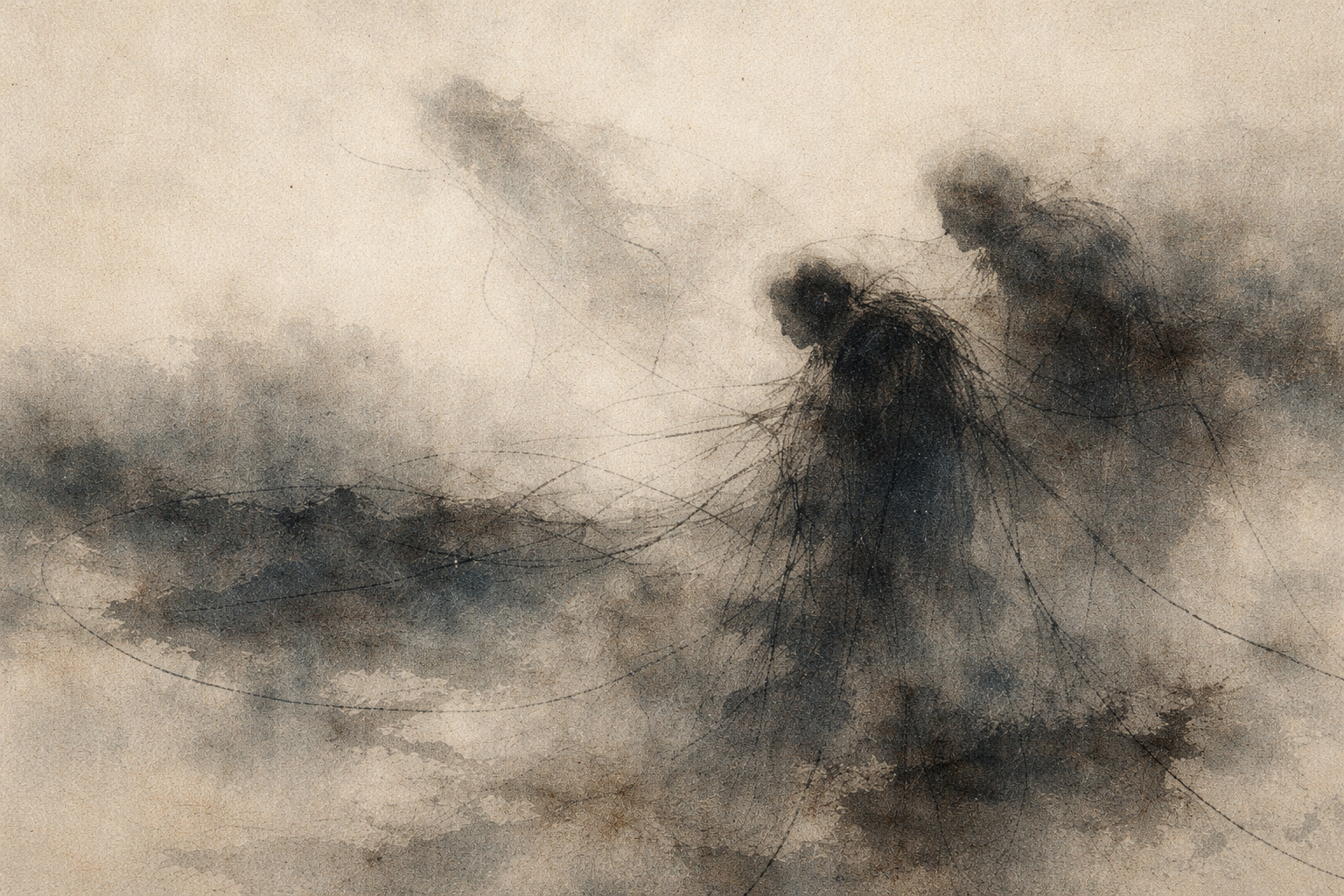
Quick Summary
- “Create own hell daily life” often happens through small, repeated reactions—not dramatic events.
- Daily suffering grows when the mind insists that reality should feel different than it does.
- Much of the “hell” is built from rumination, comparison, and rehearsing conflict in the head.
- Ordinary triggers—emails, tone of voice, fatigue, silence—can become fuel when attention narrows.
- Blame (of self or others) can feel like control, but it usually tightens the loop.
- Seeing the process clearly is different from judging yourself for having it.
- Relief often begins when experience is allowed to be plain, even if it’s uncomfortable.
Introduction
When people say they “create their own hell in daily life,” they usually mean something specific: the day isn’t objectively catastrophic, yet the mind turns it into a tight, punishing place—one more email feels like an attack, one comment feels like rejection, one mistake feels like a verdict. The confusing part is how quickly it happens, and how convincing it feels while it’s happening. This is written from a Zen-informed perspective shaped by years of observing how stress, attention, and reaction patterns play out in ordinary life.
It can be tempting to treat this as a personality flaw—“I’m just anxious,” “I’m too sensitive,” “I always ruin things.” But the more practical view is that “hell” is often a process: a chain of interpretations, body tension, and repeated mental replay that makes a small moment feel inescapable. The chain can run in the background while you’re still doing your job, answering messages, making dinner, and smiling at people.
What makes this topic worth looking at is its ordinariness. The mind doesn’t need a crisis to create suffering; it can do it with a calendar notification, a partner’s sigh, a slow checkout line, or the quiet of an evening with nothing to distract you. And because it’s ordinary, it can be seen in ordinary ways.
A Simple Lens: How “Hell” Gets Manufactured
A useful way to understand how we create our own hell in daily life is to notice the difference between what happens and what the mind adds. What happens might be neutral or mildly unpleasant: a late train, a short reply, a messy kitchen, a tired body. What the mind adds is the story that makes it personal, permanent, and loaded: “They don’t respect me,” “I can’t handle anything,” “This always happens,” “My life is going nowhere.”
This isn’t about denying real problems. It’s about seeing how quickly the mind tries to secure itself by explaining, blaming, predicting, and rehearsing. The explanation can feel like safety—if the mind can name the cause, it feels less exposed. But the naming often hardens into a verdict, and the verdict becomes a mood that colors everything else.
In relationships, this shows up as reading tone and facial expression like evidence in a trial. At work, it shows up as turning feedback into identity. In fatigue, it shows up as treating low energy as failure rather than a condition. Even in silence, the mind can create pressure by insisting that quiet should feel peaceful, and then judging itself when it doesn’t.
Seen this way, “hell” is not a place you fall into once. It’s something that gets assembled moment by moment when experience is filtered through tight expectations—about how people should act, how you should feel, how quickly things should resolve, and what your day is supposed to look like.
GASSHO
Ask and learn about Buddhism in daily life.
GASSHO is a Buddhist community app where you can learn Buddhist teachings and ask questions to the head priest of Kongosanmaiin Temple on Mount Koya.
How It Shows Up in Ordinary Moments
It often starts with a small contraction of attention. An email arrives, and the mind narrows to a single line that feels sharp. The body responds before the thinking is even clear: a slight clench in the jaw, a lift in the shoulders, a heat in the face. Then the mind searches for meaning, and meaning arrives as a familiar narrative.
In that narrowed state, the day becomes a series of proofs. A colleague doesn’t greet you, and it confirms the story. A friend takes longer to reply, and it confirms the story. Even neutral events get recruited. The mind is not trying to be cruel; it’s trying to stabilize itself by making the world predictable. But predictability comes at the cost of openness.
Another common pattern is rehearsal. A conversation that hasn’t happened yet plays on repeat: what you should say, what they might say, how you’ll defend yourself, how you’ll finally be understood. The rehearsal feels productive, but it often leaves the body more agitated and the mind more certain that conflict is inevitable. By the time the real conversation arrives, it’s already been “lived” ten times in the head.
Comparison is another quiet builder of daily hell. It can be obvious—scrolling through other people’s lives—or subtle—measuring your energy against yesterday’s, your patience against someone else’s, your progress against an imagined timeline. The comparison rarely ends with a simple fact. It tends to end with a judgment, and the judgment tends to land on the self.
Fatigue makes all of this more believable. When the body is tired, the mind’s interpretations feel heavier and more final. A minor inconvenience becomes “too much.” A small mistake becomes “I’m failing.” The tired mind doesn’t just experience discomfort; it often adds a layer of self-criticism for having discomfort at all.
Even pleasant moments can be turned. A quiet evening becomes a stage for worry: “I should be doing more.” A day off becomes a problem to optimize. A compliment becomes pressure to maintain an image. The mind can turn anything into a demand, and demands are one of the fastest ways to make life feel like a narrow corridor.
Sometimes the most painful version is the moral one: the sense that you are not only stressed, but wrong for being stressed. Then the mind creates a second hell on top of the first—suffering plus the belief that suffering shouldn’t be here. In that double layer, even help can feel irritating, because it threatens the story that you deserve the tightness.
Misunderstandings That Keep the Loop Going
One misunderstanding is to hear “you create your own hell” as blame. That framing usually backfires, because it turns observation into self-attack. The point is not that you are bad for reacting; it’s that reactions have patterns, and patterns can be seen. Seeing is different from condemning.
Another misunderstanding is to assume the only alternative is forced positivity. Many people try to escape daily hell by replacing every difficult thought with a “better” one. But the mind often senses the strain behind that effort, and the strain becomes its own pressure. A calmer approach is simply to recognize how quickly the mind adds extra weight to what is already here.
It’s also common to think the problem is the presence of difficult emotions. Anger, grief, jealousy, and fear can feel like evidence that something has gone wrong. Yet much of the suffering comes from the secondary reaction: the refusal, the argument with reality, the demand that the emotion disappear immediately, the fear of what it “means” about you.
Finally, people sometimes assume that clarity should feel dramatic—like a big insight that permanently ends the pattern. In daily life, it’s often quieter than that. The mind still reacts, but the reaction is noticed sooner, believed a little less, and carried with a little more space. That kind of clarification can look almost ordinary from the outside.
Why This Reflection Changes the Texture of a Day
When the process is recognized, everyday moments become less absolute. A tense meeting can be seen as a meeting plus a surge of interpretation, rather than a total verdict on your worth. A difficult family interaction can be seen as old habits meeting old habits, rather than a final statement about love or loyalty.
This matters because daily life is mostly made of small moments. The mind’s tendency to tighten around them can quietly drain the day: the commute becomes a battle, the inbox becomes a threat, the evening becomes a review of failures. Seeing the mechanism doesn’t remove responsibilities, but it can soften the extra suffering that comes from constant inner prosecution.
It also changes how silence feels. Without the need to fill every gap with planning or self-evaluation, quiet can be just quiet—sometimes pleasant, sometimes neutral, sometimes a little raw. The rawness is not necessarily a problem; it may simply be what was covered over by noise.
And in relationships, this reflection can make room for the possibility that not every discomfort is a message. Sometimes a partner’s shortness is fatigue. Sometimes your own irritability is hunger. Sometimes the “meaning” is just a mind trying to secure itself. The day becomes less like a courtroom and more like a living situation unfolding.
Conclusion
Much of what feels like “hell” is the mind insisting on a different moment than the one that is here. When that insistence is seen, even briefly, experience can return to something simpler: sound, sensation, thought, and the space around them. Suffering still appears, but it does not always need a second layer. The truth of this is verified in the middle of an ordinary day.
Ask a Buddhist priest
Have a question about Buddhism?
In the GASSHO app, you can ask questions about Buddhist teachings, daily concerns, and how to understand Buddhism in everyday life.
Frequently Asked Questions
- FAQ 1: What does “create own hell daily life” actually mean?
- FAQ 2: Is creating my own hell the same as “it’s all in my head”?
- FAQ 3: Why does a small problem feel unbearable when I create my own hell in daily life?
- FAQ 4: How do I know if I’m creating my own hell in daily life or facing a real issue?
- FAQ 5: What are common signs that I create my own hell in daily life at work?
- FAQ 6: How does comparison contribute to creating my own hell in daily life?
- FAQ 7: Can perfectionism be a way we create our own hell in daily life?
- FAQ 8: Why do I replay conversations when I create my own hell in daily life?
- FAQ 9: Does fatigue make it easier to create my own hell in daily life?
- FAQ 10: Is self-blame part of how we create our own hell in daily life?
- FAQ 11: Can I create my own hell in daily life even when things are going well?
- FAQ 12: How do relationships get pulled into the “create own hell daily life” pattern?
- FAQ 13: Is “creating my own hell” a spiritual failure?
- FAQ 14: What’s the difference between healthy reflection and creating my own hell in daily life?
- FAQ 15: Why does noticing I create my own hell in daily life sometimes feel worse at first?
FAQ 1: What does “create own hell daily life” actually mean?
Answer: It usually means that ordinary events (a message, a delay, a look, a mistake) get amplified by interpretation, rumination, and self-judgment until daily life feels tight and punishing. The “hell” is less about the event itself and more about the added mental and emotional layers that make it feel personal, permanent, and inescapable.
Takeaway: Daily hell is often built from what the mind adds to what happens.
FAQ 2: Is creating my own hell the same as “it’s all in my head”?
Answer: Not exactly. “It’s all in your head” can sound dismissive, as if nothing matters. “Create own hell daily life” points to a real process: the mind’s interpretations and reactions can intensify suffering, even when the situation is manageable. The situation can be real, and the extra suffering can also be real.
Takeaway: The problem isn’t imaginary; the amplification is learnable to recognize.
FAQ 3: Why does a small problem feel unbearable when I create my own hell in daily life?
Answer: Small problems can feel unbearable when the mind treats them as evidence of a larger story—about failure, rejection, danger, or being trapped. Once attention narrows and the body tenses, the mind tends to search for certainty, and certainty often arrives as worst-case meaning.
Takeaway: A small trigger can feel huge when it’s carrying a larger narrative.
FAQ 4: How do I know if I’m creating my own hell in daily life or facing a real issue?
Answer: A practical clue is whether your mind is repeatedly adding the same conclusions (about you or others) regardless of new information. Real issues still need attention, but “create own hell daily life” often includes looping thoughts, rehearsed arguments, and a sense of totalizing doom that goes beyond the facts at hand.
Takeaway: Real problems exist; the “hell” is often the repetitive, totalizing overlay.
FAQ 5: What are common signs that I create my own hell in daily life at work?
Answer: Common signs include reading neutral feedback as a verdict, assuming others’ silence is disapproval, catastrophizing small mistakes, and feeling unable to rest because the mind keeps “working” after work. Work becomes less about tasks and more about defending an identity.
Takeaway: When work feels like constant self-protection, the “hell” process may be active.
FAQ 6: How does comparison contribute to creating my own hell in daily life?
Answer: Comparison turns life into a scoreboard. Even when nothing is wrong, the mind can manufacture lack: not productive enough, not calm enough, not successful enough, not liked enough. That constant measuring often produces chronic dissatisfaction and self-criticism.
Takeaway: Comparison quietly converts ordinary life into a losing contest.
FAQ 7: Can perfectionism be a way we create our own hell in daily life?
Answer: Yes. Perfectionism can make daily life feel like continuous evaluation, where small imperfections are treated as threats. It often creates pressure even in simple tasks, and it can prevent satisfaction because “good” never feels finished.
Takeaway: Perfectionism can turn normal living into constant self-auditing.
FAQ 8: Why do I replay conversations when I create my own hell in daily life?
Answer: Replaying conversations is often the mind trying to regain control—rewriting what happened, preparing defenses, or seeking the “right” explanation. The replay can feel useful, but it usually keeps the body activated and makes the relationship feel more threatening than it may be in the present moment.
Takeaway: Mental replay can be an attempt at control that prolongs distress.
FAQ 9: Does fatigue make it easier to create my own hell in daily life?
Answer: Often, yes. When tired, the nervous system is less resilient, and interpretations can feel heavier and more final. Minor frustrations can register as intolerable, and self-judgment can become harsher because there’s less inner space available.
Takeaway: Fatigue can make the mind’s “hell-making” feel more convincing.
FAQ 10: Is self-blame part of how we create our own hell in daily life?
Answer: Very often. Self-blame can feel like accountability, but it frequently becomes global (“I’m the problem”) rather than specific (“That choice didn’t work”). When self-blame is running, even neutral moments can be interpreted as proof of inadequacy.
Takeaway: Self-blame tends to spread suffering across the whole day.
FAQ 11: Can I create my own hell in daily life even when things are going well?
Answer: Yes. The mind can turn good circumstances into pressure through fear of losing them, the need to maintain an image, or the belief that peace must feel a certain way. Sometimes “going well” triggers vigilance rather than ease.
Takeaway: The mind can manufacture strain even in favorable conditions.
FAQ 12: How do relationships get pulled into the “create own hell daily life” pattern?
Answer: Relationships get pulled in when the mind treats tone, timing, and small behaviors as definitive messages about worth or safety. Then the mind fills gaps with assumptions, rehearses conflict, and reacts to its own predictions. The relationship becomes filtered through a story rather than met as it is.
Takeaway: Assumptions and rehearsals can create relational suffering faster than facts.
FAQ 13: Is “creating my own hell” a spiritual failure?
Answer: It doesn’t have to be framed that way. The tendency to tighten, interpret, and defend is a common human habit, especially under stress. Seeing the pattern is already different from being fully inside it, and that seeing can be gentle rather than moralistic.
Takeaway: This pattern is human; noticing it doesn’t require self-condemnation.
FAQ 14: What’s the difference between healthy reflection and creating my own hell in daily life?
Answer: Healthy reflection tends to be specific, time-limited, and connected to reality (“What happened? What matters? What’s next?”). Creating your own hell in daily life tends to be repetitive, identity-based, and emotionally escalating (“This proves I’m doomed,” “They always do this,” “I’ll never be okay”).
Takeaway: Reflection clarifies; “hell-making” loops and intensifies.
FAQ 15: Why does noticing I create my own hell in daily life sometimes feel worse at first?
Answer: Because the mind may lose a familiar strategy. Even painful stories can feel like structure or control, and seeing them as stories can feel exposed or uncertain. Also, noticing can reveal how tense the body has been all along, which can be uncomfortable to acknowledge.
Takeaway: Early clarity can feel raw because it removes familiar mental armor.