



Why the Buddha Sits on a Lotus: Meaning of the Lotus Seat
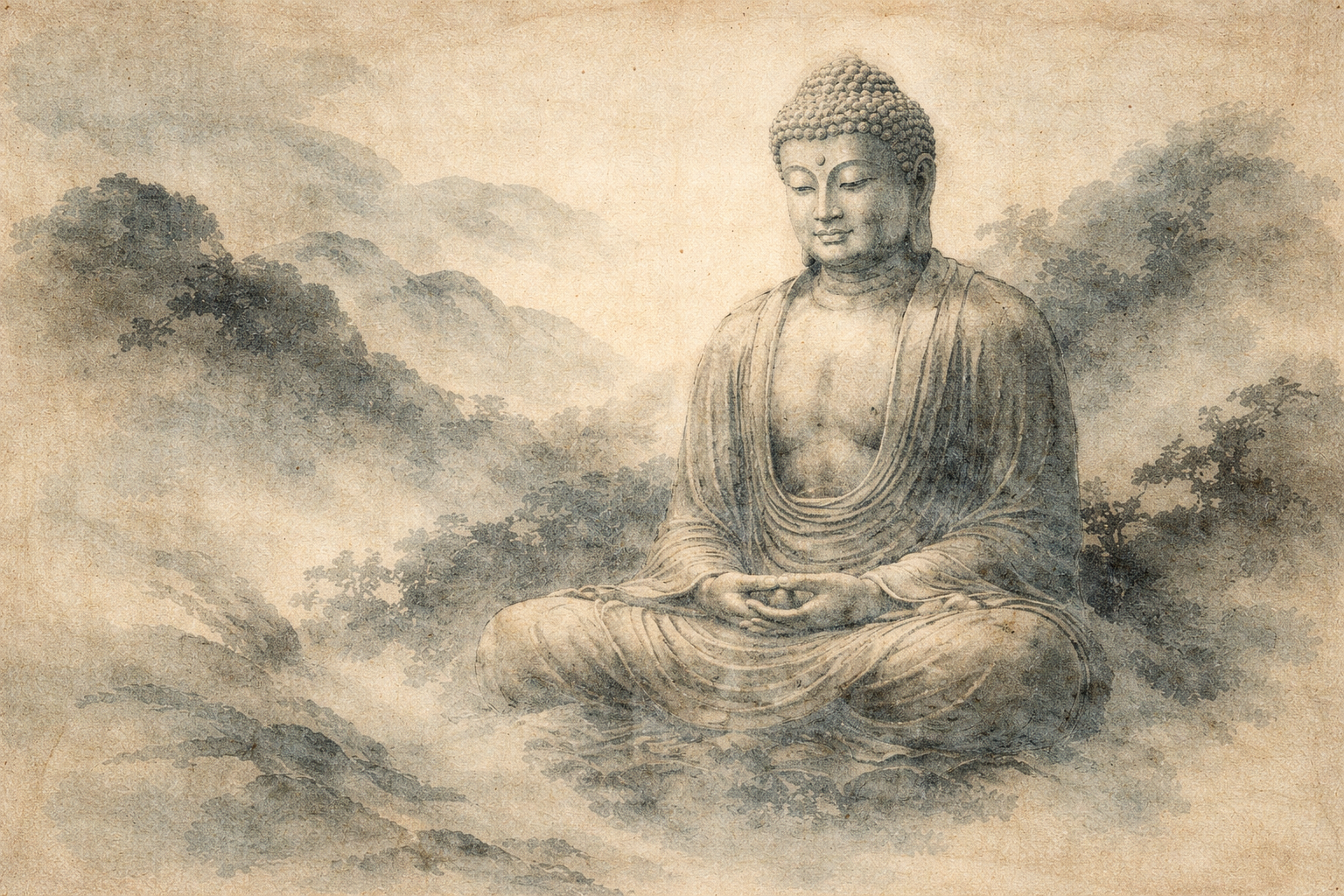
Quick Summary
- The “buddha lotus” image points to steadiness: a calm seat that isn’t dependent on perfect conditions.
- The lotus grows from muddy water yet opens cleanly, mirroring clarity arising within ordinary life.
- In art, the lotus pedestal separates the Buddha from the ground without rejecting the world.
- Lotus symbolism often highlights purity, resilience, and composure under pressure.
- The lotus seat is less about decoration and more about a way of seeing experience: unstained, present, balanced.
- Misreadings happen when the lotus is taken as “perfection” or “escape” rather than grounded clarity.
- Noticing “mud and bloom” moments in daily life makes the buddha lotus feel practical, not distant.
Introduction
If the “buddha lotus” image feels like a pretty religious motif, it can also feel confusing: why would awakening be shown sitting on a flower, and what does that have to do with real life—emails, arguments, fatigue, and the messy parts nobody posts about? The lotus isn’t there to make the Buddha look special; it’s there to show a kind of inner cleanliness that can exist even when life is not clean. This explanation is written for Gassho, a Zen/Buddhism site focused on clear, lived meaning rather than ornamental symbolism.
Across Buddhist art, the lotus seat is one of the most consistent visual choices, and that consistency is a clue: it’s doing conceptual work. It quietly says something about the relationship between a human mind and the conditions it lives in.
When people ask why the Buddha sits on a lotus, they’re often asking a deeper question: how can anyone be steady without needing the world to cooperate first? The lotus answers without words, using a simple contrast—mud below, open petals above.
The Lotus as a Lens for Seeing Life Clearly
The lotus is a way of looking, not a demand to believe anything. It points to the possibility that clarity can be present without requiring life to become ideal. A lotus grows in murky water; the image doesn’t deny the mud. It places the bloom in direct relationship with it.
In everyday terms, this is the difference between “I’ll be calm when things settle down” and “calm can be present even while things are unsettled.” The buddha lotus image suggests a mind that isn’t dragged into every condition it touches. Work pressure can be there, relationship tension can be there, and yet the center doesn’t have to be stained by it.
The lotus pedestal also communicates dignity without aggression. It elevates the seat, but not in a way that looks like domination. It’s more like a reminder that awareness doesn’t have to lie flat in the dirt of compulsive reaction, even when the dirt is unavoidable.
Seen this way, “Buddha on a lotus” isn’t about being above life. It’s about being intimate with life while not being owned by it—like staying present in a difficult conversation without needing to win, or feeling tired without turning fatigue into self-judgment.
GASSHO
Ask and learn about Buddhism in daily life.
GASSHO is a Buddhist community app where you can learn Buddhist teachings and ask questions to the head priest of Kongosanmaiin Temple on Mount Koya.
How the Buddha Lotus Shows Up in Ordinary Moments
Consider a normal morning: you wake up already behind, the phone is buzzing, and the mind starts narrating failure before your feet touch the floor. The “mud” here isn’t dramatic; it’s just momentum. The buddha lotus image points to the possibility of noticing that momentum without becoming it.
At work, a small comment lands wrong. The body tightens, and a story forms instantly—what they meant, what it says about you, what you should say back. In that moment, the lotus is not a symbol floating somewhere else; it’s the simple fact that reaction can be seen. Seeing doesn’t erase the feeling, but it changes the relationship to it.
In relationships, the same old pattern appears: defensiveness, withdrawal, over-explaining, sarcasm. The lotus lens is quiet here. It doesn’t ask for a perfect response. It highlights the split-second where you recognize, “This is the familiar loop,” and that recognition itself is already a kind of cleanliness—unstained not because nothing happened, but because it’s not blindly repeated.
Fatigue is another place where the buddha lotus becomes surprisingly concrete. When tired, the mind often turns raw sensation into a verdict: “I can’t handle this,” “I’m failing,” “I’m falling behind.” The lotus points to the difference between the tiredness itself and the extra coating of interpretation. The mud is the tiredness; the bloom is the unforced simplicity of letting it be what it is.
Even silence can feel muddy. Sitting in a quiet room, the mind may produce noise—regrets, planning, old conversations. The lotus image doesn’t romanticize silence as automatically peaceful. It suggests that clarity is not the absence of thoughts, but the ability to be with thoughts without being smeared by them.
In small ethical moments—whether to exaggerate, whether to blame, whether to cut corners—the lotus shows up as a pause that isn’t moralistic. It’s simply the felt sense of “I see what I’m about to do.” That seeing can be gentle and ordinary, like putting something down before it spills.
And sometimes the mud is just mood. Irritability, sadness, restlessness. The buddha lotus doesn’t demand that mood disappear. It hints that mood can be held in awareness the way water holds a stem: supported, not denied, not worshiped, not used as identity.
Misunderstandings Around the Lotus Seat
A common misunderstanding is to treat the lotus as a badge of purity, as if it means being spotless in a moral or emotional sense. That reading can quietly turn into pressure: never be angry, never be messy, never be human. But the lotus image includes mud by design; it doesn’t pretend the conditions are clean.
Another misunderstanding is to read the lotus as escape—floating above the world, detached from responsibilities. Yet the lotus grows in the same water as everything else. The point is not leaving life behind; it’s not being dragged under by every passing current, even while living fully within it.
Some people also take the lotus seat as purely decorative, a cultural flourish with no relevance. That’s understandable, especially when the image is repeated so often it becomes wallpaper. But repetition in sacred art is usually a sign of function: the symbol keeps pointing back to the same human problem—how to live without being stained by constant reactivity.
Finally, it’s easy to assume the lotus means a permanent state: once clear, always clear. In ordinary life, clarity and confusion alternate like weather. The lotus doesn’t need to be interpreted as a finish line; it can be seen as a steady orientation—again and again, in the middle of whatever is happening.
Why This Symbol Still Matters in Daily Life
The buddha lotus matters because it keeps the conversation honest. It doesn’t require a special lifestyle to be meaningful; it speaks directly to the fact that most days feel like mud—busy, imperfect, emotionally mixed. The image quietly refuses the idea that clarity is reserved for rare, ideal conditions.
It also softens how people relate to themselves. When a day goes poorly, the lotus image suggests that being “stained” is often just being fused with the story of the day. There can still be a clean simplicity inside the mess, like noticing breath while waiting in traffic, or hearing your own tone mid-argument.
In a culture that rewards constant performance, the lotus seat implies a different kind of dignity—one that doesn’t come from winning, proving, or polishing an image. It’s the dignity of being present, even when you’re not impressive, even when you’re tired, even when you don’t have the right words.
And because the lotus is so ordinary as a plant—rooted, seasonal, dependent on conditions—it keeps awakening from becoming abstract. It points back to the same place life happens: the body, the mind, the next conversation, the next small choice.
Conclusion
The lotus seat is a quiet reminder: mud is not a mistake, and clarity does not need to wait. Conditions rise and fall. In the middle of them, awareness can remain ungrasping. This is verified in the texture of ordinary days, where the next moment is already here.
Ask a Buddhist priest
Have a question about Buddhism?
In the GASSHO app, you can ask questions about Buddhist teachings, daily concerns, and how to understand Buddhism in everyday life.
Frequently Asked Questions
- FAQ 1: What does “buddha lotus” mean?
- FAQ 2: Why is the Buddha often shown sitting on a lotus?
- FAQ 3: Does the lotus mean the Buddha is “pure” and never affected by anything?
- FAQ 4: What is the connection between mud and the buddha lotus symbol?
- FAQ 5: Is the buddha lotus a historical detail or an artistic symbol?
- FAQ 6: What is a lotus pedestal in Buddhist statues?
- FAQ 7: Are there different types of lotus depictions under the Buddha?
- FAQ 8: Does the buddha lotus symbol appear in all Buddhist cultures?
- FAQ 9: Is the buddha lotus related to compassion or wisdom?
- FAQ 10: Why is the lotus often shown as pink or white in Buddha images?
- FAQ 11: What does it mean when the Buddha holds a lotus?
- FAQ 12: Is the buddha lotus connected to the idea of enlightenment?
- FAQ 13: Can the buddha lotus be used as a tattoo or personal symbol?
- FAQ 14: What is the difference between a lotus and a water lily in Buddha art?
- FAQ 15: How should I interpret the buddha lotus without getting overly mystical?
FAQ 1: What does “buddha lotus” mean?
Answer: “Buddha lotus” usually refers to the common Buddhist image of the Buddha seated on (or associated with) a lotus flower, especially in statues and paintings. The lotus functions as a visual symbol for clarity and composure arising within ordinary conditions, rather than a claim about a literal flower seat in daily life.
Takeaway: “Buddha lotus” is a symbolic pairing—awakening pictured with the lotus’s clean bloom.
FAQ 2: Why is the Buddha often shown sitting on a lotus?
Answer: The Buddha is shown sitting on a lotus to express a mind that remains clear and steady even when life is complicated. Because lotus plants grow from muddy water yet open cleanly above the surface, the image suggests “unstained presence” rather than escape from the world.
Takeaway: The lotus seat points to steadiness within conditions, not perfection outside them.
FAQ 3: Does the lotus mean the Buddha is “pure” and never affected by anything?
Answer: In symbolism, “pure” doesn’t have to mean emotionally blank or untouched by life. The buddha lotus more often points to not being stained by grasping, aversion, or compulsive reaction—even while experiences still arise and pass.
Takeaway: The lotus suggests non-clinging clarity, not a denial of human experience.
FAQ 4: What is the connection between mud and the buddha lotus symbol?
Answer: The lotus grows in muddy water, so mud becomes part of the message: difficulty, confusion, and ordinary mess are not obstacles that must vanish before clarity can appear. The buddha lotus image keeps both realities in one frame—roots in mud, bloom above.
Takeaway: Mud is included, not excluded; the bloom depends on conditions.
FAQ 5: Is the buddha lotus a historical detail or an artistic symbol?
Answer: It is primarily an artistic and symbolic motif used in Buddhist iconography. Statues and paintings use the lotus to communicate meaning visually—much like posture, hand gestures, and facial expression communicate qualities of mind.
Takeaway: The lotus is mainly a visual teaching device, not a literal biography detail.
FAQ 6: What is a lotus pedestal in Buddhist statues?
Answer: A lotus pedestal is the carved or sculpted lotus base beneath a Buddha or bodhisattva figure. It visually “seats” the figure on lotus petals, emphasizing dignity, clarity, and the theme of being unstained by surrounding conditions.
Takeaway: The pedestal is part of the statue’s message: grounded, elevated, and calm.
FAQ 7: Are there different types of lotus depictions under the Buddha?
Answer: Yes. Some images show a fully open lotus, others show layered petals, and some show a stylized “lotus throne.” Variations usually reflect regional art styles and symbolism, while keeping the core association of the Buddha with lotus clarity.
Takeaway: Styles vary, but the lotus meaning stays broadly consistent.
FAQ 8: Does the buddha lotus symbol appear in all Buddhist cultures?
Answer: The lotus is extremely widespread across Buddhist cultures, especially in sculpture, painting, and temple design. While emphasis and artistic form differ by region, the lotus remains one of the most recognizable symbols linked to the Buddha.
Takeaway: The buddha lotus is a near-universal motif, even when the art style changes.
FAQ 9: Is the buddha lotus related to compassion or wisdom?
Answer: It can be associated with both, depending on context, but the lotus most directly points to an unstained, clear quality of mind. In many images, that clarity naturally supports compassionate action and wise restraint without needing to announce either.
Takeaway: The lotus primarily signals clarity, which can express itself as compassion and wisdom.
FAQ 10: Why is the lotus often shown as pink or white in Buddha images?
Answer: Pink and white are common artistic choices because they read visually as clean, luminous, and gentle—qualities associated with the lotus symbolism. Color meanings can vary by culture and artwork, but the general intent is to emphasize purity and openness rather than literal botany.
Takeaway: Lotus colors in Buddha art are usually symbolic and aesthetic, not strictly literal.
FAQ 11: What does it mean when the Buddha holds a lotus?
Answer: When a Buddha figure is shown holding a lotus, it typically reinforces the same theme as the lotus seat: clarity and openness arising within conditions. In some artworks, the held lotus can also function as a visual “signature” that identifies the figure or highlights a particular quality being emphasized.
Takeaway: A held lotus repeats the message: openness without being stained.
FAQ 12: Is the buddha lotus connected to the idea of enlightenment?
Answer: Yes, the buddha lotus is commonly used to visually suggest awakening as clarity that is not dependent on perfect circumstances. The lotus’s growth pattern—rooted in mud, blooming above—makes it a natural symbol for that kind of freedom.
Takeaway: The lotus is a classic visual shorthand for awakening amid ordinary life.
FAQ 13: Can the buddha lotus be used as a tattoo or personal symbol?
Answer: Many people use the buddha lotus as a personal symbol because it’s visually simple and emotionally resonant. If used, it’s worth remembering what it points to: not a claim of being “above” life, but a reminder of steadiness and clarity within life’s mess.
Takeaway: As a personal symbol, the lotus works best as a reminder, not a status statement.
FAQ 14: What is the difference between a lotus and a water lily in Buddha art?
Answer: In everyday speech, “lotus” and “water lily” are sometimes mixed up, and stylized art can blur botanical accuracy. In Buddhist iconography, the “lotus” is the intended symbol, even if the flower looks lily-like in a particular style or region.
Takeaway: The key is the symbolic role of the lotus, even when the flower’s shape varies.
FAQ 15: How should I interpret the buddha lotus without getting overly mystical?
Answer: A practical reading is to treat the buddha lotus as a picture of relationship: conditions can be muddy, and the mind can still be clear. It’s less about supernatural purity and more about the everyday possibility of not being consumed by reaction, even when life is imperfect.
Takeaway: Read the lotus as a grounded metaphor for clarity within conditions.