



Who Was the Buddha, Before the Myths
Quick Summary
- “Buda” is commonly a misspelling or alternate spelling of “Buddha,” meaning “the awakened one,” not a personal name.
- Before myths and later art, the Buddha was a human teacher remembered for a practical way of seeing suffering and its easing.
- Early accounts emphasize ordinary realities: aging, illness, loss, and the mind’s habit of clinging and resisting.
- Many popular stories are symbolic, devotional, or cultural—useful for some, confusing for others.
- Asking “who is buda” often means asking what is historical, what is legend, and what matters in daily life.
- The most grounded answer points back to experience: how attention, reaction, and release work moment to moment.
Introduction
When people type “who is buda,” they’re usually trying to cut through two kinds of noise at once: internet spelling confusion and a fog of grand stories that make the Buddha feel unreal. The simplest starting point is also the most clarifying: “Buda” typically points to the Buddha, a human being remembered for describing suffering in plain terms and noticing how the mind keeps adding extra weight to it. This article is written for Gassho, a Zen/Buddhism site focused on grounded language and everyday experience.
There’s nothing wrong with myth, art, or devotion—those have carried meaning for centuries. But if the question is “Who was the Buddha, before the myths,” it helps to hold the stories lightly and look at what remains consistent: a person, a set of observations about the mind, and a way of speaking that keeps returning to what can be seen directly.
Who “Buda” Points To When You Strip It Down
As a lens, “the Buddha” can be understood less as a distant saint and more as a name for a kind of clarity: the capacity to see how distress is built up in real time. The historical figure is remembered as someone who looked closely at ordinary human pressure—wanting things to stay, wanting things to change, wanting the self to feel secure—and spoke about it without requiring anyone to accept a cosmic story first.
In daily life, this lens is surprisingly unromantic. At work, it looks like noticing how a single email can trigger a whole inner narrative: defensiveness, rehearsed replies, imagined outcomes. In relationships, it looks like how quickly the mind turns a small disappointment into a verdict about being valued. In fatigue, it looks like how the body’s heaviness becomes a mental complaint layered on top of the physical fact.
Seen this way, “who is buda” isn’t only a biography question. It’s also a question about what kind of seeing the Buddha represents: not a belief to adopt, but a way of noticing how experience is shaped—by attention, by habit, by the reflex to grasp what feels good and push away what feels bad.
The myths often make the Buddha feel like an exception to humanity. The more grounded view makes him feel like a mirror: not “perfect,” but pointed—showing how the mind works when it’s under pressure, and how it can stop tightening around every moment.
GASSHO
Ask and learn about Buddhism in daily life.
GASSHO is a Buddhist community app where you can learn Buddhist teachings and ask questions to the head priest of Kongosanmaiin Temple on Mount Koya.
How the Question Shows Up in Ordinary Moments
Sometimes the question “who is buda” appears when life is loud. A deadline is close, the phone keeps buzzing, and the mind starts living a few hours ahead of the body. In that state, “Buddha” can sound like a distant religious figure—interesting, but unrelated. Yet the core memory associated with him is precisely this: the mind’s tendency to run, and the possibility of noticing that running without being dragged by it.
It can show up in conflict, too. Someone says something sharp, and before any thoughtful response appears, there’s heat in the chest and a story forming: “They always do this,” “I’m not respected,” “I need to win.” The lived question isn’t “What did the Buddha believe?” so much as “What is happening right now that turns one sentence into a whole identity problem?”
It shows up in quieter places: washing dishes, walking to the car, sitting in a room after everyone else has gone to sleep. The mind reaches for stimulation, for certainty, for a sense that the day “adds up.” When it can’t find that, it may reach for a mythic Buddha—something grand to hold onto. But the more human Buddha points in the opposite direction: toward the plainness of what is already here.
Even small pleasures reveal the same pattern. A compliment lands, and the mind wants more of it. A good meal ends, and there’s a faint disappointment that it’s over. Nothing dramatic is happening, yet the inner movement is constant: leaning forward, bracing, collecting, comparing. The Buddha’s relevance, before any legend, is that he noticed this movement and treated it as understandable rather than shameful.
Fatigue is another honest teacher. When the body is tired, patience thins, and the mind becomes more reactive. In that moment, grand spiritual ideals can feel like pressure. A grounded view of “who is buda” lands differently: not as a demand to be better, but as permission to see clearly what’s already occurring—irritation, resistance, the wish for the moment to be other than it is.
Silence can be revealing as well. When there’s no input, the mind often produces its own: replaying conversations, planning, regretting. The question “Who was the Buddha?” can quietly shift into “What is this mind doing when it’s left alone?” The historical teacher becomes less important than the immediate experiment of noticing how thoughts arise and how quickly they claim authority.
In all of these situations, the “before the myths” Buddha is not a supernatural solution. He is a reference point for a kind of attention that sees the extra layer being added—again and again—without needing to dramatize it.
Where the Myths Help, and Where They Confuse
One common misunderstanding is that the Buddha must be either a flawless divine being or “just a guy,” as if those are the only options. That split is a habit of the mind: it wants a simple category to settle into. The older, steadier memory is that he was human, and that his teaching is about human experience—how distress forms, how it persists, how it softens.
Another misunderstanding is treating stories as either literal history or worthless fiction. Many traditional images function more like poetry: they point to qualities people value—steadiness, compassion, clarity—without needing to be read as a news report. Confusion happens when symbolic language is taken as a test of belief, rather than as a cultural way of expressing respect.
It’s also easy to assume that learning “who is buda” means collecting facts until uncertainty disappears. But the pull toward certainty is part of the same pattern the Buddha is remembered for noticing: the mind wants to secure itself by finishing the question. In ordinary life—at work, in relationships, in exhaustion—questions rarely finish cleanly. They mature, soften, and become more practical.
Finally, people sometimes imagine the Buddha as someone who removed all emotion. That idea can sound appealing when life is messy, but it can also become another myth: a fantasy of being untouched. The more grounded view is simpler and more recognizable—feelings still arise, but the mind doesn’t have to build a whole self around every feeling.
Why a Human Buddha Still Matters on a Regular Tuesday
When the Buddha is seen as human, the distance closes. The question stops being about a remote figure and becomes a gentle check on how experience is being handled right now—especially in moments that don’t look spiritual at all.
In a tense meeting, it can matter that the mind is prone to tightening around status and fear. In a family conversation, it can matter that the mind turns a small comment into a long internal argument. In a quiet evening, it can matter that restlessness is not a personal failure, just a familiar movement of attention.
Even the spelling confusion—“buda” vs “buddha”—points to something ordinary: people are trying to name what they sense they need, but the language is slippery. The value isn’t in getting the label perfect. It’s in recognizing the human wish underneath it: to understand suffering without being swallowed by it.
When myths are held lightly, they can remain beautiful without becoming a barrier. And when the Buddha is remembered as a person who looked closely at the mind, the teaching stays close to daily life—close enough to be tested in the middle of noise, fatigue, and ordinary love.
Conclusion
Before the myths, the Buddha is remembered as someone who paid careful attention to suffering and to the mind that keeps recreating it. The story does not end in an idea. It returns to what is happening now—sound, thought, feeling, and the small space where clinging may or may not form. The rest is verified in the texture of everyday awareness.
Ask a Buddhist priest
Have a question about Buddhism?
In the GASSHO app, you can ask questions about Buddhist teachings, daily concerns, and how to understand Buddhism in everyday life.
Frequently Asked Questions
- FAQ 1: Who is Buda?
- FAQ 2: Is “Buda” the same as “Buddha”?
- FAQ 3: Why do people spell Buddha as “Buda”?
- FAQ 4: Who was the Buddha historically (the person behind “Buda”)?
- FAQ 5: Was Buda a god or a human being?
- FAQ 6: What does the word “Buddha” mean in relation to who Buda is?
- FAQ 7: Is Buda the founder of Buddhism?
- FAQ 8: When did Buda (the Buddha) live?
- FAQ 9: Where was Buda born?
- FAQ 10: What is Buda most known for?
- FAQ 11: Did Buda write any books?
- FAQ 12: Are stories about Buda’s miracles meant to be literal?
- FAQ 13: Why is Buda often shown with specific symbols in art?
- FAQ 14: Is Buda the same figure as Budai (the “Laughing Buddha”)?
- FAQ 15: What’s the simplest way to answer “who is buda” without myths?
FAQ 1: Who is Buda?
Answer: “Buda” is most commonly a misspelling or alternate spelling used online for “Buddha,” the title given to a historical teacher remembered for awakening (clear seeing) and for teaching about suffering and its easing. In everyday usage, people asking “who is buda” usually mean “Who was the Buddha?” rather than a separate person named Buda.
Takeaway: In most contexts, “Buda” points to the Buddha.
FAQ 2: Is “Buda” the same as “Buddha”?
Answer: In English search queries, yes—“Buda” is typically intended to mean “Buddha.” The standard spelling in English is “Buddha,” while “Buda” may appear due to typing habits, language differences, or autocorrect.
Takeaway: If you mean the Buddhist teacher, “Buddha” is the standard spelling.
FAQ 3: Why do people spell Buddha as “Buda”?
Answer: People often type “buda” because it’s shorter, easier to spell, or influenced by how the word is rendered in other languages and transliterations. It can also be a simple phonetic guess: “boo-da.” Search engines commonly treat “buda” as a variant of “buddha.”
Takeaway: “Buda” is usually a spelling shortcut, not a different figure.
FAQ 4: Who was the Buddha historically (the person behind “Buda”)?
Answer: Historically, the Buddha is generally identified as Siddhartha Gautama, a teacher in ancient India whose life and teachings were preserved through oral tradition and later written collections. While details vary across sources, the consistent portrait is of a human teacher focused on understanding suffering and the mind’s patterns.
Takeaway: “Buda” usually refers to Siddhartha Gautama, remembered as the Buddha.
FAQ 5: Was Buda a god or a human being?
Answer: In the most grounded, early framing, the Buddha is remembered as a human being who awakened and taught. Later traditions sometimes describe the Buddha in more cosmic or devotional terms, but the “before the myths” answer treats him as human rather than a creator god.
Takeaway: Historically and practically, Buda is understood as human.
FAQ 6: What does the word “Buddha” mean in relation to who Buda is?
Answer: “Buddha” is a title meaning “the awakened one.” It describes a quality of understanding rather than functioning like a family name. So when someone asks “who is buda,” part of the answer is that “Buddha” points to awakening as much as it points to a particular person.
Takeaway: “Buddha” is a title tied to awakening, not just an identity label.
FAQ 7: Is Buda the founder of Buddhism?
Answer: In common terms, the Buddha is treated as the founding figure whose teachings became the basis for Buddhism. Historically, what we call “Buddhism” developed over time through communities, oral transmission, and later interpretations, but the Buddha remains the central reference point.
Takeaway: Buda is the central originating teacher associated with Buddhism.
FAQ 8: When did Buda (the Buddha) live?
Answer: Scholars commonly place the Buddha’s life somewhere around the 5th to 4th century BCE, though exact dates are debated. Different historical reconstructions exist, but the broad time period is generally agreed upon.
Takeaway: The Buddha likely lived in the mid-first millennium BCE.
FAQ 9: Where was Buda born?
Answer: Traditional accounts place the Buddha’s birth in Lumbini, an area associated today with Nepal. As with many ancient figures, geography is preserved through tradition and pilgrimage as much as through modern documentation.
Takeaway: Buda is traditionally said to be born in Lumbini.
FAQ 10: What is Buda most known for?
Answer: The Buddha is most known for teaching about suffering—how it arises in the mind and how it can ease through clear seeing and a change in relationship to craving and aversion. In simple terms, he’s remembered for pointing to a practical freedom that can be tested in lived experience.
Takeaway: Buda is known for a practical teaching on suffering and its easing.
FAQ 11: Did Buda write any books?
Answer: The Buddha is not generally understood to have written books. His teachings were preserved orally by communities and later written down in various collections over time. That’s one reason accounts can differ while still sharing core themes.
Takeaway: The teachings associated with Buda were transmitted orally before being written.
FAQ 12: Are stories about Buda’s miracles meant to be literal?
Answer: It depends on the community and the reader. Many people treat miracle stories as devotional or symbolic, expressing reverence and pointing to qualities like compassion and clarity. Others read them more literally. If your question is “who is buda before the myths,” it’s reasonable to treat such stories as later layers rather than the core historical claim.
Takeaway: Miracle stories often function as symbolism or devotion, not biography.
FAQ 13: Why is Buda often shown with specific symbols in art?
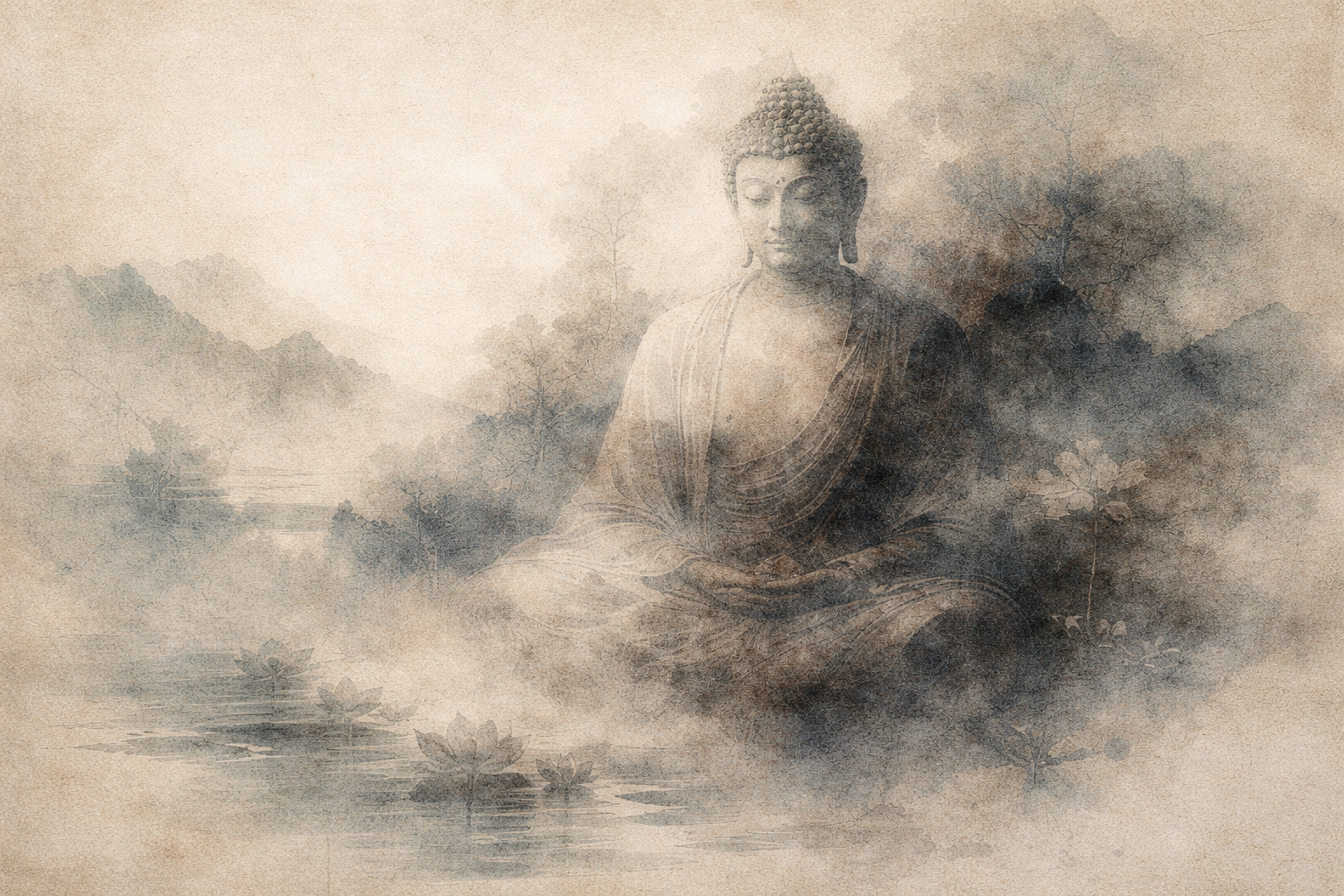
Answer: Buddhist art uses symbols (postures, gestures, marks, and settings) to communicate teachings and qualities without needing long explanations. These images developed over centuries and vary by region, so they reflect culture and devotion as much as history.
Takeaway: Symbols in Buddha images are visual shorthand for values and teachings.
FAQ 14: Is Buda the same figure as Budai (the “Laughing Buddha”)?
Answer: No. Budai (often called the “Laughing Buddha”) is a different historical figure from Chinese tradition, commonly depicted as a smiling, round-bellied monk. He is not the same as Siddhartha Gautama, the Buddha most people mean when they ask “who is buda.”
Takeaway: “Buda” usually means Gautama Buddha, not Budai.
FAQ 15: What’s the simplest way to answer “who is buda” without myths?
Answer: The simplest answer is: Buda refers to the Buddha, a human teacher remembered for awakening and for describing, in practical terms, how suffering is created and how it can ease. The emphasis is less on legend and more on what can be observed in the mind—craving, resistance, and the possibility of release.
Takeaway: Before myths, Buda is a human teacher pointing to direct understanding of suffering.