



What Is TM Meditation? Technique, Benefits, and Transcendental Meditation Explained
Quick Summary
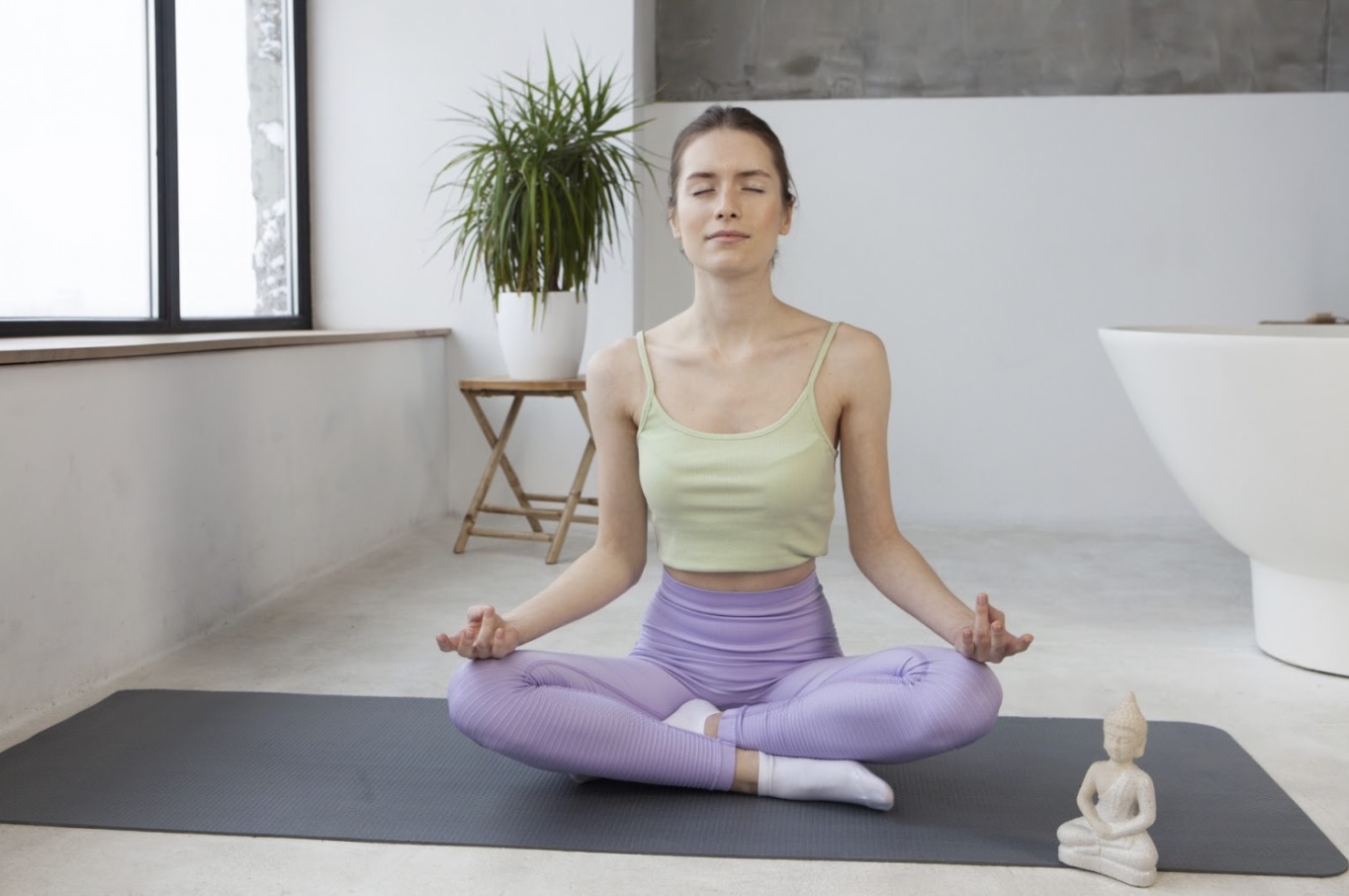
TM meditation, short for Transcendental Meditation, is one of the most widely practiced and researched meditation methods in the West. It involves silently repeating a mantra for 20 minutes twice a day, allowing the mind to settle beyond thought. Unlike mindfulness or concentration practices, TM meditation emphasizes effortlessness — letting awareness sink into calm rather than forcing focus.
- Effortless technique: No concentration or control of thoughts is required.
- Scientifically backed: Research links TM to lower stress, improved sleep, and emotional balance.
- Universal roots: Though derived from Vedic philosophy, its essence resonates with Buddhist stillness and awareness.
- Easy to begin: 20 minutes, twice daily — seated comfortably with eyes closed.
- What this article covers: Origins, how it works, scientific evidence, Buddhist parallels, and practical steps to start.
Introduction
When the noise of the day refuses to fade — emails, deadlines, restless thoughts — silence can feel impossible. Yet inside that storm lies a quieter current. TM meditation, or Transcendental Meditation, promises access to that stillness not by escape, but by effortless sinking beneath surface thought.
Born from ancient Vedic teachings and brought to the West by Maharishi Mahesh Yogi, TM became famous through artists and scientists who claimed it changed their clarity, creativity, and sleep. But beyond celebrity stories lies a deeper truth: tm meditation is not about “achieving calm” but remembering it.
In this guide, we’ll explore what tm meditation really is, how it differs from other methods, what modern science says about its effects, and how its quiet simplicity mirrors the contemplative heart of Buddhism — the stillness that listens, not strives.
Understanding TM Meditation: What It Is and Where It Comes From

Transcendental Meditation (TM) is a standardized, mantra-based meditation technique introduced in the 1950s by Maharishi Mahesh Yogi, a scholar of the Vedic tradition. The Vedic philosophy, originating in ancient India, is a body of knowledge that explores the relationship between consciousness and the cosmos. Its central insight is that true knowledge does not come from studying the outer world, but from directly experiencing the awareness within. TM meditation translates this ancient understanding into a practical method, allowing modern practitioners to experience the same inner stillness and transcendence described in the Vedic texts.
Practitioners sit comfortably with eyes closed and silently repeat a specific sound or “mantra.” The purpose isn’t concentration but transcendence — allowing the mind to move inward through subtler layers of thought until it experiences pure awareness.
Unlike mindfulness practices that emphasize observing sensations or thoughts in the present moment, TM meditation invites the practitioner to go beyond them. It’s sometimes described as “diving below the waves of the mind” into the calm depth beneath. This distinction — effortless repetition versus deliberate awareness — is one reason TM meditation appeals to those who find focus-based methods difficult.
The practice typically lasts about twenty minutes, twice daily. Certified teachers give each student a personal mantra chosen from a traditional list. Each mantra is not a word with meaning but a sound vibration selected for its calming effect. It is traditionally assigned by a certified teacher based on factors such as age and life stage. Because of this, Transcendental Meditation cannot be learned accurately from books or videos; it is normally taught through personal instruction at an official TM center. This process includes an introductory talk, one-on-one instruction, and several follow-up sessions to stabilize the practice. The mantra’s lack of meaning is essential — if a sound carries personal associations, the mind stays active instead of settling naturally into stillness.
Instruction emphasizes ease: no struggle, no analysis, just returning gently to the sound whenever attention drifts. Over time, many report a spontaneous reduction in anxiety, improved clarity, and a sense of inner restfulness that extends into daily activity.
Philosophically, TM meditation draws on the same insight found in Buddhist calm-abiding (śamatha) and the awareness of no-self: that peace isn’t created but uncovered. Both traditions see thought as ripples on a vast ocean of consciousness. When the mind stops chasing them, the surface clears — and the stillness underneath reveals itself as what was always there.
Where to Learn Transcendental Meditation
For those interested in learning TM from certified instructors, official TM centres operate in most English-speaking countries. They offer introductory sessions and personal instruction in accordance with Maharishi Mahesh Yogi’s standardized teaching.
- United States: Official TM USA website — course details and centre locator available (https://www.tm.org/en-us)
- United Kingdom: TM UK official site — find local centres and free introductory talks (https://www.tm.org/en-gb)
- Australia: TM Australia — national website with information on learning TM and course schedules (https://tm.org.au)
GASSHO
Ask and learn about Buddhism in daily life.
GASSHO is a Buddhist community app where you can learn Buddhist teachings and ask questions to the head priest of Kongosanmaiin Temple on Mount Koya.
How TM Meditation Works and How to Practice It
At its heart, tm meditation rests on a paradox: you don’t “do” it, you allow it. Where most meditation methods train the mind to observe or control, TM uses a mantra — a simple sound without meaning — to draw attention inward effortlessly. As you repeat the sound gently, the mind follows it toward quieter levels of thought until both fade, leaving awareness resting in stillness.
Maharishi Mahesh Yogi described this as “transcending,” the moment when thought dissolves and the meditator experiences pure consciousness — a wakeful, restful state beyond effort or focus. The body responds too: heart rate slows, stress hormones drop, and brain waves show coherent alpha patterns often associated with relaxed alertness. Modern research from institutions such as Harvard Medical School and the American Psychological Association supports these findings, linking tm meditation to reduced anxiety, improved cognitive performance, and better cardiovascular health.
The practice itself is simple:
Sit comfortably in a chair or on a cushion, feet or legs relaxed, eyes closed. Take a few breaths to settle. Then begin silently repeating your personal mantra — a sound given by a certified TM teacher during instruction. If thoughts arise, do nothing special; when you notice you’ve drifted, gently return to the mantra. After about twenty minutes, stop repeating it and sit quietly for a minute or two before opening your eyes.
This process is not about suppressing thought or chasing bliss. It’s about letting the mind return to its natural equilibrium, like a lake that settles when the wind dies down. Over time, many practitioners find this inner calm expands into daily life — less reactivity, clearer decisions, easier sleep. The repetition of the mantra becomes a bridge between action and rest, allowing awareness to remain stable even amid movement.
Frequency and routine: Most people practice tm meditation twice a day, once in the morning and once before dinner or bed. This regular rhythm supports both physiological recovery and mental clarity. Even when schedules feel impossible, those twenty-minute pockets can become silent anchors that frame the day.
And while tm meditation originates from Vedic philosophy, its spirit harmonizes beautifully with Buddhist insight. Both see peace not as an achievement but as a return — an uncovering of what was never truly lost. The mantra, like the breath or a bell in Zen, is simply the doorway home.
The Science and Research Behind TM Meditation

For a practice born from ancient India, tm meditation has an unusually robust scientific record. Since the 1970s, more than 600 studies across universities and medical centers — including Harvard, Stanford, and UCLA — have examined its psychological and physiological effects. While not all results are equally strong, the overall pattern points toward measurable calm in both body and brain.
1. The physiology of rest:
Researchers describe tm meditation as a “wakeful hypometabolic state” — the body is deeply relaxed, yet the mind remains alert. A review published in Neuroscience & Biobehavioral Reviews by Jevning, Wallace, and Beidebach reported that during deep meditative states such as TM practice, oxygen consumption, heart rate, and respiratory rate decrease significantly, indicating a “wakeful hypometabolic state.” This state reflects not mere relaxation but a unique condition in which deep rest and clear awareness coexist.
2. Brain coherence and focus:
According to EEG (electroencephalogram) studies conducted at Maharishi International University, practitioners of Transcendental Meditation (TM) show increased coherence in alpha, theta, and beta brain-wave frequencies during meditation. These coherent patterns are associated with a relaxed yet highly alert state of mind and are often linked to creativity and mental clarity.
Further findings compiled in the Collected Papers on the TM and TM-Sidhi Program report “increased EEG coherence in alpha, theta, and beta bands, with further increases during the TM-Sidhi program.” Similarly, TM Keskus’s summary of brain research describes that long-term TM practitioners exhibit high levels of EEG coherence not only during meditation but also during ordinary waking activity.
Typically, the brain oscillates between beta waves—linked to tension and active thinking—and the slower alpha and theta waves associated with rest and relaxation. During TM, however, these rhythms become harmoniously integrated, creating a distinctive state described as “calm yet awake.” Neuroscientists refer to this as global tuning of the nervous system, a state in which distant regions of the brain begin to function in greater harmony.
3. Cognitive and emotional outcomes:
In a recent systematic review and meta-analysis of meditation interventions, it was found that regular practice—including but not limited to the Transcendental Meditation (TM) technique—was associated with reductions in anxiety and depressive symptoms among adult and youth populations. For instance, one meta-analysis published in the journal International Journal of Environmental Research and Public Health reported a moderate effect size (Hedges’s g ≈ –0.67) for TM-specific studies in reducing post-traumatic stress symptoms, suggesting similar potential for anxiety and mood regulation.
Moreover, a meta-analysis in Mindfulness examining attention-based meditation techniques (though not exclusively TM) found improvements in executive control functions (inhibition and updating) with effect sizes around g ≈ 0.203.
These findings support the view that TM and related meditation practices can enhance working memory and executive function (i.e., capacities for emotional and impulse regulation), strengthening internal resilience across age groups—though the magnitude of effect is moderate and research designs vary.
4. Heart and health effects:
Research on Transcendental Meditation (TM) suggests that regular practice may significantly reduce the risk of cardiovascular disease, particularly among individuals with hypertension or high cardiovascular risk. In one randomized clinical trial, the TM group showed a 65% lower incidence of major cardiovascular events—including heart attack, stroke, and mortality—compared with a health-education control group over five years (Maharishi International University News).
Moreover, a systematic review and meta-analysis of meditation and relaxation interventions found that participants with hypertension or pre-hypertension experienced an average reduction of approximately 4.3 mmHg in systolic blood pressure following regular practice (Journal of Human Hypertension, Nature Publishing Group).
These physiological improvements are thought to stem from a rebalancing of the autonomic nervous system—specifically, the calming of the sympathetic “fight-or-flight” response and the activation of the parasympathetic “rest-and-restore” mode. This shift supports cardiovascular resilience and contributes to long-term heart health.
Of course, not all research is glowing. Critics argue that some TM-funded studies lack methodological rigor or overstate claims of enlightenment. That skepticism is healthy; it reminds us that meditation, like any behavioral intervention, is deeply personal and context-dependent. Still, the convergence of independent findings — especially on stress reduction and mood regulation — gives tm meditation a credible scientific foothold among modern mind–body practices.
In a sense, science has circled back to an ancient intuition: that silence heals. By letting the nervous system slip into its natural rhythm, tm meditation offers what both medicine and mysticism value — a body at ease and a mind awake.
TM Meditation and Buddhism: The Shared Language of Stillness
Although TM meditation grew from the Vedic roots of Hindu philosophy, its heart beats in unison with the contemplative traditions of Buddhism. Both pursue liberation through stillness, not through effort or self-improvement, but through seeing the mind clearly and letting it rest in its natural state.
In classical Buddhism, samatha — often translated as “calm abiding” — trains attention to settle on an object like the breath or a visual form until the mind becomes serene and unified. From that calm foundation arises vipassanā, or insight: the direct seeing of impermanence, unsatisfactoriness, and non-self. TM meditation, though different in form, moves through a similar dynamic. The mantra acts like the breath in samatha, gently steadying the mind. As repetition softens and thoughts subside, the practitioner experiences a silent awareness beneath phenomena — what Maharishi Mahesh Yogi called “pure consciousness.”
The difference lies mostly in emphasis. Buddhist meditation cultivates mindfulness and ethical insight toward liberation from craving; TM focuses on transcending surface thought to restore the nervous system’s equilibrium. Yet at their core, both affirm that awakening is not achieved by forcing silence but by remembering it. The Buddha called this nibbāna — the cooling of the fires — while TM describes it as a return to the Self that underlies all experience. In either language, peace is not something gained but something uncovered.
Modern practitioners often find resonance between the two. In Zen, the sound of a bell or the rhythm of chanting can become an anchor that quiets thought — much like a TM mantra. In Tibetan Buddhism, seed syllables such as “Om” or “Ah” are used not for meaning but vibration; they mirror TM’s use of sound as a vehicle for transcendence. Even the attitude of “non-striving,” central to mindfulness teachings from Thich Nhat Hanh and Jon Kabat-Zinn, echoes Maharishi’s reminder that TM should feel effortless.
Where TM and Buddhism meet most intimately is in compassion. As inner turbulence dissolves, awareness naturally opens toward others. The calm reached in TM meditation is not withdrawal but readiness — the same quiet strength embodied by the meditating bodhisattva who sits still yet hears the cries of the world. Both paths insist that stillness is not escape from life, but a way of returning to it with clarity and gentleness.
In this sense, tm meditation is not a rival to Buddhist practice but another dialect of the same ancient language: the language of silence. Whether one calls it śūnyatā (emptiness) or pure consciousness, the invitation is identical — to rest in the awareness that remains when thought has done its talking.
Conclusion: Returning to the Quiet That Was Always There

In an age of constant motion, tm meditation offers a rare permission: to do nothing and let the mind remember its own stillness. Twenty minutes of silent repetition, twice a day, might seem insignificant against the noise of modern life — yet that’s its quiet rebellion. Instead of trying to control thoughts or chase enlightenment, you simply let awareness sink beneath the surface until the waves lose their urgency.
Science calls it restful alertness. Philosophy calls it pure consciousness. Buddhism calls it awakening. But each is pointing to the same intimate experience — a pause in which the self stops struggling and reality feels simple again. TM meditation doesn’t demand belief or achievement; it invites curiosity about what happens when you stop trying so hard.
For some, this practice becomes a refuge from anxiety or insomnia. For others, it is a doorway into deeper compassion and clarity. Whether you think of it as a stress-relief technique, a spiritual discipline, or a form of neurophysiological tuning, tm meditation keeps reminding us that peace was never missing — it was merely covered by noise.
You don’t have to travel to an ashram or retreat center to find that quiet. It can unfold in your living room, between meetings, or before sleep. The mantra is only a sound; the real teacher is silence itself.
Ask a Buddhist priest
Have a question about Buddhism?
In the GASSHO app, you can ask questions about Buddhist teachings, daily concerns, and how to understand Buddhism in everyday life.
Frequently Asked Questions
FAQ 1: What is TM meditation?
Answer: TM meditation, short for Transcendental Meditation, is a standardized, mantra-based practice done for about 20 minutes, twice daily, while sitting comfortably with eyes closed. The aim is not concentration but an effortless settling of the mind beyond surface thought into restful alertness. Many beginners find the ease appealing compared with focus-based practices. Consistency matters more than intensity; brief daily sessions accumulate into calmer baseline physiology.
Real Results: The official TM organization outlines the method, schedule, and instruction model, emphasizing ease and standardization. Harvard Health also describes TM as inducing restful alertness with potential cardiovascular benefits.
Takeaway: TM doesn’t force quiet; it lets quiet reappear.
FAQ 2: How is Transcendental Meditation different from mindfulness?
Answer: Mindfulness typically trains open, nonjudgmental awareness of present-moment experience, while TM uses a silently repeated sound to let attention sink beneath thought. In mindfulness you observe phenomena; in TM you transcend them. Both reduce stress, but the attentional strategy differs—active monitoring versus effortless inward “diving.” People who struggle with concentration sometimes find TM’s non-effort approach more accessible.
Real Results: A Frontiers review differentiates styles and neural signatures of meditation, including mantra recitation versus open monitoring. NCCIH overviews benefits and safety across meditation types.
Takeaway: Mindfulness watches the waves; TM slips into the still water beneath.
FAQ 3: How do I learn TM meditation?
Answer: TM is taught by certified teachers through a structured course: an introduction, one-on-one instruction where a personal mantra is given, and follow-up to ensure effortlessness. Self-teaching is discouraged because subtle errors—like turning the mantra into concentration—can undermine results. After instruction, practice is independent: 20 minutes, morning and evening, seated comfortably with eyes closed.
Real Results: The official registry explains the step-by-step course and worldwide teacher network. TM Australia provides an accessible overview of the standardized program and schedule.
Takeaway: Simple technique, but learning non-effort benefits from guidance.
FAQ 4: Do I need a teacher to practice TM?
Answer: The TM method is standardized and designed for personal instruction. A teacher helps you embody effortlessness and use the mantra properly, preventing common pitfalls like over-focus or suppression of thoughts. While videos can explain concepts, formal instruction remains the recommended way to learn authentic TM safely and effectively.
Real Results: TM’s official sites specify one-on-one instruction and lifetime follow-up as core features. NCCIH notes instruction quality matters for safety and adherence in meditation programs.
Takeaway: Doing less well often requires a good coach.
FAQ 5: What is the mantra in TM?
Answer: In TM the mantra is a simple, non-semantic sound given during instruction; it is not an affirmation or meaning-based phrase. You repeat it silently and effortlessly. If attention drifts, you return gently. The mantra’s role isn’t to block thoughts but to allow attention to settle where thinking grows quiet on its own.
Real Results: TM organizations outline why personal, non-meaningful sounds are used and how they support effortlessness. Peer EEG studies report distinctive alpha synchrony during TM practice (e.g., ScienceDirect).
Takeaway: The sound isn’t the point—the silence it opens is.
FAQ 6: How long should each session last?
Answer: The recommended schedule is 20 minutes, twice daily. This duration allows the nervous system to enter a reliable pattern of restful alertness without grogginess or strain. Shorter sits can help on busy days, but the 20-minute arc supports a full “settling and return” cycle that many find stabilizing across weeks.
Real Results: TM organizations specify 20-minutes-twice-daily as standard. A randomized trial of TM in adults with elevated blood pressure used twice-daily sessions and reported beneficial effects. (ScienceDirect).
Takeaway: Twenty minutes is long enough for depth and short enough to fit life.
FAQ 7: Can I practice TM lying down?
Answer: TM is taught seated, with back supported and eyes closed. Lying down often leads to sleep and blurs the distinction between meditation and rest. If injury or mobility issues require adjustments, a reclined but wakeful posture can work; otherwise, sit comfortably so awareness stays clear.
Real Results: NCCIH’s safety overview notes posture and alertness considerations for meditation programs and cautions about drowsiness and falls with supine positions.
Takeaway: Comfort is good; wakefulness is better.
FAQ 8: Is TM religious or spiritual?
Answer: TM has Vedic roots but is taught and practiced in a secular format; no beliefs, rituals, or lifestyle changes are required. Many religious and non-religious people practice it because the goal is experiential—restful alertness—not doctrine. It can complement, not replace, personal worldviews.
Real Results: TM organizations describe the program as non-religious and widely adopted across cultures. Harvard Health frames TM within health behavior rather than religious practice.
Takeaway: TM points to experience, not belief.
FAQ 9: What are the main benefits of TM?
Answer: Reported benefits include lower stress reactivity, improved sleep quality, steadier mood, and clearer focus. Physiologically, TM evokes a relaxation response—heart rate and breathing ease—while attention remains alert. Over weeks, many notice less reactivity and smoother recovery after daily challenges.
Real Results: AHA’s scientific statement reviews blood pressure–lowering evidence for meditation, including TM. Harvard Health summarizes cardiovascular findings and mixed but promising evidence.
Takeaway: Calmer body, clearer mind, kinder days.
FAQ 10: Can TM help with anxiety or stress?
Answer: Yes. Regular TM practice shifts autonomic balance toward parasympathetic recovery, which helps down-regulate chronic stress. People often experience reduced baseline anxiety and quicker emotional reset after stressors. It’s not a cure-all, but as a daily practice it can meaningfully lighten the load.
Real Results: Reviews and RCTs show reductions in anxiety with meditation, including TM; APA summarizes meditation’s stress-reduction evidence. A randomized TM trial in at-risk adults reported stress and BP improvements (ScienceDirect).
Takeaway: When the body remembers rest, the mind remembers calm.
FAQ 11: Does TM improve sleep?
Answer: Many find TM before evening helps transition from mental speed to rest. By easing hyperarousal, TM can shorten sleep onset and improve perceived sleep quality. The goal remains awareness, not sedation; better sleep tends to follow from a less stressed nervous system.
Real Results: Harvard Health reports meditation practices reducing insomnia symptoms and improving sleep quality. TM’s official health page also describes improved sleep among benefits.
Takeaway: Quieting before bed teaches the mind how to let go.
FAQ 12: Are there any side effects?
Answer: TM is generally safe and well-tolerated. Early sessions can bring drowsiness or emotional release as tension unwinds. Rarely, difficult memories surface; pausing and consulting a teacher helps. People with complex trauma or acute conditions should learn with instructors who understand psychological safety.
Real Results: NCCIH notes meditation is safe for most and outlines when to seek guidance, especially for mental health concerns. Clinical reports describe low adverse-event rates comparable to relaxation training.
Takeaway: Most effects are gentle; meet stronger ones with support and pacing.
FAQ 13: How soon will I notice results?
Answer: Some feel calmer after the first week; others notice changes—clearer focus, smoother mood, easier sleep—over several weeks. As with fitness, gains come from rhythm, not occasional intensity. The day often feels different when framed by twenty minutes of quiet at the start and end.
Real Results: Longitudinal TM studies in blood pressure and stress show measurable improvements over 8–12 weeks of regular practice (American Heart Association).
Takeaway: Give it weeks; the nervous system learns by repetition.
FAQ 14: Can children or older adults practice TM?
Answer: TM can be adapted across the lifespan. Children learn simplified approaches; older adults often use TM to support recovery, mood, and cognitive steadiness. As always, instruction tailors pacing and posture to individual needs so practice stays effortless and safe.
Real Results: The American Heart Association review notes BP and stress benefits relevant to older adults. NCCIH summarizes age-spanning evidence for meditation’s sleep, stress, and quality-of-life outcomes.
Takeaway: Stillness has no minimum or maximum age.
FAQ 15: How does TM affect the brain?
Answer: EEG studies associate TM with increased alpha coherence—more harmonious communication between brain regions—linked to relaxed alertness and improved executive control. Rather than “less brain activity,” TM shows more ordered activity, which may support focus and emotional regulation off the cushion.
Real Results: Peer-reviewed EEG work reports enhanced alpha synchrony during TM (Patterns of EEG coherence, power, and contingent negative variation characterize the integration of transcendental and waking states).
Takeaway: Quieter doesn’t mean duller; it means better organized.
FAQ 16: What does science say about TM overall?
Answer: The evidence base spans thousands of participants over decades. Not all studies are equal—some are TM-affiliated—but independent reviews find moderate, consistent benefits for stress, blood pressure, and well-being. The most responsible view: TM is a useful adjunct, not a replacement for medical care when needed.
Real Results: AHA’s scientific statement considers TM a reasonable adjunct for hypertension management. Harvard Health summarizes a 2024 Cochrane review on meditation and cardiovascular outcomes.
Takeaway: Medicine likes data; TM’s data trend positive though not magical.
FAQ 17: How does TM relate to Buddhism?
Answer: TM’s effortless “transcending” resembles Buddhist calm-abiding (samatha), while the recognition of spacious awareness echoes insight traditions. Language and aims differ—TM emphasizes nervous-system recovery; Buddhism leans toward liberation—but both trust non-striving and quiet clarity to reveal the mind’s nature.
Real Results: Comparative reviews outline differing mechanisms across mantra, focused attention, and open monitoring practices. (Frontiers in Psychology). NCCIH provides context for varied meditation styles and outcomes.
Takeaway: Different paths, shared stillness.
FAQ 18: Can I use an app like Gassho to support TM?
Answer: Yes. Apps can’t replace formal TM instruction, but short chants, bells, or breath cues between sessions help you remember to pause and reset. Think of an app as a “micro-practice” companion that keeps the day breathable while TM provides deeper reset twice daily.
Real Results: The National Center for Complementary and Integrative Health (NCCIH) highlights how app-based mindfulness tools can support consistency in daily meditation practice while not substituting for professional guidance.
Takeaway: Let technology nudge you back to quiet, not away from it.
FAQ 19: Is TM expensive to learn?
Answer: TM courses charge tuition that funds one-on-one instruction and lifetime follow-up; fees vary by region and income, with scholarships and sliding scales in many centers. The cost isn’t for “secret words” but for careful training in effortless practice and ongoing support.
Real Results: Current program details and financial aid are listed by TM organizations. Independent coverage notes program structure and public health framing (e.g., Axios overview).
Takeaway: You’re paying for how to rest, not what to repeat.
FAQ 20: How can I stay consistent with TM?
Answer: Anchor sessions to transitions you already have—after waking and before dinner or bed—and treat misses lightly. Use gentle cues: put the phone on Do Not Disturb, sit in the same spot, exhale once, begin. Consistency grows from rhythm, not force; the body starts to expect and welcome the pause.
Real Results: Habit research from Stanford and related behavior-change literature shows routines linked to existing cues persist 2–3× longer than free-floating intentions. NCCIH notes adherence improves when practices are simple, brief, and regular.
Takeaway: Pair quiet with daily cues until the day feels wrong without it.
FAQ 21: Is a mantra essential for TM meditation?
Answer: Yes. Transcendental Meditation (TM) is built around the use of a specific mantra, which is an essential part of the technique. The mantra is not a word with meaning, but a sound that allows the mind to settle inward naturally, without force or concentration. If you remove the mantra, the practice becomes closer to mindfulness or breath-based meditation. In TM, each practitioner receives a personal mantra selected from a traditional list, chosen for its subtle vibrational quality that resonates with their nervous system. Without the mantra, it’s difficult to access the effortless “transcending” state that defines authentic TM.
Real Results: The official TM Organization describes the mantra as the core of TM, explaining that the repetition of a meaningless sound leads the awareness inward to deeper levels of rest. Research published in Frontiers in Psychology also reports that mantra-based meditation produces distinctive alpha-wave coherence patterns compared to other techniques.
Takeaway: The mantra isn’t a tool—it’s the doorway to stillness, enabling TM’s effortless transcendence.
Related Articles
- Harvard Health – Transcendental Meditation and Stress Relief
Summarizes research showing how TM meditation triggers the body’s relaxation response and lowers blood pressure. - American Psychological Association – Meditation and Mental Health
Explains how Transcendental Meditation and mindfulness practices enhance emotional regulation and reduce anxiety. - Frontiers in Psychology – The Neurophysiology of Transcendental Meditation
Presents peer-reviewed evidence that TM practice increases alpha coherence and improves attention and emotional stability. - Mindfulness Meditation and the Brain: The Science Behind Its Benefits
Gently explores how mindfulness meditation is deeply connected to the structure and function of our brain. - Yoga and Meditation: A Path to Relaxation, Focus, and Inner Peace
Explores the historical and practical relationship between yoga and meditation, outlining key types, techniques, and their shared benefits.