



What Is a Zafu? Zen Meditation Cushion Meaning and Use Explained
Quick Summary
Zafu is more than a meditation cushion—it’s a bridge between body and mind, stillness and awareness. This guide explores what a zafu is, how to use it, why it matters in Zen Buddhism, and how its spirit carries into modern mindfulness tools like Gassho.
- Balanced posture: How a zafu lifts the hips, aligns the spine, and deepens the breath for steadier attention.
- Zen roots: The zafu’s role in zazen (seated meditation) and what “just sitting” actually means.
- Mindful design: Shapes, fillings, and height—how to choose the right zafu for your body.
- Everyday mindfulness / Gassho for daily life: How Gassho functions like a “digital zafu,” cueing the return to presence with sound.
- Practical guide: Clear, beginner-friendly steps for sitting and caring for your cushion.
Introduction
Modern life teaches us to move quickly and settle into poor posture. Meditation asks for the opposite. A zafu—a modest, round, and quiet cushion—doesn’t offer escape. It offers arrival. Used for centuries by monastics and lay practitioners alike, the zafu embodies what Zen calls “upright sitting”: a body anchored, breath unforced, and a mind that can finally rest in the present.
This article explores not only the zafu’s form and function, but its deeper meaning. We’ll look at its traditional role in Zen temples, its quiet presence in today’s homes and studios, and how the mindfulness app Gassho carries that same spirit into modern life—offering a way to return to presence even without a cushion beneath you. Through all of this, we revisit a simple question: what does it really mean to sit?
What Is a Zafu and Why It Matters
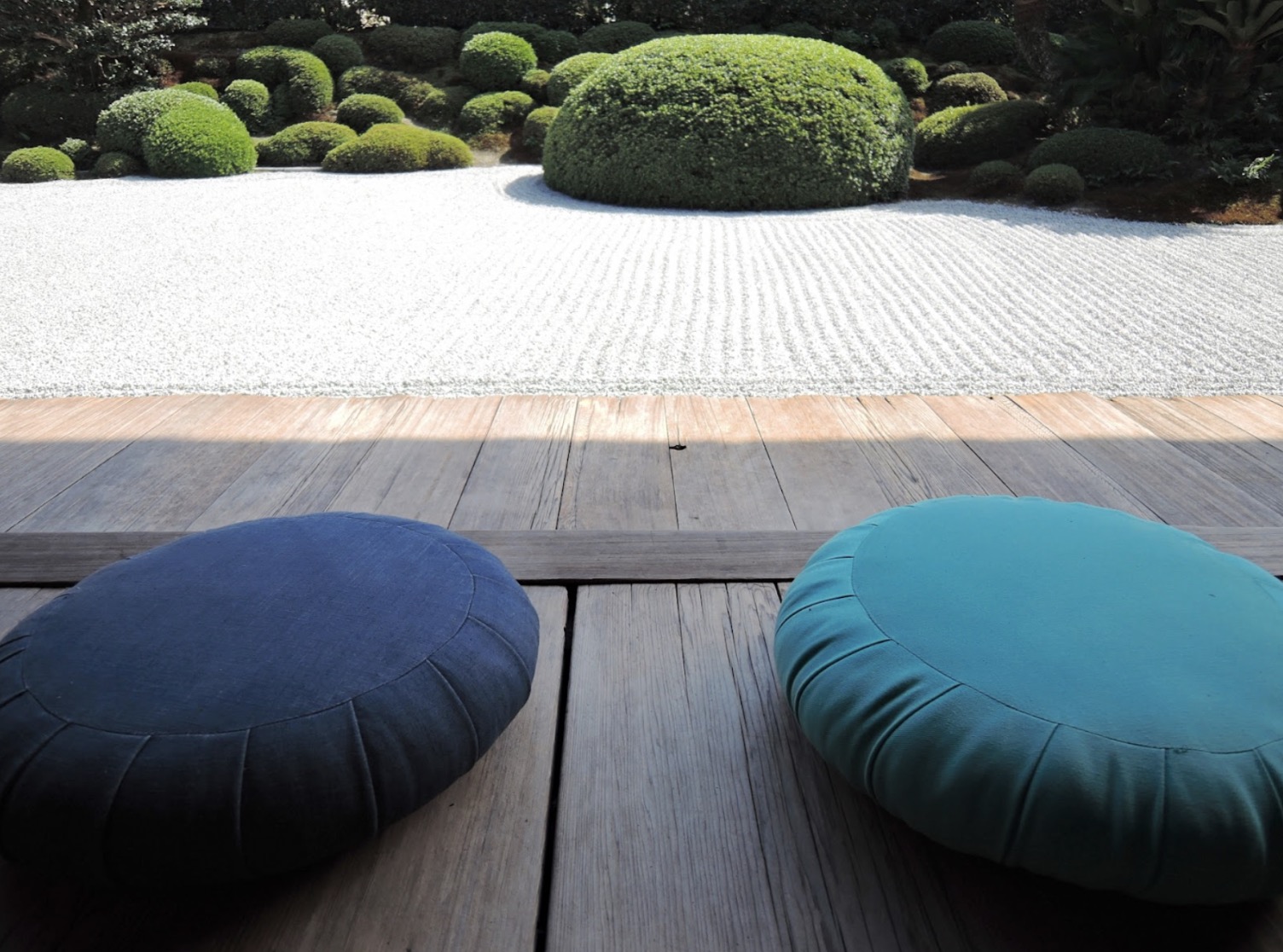
A zafu is a round, often firm cushion used for zazen—the Zen Buddhist practice of seated meditation. The word “za” means “to sit,” and “fu” originally referred to the soft reeds once used as filling. Today, zafus are typically filled with buckwheat hulls or kapok fiber, which provide a stable, adaptable base for meditation.
By slightly elevating the hips above the knees, the zafu tilts the pelvis forward, allowing the spine to rest in a natural curve. This simple adjustment makes long periods of stillness sustainable without muscle strain. In Zen temples, the zafu is paired with a flat mat called a zabuton, cushioning the knees and ankles and symbolizing humility—everyone sits at the same level.
The zafu represents both practicality and principle: when the body finds balance, the mind follows. For clear, traditional posture guidance and practice context, see the detailed instructions in Lion’s Roar’s Zazen Guide, which explains how the cushion supports alignment, breath, and awareness during sitting meditation.
GASSHO
Ask and learn about Buddhism in daily life.
GASSHO is a Buddhist community app where you can learn Buddhist teachings and ask questions to the head priest of Kongosanmaiin Temple on Mount Koya.
The Anatomy of Stillness — How a Zafu Supports Meditation

Good posture isn’t rigidity—it’s a gentle, upright alignment. When you sit on a zafu, the pelvis tilts forward naturally, allowing the spine to rise with ease. The chest opens, the breath deepens, and tension softens throughout the body.
This alignment frees the diaphragm, helping the breath slow and settle, which in turn supports a calmer state of awareness. Neuroscience suggests that posture may subtly shape mood and consciousness. For example, a study from Stanford University on expansive posture found that how we sit or stand can influence brain activity and emotional tone—pointing to a link between bodily form and internal state. While science has yet to establish a direct causal relationship between posture and emotional clarity, the connection remains a rich field of inquiry.
Still, simple physical adjustments—lengthening the spine, softening the shoulders, grounding the seat—may serve as quiet gateways into stillness. In classic Zen teaching, the spine is described as a “stack of coins”—balanced but not stiff. The head floats lightly, as if suspended by a thread, with the chin tucked gently and the back of the neck free from strain.
These posture cues are clearly illustrated in resources such as Tricycle’s meditation guide and Lion’s Roar’s practice instructions, which offer accessible support for beginning meditators. Whether your goal is comfort, clarity, or stillness, the zafu helps lay the foundation—firm, quiet, and kind.
From Zen Temples to Modern Homes
For centuries, Zen monasteries organized daily practice around zazen, using zafu and zabuton to stabilize the body. In the modern world, this same simplicity has moved into yoga studios, home practice corners, and corporate wellness rooms.
Western practitioners have found that floor seating encourages presence—a subtle but powerful shift from “chair-bound attention” to grounded awareness. The zafu bridges ancient form and contemporary need: an anchor for those who meditate, journal, or simply rest.
To explore how authentic Zen centers teach this adaptation, the San Francisco Zen Center provides extensive beginner resources and posture workshops that translate traditional form into modern context.
For those interested in the roots of the Gassho app, Kongo Sanmai-in, a historic Shingon temple in Koyasan, Japan, also offers zazen instruction and dharma chanting in a traditional monastic setting. It continues to embody the spirit of stillness that Gassho brings into everyday life.
From Cushions to Gassho — Mindfulness Anywhere

A zafu offers something unique. It supports your posture, lifts the hips, and marks a quiet boundary between the ordinary and the intentional. Sitting on one signals to your body, “this is your moment to be still.” For many practitioners, the zafu becomes a trusted companion—simple, solid, and grounding. Yet you don’t have to wait for the perfect cushion to begin. A folded blanket, a towel, or even the edge of your bed can work beautifully. What matters is the act itself: choosing to sit with awareness. Zen practice has never been about perfection but about sincerity—meeting the moment as it is, with whatever you have. That same spirit continues in Gassho, a mindfulness app designed for everyday life. Through gentle chants, natural sounds, and short guided pauses, it helps you find quiet wherever you are—on the train, between meetings, or before sleep. In this way, Gassho doesn’t replace the zafu; it carries its essence forward. Both serve as invitations to return—to posture, to breath, to presence.
How to Choose and Use a Zafu
- Shape: The classic round zafu distributes weight evenly, while crescent shapes open tight hips and ease ankle pressure. Taller zafus help if you have less flexibility.
- Filling: Buckwheat hulls conform to your body and provide firm support; kapok is lighter, with a springy feel. Each type affects stability and comfort differently. For product comparisons, see Still Sitting’s Cushion Guide.
- Height and pairing: Aim for hips slightly above knees. Pairing the zafu with a zabuton protects joints and helps sustain longer sessions comfortably.
- Basic posture: Sit on the forward third of the cushion to tilt the pelvis naturally. Cross-legged (half or full lotus), Burmese (legs side by side), or seiza (kneeling) are all valid. Lengthen the spine, soften the shoulders, rest the hands in your lap, and lower the gaze. For visual instruction, consult Lion’s Roar or Tricycle.
Zafu Care and Mindful Maintenance
Treat your zafu as you would a musical instrument—it keeps harmony through regular attention. Most covers unzip for easy cleaning; buckwheat hulls can be aired and replaced as they settle over time. Place your zafu in a clean, quiet space, away from moisture, and let it air out occasionally. Some practitioners treat this care as part of their mindfulness routine: dusting the mat, refilling the cushion, bowing to it before sitting.
For long-term maintenance tips and eco-friendly refilling instructions, see Still Sitting’s Kapok vs. Buckwheat Guide.
Cultural Symbolism — The Zafu as a Teacher

The zafu is more than fabric and filling—it’s a teacher in disguise. In Zen, the act of sitting upright mirrors the principle of shikantaza (“just sitting”), where one stops striving and simply returns to being.
Empty inside yet fully supportive, the zafu embodies the Buddhist paradox of form and emptiness: form is emptiness, emptiness is form. Each time you sit, you practice grounding awareness in that paradox—steady in body, fluid in mind.
Modern Zen teachers often speak of the zafu as a “mirror”: it reflects your relationship to stillness. For contemporary reflections on posture and practice, explore teachings from San Francisco Zen Center and Lion’s Roar.
Conclusion — The Cushion Is Not the Point
You don’t need to flee to a mountain monastery to find quiet. You only need a stable seat and the willingness to listen. A zafu offers that—an honest, simple form that grounds the body so the mind can remember itself.
In the same way, Gassho transforms ordinary moments into digital pauses, reminding you to breathe before the next task. Both are tools of return: one physical, one auditory.
The cushion is not the point—presence is. Sit for five quiet minutes. Feel the breath. Bow to the space that holds you. In that stillness, you may find what monks and modern meditators alike have discovered: stillness is not somewhere else; it’s right here.
Ask a Buddhist priest
Have a question about Buddhism?
In the GASSHO app, you can ask questions about Buddhist teachings, daily concerns, and how to understand Buddhism in everyday life.
Frequently Asked Questions
FAQ 1: What is a zafu cushion used for?
Answer: A zafu is a firm cushion used to support upright, comfortable sitting during meditation. By slightly elevating the hips, it allows the pelvis to tilt forward so the spine can lengthen without strain, which steadies the breath and attention. In Zen, this simple aid is part of making practice sustainable: stability in the body fosters ease in the mind. Whether you sit for five minutes or longer periods, the zafu’s role is humble but clear—reduce physical struggle so awareness can rest more gently.
Real Results: Traditional posture instructions from Lion’s Roar and the San Francisco Zen Center describe how hip elevation improves spinal alignment and breathing comfort for sustained sitting.
Takeaway: A steady seat helps a steady mind.
FAQ 2: How is a zafu different from a zabuton?
Answer: A zafu is the smaller, elevated cushion you sit on; a zabuton is the flat mat beneath that cushions knees and ankles. Used together, they create a simple, ergonomic setup: the zafu lifts the hips for spinal alignment, while the zabuton protects pressure points so circulation remains easy. This pairing is common in Zen halls because it balances firmness and softness—support where you need it, gentleness where you feel it. If floor surfaces are hard or your joints are sensitive, a zabuton often makes the difference between fidgeting and real stillness.
Real Results: Practice guides from Tricycle and Lion’s Roar explain the complementary roles of zafu and zabuton for posture comfort and endurance.
Takeaway: Zafu lifts; zabuton softens.
FAQ 3: Do I need a zafu to start meditating?
Answer: A zafu is helpful but not required. You can begin with a folded blanket, a towel, or a chair; what matters is an upright, relaxed posture and a spirit of gentle attention. Many traditions emphasize sincerity over equipment, inviting you to meet the moment with whatever you have. If you later choose a zafu, it may deepen comfort and consistency, but you don’t need to delay practice until you own one—the doorway is already open, right where you sit.
Real Results: Beginner instructions from the San Francisco Zen Center and Lion’s Roar affirm that mindful sitting can start on any stable seat; cushions are recommended for comfort, not as a prerequisite
Takeaway: Begin where you are, with what you have.
FAQ 4: How do I sit properly on a zafu?
Answer: Sit on the front third of the zafu so the pelvis can tilt gently forward; let the knees touch the zabuton or floor for a stable tripod base. Lengthen the spine without stiffness, relax the shoulders, and let the chin tuck slightly so the back of the neck is easy. Hands rest in the lap or on the thighs, and the gaze softens downward. Small adjustments—raising the cushion height, changing leg position to Burmese or seiza—are acts of intelligence, not failure; the aim is steady comfort that supports continuous attention.
Real Results: Posture primers from Tricycle and Lion’s Roar detail alignment cues—pelvic tilt, knee support, and head balance—that reduce strain and improve breath stability.
Takeaway: Upright and at ease—never rigid.
FAQ 5: What are common zafu fillings, and how do they differ?
Answer: Most zafus are filled with buckwheat hulls or kapok. Buckwheat behaves like sand in small pillows: it shifts to your shape, holds you firmly, and can be topped up over time as it settles. Kapok is lighter and springier, creating a softly buoyant feel that some find kinder on sensitive hips. Neither is “better” in principle; choose the feel that allows steady posture with minimal fidgeting. If your hips are tight, a taller or firmer buckwheat zafu often helps; if you prefer lift with gentle give, kapok can be a calm companion.
Real Results: Maker guides used by meditation communities compare support, maintenance, and longevity across different fillings. See Still Sitting’s overview and model guide for practical insights on finding your ideal cushion.
Takeaway: Choose the feel that helps you stay.
FAQ 6: How high should a zafu be?
Answer: The ideal height varies with body type and flexibility. Most zafus range from about 4 to 8 inches tall; taller cushions are helpful if your hips or knees are tight, while lower ones suit flexible bodies that prefer closeness to the ground. The goal is to keep your knees comfortably touching the floor or zabuton, creating a stable three-point base. A good test is simple: once seated, your spine should rise easily, breath should flow, and you should feel balanced without effort. Adjust until the posture feels natural rather than forced.
Real Results: Instruction from the San Francisco Zen Center recommends choosing a height that keeps hips slightly above knees for best alignment and reduced strain during long sits.
Takeaway: Comfort is balance, not endurance.
FAQ 7: Can I use a zafu if I have back or knee pain?
Answer: Yes, but with care. Pain often comes from forcing a shape rather than finding your own alignment. Experiment with height, add a folded blanket under your knees, or try a seiza (kneeling) posture supported by the edge of the cushion. Remember that Zen’s wisdom includes compassion for the body—adjustment is not failure but awareness. If pain persists, alternate sitting with standing or chair meditation until strength and openness return. Meditation is less about heroic stillness and more about kind attention to what is present.
Real Results: The U.S. National Institutes of Health (NCCIH) reports mindfulness-based programs can help manage chronic low-back pain; posture options and adaptations are also emphasized in contemporary instruction
Takeaway: Adjusting the seat is wisdom, not weakness.
FAQ 8: How do I clean or maintain a zafu
Answer: Most zafus have removable covers that can be washed separately; the inner filling should be kept dry and aired occasionally. Buckwheat hulls can be refreshed or replaced every few years, while kapok benefits from gentle fluffing to restore loft. Treat the cushion like a personal altar object—kept clean, used with care, and occasionally rested in sunlight to release moisture. This quiet maintenance becomes a mindfulness act itself, a reminder that practice is sustained by small, consistent attention.
Real Results: Practical care instructions from Still Sitting and DharmaCrafts detail how to maintain your cushion’s longevity—washing removable covers, air-drying natural fillings, and occasionally refilling to preserve firmness and comfort.
Takeaway: Caring for your seat is part of the practice.
FAQ 9: Can I travel with a zafu?
Answer: Yes, though a full-sized zafu can be bulky. Many practitioners use compact travel cushions or inflatable meditation pillows for convenience. The essence of practice does not depend on size or setting; any seat that allows balance and quiet is enough. When traveling, roll your zafu in a soft bag or carry it as hand luggage to keep it dry and protected. In hotels or retreats, even a folded blanket can serve. What matters is continuity—the habit of returning to stillness wherever you go.
Real Results: Travel-friendly meditation equipment reviewed by Lion’s Roar and Yoga Journal shows that smaller or inflatable cushions support consistent practice without loss of comfort.
Takeaway: Your seat travels with your intention.
FAQ 10: What posture options work with a zafu besides lotus?
Answer: While full lotus is traditional, it is not required. Half lotus, Burmese (legs relaxed side by side), and seiza (kneeling with cushion under the hips) are all respected forms. The aim is a posture that supports alertness without strain. Let the spine rise naturally, shoulders fall open, and chin tilt slightly inward. Zen teachers often remind students: the best posture is the one you can sustain with kindness. Whether cross-legged or kneeling, the shape should express balance, not effort.
Real Results: Tricycle and San Francisco Zen Center guides confirm that alternative positions—Burmese and seiza—maintain alignment benefits equal to lotus for most practitioners.
Takeaway: Form follows awareness, not ideal shapes.
FAQ 11: What are the benefits of using a zafu?
Answer: Sitting on a zafu helps align the body in a way that naturally deepens the breath and quiets the mind. The stable, elevated base reduces tension in the back and hips, allowing awareness to flow without constant physical distraction. Over time, this steadiness cultivates patience, presence, and emotional balance. The zafu is not magical; its benefit lies in the way it lets the body support the mind, so meditation becomes less of a struggle and more of a return to ease.
Real Results: A meta-analysis in JAMA Internal Medicine found mindfulness programs improve stress-related outcomes; reviews in Frontiers in Psychology describe mechanisms of improved attention and emotion regulation relevant to posture-supported sitting.
Takeaway: A balanced body becomes a calm mind.
FAQ 12: What is the origin of the zafu in Buddhism?
Answer: The zafu’s lineage reaches back to ancient India and China, where monks used simple straw or reed cushions for seated meditation. As Zen developed in China and Japan, the cushion became standardized—circular, firm, and symbolic of readiness. Sitting on the zafu represented entering the world of practice with dignity and humility. It is both a tool and a ritual gesture, a sign that the practitioner honors stillness as sacred ground.
Real Results: Historical sources such as the Dōgen Zenji’s Eihei Shingi and records of Chinese Chan monasteries describe cushions (za and fu) as essential implements for meditation practice and discipline. (Tricycle Meditation Guide).
Takeaway: The zafu embodies centuries of mindful sitting.
FAQ 13: How does zazen relate to the zafu?
Answer: Zazen, or seated meditation, is both the method and the essence of Zen. The zafu serves this method by stabilizing the body so the mind can settle. In Zen temples, practitioners bow to the cushion before sitting—not because it is sacred in itself, but because it symbolizes the vow to be fully present. The act of sitting upright on a zafu is an expression of zazen: posture, breath, and awareness unified in a single moment.
Real Results: Zen practice manuals such as Fukanzazengi (Universal Recommendation for Zazen) emphasize upright posture and steady breathing as the basis of awakening; the zafu is named explicitly as a means to sustain this alignment. (San Francisco Zen Center).
Takeaway: The cushion and the practice complete each other.
FAQ 14: Can using a zafu improve focus or emotional balance?
Answer: Yes. A stable seat fosters relaxed alertness, reducing fidgeting and helping attention rest on the breath or present sensations. Over time, this bodily steadiness translates into mental steadiness; you notice emotions without being swept away. The zafu becomes a quiet ally, reminding you to meet every feeling with balance. Stillness in the body invites clarity in the mind, and clarity in the mind softens reactivity.
Real Results: A comprehensive review in Frontiers in Psychology outlines how mindfulness strengthens emotion regulation networks; neuroimaging research reports meditation training can modulate amygdala responses to emotional stimuli.
Takeaway: The body teaches the mind to stay calm
FAQ 15: How long should I sit on a zafu each day?
Answer: Even a few minutes of steady sitting can begin to quiet the mind. Beginners often start with five or ten minutes and gradually extend as comfort and concentration grow. The goal is not endurance but sincerity—consistency matters more than duration. Some days the body settles quickly; other days it resists. The zafu simply holds you through both, without judgment.
Real Results: A 2023 study in Mindfulness (SpringerLink) found that brief daily meditation sessions of around 10 minutes improved emotional well-being and self-regulation when practiced consistently over several weeks.
Takeaway: Sit regularly, not perfectly.
FAQ 16: Can children or beginners use a zafu?
Answer: Definitely. A zafu is designed to support any body in comfortable upright sitting. For children or beginners, consider a slightly shorter or softer cushion — for instance, the Still Sitting “Junior Zafu”, created specifically for young meditators.Rather than viewing posture as discipline, invite it as discovery. Ask: “What does stillness feel like?” That question marks the start of mindfulness.
Real Results: Mindfulness education programs reviewed by the American Psychological Association (APA) show that posture-supported meditation among students improves focus and calm, even when practices are short.
Takeaway: The best zafu is one that makes stillness friendly — especially for children and beginners.
FAQ 17: Is the effect of sitting on a zafu supported by science?
Answer: Yes. Ergonomic and neuroscience research confirms that upright sitting influences brain states related to calm and focus. Proper pelvic tilt reduces muscle strain, freeing the breath and stimulating the vagus nerve, which signals the body to relax. Over time, this posture lowers stress markers and enhances clarity. While Zen discovered this through experience, modern science now traces the same cause and effect.
Real Results: Peer-reviewed findings from Frontiers in Human Neuroscience and Stanford University’s Center for Compassion and Altruism Research show that supported, upright sitting improves autonomic balance and attention.
Takeaway: The ancient form aligns with modern science.
FAQ 18: What if I can’t sit still on a zafu?
Answer: Restlessness is part of the practice. If your body feels tense, adjust; if your mind wanders, return to the breath. Sitting still is not about freezing but about being fully alive within stillness. Sometimes starting with shorter sessions or alternating seated and walking meditation helps balance energy. The zafu holds you regardless of fidgeting—its firmness reminds you that balance is built gradually, with patience and kindness.
Real Results: Research published in PLOS ONE shows that alternating different meditation modalities—such as walking and seated mindfulness—enhances adherence and reduces restlessness, supporting gradual development of concentration.
Takeaway: Movement is not failure; returning is practice.
FAQ 19: How does Gassho connect to zafu practice?
Answer: Both share the same intention: to return to presence. A zafu grounds the body; Gassho guides awareness through sound. While one steadies posture, the other steadies attention during daily life. They complement rather than replace each other. You may sit on a cushion in the morning and use Gassho during the day—each moment of awareness continues the same thread of mindfulness. Tradition and technology meet in service of stillness.
Real Results: A 2024 study on technology-assisted mindfulness (arXiv) reported that short, app-based mindfulness cues integrated into routine smartphone use improved sustained attention and reduced perceived stress, bridging formal and informal practice.
Takeaway: The form may change, the presence remains.
FAQ 20: What does sitting on a zafu teach about mindfulness?
Answer: Each time you sit, the zafu teaches patience. It reminds you that peace is not manufactured—it’s uncovered when we stop chasing and simply sit. The cushion holds both your restlessness and your calm without preference. Mindfulness grows from this acceptance: learning to stay with what is, not waiting for what should be. The zafu, humble and silent, becomes a mirror for the mind’s natural stillness.
Real Results: A 2025 article in Current Psychology (SpringerLink) found that mindfulness practices emphasizing acceptance and body awareness were strongly associated with improved psychological resilience and reduced stress.
Takeaway: The zafu shows that stillness was here all along.
Related Articles
- Harvard Health – Can mindfulness change your brain? Summarizes research showing structural brain changes linked to regular mindfulness meditation.
- Harvard Health – Mindfulness practice for focus. Describes how daily mindfulness enhances attention and cognitive performance.
- Harvard Health – Evoking calm: Practicing mindfulness in daily life helps. Explains how brief mindfulness can improve focus, reduce stress, and support well-being.
5-Minute Mindfulness Meditation with Gassho: A Simple Guide - Breathe with awareness and listen to the sound. A small moment of meditation to restore inner calm—right from your smartphone.
- What Is Gassho? The Meaning and Practice of a Timeless Gesture
Introducing the mindfulness app Gassho.