



Memento Mori: Meaning and the Practice of Remembering Mortality
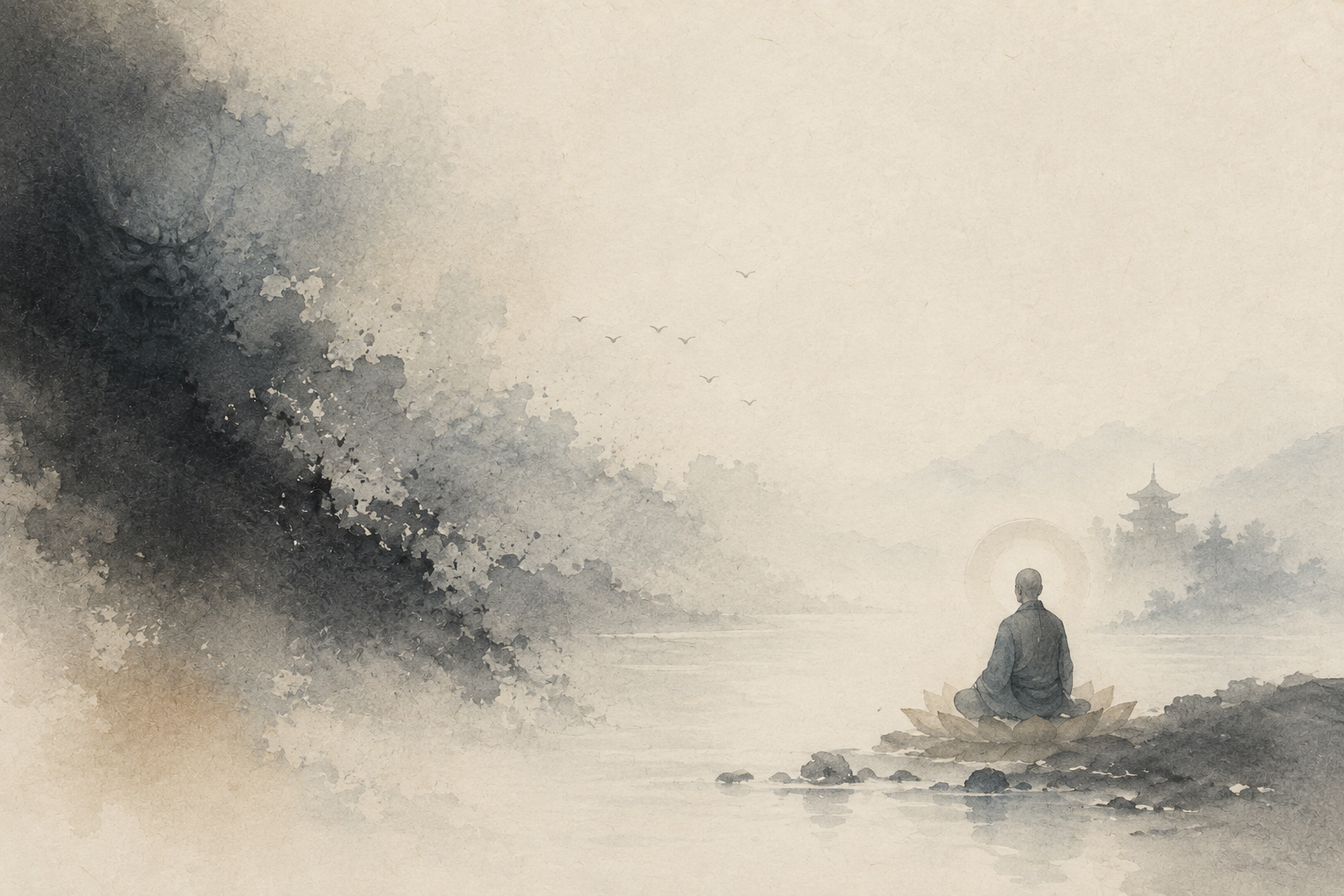
Quick Summary
- Memento mori meaning: “remember you must die,” a prompt to live with clarity rather than fear.
- It’s less a slogan and more a lens: mortality makes priorities visible.
- Used well, it softens procrastination, resentment, and compulsive busyness.
- It can be practiced in seconds: a breath, a pause, a simple recollection.
- It’s not morbid; it’s a way to stop treating life as guaranteed.
- The point is kinder living now—more honesty, fewer delays, more presence.
- If it triggers anxiety, the practice should be gentler and more grounded.
Introduction
You’ve probably seen “memento mori” on jewelry, tattoos, posters, and social media—and the confusion is understandable: is it a dark aesthetic, a motivational hack, or a serious spiritual reminder? The memento mori meaning is simple, but the practice is subtle: it’s a way to remember mortality without collapsing into dread, and to let that remembrance clean up how you spend your attention today. At Gassho, we write about practical contemplative habits that reduce suffering and increase clarity in ordinary life.
When people misunderstand memento mori, they usually swing to one of two extremes: either they romanticize death as “edgy,” or they avoid the topic entirely and keep living as if time is unlimited. Neither extreme helps much. A steady middle approach treats mortality as a fact that can steady the mind and simplify choices.
What “Memento Mori” Really Points To
At the literal level, memento mori is Latin for “remember you must die.” But the phrase isn’t asking you to obsess over death; it’s asking you to stop forgetting it. Forgetting mortality tends to produce a particular kind of mental fog: endless postponing, casual cruelty, and the assumption that you can always fix things later.
As a lens for experience, memento mori highlights impermanence in a very personal way. Not “everything changes” as an abstract idea, but “this conversation, this body, this relationship, this afternoon” as a lived reality. When that lands, even lightly, it changes the emotional math of your day: what matters becomes more obvious, and what doesn’t matter loses some grip.
It also reframes control. Remembering mortality doesn’t give you control over outcomes; it clarifies what you actually control: your next action, your tone, your honesty, your willingness to show up. In that sense, memento mori is less about death and more about responsibility for the present moment.
Most importantly, the phrase is meant to be usable. If the reminder makes you rigid, panicked, or numb, it’s being applied too harshly. A workable memento mori practice feels like a quiet straightening of posture in the mind—less drama, more sincerity.
GASSHO
Ask and learn about Buddhism in daily life.
GASSHO is a Buddhist community app where you can learn Buddhist teachings and ask questions to the head priest of Kongosanmaiin Temple on Mount Koya.
How Remembering Mortality Shows Up in Daily Experience
You’re about to send a message you can’t take back. A quick memento mori recollection—“this life is not endless”—can interrupt the reflex to be sharp, sarcastic, or performative. The mind often softens just enough to choose a cleaner sentence.
You notice yourself scrolling, not because you enjoy it, but because you’re avoiding something: a difficult task, a feeling, a conversation. Remembering mortality doesn’t shame you; it simply asks, “Is this how you want to spend a portion of your finite life?” Sometimes the answer is yes (rest is real). Often the answer is no (avoidance is expensive).
In conflict, the reminder can change what you’re trying to win. When time feels unlimited, the ego can afford to be right for years. When time feels finite, the heart starts to care more about repair than victory. You may still set boundaries, but the energy shifts from punishment to clarity.
In moments of beauty—food, sunlight, a friend laughing—memento mori can sharpen appreciation without forcing gratitude. The mind registers, “This is passing,” and the experience becomes less background noise. It’s not about clinging; it’s about actually being there.
In anxiety, the practice can go either way. If you use memento mori like a threat—“I could die any second!”—you’ll likely tighten. If you use it like a grounding truth—“Life is uncertain; I can meet this moment”—the body may relax. The difference is tone: harsh reminders agitate; gentle reminders clarify.
In decision-making, remembering mortality often exposes hidden motives. You might notice you’re saying yes out of fear of disappointing someone, or saying no out of fear of being seen. The reminder doesn’t dictate the “right” choice; it reveals what’s driving the choice.
Over time (even within a single day), memento mori can feel like a small internal bell. Not constant, not loud—just a periodic return to what’s real. You still plan, you still work, you still enjoy things, but you do it with less unconscious bargaining: “I’ll start living later.”
Common Misreadings That Make It Unhelpful
Misunderstanding 1: “Memento mori means being morbid.” If the phrase leads you into gloom, it’s being used as a mood rather than a mirror. The mirror is simple: life ends. The skill is to let that fact make you more awake, not more dark.
Misunderstanding 2: “It’s a productivity slogan.” Mortality can motivate, but if you turn memento mori into pressure—optimize everything, never rest, hustle harder—you’ve replaced forgetting death with fearing it. A healthier application includes rest, play, and care because those are also part of living.
Misunderstanding 3: “It means nothing matters.” Some people hear “you will die” and conclude that meaning collapses. In practice, the opposite often happens: because time is limited, choices matter more. The reminder can support values—kindness, honesty, courage—precisely because you don’t have infinite chances.
Misunderstanding 4: “Thinking about death will fix my fear of death.” Repetition alone doesn’t guarantee wisdom. If the practice spikes anxiety, it may need to be softened: shorter reflections, more grounding in the body, and more emphasis on what you can do now (one helpful action, one sincere conversation, one breath).
Misunderstanding 5: “It’s only for people in crisis.” The reminder is most useful when life is ordinary. That’s when we drift, postpone, and numb out. Memento mori is a small course-correction that can be practiced in the middle of a normal Tuesday.
Why This Reminder Can Make Life Simpler
The practical value of memento mori is that it reduces mental clutter. When you remember that time is not guaranteed, you’re less likely to feed grudges, inflate minor problems, or chase status as if it will finally make you safe. The mind becomes more willing to drop what’s performative.
It also supports cleaner ethics without preaching. You don’t need a grand theory to see that harsh words linger, that avoidance costs intimacy, and that kindness is often delayed for no good reason. Mortality makes “later” less convincing, which can bring warmth into the present.
In relationships, the reminder can be quietly transformative. Not in a sentimental way, but in a practical way: you may apologize sooner, listen more fully, and stop treating people as background characters in your private story. Remembering death can make room for love that is less possessive and more direct.
And in your own inner life, memento mori can reduce self-deception. It becomes harder to keep promising yourself you’ll start living after the next milestone. The reminder doesn’t demand dramatic change; it invites small, honest adjustments that add up.
Conclusion
The memento mori meaning isn’t complicated: remember you will die. What’s challenging—and worthwhile—is letting that truth touch your choices without turning it into fear, performance, or pressure. Used gently, it becomes a steadying practice: it clears priorities, softens reactivity, and brings you back to the only place life can be lived—right here.
If you want to try it, keep it small: one pause a day, one breath, one honest question—“Given that life is finite, what matters most in this moment?” Then do the next kind, clear thing you can do.
Ask a Buddhist priest
Have a question about Buddhism?
In the GASSHO app, you can ask questions about Buddhist teachings, daily concerns, and how to understand Buddhism in everyday life.
GASSHO is an app for exploring Buddhism in everyday life.
Learn more about Buddhist deities.


Frequently Asked Questions
- FAQ 1: What is the literal memento mori meaning?
- FAQ 2: What does memento mori mean in everyday life?
- FAQ 3: Is memento mori meaning the same as “life is short”?
- FAQ 4: Does memento mori meaning imply being pessimistic?
- FAQ 5: What is the spiritual meaning of memento mori?
- FAQ 6: What does memento mori mean as a practice, not just a phrase?
- FAQ 7: Can the memento mori meaning help with procrastination?
- FAQ 8: What does memento mori mean in relation to anxiety about death?
- FAQ 9: Is memento mori meaning the same as “nothing matters”?
- FAQ 10: What does memento mori mean for relationships?
- FAQ 11: What does memento mori mean in modern usage?
- FAQ 12: How do you reflect on the memento mori meaning without becoming depressed?
- FAQ 13: What is the difference between memento mori meaning and carpe diem?
- FAQ 14: What does memento mori mean if I’m grieving?
- FAQ 15: What is a simple daily reminder that captures the memento mori meaning?
FAQ 1: What is the literal memento mori meaning?
Answer: Literally, memento mori is Latin for “remember you must die.” It’s a direct reminder of mortality, meant to bring clarity to how you live now rather than to create a gloomy mood.
Takeaway: The phrase is a mortality reminder, not a decoration or a threat.
FAQ 2: What does memento mori mean in everyday life?
Answer: In daily life, memento mori means pausing to remember that time is limited, then letting that fact inform your next choice—how you speak, what you prioritize, and what you stop postponing.
Takeaway: It’s a practical pause that helps you choose more deliberately.
FAQ 3: Is memento mori meaning the same as “life is short”?
Answer: They’re related, but not identical. “Life is short” can stay motivational or vague, while memento mori is more precise: you will die, and remembering that can cut through denial and distraction.
Takeaway: Memento mori is a sharper, more personal reminder than a general slogan.
FAQ 4: Does memento mori meaning imply being pessimistic?
Answer: Not necessarily. The reminder can be sobering, but its purpose is often to support appreciation, honesty, and cleaner priorities. Pessimism comes from the tone you add, not from the phrase itself.
Takeaway: The meaning is neutral; your approach determines whether it feels heavy or clarifying.
FAQ 5: What is the spiritual meaning of memento mori?
Answer: Spiritually, memento mori points to living with awareness of impermanence—using mortality as a mirror that reveals what you cling to, what you avoid, and what you genuinely value.
Takeaway: Its spiritual use is to wake up attention and reduce unconscious living.
FAQ 6: What does memento mori mean as a practice, not just a phrase?
Answer: As a practice, it’s a brief recollection of mortality—sometimes a single sentence—followed by a small realignment: soften your tone, do the important task, tell the truth, or let go of a petty fixation.
Takeaway: The practice is “remember, then realign,” even in tiny ways.
FAQ 7: Can the memento mori meaning help with procrastination?
Answer: Yes, because it challenges the assumption that you can always do it later. Remembering mortality can make avoidance feel less rewarding and make one small step feel more meaningful.
Takeaway: Mortality awareness can reduce “later” thinking and support action.
FAQ 8: What does memento mori mean in relation to anxiety about death?
Answer: It can either intensify anxiety or soften it, depending on how it’s used. If applied harshly, it can feel threatening; if applied gently, it can ground you in what you can do now and reduce frantic control-seeking.
Takeaway: The meaning doesn’t require fear; a gentle tone makes it workable.
FAQ 9: Is memento mori meaning the same as “nothing matters”?
Answer: No. “Nothing matters” is a nihilistic conclusion, while memento mori is a clarifying reminder. Many people find it makes actions matter more because opportunities are finite.
Takeaway: Memento mori tends to sharpen meaning, not erase it.
FAQ 10: What does memento mori mean for relationships?
Answer: It means remembering that time with others is limited, which can encourage more direct care: apologizing sooner, listening more fully, and not wasting closeness on pride or scorekeeping.
Takeaway: Mortality awareness can make love and repair feel more urgent and simple.
FAQ 11: What does memento mori mean in modern usage?
Answer: Today it’s used in art, fashion, and self-help, but the core memento mori meaning remains a reminder of death meant to influence how you live. The modern risk is turning it into an aesthetic without the inner reflection.
Takeaway: Modern use varies, but the core meaning is still mortality remembrance.
FAQ 12: How do you reflect on the memento mori meaning without becoming depressed?
Answer: Keep reflections brief and grounded: acknowledge mortality, feel one breath, then choose one kind or necessary action. If you spiral, shorten the reflection and focus on what’s tangible and supportive in the present.
Takeaway: Small, grounded reflection keeps the meaning clarifying rather than crushing.
FAQ 13: What is the difference between memento mori meaning and carpe diem?
Answer: Memento mori emphasizes remembering death; carpe diem emphasizes seizing the day. They can complement each other, but memento mori is the sobering reminder that makes “seize the day” feel honest rather than impulsive.
Takeaway: Memento mori is the grounding truth; carpe diem is one possible response.
FAQ 14: What does memento mori mean if I’m grieving?
Answer: In grief, the phrase can be too sharp if used as a slogan. A gentler reading is simply acknowledging impermanence while honoring love and loss—without forcing yourself to “move on” quickly.
Takeaway: In grief, hold the meaning softly; let it support tenderness, not pressure.
FAQ 15: What is a simple daily reminder that captures the memento mori meaning?
Answer: A simple daily reminder is: “This day is not promised.” Pause for one breath, then ask, “What matters most in the next hour?” and act on one small, clear priority.
Takeaway: One breath plus one honest question can embody the meaning in daily life.