



Bodhi Day: How Buddhists Remember the Buddha’s Awakening
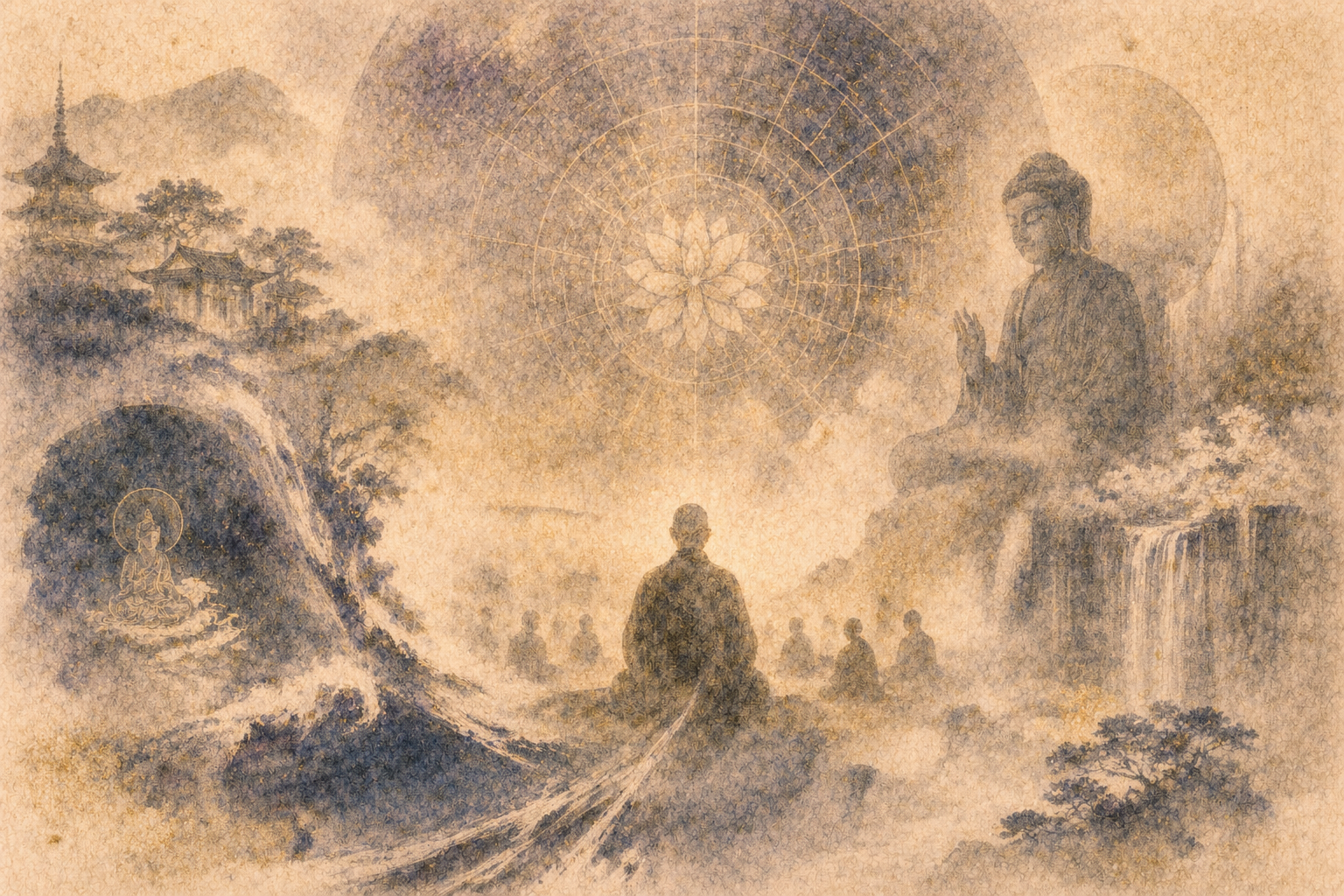
Quick Summary
- Bodhi Day is a Buddhist holiday that remembers the Buddha’s awakening (enlightenment) under the Bodhi tree.
- Many people observe it on December 8, though dates can vary by country and tradition.
- It’s less about “celebrating a miracle” and more about honoring clarity, compassion, and steady practice.
- Common observances include meditation, reading teachings, simple offerings, and acts of generosity.
- A meaningful Bodhi Day can be quiet and ordinary: one sincere intention is enough.
- The day points to a practical question: what happens when we stop feeding confusion and start paying attention?
Introduction
If you’ve heard of Bodhi Day but aren’t sure whether it’s a “Buddhist Christmas,” a strict religious obligation, or just a nice idea, you’re not alone—and the mixed explanations online don’t help. Bodhi Day is simple: it’s a reminder of awakening as something human, grounded, and relevant to the way your mind works on an average day. At Gassho, we focus on practical Buddhist living and clear, no-hype explanations.
The word “bodhi” means awakening: seeing clearly, without the usual fog of grasping, aversion, and distraction. Bodhi Day remembers the Buddha’s awakening not as a distant legend, but as a symbol of what becomes possible when attention is steady and the heart is trained toward kindness.
People observe Bodhi Day in many ways—some formal, some very simple. What matters most is the direction: turning toward clarity, ethical care, and compassion, even in small, realistic steps.
A Clear Lens for Understanding Bodhi Day
Bodhi Day can be understood as a yearly “reset” for how we relate to experience. Instead of treating awakening as a supernatural event that happened to someone else long ago, the day invites a different lens: notice how confusion is built moment by moment, and notice how it can soften when we stop adding fuel.
In this lens, awakening isn’t a trophy and it isn’t a personality upgrade. It’s the simple, sometimes uncomfortable honesty of seeing what’s happening in the mind—craving, irritation, fear, pride—without immediately obeying it. Bodhi Day points to the possibility of meeting life without being pushed around by every impulse.
Remembering the Buddha’s awakening is also a way of remembering cause and effect in the inner world. When attention is scattered, we miss what we’re doing as we do it. When attention is collected, we can see the chain: a thought appears, a story forms, the body tightens, a reaction follows. That clarity creates space for a wiser response.
Finally, Bodhi Day is a compassion practice in disguise. Clear seeing isn’t cold or detached; it naturally supports kindness. When you see how suffering is constructed—yours and others’—it becomes harder to justify harshness, and easier to choose patience, restraint, and care.
GASSHO
Ask and learn about Buddhism in daily life.
GASSHO is a Buddhist community app where you can learn Buddhist teachings and ask questions to the head priest of Kongosanmaiin Temple on Mount Koya.
What Bodhi Day Looks Like in Ordinary Life
On Bodhi Day, you might sit down intending to be calm and immediately notice the opposite: a restless mind, a list of worries, a pull toward your phone. That moment is not a failure; it’s the point. Awakening begins with seeing what is actually happening, not what you wish were happening.
You may notice how quickly the mind turns experience into commentary. A small discomfort becomes “I can’t do this.” A memory becomes “I always mess things up.” Bodhi Day practice can be as simple as catching that commentary and returning to something direct: breathing, sounds, sensations, the feeling of sitting here.
During the day, ordinary friction becomes a teacher. Someone cuts you off in traffic, a coworker is short with you, a family member repeats the same complaint. The mind wants to tighten into blame. Bodhi Day is a chance to notice the first spark—before the fire—when irritation is still just a sensation and a thought, not a full identity.
You might also notice the subtler habits: the need to be right, the urge to win, the reflex to perform. These don’t look like “big suffering,” but they quietly drain the heart. Remembering awakening can mean practicing one small reversal: listening without preparing your next line, letting someone else have the last word, choosing honesty over image.
Many people include generosity on Bodhi Day, and it doesn’t have to be dramatic. You can give time, attention, money, food, or forgiveness. The inner practice is noticing what it feels like to loosen the fist—how the body softens when you stop clinging to “mine.”
Even if you do nothing “special,” you can still observe Bodhi Day by making one deliberate pause. Before speaking, pause. Before buying, pause. Before reacting, pause. That pause is a small echo of awakening: a gap where choice becomes possible.
At the end of the day, reflection matters more than perfection. What did you notice about craving, aversion, and distraction? Where did you meet experience directly, even for a few seconds? Bodhi Day can be a gentle audit of attention—without self-judgment.
Common Misunderstandings About Bodhi Day
“Bodhi Day is only for monks or serious Buddhists.” Many people observe it privately at home. A short sit, a candle, a reading, or a kind action can be a complete observance.
“It’s a celebration of the Buddha as a god.” Bodhi Day is typically about remembering awakening as a human possibility: clarity, compassion, and freedom from compulsive reactivity.
“If I don’t feel peaceful, I’m doing it wrong.” Bodhi Day often reveals the mind’s noise. Seeing restlessness clearly is already a meaningful practice.
“It has to look a certain way.” Some communities hold long meditation sessions; others focus on service or study. The heart of the day is intention: turning toward wakefulness and care.
“Awakening means never having problems again.” Bodhi Day points toward wiser relationship with problems—less compulsion, more clarity—not a life without difficulty.
Why Bodhi Day Still Matters Today
Bodhi Day matters because modern life is designed to fragment attention. When attention is constantly pulled outward, we lose contact with the inner causes of stress: the stories we repeat, the comparisons we feed, the reactions we rehearse. A day dedicated to awakening is a practical counterweight.
It also matters because ethics and attention are linked. When we’re not aware, we speak sharply, spend impulsively, and treat people as obstacles. When we’re aware, we can choose restraint and kindness without making it a moral performance.
Bodhi Day is a reminder that compassion is trainable. Not as a mood, but as a habit: noticing suffering, not turning away, and responding in ways that reduce harm. Even one day a year can strengthen that direction.
Finally, Bodhi Day offers hope without fantasy. It doesn’t ask you to believe in a perfect version of yourself. It asks you to look closely at what’s happening right now—and to practice one small step toward clarity.
Conclusion
Bodhi Day remembers the Buddha’s awakening, but its real gift is personal and immediate: a chance to practice seeing clearly and responding kindly. If you keep it simple—one period of quiet, one act of generosity, one honest reflection—you’re already honoring what the day points to.
Awakening doesn’t have to be treated as distant or dramatic. On Bodhi Day, the most meaningful tribute is a mind that pauses, notices, and chooses less harm.
Ask a Buddhist priest
Have a question about Buddhism?
In the GASSHO app, you can ask questions about Buddhist teachings, daily concerns, and how to understand Buddhism in everyday life.
GASSHO is an app for exploring Buddhism in everyday life.
Learn more about Buddhist deities.


Frequently Asked Questions
- FAQ 1: What is Bodhi Day?
- FAQ 2: When is Bodhi Day celebrated?
- FAQ 3: What does “bodhi” mean in Bodhi Day?
- FAQ 4: Is Bodhi Day the Buddhist equivalent of Christmas?
- FAQ 5: How do Buddhists celebrate Bodhi Day?
- FAQ 6: What is a simple way to observe Bodhi Day at home?
- FAQ 7: Do you have to be Buddhist to observe Bodhi Day?
- FAQ 8: What is the story behind Bodhi Day?
- FAQ 9: Why do some people observe Bodhi Day on different dates?
- FAQ 10: What foods are traditionally eaten on Bodhi Day?
- FAQ 11: What is a meaningful Bodhi Day intention to set?
- FAQ 12: Is Bodhi Day about achieving enlightenment?
- FAQ 13: What symbols are associated with Bodhi Day?
- FAQ 14: How is Bodhi Day different from Vesak?
- FAQ 15: What is an appropriate greeting for Bodhi Day?
FAQ 1: What is Bodhi Day?
Answer: Bodhi Day is a Buddhist observance that commemorates the Buddha’s awakening (bodhi), traditionally remembered as occurring under the Bodhi tree after deep meditation and insight.
Takeaway: Bodhi Day is about remembering awakening as clarity and compassion, not just a historical date.
FAQ 2: When is Bodhi Day celebrated?
Answer: Many Buddhists observe Bodhi Day on December 8, but the date can vary depending on country, calendar system, and local community customs.
Takeaway: December 8 is common, but Bodhi Day timing isn’t universal.
FAQ 3: What does “bodhi” mean in Bodhi Day?
Answer: “Bodhi” means awakening—seeing clearly into the nature of experience and no longer being driven in the same way by craving, aversion, and confusion.
Takeaway: Bodhi points to waking up to how the mind creates suffering.
FAQ 4: Is Bodhi Day the Buddhist equivalent of Christmas?
Answer: Not really. Bodhi Day is typically quieter and practice-focused, centered on remembrance, meditation, study, and generosity rather than gift-giving or a family festival structure.
Takeaway: Bodhi Day is more reflective than celebratory in a holiday-commercial sense.
FAQ 5: How do Buddhists celebrate Bodhi Day?
Answer: Observances vary, but common practices include meditation, chanting or reading teachings, making simple offerings (like lights or incense), and doing acts of generosity or service.
Takeaway: There’s no single required ritual—Bodhi Day is often kept simply.
FAQ 6: What is a simple way to observe Bodhi Day at home?
Answer: You can set aside a short period for quiet sitting, read a short passage about the Buddha’s awakening, light a candle as a symbol of clarity, and choose one concrete act of kindness that day.
Takeaway: A small, sincere home observance is enough for Bodhi Day.
FAQ 7: Do you have to be Buddhist to observe Bodhi Day?
Answer: No. Many non-Buddhists observe Bodhi Day as a day of reflection on attention, compassion, and reducing harm, while respectfully acknowledging its Buddhist roots.
Takeaway: Bodhi Day can be observed respectfully without formal conversion.
FAQ 8: What is the story behind Bodhi Day?
Answer: Bodhi Day recalls the Buddha’s awakening after sustained meditation and deep investigation of suffering and its causes, traditionally associated with sitting beneath the Bodhi tree.
Takeaway: The story highlights steady attention and insight rather than spectacle.
FAQ 9: Why do some people observe Bodhi Day on different dates?
Answer: Different Buddhist communities use different calendars and have different historical customs, so the commemoration of the Buddha’s awakening may fall on varying days.
Takeaway: Date differences reflect cultural and calendar diversity, not disagreement about the meaning.
FAQ 10: What foods are traditionally eaten on Bodhi Day?
Answer: There isn’t one universal Bodhi Day menu, but some people choose simple vegetarian meals, rice or porridge, tea, or modest dishes that support a reflective, non-indulgent tone.
Takeaway: Bodhi Day food traditions are usually simple and community-specific.
FAQ 11: What is a meaningful Bodhi Day intention to set?
Answer: A helpful intention is to practice clear seeing and kindness in one specific area—such as pausing before reacting, speaking more gently, or doing one act of generosity without seeking credit.
Takeaway: Keep Bodhi Day intentions concrete and doable.
FAQ 12: Is Bodhi Day about achieving enlightenment?
Answer: Bodhi Day is primarily about remembrance and practice, not pressure to “achieve” something. It encourages conditions for clarity—attention, ethics, and compassion—without turning awakening into a performance goal.
Takeaway: Bodhi Day supports practice; it doesn’t demand a dramatic result.
FAQ 13: What symbols are associated with Bodhi Day?
Answer: Common symbols include the Bodhi tree (or leaves), lights or candles representing wisdom, and simple offerings that express gratitude and aspiration toward awakening.
Takeaway: Bodhi Day symbols point to clarity, steadiness, and remembrance.
FAQ 14: How is Bodhi Day different from Vesak?
Answer: Vesak often commemorates multiple events in the Buddha’s life (commonly birth, awakening, and passing), while Bodhi Day focuses specifically on the Buddha’s awakening.
Takeaway: Bodhi Day is a focused remembrance of awakening; Vesak is broader.
FAQ 15: What is an appropriate greeting for Bodhi Day?
Answer: There’s no single standard greeting, but “Happy Bodhi Day” is common in English. Some people also use “Gassho” as a respectful gesture of greeting and gratitude, depending on context.
Takeaway: A simple, respectful “Happy Bodhi Day” is usually appropriate.