



Why Buddhist Practice Does Not Ask Us to Deny Pain
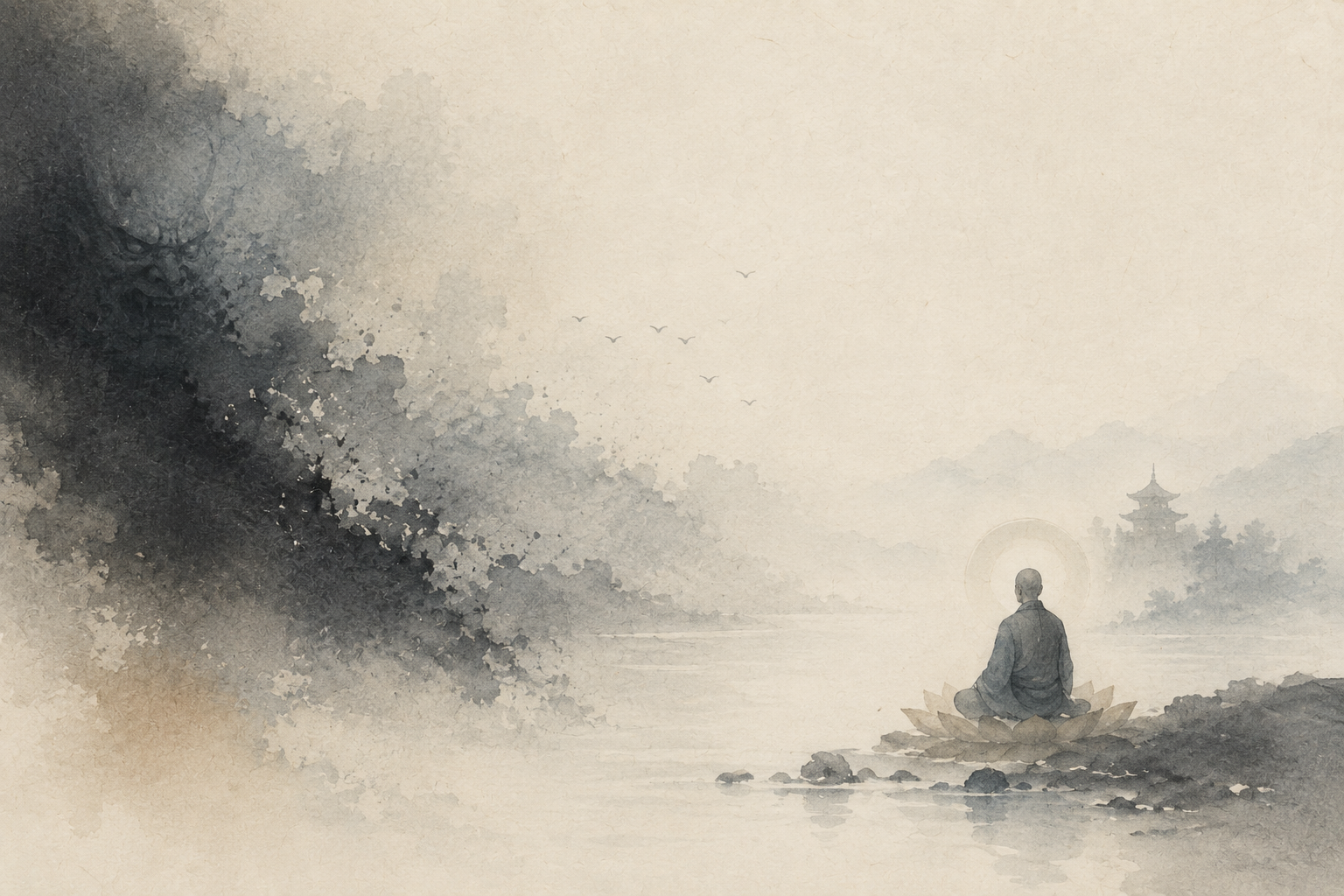
Quick Summary
- Buddhist practice does not ask you to deny pain; it asks you to stop adding extra suffering on top of it.
- Pain is treated as real, immediate experience—something to be met clearly, not argued away.
- The key shift is from “Why is this happening to me?” to “What is happening right now in body and mind?”
- Practice trains attention to notice reactions like tightening, resisting, blaming, and catastrophizing.
- Compassion includes yourself: acknowledging pain is often the first act of care.
- Acceptance is not approval; it’s dropping the fight with what is already here so wise action becomes possible.
- This approach supports everyday resilience without pretending life is painless.
Introduction
If you’ve been around Buddhist language for a while, it can sound like you’re supposed to “let go” so completely that pain shouldn’t touch you—like the goal is to become calm, unbothered, and somehow above it all. That reading is not only unrealistic; it can quietly turn practice into self-gaslighting, where you feel pain and then shame yourself for feeling it. At Gassho, we write about Buddhist practice as something you can test in real life—especially when it hurts.
The point isn’t to deny pain, suppress emotion, or force a spiritual smile. The point is to meet pain without the reflex to harden around it, narrate it into a personal failure, or turn it into a permanent identity.
A Clear Lens: Pain Is Real, Added Suffering Is Optional
A practical Buddhist lens starts with a simple distinction: there is the raw fact of pain, and there is what the mind adds to it. The raw fact might be physical discomfort, grief, anxiety, or disappointment—direct sensations and emotions that arise in experience. The added layer is the struggle: “This shouldn’t be happening,” “I can’t handle this,” “This means something is wrong with me,” “This will never end.”
This isn’t a belief system you have to adopt; it’s an experiment you can run. When pain appears, notice what happens next. Does the body tense? Does the mind search for someone to blame? Does it jump into the future and rehearse worst-case outcomes? That secondary activity often hurts as much as the original pain—sometimes more.
From this view, practice is not a demand to be numb. It’s training in clarity and kindness: seeing pain as pain, seeing reaction as reaction, and learning that you don’t have to fuse them into one solid, hopeless experience. Pain is acknowledged; the compulsive war with pain is questioned.
When people say “acceptance,” it can sound passive. Here it’s more like accuracy: admitting what is already true in this moment so you can respond wisely. Denial blocks response. Clear seeing supports response.
GASSHO
Ask and learn about Buddhism in daily life.
GASSHO is a Buddhist community app where you can learn Buddhist teachings and ask questions to the head priest of Kongosanmaiin Temple on Mount Koya.
What It Looks Like in Ordinary Moments
Imagine you wake up with a tight neck. The first moment is sensation: pressure, heat, stiffness. Then the mind arrives: “Not today,” “I’m going to be miserable,” “I can’t work like this.” The practice is not to pretend the neck feels fine. The practice is to notice the instant the mind starts turning sensation into a story of doom.
Or consider emotional pain: you send a message and don’t get a reply. There’s a small sting—uncertainty, vulnerability. Then comes the surge: replaying what you wrote, imagining rejection, building a case against yourself or the other person. Practice doesn’t erase the sting. It helps you see the replaying as replaying, the imagining as imagining.
In the body, this often shows up as bracing. You may notice shoulders lifting, jaw clenching, breath getting shallow. The pain is one thing; the bracing is another. When bracing softens even slightly, the experience can become more workable—not because pain is denied, but because resistance is reduced.
In the mind, it can show up as bargaining: “If I practice correctly, I won’t feel this.” That bargain is a hidden form of denial. A more honest approach is: “This hurts. And I can stay present with what’s here for one breath.” Not heroic. Not dramatic. Just one breath of not abandoning yourself.
Another common moment is when pain triggers comparison. “Other people handle this better.” “I should be over this by now.” Comparison adds a second wound: shame. Practice invites a different move—naming the experience plainly: “Pain is here. Shame is here.” Naming is not cold; it’s stabilizing.
Over time, you may notice that pain has texture and movement. It pulses, shifts, intensifies, fades, returns. Seeing that movement doesn’t make pain unreal; it makes it less monolithic. The mind’s story tends to be solid—“always,” “never,” “forever.” Direct observation tends to be more nuanced.
And sometimes the most important lived detail is this: you can care for pain without making it your whole identity. You can rest, seek help, set boundaries, take medicine, talk to a friend—while also not feeding the inner voice that says your life is nothing but this pain.
Where People Get Misled About “Letting Go”
One misunderstanding is that Buddhist practice aims at emotional shutdown. People hear “non-attachment” and assume it means not feeling. But not feeling is not freedom; it’s often a form of freezing. Practice points more toward intimacy with experience—feeling what is there without being dragged into compulsive reaction.
Another misunderstanding is using spiritual ideas to override the body. If you’re in pain and you tell yourself, “Pain is an illusion, so I shouldn’t respond,” you may ignore signals that require care. A grounded practice respects the body’s messages and supports appropriate action. Clear seeing includes knowing when to rest, when to ask for help, and when to change what can be changed.
A third misunderstanding is confusing acceptance with approval. Accepting that pain is present does not mean you like it, want it, or think it’s “meant to be.” It means you stop spending all your energy arguing with reality in the exact moment it is already happening. That energy can then go toward wise choices.
Finally, some people turn practice into a performance: “I’m practicing, so I must look calm.” That pressure creates more suffering. Pain doesn’t become less painful because you hide it. Often it becomes heavier because you carry it alone.
Why This Approach Changes Daily Life
When you stop treating pain as a personal failure, you regain dignity. You can say, “This is hard,” without concluding, “I am broken.” That shift is subtle, but it affects how you speak to yourself, how you ask for support, and how you recover after setbacks.
It also improves relationships. Denying pain often makes you irritable, withdrawn, or performatively “fine.” Acknowledging pain—without dumping it on others—makes communication clearer: “I’m not at my best today. I’m dealing with something. I may need patience.” That honesty reduces confusion and resentment.
In practical terms, this lens helps you separate what needs care from what needs release. Some pain calls for action: a doctor’s visit, a difficult conversation, a boundary, a change in schedule. Some pain calls for presence: breathing, feeling, allowing tears, letting the nervous system settle. Denial blurs these options; clarity restores them.
Most importantly, it supports a kind of courage that isn’t aggressive. You don’t have to “win” against pain to live well. You can live with tenderness and realism, responding to what’s here without making it into a life sentence.
Conclusion
“Why Buddhist practice does not ask us to deny pain” comes down to a humane point: denial is another form of suffering. Practice is not a demand to be untouched; it’s an invitation to be honest about what hurts and to notice what we add—tension, stories, shame, resistance—so we can set some of that down.
Pain may still be present. But when you stop fighting the fact of pain, you often discover more space to breathe, more capacity to choose, and more kindness toward yourself and others.
Ask a Buddhist priest
Have a question about Buddhism?
In the GASSHO app, you can ask questions about Buddhist teachings, daily concerns, and how to understand Buddhism in everyday life.
Frequently Asked Questions
- FAQ 1: Why does Buddhist practice not ask us to deny pain?
- FAQ 2: If I accept pain, am I supposed to stop trying to fix it?
- FAQ 3: What is the difference between pain and suffering in Buddhist practice?
- FAQ 4: Does “letting go” mean I shouldn’t feel pain as strongly?
- FAQ 5: Is it “un-Buddhist” to cry or feel overwhelmed by pain?
- FAQ 6: Why can denying pain make it worse?
- FAQ 7: How do I practice with pain without getting lost in it?
- FAQ 8: Does Buddhist practice claim pain is an illusion?
- FAQ 9: What does compassion look like when I’m in pain?
- FAQ 10: How can I tell the difference between acceptance and resignation about pain?
- FAQ 11: Why do I feel guilty that practice isn’t making my pain go away?
- FAQ 12: Can Buddhist practice help with chronic pain without denying it?
- FAQ 13: If I focus on pain, won’t I amplify it?
- FAQ 14: How does Buddhist practice relate to emotional pain like grief or heartbreak?
- FAQ 15: What is one simple way to practice when pain hits suddenly?
FAQ 1: Why does Buddhist practice not ask us to deny pain?
Answer: Because denial adds a second layer of struggle—tension, fear, shame, and mental fighting—on top of the original pain. Practice emphasizes meeting pain honestly so you can respond with clarity rather than react from resistance.
Takeaway: Pain is acknowledged; the extra suffering created by resistance is what practice helps reduce.
FAQ 2: If I accept pain, am I supposed to stop trying to fix it?
Answer: No. Acceptance means recognizing what is happening right now without arguing with it internally. From that clear recognition, you can still take practical steps—rest, treatment, boundaries, or asking for help—without panic or self-blame driving the decision.
Takeaway: Acceptance supports wise action; it doesn’t replace it.
FAQ 3: What is the difference between pain and suffering in Buddhist practice?
Answer: Pain is the raw experience (physical discomfort, grief, anxiety). Suffering is often the added mental and emotional struggle around it—resisting, catastrophizing, identifying with it, or demanding it be different immediately.
Takeaway: You may not control the first arrow (pain), but you can work with the second arrow (added suffering).
FAQ 4: Does “letting go” mean I shouldn’t feel pain as strongly?
Answer: Letting go primarily means releasing the compulsive tightening and storytelling around pain, not forcing the sensation or emotion to disappear. Sometimes pain intensity changes; sometimes it doesn’t. The main shift is how you relate to it.
Takeaway: Letting go is about dropping the fight, not erasing feeling.
FAQ 5: Is it “un-Buddhist” to cry or feel overwhelmed by pain?
Answer: No. Crying and feeling overwhelmed are human responses. Practice is not a rule that forbids emotion; it’s a way to be present with emotion without adding harsh judgment like “I shouldn’t be like this.”
Takeaway: Feeling pain fully can be part of practice when it’s met with honesty and care.
FAQ 6: Why can denying pain make it worse?
Answer: Denial often creates internal conflict: the body says “this hurts,” while the mind insists “it shouldn’t.” That split can amplify stress responses, increase tension, and add shame—turning manageable pain into a more consuming experience.
Takeaway: Denial multiplies pain by adding stress and self-judgment.
FAQ 7: How do I practice with pain without getting lost in it?
Answer: Start by separating components: physical sensations, emotions, and thoughts. Notice each one as it appears (“tightness,” “sadness,” “worry story”) and return to something simple like the breath or contact with the ground. This keeps pain acknowledged but not totalizing.
Takeaway: Name what’s here, then anchor attention so pain doesn’t become your entire world.
FAQ 8: Does Buddhist practice claim pain is an illusion?
Answer: In practical terms, practice treats pain as a real experience that deserves care and attention. Even when teachings discuss how experiences are constructed, that is not a license to dismiss pain or ignore the body’s needs.
Takeaway: Whatever the philosophy, the practice approach is: pain is real in experience—meet it responsibly.
FAQ 9: What does compassion look like when I’m in pain?
Answer: Compassion can be as simple as stopping self-criticism, softening the body where possible, speaking to yourself gently, and choosing supportive actions (rest, medical care, honest communication). It’s treating pain as worthy of kindness, not as a weakness.
Takeaway: Compassion begins with not abandoning yourself when it hurts.
FAQ 10: How can I tell the difference between acceptance and resignation about pain?
Answer: Acceptance is clear, present-moment honesty that keeps options open. Resignation is a collapsed conclusion like “Nothing can change.” Acceptance may still include treatment, boundaries, and problem-solving; resignation tends to shut those down.
Takeaway: Acceptance is awake and responsive; resignation is shut down.
FAQ 11: Why do I feel guilty that practice isn’t making my pain go away?
Answer: Many people unconsciously turn practice into a performance goal: “If I do this right, I won’t hurt.” When pain remains, they assume failure. A healthier frame is that practice changes your relationship to pain, not your humanity.
Takeaway: Pain persisting is not proof you’re doing practice wrong.
FAQ 12: Can Buddhist practice help with chronic pain without denying it?
Answer: Yes, by training you to notice tension, fear, and mental spirals that often accompany chronic pain, and by supporting steadier attention and kinder self-talk. This doesn’t replace medical care, but it can reduce the added suffering that makes chronic pain harder to live with.
Takeaway: Practice can ease the “extra layer” around chronic pain while respecting the need for treatment.
FAQ 13: If I focus on pain, won’t I amplify it?
Answer: Obsessive focus can amplify pain, but mindful attention is different: it’s steady, curious, and less reactive. The aim is not to stare at pain aggressively, but to notice it clearly while also relaxing resistance and widening awareness to include breath, sounds, and the rest of the body.
Takeaway: Mindful attention is balanced—clear enough to be honest, wide enough to avoid fixation.
FAQ 14: How does Buddhist practice relate to emotional pain like grief or heartbreak?
Answer: It encourages you to feel the emotion directly—sadness, longing, emptiness—without immediately converting it into harsh narratives (“I’ll never be okay,” “I’m unlovable”). Grief is honored as real; the practice is to reduce the self-punishing and future-tripping that often rides on top of it.
Takeaway: Emotional pain is not denied; the added self-attack and catastrophic storylines are what you learn to loosen.
FAQ 15: What is one simple way to practice when pain hits suddenly?
Answer: Try a three-step check-in: (1) name it plainly (“pain is here”), (2) feel where it lands in the body without commentary for one or two breaths, and (3) soften what you can (jaw, shoulders, belly) while choosing one helpful next action. This keeps pain real and workable rather than denied or dramatized.
Takeaway: A brief, honest check-in can prevent pain from turning into a full spiral.