



How Japanese Music Can Carry Buddhist Ideas
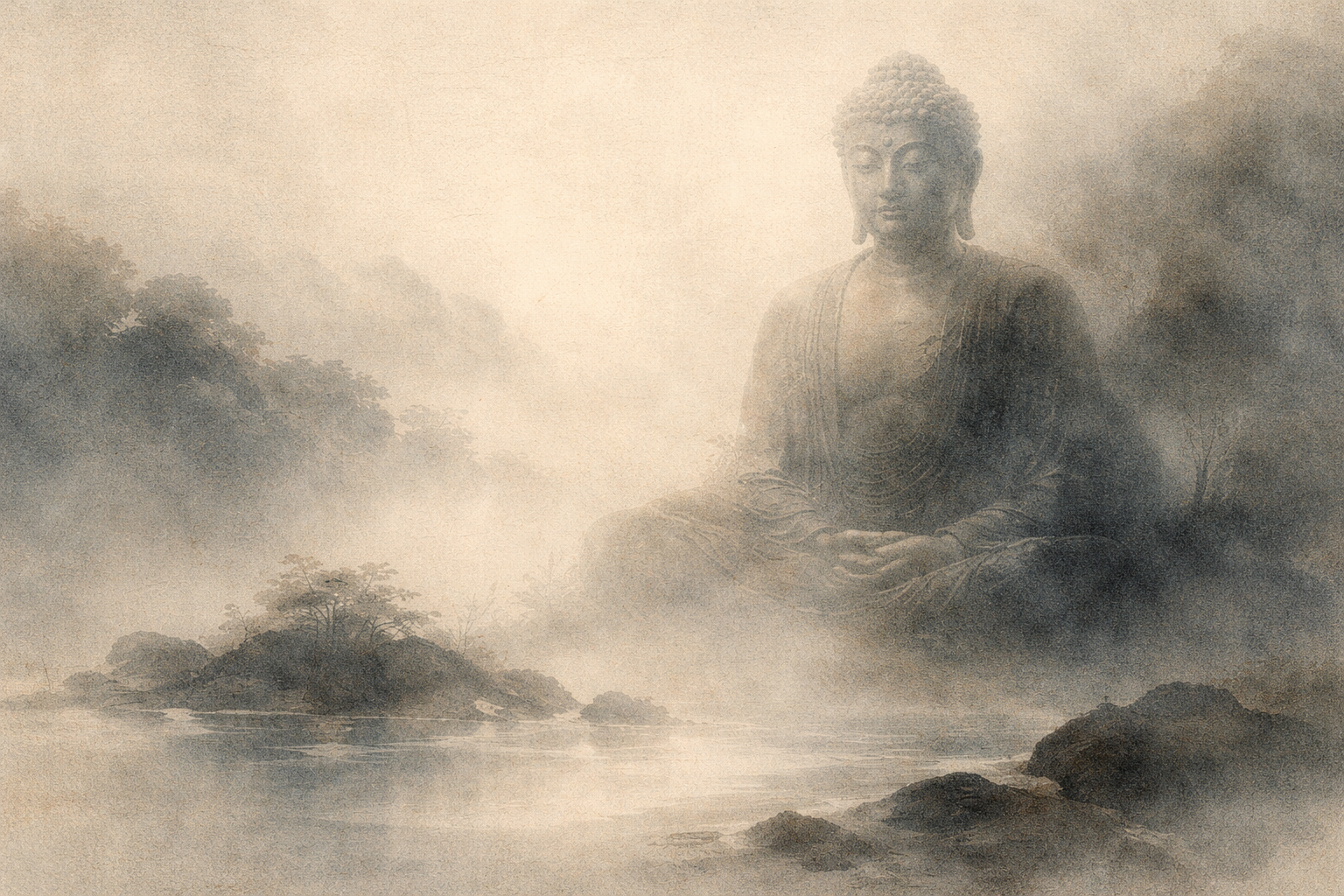
How Japanese Music Can Carry Buddhist Ideas
Quick Summary
- Japanese music often communicates Buddhist ideas through mood, pacing, and restraint rather than explicit lyrics.
- Silence, space, and “not filling everything in” can mirror Buddhist attention to impermanence and non-grasping.
- Repetition and cyclical forms can train the ear to notice change inside what seems “the same.”
- Ritual sound (chant, bells, drums) can function as a practical cue for presence, not a performance.
- Traditional aesthetics like simplicity and asymmetry can support a less possessive way of listening.
- You don’t need to “believe” anything to feel the effect; the listening itself is the point.
- Daily listening habits can become a gentle training in attention, patience, and letting go.
Introduction
You can listen to Japanese music—traditional, contemporary, or somewhere in between—and sense something quietly “Buddhist” in it, yet struggle to explain what that means without turning it into vague mysticism or cultural stereotypes. The confusion usually comes from expecting Buddhist ideas to arrive as clear messages, when Japanese music often carries them as a way of hearing: how sound appears, fades, leaves space, and refuses to be owned. At Gassho, we focus on practical, experience-based Buddhism and how it shows up in ordinary life.
When people say a piece feels contemplative, they’re often pointing to specific musical choices: slower unfolding, fewer notes, a willingness to let a tone decay fully, and an acceptance that the “meaning” isn’t pinned down. Those choices can act like a gentle lesson in how to relate to experience—without needing a lecture.
This matters because listening is one of the most frequent things we do while trying to manage our minds. Music can either reinforce grasping (more stimulation, more control, more certainty) or it can soften it. Japanese musical traditions have many examples of the second approach.
GASSHO
Ask and learn about Buddhism in daily life.
GASSHO is a Buddhist community app where you can learn Buddhist teachings and ask questions to the head priest of Kongosanmaiin Temple on Mount Koya.
A Listening Lens for Buddhist Ideas
A useful way to understand how Japanese music can carry Buddhist ideas is to treat “Buddhist ideas” as a lens on experience rather than a set of claims. The lens is simple: notice how things arise, change, and pass; notice how the mind tries to hold them; notice what happens when you don’t. Music is an ideal training ground because it is made of appearing and disappearing.
In many Japanese styles, the most important “content” is not a dense melody or a dramatic climax, but the relationship between sound and silence. A note is allowed to be incomplete, to trail off, to leave you with an afterimage. That can echo a Buddhist emphasis on impermanence—not as a gloomy thought, but as a direct sensory fact: the tone cannot be kept.
Another part of the lens is non-grasping. Some music invites you to consume it quickly, to chase the next hit of novelty. Other music invites you to stay with what is already here. When a piece uses restraint, repetition, or spacious phrasing, it can nudge the listener toward a less possessive relationship with sound: hearing without immediately demanding more.
Finally, Japanese music often values suggestion over declaration. Instead of forcing a single emotional interpretation, it can leave room for the listener’s mind to reveal itself. That room is where Buddhist ideas become practical: you start noticing your own habits—impatience, comparison, craving for resolution—because the music isn’t rushing to cover them up.
How It Shows Up While You’re Listening
You press play and, at first, your attention behaves the way it usually does: scanning for the hook, predicting the next phrase, deciding whether you “like it.” With spacious Japanese music, that strategy can feel slightly frustrated, because the piece may not reward speed. The mind notices the lack of immediate payoff.
Then something small happens: you begin to hear the decay of a note, the texture of breath, the soft edge of a drum, the way a bell’s shimmer changes second by second. The “object” of listening stops being a melody you can summarize and becomes a living process. This is a direct encounter with change, not an idea about change.
Repetition can bring another shift. A phrase returns, but it doesn’t return as the same experience. Your mood is different, your body is different, your expectations are different. The mind learns—quietly—that “same” is often a label we apply, not a reality we can hold onto.
Silence plays a role too. When there is space between sounds, you may notice what you usually miss: the urge to fill the gap, the discomfort of not being entertained, the impulse to check something else. That impulse is not a moral failure; it’s simply a habit becoming visible.
In some forms connected to ritual or temple settings, the sound can feel less like self-expression and more like a cue. A bell, a steady chant, or a measured drum pattern can function like a signpost for attention: “Here. Now.” The mind may still wander, but it also has a clear, simple place to return.
Even with modern Japanese music, you can notice similar dynamics when the arrangement leaves air, when the vocal delivery is understated, or when the emotional tone is ambiguous rather than declarative. Ambiguity can be surprisingly calming because it reduces the pressure to interpret correctly. You can just listen.
Over time, the most practical effect is not that you become “more spiritual,” but that you become more honest about your reactions. You hear grasping as grasping, impatience as impatience, and ease as ease. The music becomes a mirror that doesn’t scold.
Common Misunderstandings to Avoid
One misunderstanding is assuming that any slow or minimal Japanese music is automatically “Buddhist.” Slowness can be a style choice, a mood, or a cultural convention. What matters is the listening relationship it supports: does it help you notice change and soften grasping, or does it simply become background atmosphere?
Another misunderstanding is treating Buddhist ideas as hidden codes that you must decode correctly. Music doesn’t need to be a puzzle. If a piece leads you to notice impermanence, reactivity, or spaciousness in your own mind, it is already “carrying” something meaningful—without requiring a single official interpretation.
It’s also easy to romanticize Japanese culture as uniquely enlightened. That’s unfair to both Buddhism and Japan. Japanese music contains the full range of human expression: playful, commercial, devotional, rebellious, sentimental. The point is not to idealize, but to learn how certain musical choices can support certain qualities of attention.
Finally, some people think Buddhist-related music must be emotionally flat. In practice, many Japanese forms hold emotion with restraint rather than suppression. The feeling is present, but it isn’t forced into a dramatic narrative. That can be a helpful model for meeting emotion without being dominated by it.
Why This Matters in Everyday Life
Most of us use sound to manage our inner state: to energize, distract, soothe, or avoid. If you’re always filling silence, you may never notice how quickly the mind reaches for control. Japanese music that emphasizes space can gently reintroduce silence as something workable rather than threatening.
This can change how you handle ordinary moments: commuting, washing dishes, waiting in line, or winding down at night. Instead of using music only as stimulation, you can use it as a practice of listening—hearing each sound fully, letting it end, and noticing the urge to chase the next moment.
It can also improve how you relate to other people. When you train yourself to hear subtle changes in tone and timing, you often become more patient with conversation. You interrupt less quickly, you leave more room, and you notice the “space” in which meaning actually lands.
On a deeper level, this kind of listening supports a less possessive approach to life. If you can enjoy a note without trying to keep it, you can begin to enjoy experiences without clenching around them. That doesn’t remove grief or difficulty, but it can reduce the extra suffering created by constant grasping.
None of this requires special knowledge. It’s simply a shift from consuming music to meeting it. Japanese music offers many accessible entry points for that shift because it often makes space unavoidable—and therefore instructive.
Conclusion
How Japanese music can carry Buddhist ideas is less about hidden doctrine and more about training the ear—and the mind—through direct experience. When sound is allowed to arise and fade, when silence is treated as part of the music, and when repetition reveals change rather than sameness, the listener gets a practical lesson in impermanence and non-grasping.
If you want to explore this gently, start with one simple experiment: listen to a piece with more space than you’re used to, and notice the exact moment you want it to hurry up. That moment is where the teaching lives—not in theory, but in your own attention.
Ask a Buddhist priest
Have a question about Buddhism?
In the GASSHO app, you can ask questions about Buddhist teachings, daily concerns, and how to understand Buddhism in everyday life.
Frequently Asked Questions
- FAQ 1: What does it mean to say Japanese music “carries” Buddhist ideas?
- FAQ 2: How can silence in Japanese music reflect Buddhist ideas?
- FAQ 3: Is Japanese Buddhist influence in music mainly about lyrics and chanting?
- FAQ 4: How does impermanence show up in Japanese music?
- FAQ 5: Can repetition in Japanese music express Buddhist ideas without becoming monotonous?
- FAQ 6: How can Japanese ritual sounds (bells, drums, chant) support Buddhist ideas?
- FAQ 7: Do I need to understand Buddhism to hear Buddhist ideas in Japanese music?
- FAQ 8: How can Japanese music point to non-attachment without sounding emotionless?
- FAQ 9: What listening habit best reveals Buddhist ideas in Japanese music?
- FAQ 10: Can modern Japanese music also carry Buddhist ideas, or only traditional forms?
- FAQ 11: How do Japanese musical aesthetics like simplicity relate to Buddhist ideas?
- FAQ 12: Is it accurate to call Japanese music “Zen music” when it feels calm?
- FAQ 13: How can Japanese music help with noticing craving and aversion in a Buddhist sense?
- FAQ 14: What’s a simple way to practice “Buddhist listening” with Japanese music?
- FAQ 15: How do I avoid cultural appropriation when exploring how Japanese music carries Buddhist ideas?
FAQ 1: What does it mean to say Japanese music “carries” Buddhist ideas?
Answer: It means the music can communicate Buddhist themes through how it shapes attention—using impermanence (notes fading), non-grasping (restraint), and awareness (space and timing)—even when no Buddhist terms are spoken.
Takeaway: The “teaching” can be in the listening experience, not in explicit lyrics.
FAQ 2: How can silence in Japanese music reflect Buddhist ideas?
Answer: Silence highlights the mind’s urge to fill gaps and control experience. When a piece treats silence as part of the form, it invites you to rest with what’s present and notice craving for stimulation as it arises.
Takeaway: Silence can function like a practical lesson in non-grasping.
FAQ 3: Is Japanese Buddhist influence in music mainly about lyrics and chanting?
Answer: Lyrics and chanting can matter, but many Buddhist ideas are carried by musical qualities like pacing, repetition, tone color, and the willingness to let sounds decay fully without rushing to the next event.
Takeaway: Buddhist influence often shows up in form and feeling, not just words.
FAQ 4: How does impermanence show up in Japanese music?
Answer: Impermanence is felt when you attend to how each sound arises, changes, and disappears—especially in music that emphasizes resonance, decay, and subtle shifts rather than constant forward drive.
Takeaway: Listening closely makes change obvious and unavoidable.
FAQ 5: Can repetition in Japanese music express Buddhist ideas without becoming monotonous?
Answer: Yes. Repetition can reveal that “the same” phrase is never the same experience twice. Your attention, mood, and expectations change, so repetition becomes a way to notice difference within familiarity.
Takeaway: Repetition can train sensitivity rather than dull it.
FAQ 6: How can Japanese ritual sounds (bells, drums, chant) support Buddhist ideas?
Answer: They can act as cues for presence and recollection. The sound marks a moment, gathers attention, and provides a simple anchor you can return to when the mind wanders.
Takeaway: Ritual sound can be functional—more like a reminder than a performance.
FAQ 7: Do I need to understand Buddhism to hear Buddhist ideas in Japanese music?
Answer: No. You can notice the effects directly: whether the music encourages patience, spacious attention, and less grasping. Conceptual knowledge can add context, but it isn’t required for the experience.
Takeaway: The ear can learn before the intellect does.
FAQ 8: How can Japanese music point to non-attachment without sounding emotionless?
Answer: Non-attachment doesn’t mean no feeling; it means not clinging. Many Japanese pieces hold emotion with restraint—allowing sadness, tenderness, or calm to be present without forcing a dramatic peak or a tidy resolution.
Takeaway: Feeling can be fully present without being gripped.
FAQ 9: What listening habit best reveals Buddhist ideas in Japanese music?
Answer: Listen for endings: the fade of a note, the last vibration of a bell, the breath after a phrase. Staying with endings makes impermanence experiential and shows how quickly the mind reaches for the next thing.
Takeaway: Follow sounds all the way out, not just at their peak.
FAQ 10: Can modern Japanese music also carry Buddhist ideas, or only traditional forms?
Answer: Modern music can carry them too, especially when it uses space, understatement, ambiguity, or cyclical structures that encourage attentive listening rather than constant stimulation.
Takeaway: The “Buddhist” quality is often in how attention is shaped, not the era.
FAQ 11: How do Japanese musical aesthetics like simplicity relate to Buddhist ideas?
Answer: Simplicity can reduce the urge to consume and categorize. When fewer elements are presented, the listener naturally notices subtleties and becomes more aware of their own projections and impatience.
Takeaway: Less musical “stuff” can reveal more about the mind.
FAQ 12: Is it accurate to call Japanese music “Zen music” when it feels calm?
Answer: Not always. Calmness can come from many sources, and labeling everything as “Zen” can flatten cultural and musical diversity. It’s more accurate to describe the specific qualities you hear—space, pacing, restraint—and how they affect attention.
Takeaway: Describe the listening qualities instead of relying on broad labels.
FAQ 13: How can Japanese music help with noticing craving and aversion in a Buddhist sense?
Answer: Spacious or slow-developing music makes your reactions easier to detect: the urge for a climax, irritation at repetition, or the desire to skip ahead. Noticing these impulses without immediately obeying them is the practical link.
Takeaway: The music can expose your push-pull habits in real time.
FAQ 14: What’s a simple way to practice “Buddhist listening” with Japanese music?
Answer: Choose one piece and listen once without multitasking. Pick one element—breath, drum pulse, or the space between phrases—and keep returning to it when the mind drifts, without judging yourself.
Takeaway: One steady point of attention turns listening into a gentle practice.
FAQ 15: How do I avoid cultural appropriation when exploring how Japanese music carries Buddhist ideas?
Answer: Stay specific and respectful: learn basic context, avoid claiming authority, don’t reduce Japan to a “spiritual aesthetic,” and focus on what the music does to your attention rather than using it as a costume for identity.
Takeaway: Respect grows from context, humility, and careful language.