



Buddhist Practice Before Opening Social Media
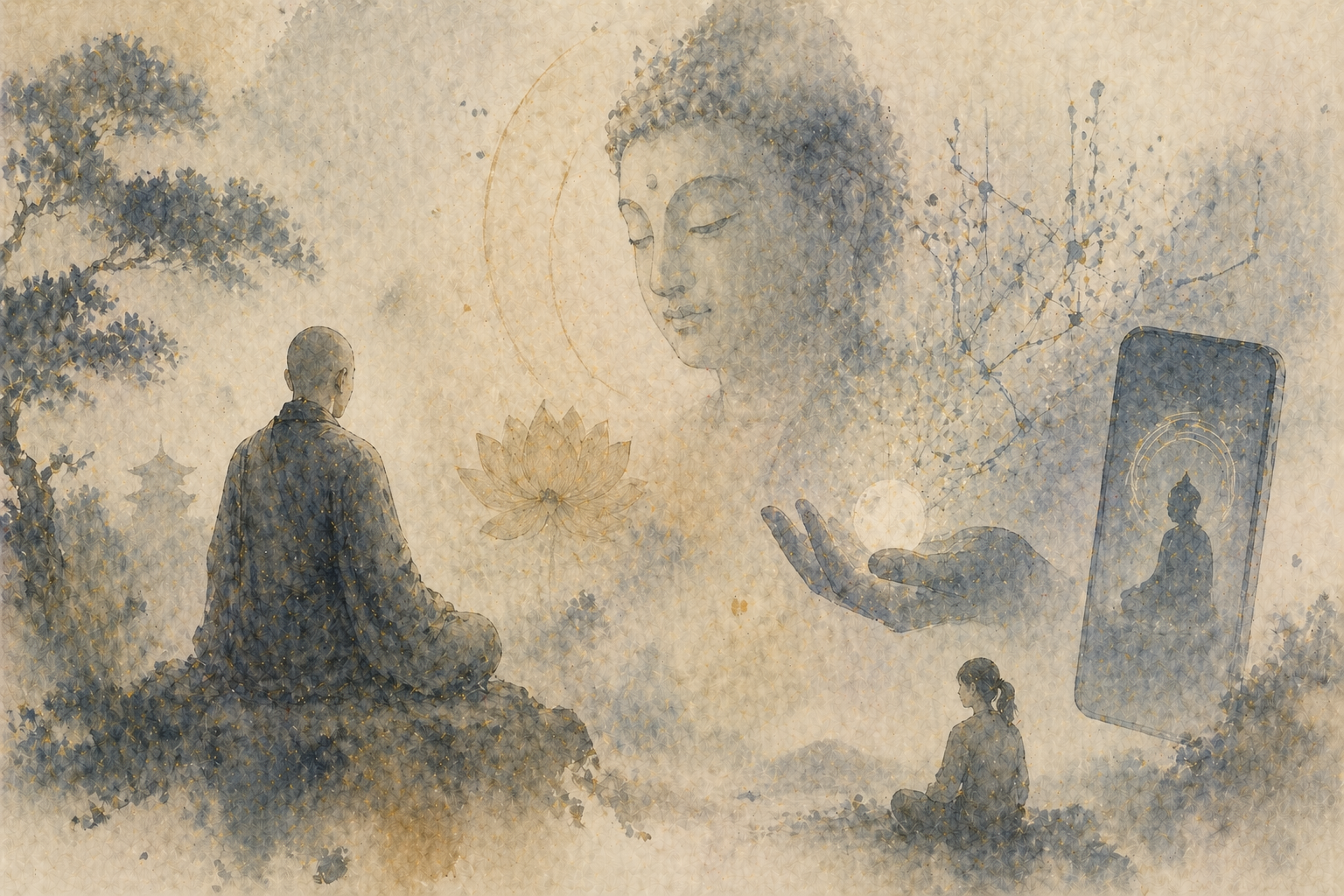
Quick Summary
- A Buddhist practice before opening social media is a short pause that protects attention and reduces reactivity.
- The goal isn’t to “be calm,” but to notice intention and choose how you want to show up online.
- A simple sequence works: stop, breathe, feel the body, name the intention, then open the app.
- Even 10–30 seconds can change how you read, scroll, comment, and compare.
- This practice helps you meet craving, irritation, and FOMO without feeding them.
- It’s compatible with any schedule: morning, work breaks, or whenever you reach for your phone.
- Consistency matters more than duration; “small and repeatable” beats “perfect and rare.”
Buddhist Practice Before Opening Social Media
You pick up your phone for one quick check, and suddenly your mind is crowded: opinions, urgency, comparison, and a subtle pressure to react. The confusing part is that nothing “bad” happened—yet your attention feels spent, and your mood has shifted. I’ve written and practiced in the Zen/Buddhist space at Gassho with a focus on simple, repeatable habits that protect attention in ordinary life.
A Buddhist practice before opening social media is not about rejecting technology or forcing yourself into a special mood. It’s a small moment of training: you meet the impulse to open an app, you recognize what it wants, and you decide how to proceed. That decision—made while you can still feel your body and breath—often determines whether social media becomes connection or compulsion.
GASSHO
Ask and learn about Buddhism in daily life.
GASSHO is a Buddhist community app where you can learn Buddhist teachings and ask questions to the head priest of Kongosanmaiin Temple on Mount Koya.
A Clear Lens: Intention Before Input
The core perspective is simple: before you take in more information, check the mind that wants it. Social media is designed to pull attention forward—toward novelty, approval, outrage, and endless “just one more.” A Buddhist lens doesn’t treat that pull as a moral failure. It treats it as a predictable pattern: contact leads to feeling, feeling leads to wanting or resisting, and then we act.
So the practice is to insert a small gap between impulse and action. In that gap, you don’t need to solve your life or become perfectly mindful. You only need to notice: “What is my intention right now?” Maybe it’s to reply to a message, check an event, share something helpful, or simply numb out. Naming the intention doesn’t condemn it; it makes it visible.
From this view, attention is not a possession you either have or don’t have—it’s a relationship you keep renewing. When you open social media without checking in, you hand that relationship over to whatever is loudest. When you pause first, you keep a small amount of agency: you can choose a time limit, choose one task, or choose not to open at all.
This is why the practice is framed as a lens for experience rather than a belief. You can test it immediately. Try opening an app in a hurry, then try opening it after three slow breaths. The content may be identical, but your mind meets it differently.
What You Notice in Real Time When You Reach for the App
The moment before opening social media often has a particular texture: a slight leaning forward in the mind, a quickening in the chest, a restless hand already moving. It can feel like “I’m just checking,” but the body sometimes tells a more honest story—anticipation, tension, or a dull hunger for stimulation.
When you pause, you may notice how quickly the mind creates a reason. “I need to stay informed.” “I should respond right away.” “I’ll only look for a minute.” The practice isn’t to argue with these thoughts. It’s to recognize them as thoughts—mental events that appear, persuade, and fade.
With one or two breaths, you can feel the difference between a clean intention and a compulsive pull. A clean intention has a simple shape: “I’m going to check messages for five minutes.” A compulsive pull is vaguer and more urgent: “I need something—anything—right now.” Seeing that difference is already a shift.
You might also notice emotional pre-loading. If you’re tired, social media can become a shortcut to stimulation. If you’re lonely, it can become a substitute for contact. If you’re anxious, it can become a way to scan for threats. None of this is unusual; it’s just how the mind tries to regulate itself.
Then there’s the comparison reflex. Even before you open the app, the mind may be preparing to measure: “How am I doing?” That measuring can be subtle, like a background hum. A brief practice—feeling your feet, softening the jaw, letting the breath drop—can lower the volume of that hum.
When you do open social media after a pause, you may find yourself reading more slowly. You might notice the first spark of irritation under a post, or the first tug of envy, and you can choose not to feed it. The practice doesn’t remove reactions; it makes them easier to see before they become words, clicks, or arguments.
Over time, the most practical change is that “opening the app” becomes a conscious action rather than a reflex. Sometimes you still scroll. Sometimes you still get hooked. But the pause gives you a way back—again and again—without drama.
Common Misunderstandings That Make the Practice Harder
Misunderstanding 1: “I have to feel peaceful before I open anything.” The point is not to manufacture calm. The point is to be honest about what’s present—restlessness included—and to choose your next step with a little more clarity.
Misunderstanding 2: “If I still get pulled in, the practice failed.” Getting pulled in is normal. The practice is the moment you notice you’re pulled in and return to intention. That return is the training.
Misunderstanding 3: “This is about quitting social media.” It can support healthier use, but it doesn’t require abstinence. The practice is about relationship: using social media without letting it use your attention as raw material.
Misunderstanding 4: “I need a long ritual.” A long ritual can be meaningful, but it’s not necessary. If your practice can’t fit into real life, it won’t be there when you need it most—right at the moment of impulse.
Misunderstanding 5: “I should judge myself for wanting to check.” Judgment adds a second layer of agitation. A Buddhist approach is more functional: notice wanting, feel it in the body, and decide what action reduces harm and confusion.
Why This Small Pause Changes Your Whole Day Online
Social media doesn’t only take time; it shapes the mind that returns to your life afterward. If you open it in a scattered state, you often bring that scatteredness into work, relationships, and even rest. A brief Buddhist practice before opening social media protects the “entry point,” which is where habits form.
This pause also reduces unintentional harm. Many online regrets come from speed: replying while irritated, sharing while anxious, commenting to win, or doomscrolling until you feel numb. When you check intention first, you’re more likely to communicate clearly, stop sooner, and avoid feeding cycles that leave you tense.
It supports a healthier sense of self. Social media can turn identity into a performance and attention into a scoreboard. A short grounding—breath, body, intention—reminds you that your worth is not being negotiated in the feed. You can participate without constantly measuring yourself.
Finally, it makes your online time more useful. When you open with a purpose, you can do the thing you came to do: answer messages, post an update, learn something specific, then close the app. The practice doesn’t add another task to your day; it prevents the app from becoming the task.
Conclusion: A Simple Practice You Can Repeat Today
If you want a Buddhist practice before opening social media that actually survives real life, keep it small. Pause. Feel one breath. Notice the body. Name your intention in a plain sentence. Then open the app—or don’t. That tiny moment won’t make the internet gentle, but it can make your mind less available for automatic reactivity.
When you repeat this, you’re not trying to become a different person online. You’re training the ability to choose your next action with a little more care, which is often the difference between connection and compulsion.
Ask a Buddhist priest
Have a question about Buddhism?
In the GASSHO app, you can ask questions about Buddhist teachings, daily concerns, and how to understand Buddhism in everyday life.
Frequently Asked Questions
- FAQ 1: What is a Buddhist practice before opening social media?
- FAQ 2: How long should a Buddhist practice before opening social media take?
- FAQ 3: What is the simplest step-by-step routine I can do before opening social media?
- FAQ 4: Why does opening social media feel compulsive even when I don’t want to scroll?
- FAQ 5: What intention should I set before opening social media?
- FAQ 6: Can I do this practice if I’m opening social media for work?
- FAQ 7: What should I do if I notice anxiety right before opening social media?
- FAQ 8: Is it “un-Buddhist” to enjoy social media?
- FAQ 9: How do I practice before opening social media when I’m in a hurry?
- FAQ 10: What do I do if I forget the practice and start scrolling automatically?
- FAQ 11: How can I use breath without trying to force myself to be calm?
- FAQ 12: What is a good phrase to silently repeat before opening social media?
- FAQ 13: How does this practice help with comparison and envy on social media?
- FAQ 14: Can I combine a Buddhist practice before opening social media with a time limit?
- FAQ 15: What is the main benefit of doing a Buddhist practice before opening social media every day?
FAQ 1: What is a Buddhist practice before opening social media?
Answer: It’s a brief pause—often just a few breaths—where you notice your intention and state of mind before you open an app, so you engage more deliberately instead of automatically.
Takeaway: Pause first, then choose how you want to enter the feed.
FAQ 2: How long should a Buddhist practice before opening social media take?
Answer: It can be 10–30 seconds. The point is consistency at the moment of impulse, not a long session you rarely do.
Takeaway: Short and repeatable beats long and occasional.
FAQ 3: What is the simplest step-by-step routine I can do before opening social media?
Answer: Stop for one breath, feel your feet or hands, relax the jaw, silently name your intention (“I’m checking messages for five minutes”), then open the app and do only that task.
Takeaway: Stop, feel, intend, then act.
FAQ 4: Why does opening social media feel compulsive even when I don’t want to scroll?
Answer: The mind learns quick relief through novelty and validation, so the body starts reaching before you’ve decided. The practice is to notice that pull as a sensation and thought-pattern, not a command.
Takeaway: Compulsion is a pattern you can observe, not an order you must obey.
FAQ 5: What intention should I set before opening social media?
Answer: Set an intention that is specific and kind: one task (reply, post, check an update) and a time boundary. Avoid vague intentions like “just see what’s happening.”
Takeaway: Specific intention prevents accidental scrolling.
FAQ 6: Can I do this practice if I’m opening social media for work?
Answer: Yes. In fact, work use benefits a lot: you can clarify the work objective, reduce reactive posting, and close the app when the task is complete.
Takeaway: Work use still needs an intentional entry.
FAQ 7: What should I do if I notice anxiety right before opening social media?
Answer: Name it softly (“anxiety is here”), feel where it sits in the body, take one slower exhale, and decide whether opening the app will help or amplify it. If you still open it, keep the intention narrow.
Takeaway: Let anxiety be known before you add more stimulation.
FAQ 8: Is it “un-Buddhist” to enjoy social media?
Answer: Enjoyment isn’t the issue; unconscious grasping is. A Buddhist practice before opening social media helps you enjoy what’s wholesome without getting dragged by craving, comparison, or agitation.
Takeaway: Enjoyment is fine—automatic grasping is what to watch.
FAQ 9: How do I practice before opening social media when I’m in a hurry?
Answer: Use a single breath as the whole practice: inhale, exhale, then state the one thing you’re opening the app to do. If you can’t name it, consider waiting.
Takeaway: One breath is enough to restore choice.
FAQ 10: What do I do if I forget the practice and start scrolling automatically?
Answer: Begin the practice the moment you notice: pause mid-scroll, take one breath, re-state your intention, and either continue with a clear task or close the app.
Takeaway: The practice can start at any moment you wake up.
FAQ 11: How can I use breath without trying to force myself to be calm?
Answer: Treat the breath as information, not a tool to control feelings. Feel one natural inhale and exhale, and let your mood be exactly what it is while you choose your next action.
Takeaway: Use breath to notice, not to perform calmness.
FAQ 12: What is a good phrase to silently repeat before opening social media?
Answer: Try something plain and non-dramatic: “What am I here for?” or “May I use this wisely.” Then answer with a concrete intention.
Takeaway: A short phrase can cue intention and restraint.
FAQ 13: How does this practice help with comparison and envy on social media?
Answer: The pause reconnects you to the body and present moment before the feed triggers measuring. When comparison arises, you’re more likely to recognize it early and not build a story around it.
Takeaway: Grounding first makes comparison easier to spot and release.
FAQ 14: Can I combine a Buddhist practice before opening social media with a time limit?
Answer: Yes. After you set intention, choose a clear boundary (like “five minutes” or “reply to three messages”), and treat the boundary as part of the practice of non-grasping.
Takeaway: Intention plus a boundary turns scrolling into a deliberate action.
FAQ 15: What is the main benefit of doing a Buddhist practice before opening social media every day?
Answer: You train the ability to notice impulse and choose response. That reduces reactive posting, doomscrolling, and mood spillover into the rest of your day, even when the feed is intense.
Takeaway: Daily repetition builds choice at the exact moment you usually lose it.