



How Buddhist Images Helped Teach People Who Could Not Read Texts
Quick Summary
- Buddhist images taught core ideas through sight when many people could not read religious texts.
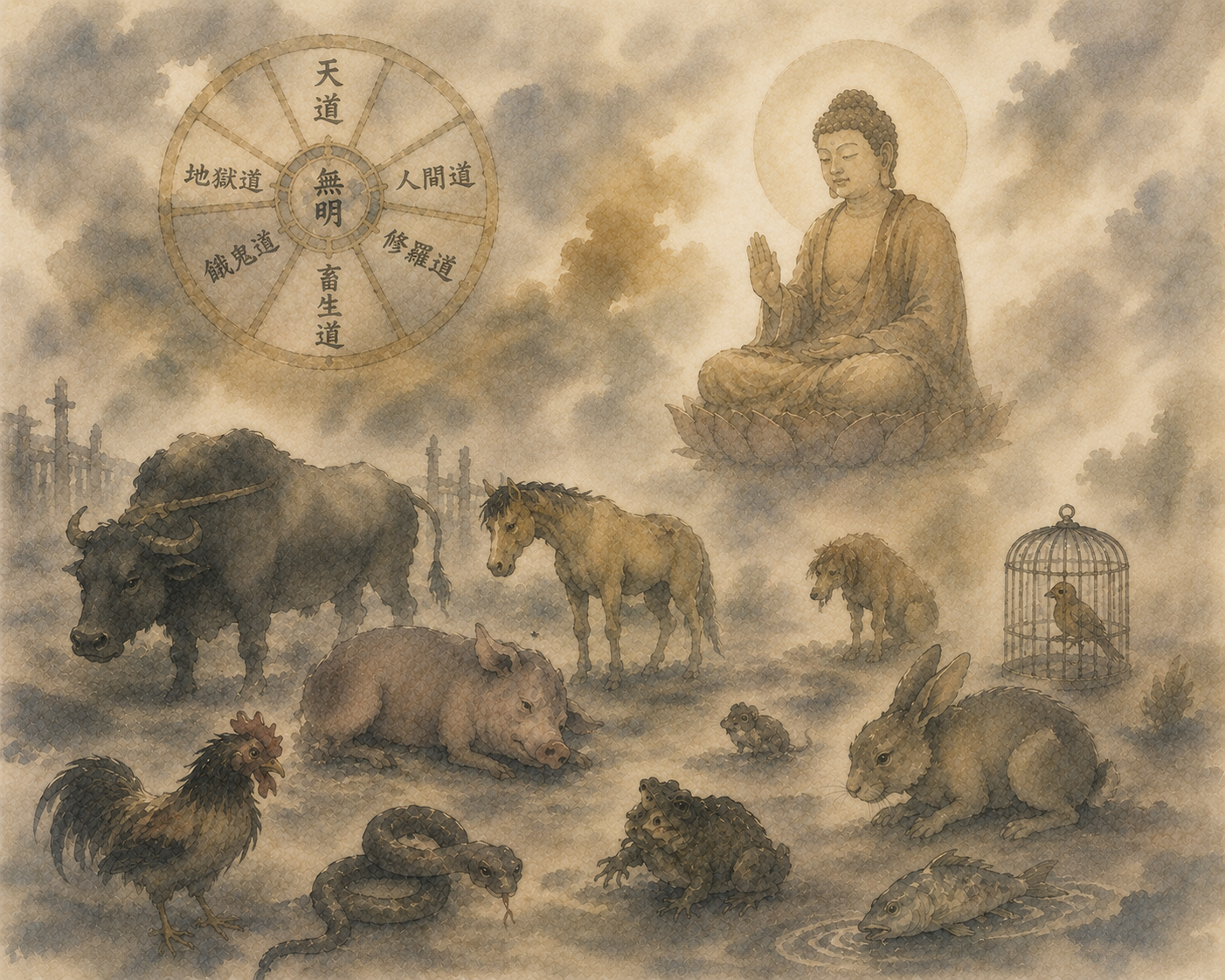
- Statues, murals, and scrolls worked like “visual sermons,” guiding attention, emotion, and memory.
- Repeated symbols (gestures, halos, lotus seats) made teachings recognizable across regions and languages.
- Narrative art (life stories, cause-and-effect scenes) helped people grasp ethics and consequences quickly.
- Images supported communal learning: teachers could point, explain, and invite questions in real time.
- Devotional looking was also training—shaping patience, humility, and compassion through steady attention.
- The goal was not “art appreciation,” but accessible understanding and practice for everyday people.
Introduction
If you’ve been told Buddhism is mainly “a religion of texts,” it can be confusing to learn how much ordinary people historically relied on images—especially when reading was rare, expensive, or simply not part of daily life. Buddhist images weren’t decorative extras; they were practical teaching tools that made complex ideas visible, memorable, and shareable in a crowded temple hall or a village shrine. At Gassho, we focus on how Buddhist practice actually worked for real communities, not just how it reads on a page.
When people could not read sutras, they still needed ways to learn: what to value, how to behave, and how to work with fear, grief, anger, and desire. Images met that need by translating teachings into forms the body and mind can take in quickly—posture, gesture, facial expression, story scenes, and symbolic objects.
This matters because “teaching” is not only about transferring information. It’s also about shaping attention. A well-placed statue or mural doesn’t just tell you something; it shows you where to look, how to pause, and what kind of person you might become.
A Practical Lens: Images as Teaching, Not Decoration
A helpful way to understand Buddhist images is to treat them as a teaching language designed for the eyes. When reading is limited, a community still needs stable, repeatable ways to communicate meaning. Images can carry that meaning without requiring literacy, and they can do it in seconds: you see a calm face, an open hand, a seated posture, and you immediately receive a message about steadiness, restraint, and care.
This doesn’t require believing that an image is “magical.” It’s enough to notice how humans learn: we imitate what we see, we remember stories as scenes, and we absorb values through repeated exposure. Buddhist art used those human tendencies intentionally. A statue’s posture can model composure; a painted scene can model generosity; a frightening guardian figure can model boundaries and protection.
Images also functioned as shared reference points. A teacher could point to a gesture or symbol and explain it aloud, and the group could return to that same image later—alone or together—without needing to “look it up” in a book. In that sense, the image becomes a public classroom that’s always open.
Most importantly, images offered a bridge between inner life and outer form. Teachings about compassion, non-harming, or clarity can feel abstract when they stay as words. When they appear as a face, a hand, a scene of giving, or a sequence of cause-and-effect, they become easier to recognize in one’s own experience.
GASSHO
Ask and learn about Buddhism in daily life.
GASSHO is a Buddhist community app where you can learn Buddhist teachings and ask questions to the head priest of Kongosanmaiin Temple on Mount Koya.
How Visual Teaching Shows Up in Ordinary Experience
Think about what happens when you enter a quiet space and see a calm figure seated upright. Before you “understand” anything, your body often responds. Shoulders drop a little. Breathing slows. The image teaches without a lecture, simply by offering a model of composure that your nervous system can mirror.
Then attention starts to organize itself. Instead of scanning for entertainment, the eyes settle. You notice details: the hands, the gaze, the symmetry. This is already a kind of training—learning to stay with one object long enough for the mind to stop chasing novelty.
Next comes meaning-making. Even without reading, people naturally ask: “Why is the hand raised?” “Why is there a lotus?” “Why does this figure look peaceful while another looks fierce?” Those questions invite spoken teaching. A monk, nun, elder, or parent can answer in plain language, using the image as a map.
Stories become easier to hold when they are pictured. A mural showing generosity, conflict, regret, and repair can be remembered as a sequence of scenes. Later, when someone is tempted to act harshly, the mind may recall the “scene” of consequences more readily than a paragraph of moral instruction.
Images also help with emotional regulation. A compassionate face can soften anger. A protective figure can steady fear. A scene of suffering can awaken empathy without needing a long explanation. This isn’t about being manipulated; it’s about recognizing that learning includes the heart, not only the intellect.
Over time, repeated viewing builds familiarity. Familiarity reduces intimidation. A person who feels unqualified to approach “holy texts” can still approach a familiar image, offer respect, and listen to a short teaching connected to what they see. The barrier to entry becomes lower and more humane.
And in daily life, the lessons can travel. A remembered gesture—an open palm, a lowered gaze, a balanced seat—can reappear as a cue: “Pause.” “Soften.” “Don’t escalate.” The image becomes a portable reminder, even when the person never learned to read a single line.
Common Misunderstandings About Buddhist Teaching Through Images
Misunderstanding 1: “Images were only for worship, not education.” In practice, worship and education often overlapped. Respectful looking can be a way of learning: it trains attention, reinforces values, and creates a setting where spoken teaching lands more deeply.
Misunderstanding 2: “If people couldn’t read, they couldn’t understand anything subtle.” Literacy is one kind of skill, not the only kind. People learn through listening, watching, repeating, and discussing. Images supported those pathways by giving communities a stable visual reference for subtle ideas like compassion, restraint, and cause-and-effect.
Misunderstanding 3: “Symbols are too vague to teach clearly.” Symbols can be vague when they’re private. In a community, symbols become clear through repeated use and explanation. A gesture, a posture, or an object becomes a shared vocabulary—especially when teachers consistently connect it to everyday behavior.
Misunderstanding 4: “Buddhist art is just cultural, not practical.” Culture is practical. When a society needs to transmit ethics and mental training across generations, it uses the tools that work: stories, rituals, songs, and images. Buddhist images were part of that practical toolkit.
Misunderstanding 5: “Looking at images replaces personal effort.” Images don’t do the work for someone. They support the work by making it easier to remember, easier to begin, and easier to discuss. The effort still happens in choices: how one speaks, acts, and responds.
Why This Still Matters for Everyday Learning
Even today, many people feel shut out by dense religious language or long books. The historical use of Buddhist images is a reminder that teaching can be direct, accessible, and embodied. You don’t need to be “good at reading” to learn how to pause before reacting, how to notice craving, or how to practice kindness.
Images also show a respectful approach to different learning styles. Some people learn best by listening, others by doing, others by seeing. Buddhist communities used images to include more people—farmers, merchants, children, elders—without treating literacy as the price of admission.
There’s also a quiet ethical point here: when teachings are only in texts, power concentrates in the hands of those who can read and interpret them. Visual teaching spreads access. A public mural or statue can’t be locked away as easily as a rare manuscript.
Finally, images remind us that attention is trainable. In a world built to fragment focus, learning to look steadily—without grabbing, scrolling, or judging—can be a meaningful practice. Historically, Buddhist images helped people do exactly that: settle, observe, and let the mind become less scattered.
Conclusion
How Buddhist images helped teach people who could not read texts comes down to a simple human fact: we learn through the senses, through repetition, and through shared reference points. Statues, murals, and painted stories made teachings visible, gave teachers something to point to, and offered communities a way to remember ethics and mental training without needing a book in hand.
Rather than treating images as secondary to “real” teaching, it’s more accurate to see them as one of the most practical teaching methods Buddhism used—especially for ordinary people trying to live with a little more clarity and care.
Ask a Buddhist priest
Have a question about Buddhism?
In the GASSHO app, you can ask questions about Buddhist teachings, daily concerns, and how to understand Buddhism in everyday life.
Frequently Asked Questions
- FAQ 1: How did Buddhist images teach people who could not read texts?
- FAQ 2: What kinds of Buddhist images were most useful for non-literate audiences?
- FAQ 3: Why were narrative murals important for teaching people who could not read?
- FAQ 4: How did teachers use images in spoken instruction for people who couldn’t read texts?
- FAQ 5: Did Buddhist images replace texts for people who could not read?
- FAQ 6: What visual features helped Buddhist images communicate teachings clearly?
- FAQ 7: How did Buddhist images help teach ethics to people who could not read texts?
- FAQ 8: Why were hand gestures in Buddhist images helpful for non-readers?
- FAQ 9: How did Buddhist images support memory for people who could not read texts?
- FAQ 10: Were Buddhist images designed to be understood by ordinary people who couldn’t read?
- FAQ 11: How did Buddhist images help teach compassion to people who could not read texts?
- FAQ 12: How did Buddhist images help teach cause-and-effect (karma) to non-literate communities?
- FAQ 13: Did Buddhist images help unify teaching across different languages for people who could not read texts?
- FAQ 14: How did Buddhist images help children and families learn when they could not read texts?
- FAQ 15: What is the main reason Buddhist images were effective for teaching people who could not read texts?
FAQ 1: How did Buddhist images teach people who could not read texts?
Answer: They communicated teachings through recognizable visual cues—posture, facial expression, hand gestures, symbolic objects, and story scenes—so people could grasp key ideas through looking and listening to oral explanations.
Takeaway: Images worked as a visual teaching language when reading wasn’t available.
FAQ 2: What kinds of Buddhist images were most useful for non-literate audiences?
Answer: Public, easy-to-see forms like temple murals, narrative paintings, relief carvings, and large statues were especially effective because they could be viewed by groups while a teacher explained the scenes.
Takeaway: Large, public images supported communal learning without books.
FAQ 3: Why were narrative murals important for teaching people who could not read?
Answer: Narrative murals present teachings as sequences of events—choices and consequences—so people can remember the lesson as a “story in pictures,” even if they can’t access written versions.
Takeaway: Visual stories make ethical cause-and-effect easier to remember.
FAQ 4: How did teachers use images in spoken instruction for people who couldn’t read texts?
Answer: Teachers could point to specific details (a gesture, an object, a scene) and explain its meaning in everyday language, using the image as a shared reference so listeners could follow without needing a written page.
Takeaway: Images gave oral teaching a clear, concrete anchor.
FAQ 5: Did Buddhist images replace texts for people who could not read?
Answer: Not exactly. Images often complemented oral recitation and explanation. For non-literate audiences, images functioned as the “visible part” of teachings that were also carried by memory, chanting, and community instruction.
Takeaway: Images supported learning alongside oral teaching rather than fully replacing texts.
FAQ 6: What visual features helped Buddhist images communicate teachings clearly?
Answer: Repetition and standardization helped: consistent hand gestures, calm seated postures, halos, lotus seats, and recognizable scene layouts made meanings easier to learn and recall across time and place.
Takeaway: Repeated visual conventions made teachings easier to recognize without reading.
FAQ 7: How did Buddhist images help teach ethics to people who could not read texts?
Answer: Images showed ethical behavior in action—giving, restraint, patience, reconciliation—and often contrasted it with harmful actions and their consequences, making moral lessons concrete rather than abstract.
Takeaway: Ethics became visible through scenes of behavior and outcome.
FAQ 8: Why were hand gestures in Buddhist images helpful for non-readers?
Answer: Gestures are immediate and memorable. A raised open palm, a hand touching the ground, or hands held in a calm position can signal protection, steadiness, or resolve—messages that don’t require literacy to perceive.
Takeaway: Gestures communicate meaning quickly, even without words.
FAQ 9: How did Buddhist images support memory for people who could not read texts?
Answer: People tend to remember pictures and scenes strongly. By linking teachings to a vivid image—like a repeated mural panel or a familiar statue—communities could recall lessons through mental pictures and shared retellings.
Takeaway: Visual memory helped preserve teachings without written study.
FAQ 10: Were Buddhist images designed to be understood by ordinary people who couldn’t read?
Answer: Many were. While some art includes complex symbolism, a large portion of temple imagery emphasizes clear emotional tone, recognizable scenes, and repeated symbols that can be explained simply in public settings.
Takeaway: Much Buddhist imagery was made for broad, practical understanding.
FAQ 11: How did Buddhist images help teach compassion to people who could not read texts?
Answer: Compassion can be modeled visually through facial expression, posture, and scenes of care. Seeing a gentle, attentive figure or a story of helping behavior can evoke empathy and provide a template for how to respond to others.
Takeaway: Images can model compassion in a way the heart understands immediately.
FAQ 12: How did Buddhist images help teach cause-and-effect (karma) to non-literate communities?
Answer: Cause-and-effect is easier to grasp when shown as a sequence: an action, its immediate impact, and later consequences. Visual storytelling can make that chain feel real without requiring someone to parse written doctrine.
Takeaway: Pictured sequences made moral consequences easier to understand without reading.
FAQ 13: Did Buddhist images help unify teaching across different languages for people who could not read texts?
Answer: Yes. Shared visual conventions allowed teachings to be recognized even when spoken languages differed. A familiar posture or symbol could be “read” visually, then explained locally in the community’s own speech.
Takeaway: Visual conventions helped teachings travel beyond literacy and language barriers.
FAQ 14: How did Buddhist images help children and families learn when they could not read texts?
Answer: Families could use images as prompts for simple explanations and retelling: “This scene shows giving,” “This shows calming anger,” “This shows making amends.” Children learn naturally through pictures and repetition in shared spaces.
Takeaway: Images made teaching intergenerational and easy to repeat at home and in temples.
FAQ 15: What is the main reason Buddhist images were effective for teaching people who could not read texts?
Answer: They made teachings concrete and shareable: people could see a stable reference, hear an explanation, remember the scene, and return to it again—without needing personal access to written materials.
Takeaway: Images lowered the barrier to learning by turning teachings into something visible and repeatable.