



Why Fire Appears in Buddhist Imagery: Transformation and Inner Clarity
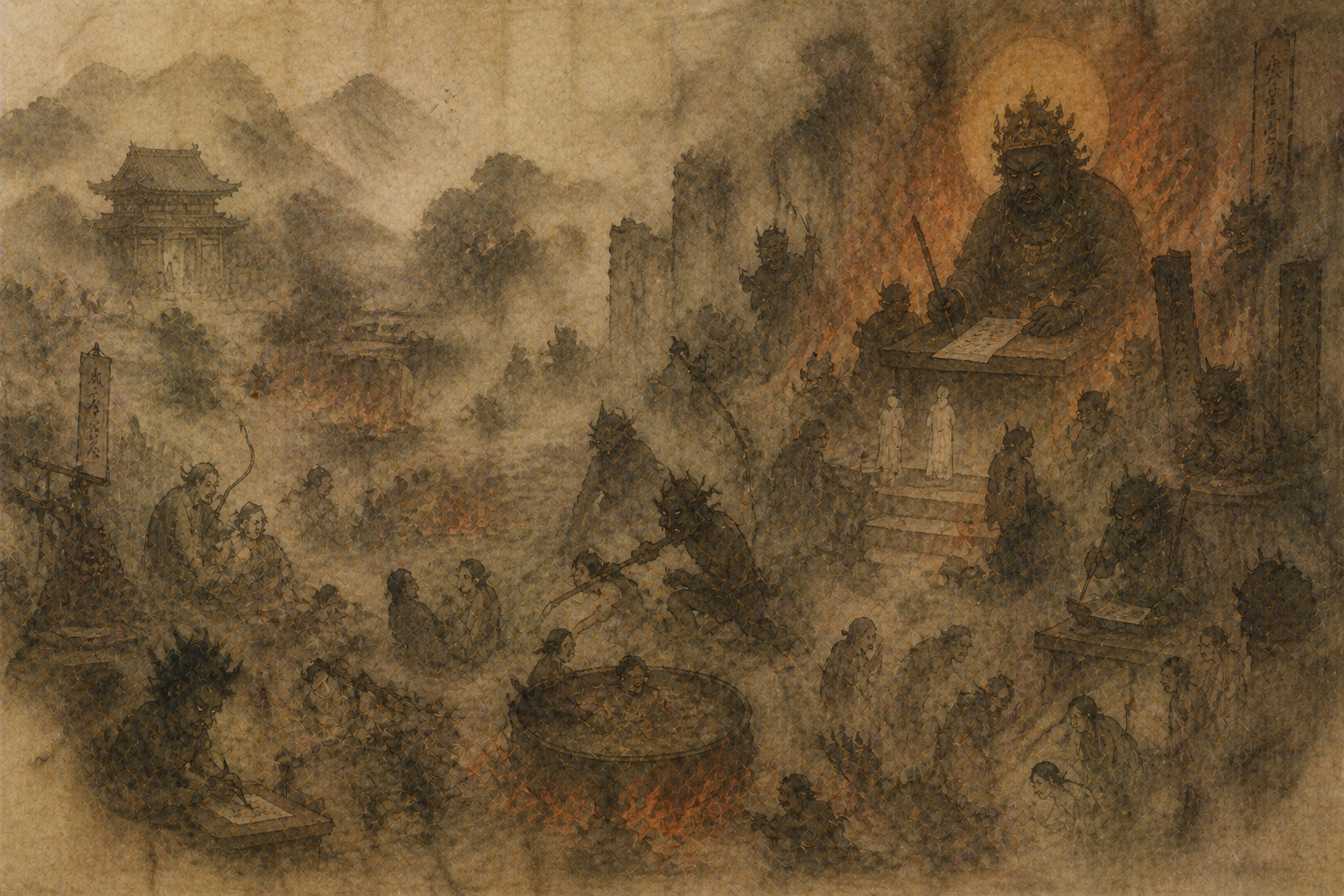
Quick Summary
- Fire Buddhist imagery often points to transformation: what is rigid becomes workable, what is confused becomes clear.
- Flames can symbolize inner heat: attention, energy, and the capacity to face experience directly.
- Fire also represents discernment—light that reveals what is actually happening, not what we assume.
- Some fiery figures look wrathful, but the “heat” is frequently about cutting through delusion, not promoting anger.
- Offerings like lamps and candles emphasize steadiness and care, not spectacle.
- Fire imagery can be both protective and purifying: it marks boundaries and burns away what doesn’t serve.
- Reading fire symbols well means asking, “What is being transformed here—fear, craving, confusion, or avoidance?”
Introduction
Fire Buddhist imagery can feel contradictory: Buddhism is associated with calm, yet you see blazing halos, flaming swords, and fierce faces surrounded by heat. It’s easy to assume the art is about punishment, supernatural power, or “scary” deities—but most of the time, the fire is a practical symbol for what happens when confusion meets clear attention. At Gassho, we focus on Buddhist symbolism as a tool for understanding lived experience rather than a set of beliefs to adopt.
When you look closely, fire in Buddhist art is rarely random decoration. It tends to show up precisely where the image is pointing to change: the shift from reactive habits to responsiveness, from foggy thinking to discernment, from clinging to release.
This matters because symbols shape how you relate to your own mind. If you read fire as aggression, you may try to “fight” yourself. If you read fire as clarity and transformation, you may learn to stay present with what’s difficult without turning it into a personal failure.
A Clear Lens for Understanding Fire Symbols
A grounded way to read fire Buddhist imagery is to treat fire as a picture of process. Fire changes what it touches: it warms, illuminates, consumes, and refines. In the same way, attention changes what it touches: when you actually feel an emotion instead of narrating it, the emotion often shifts; when you look directly at a belief, it can lose its grip.
Fire also has two qualities that make it a useful symbol for inner life: it is bright and it is honest. Brightness suggests seeing—what’s here, right now. Honesty suggests that some things cannot remain the same under close observation. A story you tell yourself may survive vague thinking, but it often can’t survive clear seeing.
In imagery, flames can surround a figure, radiate from the body, or appear as a tool (like a flaming sword). Instead of reading these as threats, you can read them as emphasis: “This is the energy of awakening,” meaning the capacity to meet experience without drifting into denial, numbness, or automatic reaction.
Finally, fire can function as a boundary. A ring of flame suggests protection—not from the world, but from confusion. It marks a space where clarity is prioritized, where distractions are burned off, and where what is unhelpful is not allowed to quietly run the show.
GASSHO
Ask and learn about Buddhism in daily life.
GASSHO is a Buddhist community app where you can learn Buddhist teachings and ask questions to the head priest of Kongosanmaiin Temple on Mount Koya.
How Fire Imagery Shows Up in Ordinary Inner Life
Think about the moment you notice you’re spiraling. The mind is busy building a case: why you’re right, why you’re doomed, why someone else is the problem. Then a small shift happens—maybe you feel your breath, maybe you sense tension in your jaw, maybe you simply admit, “I’m upset.” That shift is like the first spark in fire Buddhist imagery: awareness begins to light up what was running in the dark.
As attention becomes steadier, it can feel “hot.” Not mystical—just immediate. You may notice impatience as a tight, prickly energy. You may notice craving as restlessness in the chest. Fire imagery mirrors this directness: it’s the refusal to keep emotions at a safe intellectual distance.
Sometimes the heat is uncomfortable because it exposes the cost of your habits. You might see how often you interrupt, how quickly you assume, how easily you reach for distraction. In that sense, fire is not a reward; it’s illumination. It shows what’s actually happening, which can be humbling.
At other times, the heat is energizing. You stop negotiating with yourself about what you already know is unhelpful. You don’t need to hate the habit; you simply see it clearly enough that it loses its glamour. This is one reason flames are paired with tools in art: a flaming sword can be read as discernment that cuts through confusion cleanly, without drama.
Fire Buddhist imagery also resonates when you’re dealing with anger. Anger can be destructive, but it also contains information: something feels threatened, something feels violated, something needs attention. The “fire” here is learning to feel the energy without letting it become cruelty—using the brightness of awareness to separate heat from harm.
Even quiet practices have a “fire” dimension. A candle flame is steady, small, and alive. When you return to a simple anchor—breath, sound, posture—you’re training steadiness. The symbol isn’t about intensity; it’s about continuity. A small flame that doesn’t go out can be more transformative than a brief blaze.
Over time, you may notice that clarity burns in two directions: it reveals what’s unskillful, and it reveals what’s already okay. Fire imagery can point to both. It can burn away self-deception, and it can warm the parts of you that have been frozen by shame or fear.
Common Misreadings of Fiery Buddhist Art
One common misunderstanding is assuming that fire Buddhist imagery is about violence or punishment. Flames and fierce expressions can look threatening if you approach them with a moralistic lens. But symbolically, the “target” is usually confusion—habits that keep suffering going—not a person who deserves harm.
Another misreading is treating fire as a promise of special power. It’s tempting to see flames as a sign of supernatural force, as if the image is advertising spiritual intensity. A more grounded reading is that fire represents the power of attention itself: when you stop lying to yourself, things change.
People also confuse heat with anger. In inner work, heat can be the sensation of contact—being close to experience without flinching. That can look fierce in art because it is uncompromising, but it doesn’t have to be hostile. Fierce clarity is different from aggression.
Finally, some assume fire imagery means you should “burn away” emotions by force. That approach often backfires. Symbolic fire is not repression. It’s the kind of seeing that makes clinging unnecessary—like turning on a light rather than wrestling the darkness.
Why Fire Symbols Still Matter in Daily Life
Fire Buddhist imagery matters because it gives you a language for change that doesn’t rely on self-hatred. If you think transformation requires harshness, you may try to fix yourself through pressure. Fire symbols suggest a different model: clarity transforms naturally, like heat reshaping metal.
It also helps you relate to intensity without panic. Strong emotions, strong desires, and strong fears are part of being human. Fire imagery normalizes intensity while pointing to a skillful response: bring light, bring steadiness, and let what is untrue burn off through honest attention.
In relationships, the “fire” lens can be especially practical. When you feel triggered, you can ask: what is the flame revealing—an unmet need, a boundary, a story I’m clinging to? That question turns heat into information instead of turning it into damage.
And in a world full of distraction, a simple flame—literal or symbolic—reminds you that clarity is fragile and worth protecting. Not by withdrawing from life, but by choosing what you feed with your attention.
Conclusion
Fire Buddhist imagery is less about spectacle and more about a human process: attention that illuminates, warms, and transforms. Flames in art can point to discernment, protection from confusion, and the honest heat of meeting experience directly.
If you keep one idea, keep this: in many Buddhist images, fire is what clarity looks like when it’s alive—bright enough to reveal, steady enough to stay, and strong enough to change what no longer serves.
Ask a Buddhist priest
Have a question about Buddhism?
In the GASSHO app, you can ask questions about Buddhist teachings, daily concerns, and how to understand Buddhism in everyday life.
Frequently Asked Questions
- FAQ 1: What does fire Buddhist imagery usually symbolize?
- FAQ 2: Why are some Buddhist figures surrounded by a ring of flames?
- FAQ 3: Is fire Buddhist imagery meant to be frightening?
- FAQ 4: What is the meaning of a flaming sword in Buddhist imagery?
- FAQ 5: How is fire Buddhist imagery different from fire as destruction?
- FAQ 6: Does fire Buddhist imagery represent anger?
- FAQ 7: Why do flames appear behind the head in Buddhist art?
- FAQ 8: What do candle and lamp offerings mean in relation to fire Buddhist imagery?
- FAQ 9: Is fire Buddhist imagery connected to “purification”?
- FAQ 10: Why do some Buddhist protectors look wrathful and fiery?
- FAQ 11: How should beginners interpret fire Buddhist imagery without overthinking it?
- FAQ 12: Does fire Buddhist imagery imply suffering is “burned away” instantly?
- FAQ 13: Are there different meanings between gentle flames and blazing flames in Buddhist imagery?
- FAQ 14: Is fire Buddhist imagery literal, like a claim that enlightened beings emit flames?
- FAQ 15: How can I use fire Buddhist imagery as a reminder in daily life?
FAQ 1: What does fire Buddhist imagery usually symbolize?
Answer: Fire Buddhist imagery most often symbolizes transformation through clarity—attention that illuminates confusion, burns away unhelpful habits, and energizes wise action.
Takeaway: Read fire as a symbol of inner change driven by clear seeing.
FAQ 2: Why are some Buddhist figures surrounded by a ring of flames?
Answer: A flaming aura or ring commonly represents protective clarity—an image of awareness that keeps confusion, distraction, and harmful impulses from taking over the mind.
Takeaway: The “fire halo” often points to protection through discernment, not threat.
FAQ 3: Is fire Buddhist imagery meant to be frightening?
Answer: It can look intense, but it’s not necessarily meant to frighten. The fierceness often emphasizes uncompromising clarity—seeing through delusion without hesitation.
Takeaway: Intensity in the image can be symbolic emphasis rather than a scare tactic.
FAQ 4: What is the meaning of a flaming sword in Buddhist imagery?
Answer: A flaming sword typically symbolizes discernment that “cuts” confusion—clear insight that separates what’s true from what’s assumed, without needing aggression.
Takeaway: The flaming sword is usually about insight, not violence.
FAQ 5: How is fire Buddhist imagery different from fire as destruction?
Answer: While fire can destroy, in Buddhist symbolism it often highlights refinement and release—burning away clinging, ignorance, and rigidity so something freer can appear.
Takeaway: The focus is usually purification and transformation, not annihilation.
FAQ 6: Does fire Buddhist imagery represent anger?
Answer: Not necessarily. Fire can represent energy and immediacy. Some images use fierce heat to show the power of clarity, which is different from uncontrolled anger.
Takeaway: Fire may resemble anger visually, but it often symbolizes awake energy.
FAQ 7: Why do flames appear behind the head in Buddhist art?
Answer: Flames behind the head can function like a radiant halo, suggesting illumination—awareness that “lights up” experience and makes things visible as they are.
Takeaway: Head flames often point to awakened clarity rather than literal fire.
FAQ 8: What do candle and lamp offerings mean in relation to fire Buddhist imagery?
Answer: Lamps and candles commonly symbolize offering light—supporting clarity, gratitude, and steadiness. The small flame emphasizes consistent attention rather than dramatic intensity.
Takeaway: Offering light is a symbolic act of valuing clarity and care.
FAQ 9: Is fire Buddhist imagery connected to “purification”?
Answer: Yes, often symbolically. Purification here usually means reducing confusion and unhelpful patterns through honest awareness, not becoming morally “perfect.”
Takeaway: Purification in fire imagery is about clarity and release, not self-judgment.
FAQ 10: Why do some Buddhist protectors look wrathful and fiery?
Answer: Wrathful, fiery forms often symbolize protective forcefulness—an image of cutting through confusion quickly and guarding what supports clarity and compassion.
Takeaway: “Wrathful fire” can represent protection and decisiveness rather than hostility.
FAQ 11: How should beginners interpret fire Buddhist imagery without overthinking it?
Answer: A simple approach is to ask what the fire is doing: illuminating, protecting, or transforming. Then relate that to inner life—seeing clearly, staying steady, letting go.
Takeaway: Focus on function (light/heat/transform) rather than literalism.
FAQ 12: Does fire Buddhist imagery imply suffering is “burned away” instantly?
Answer: Not necessarily. The imagery is symbolic, and transformation can be gradual. Fire can represent repeated moments of clear seeing that slowly weaken confusion and clinging.
Takeaway: Fire imagery can point to ongoing practice of clarity, not instant fixes.
FAQ 13: Are there different meanings between gentle flames and blazing flames in Buddhist imagery?
Answer: Often, yes. Gentle flames can suggest steady illumination and care, while blazing flames can emphasize strong, decisive clarity that confronts confusion directly.
Takeaway: Flame intensity can signal the “tone” of clarity—steady or forceful.
FAQ 14: Is fire Buddhist imagery literal, like a claim that enlightened beings emit flames?
Answer: In most contexts, it’s best approached as symbolic art rather than a literal claim. The flames communicate qualities of mind—illumination, energy, and transformation.
Takeaway: Treat the fire primarily as symbolic language for inner qualities.
FAQ 15: How can I use fire Buddhist imagery as a reminder in daily life?
Answer: You can use it as a cue to bring light to what’s happening: pause, notice the body, name the emotion, and choose one clear next step instead of feeding confusion.
Takeaway: Let the symbol prompt a small act of clarity and steadiness.