



What Is Shonanoka? The First Seven-Day Memorial in Japanese Buddhism
Quick Summary
- Shonanoka (初七日) is the first seven-day memorial observance after a death in Japanese Buddhism.
- It’s commonly held on the 7th day after death (counting the day of death as day one), though timing can vary by family and temple.
- The focus is remembrance, gratitude, and support for the bereaved, expressed through chanting, offerings, and a short service.
- Shonanoka is often the first time relatives gather after the funeral, making it emotionally important and practically helpful.
- Even if you can’t attend, you can participate through simple home offerings and a sincere moment of recollection.
- It’s not about “earning points” for the deceased; it’s a ritual container for love, grief, and responsibility.
- Understanding Shonanoka makes later memorials (14th, 21st, 49th day) feel less confusing and more humane.
Shonanoka, Explained Without the Fog
You keep hearing “Shonanoka” and you’re not sure what you’re supposed to do—show up, bring something, say something, or just stay out of the way. The word sounds formal, but the situation is usually very ordinary: a family is tired, grief is uneven, and everyone wants to honor the person who died without making mistakes. At its simplest, Shonanoka is the first seven-day memorial service after a death, and it exists to give the living a clear, shared moment to remember and to steady themselves. At Gassho, we write about Japanese Buddhist customs in plain language, with respect for both tradition and real-life families.
In Japanese, Shonanoka is written 初七日 and read “shonanoka” (sometimes also said as “shonanoka hōyō” when referring to the memorial service). It points to a specific time marker: the first seventh day after death. In many households, this is the first memorial observance that follows the funeral rhythm, and it often sets the tone for how the family will carry remembrance forward.
Because modern schedules are tight, Shonanoka is sometimes held on the same day as the funeral or during the funeral period, especially when relatives are traveling from far away. That practical adjustment can confuse people: “Did we already do Shonanoka?” “Do we still need to do it?” The short answer is that families and temples often coordinate what is feasible, while keeping the intention intact.
What matters most is not perfect timing or perfect etiquette. Shonanoka is a structured pause—an agreed-upon moment when people stop managing logistics and, together, face what has happened.
GASSHO
Ask and learn about Buddhism in daily life.
GASSHO is a Buddhist community app where you can learn Buddhist teachings and ask questions to the head priest of Kongosanmaiin Temple on Mount Koya.
The Core Lens: What Shonanoka Is Really For
A helpful way to understand Shonanoka is to see it as a container rather than a test. When someone dies, the mind swings between numbness and overwhelm, and families can get stuck in either avoidance (“just keep busy”) or rumination (“what if we had…”). Shonanoka provides a simple frame: we gather, we acknowledge the death, we offer respect, and we let the heart do what it does.
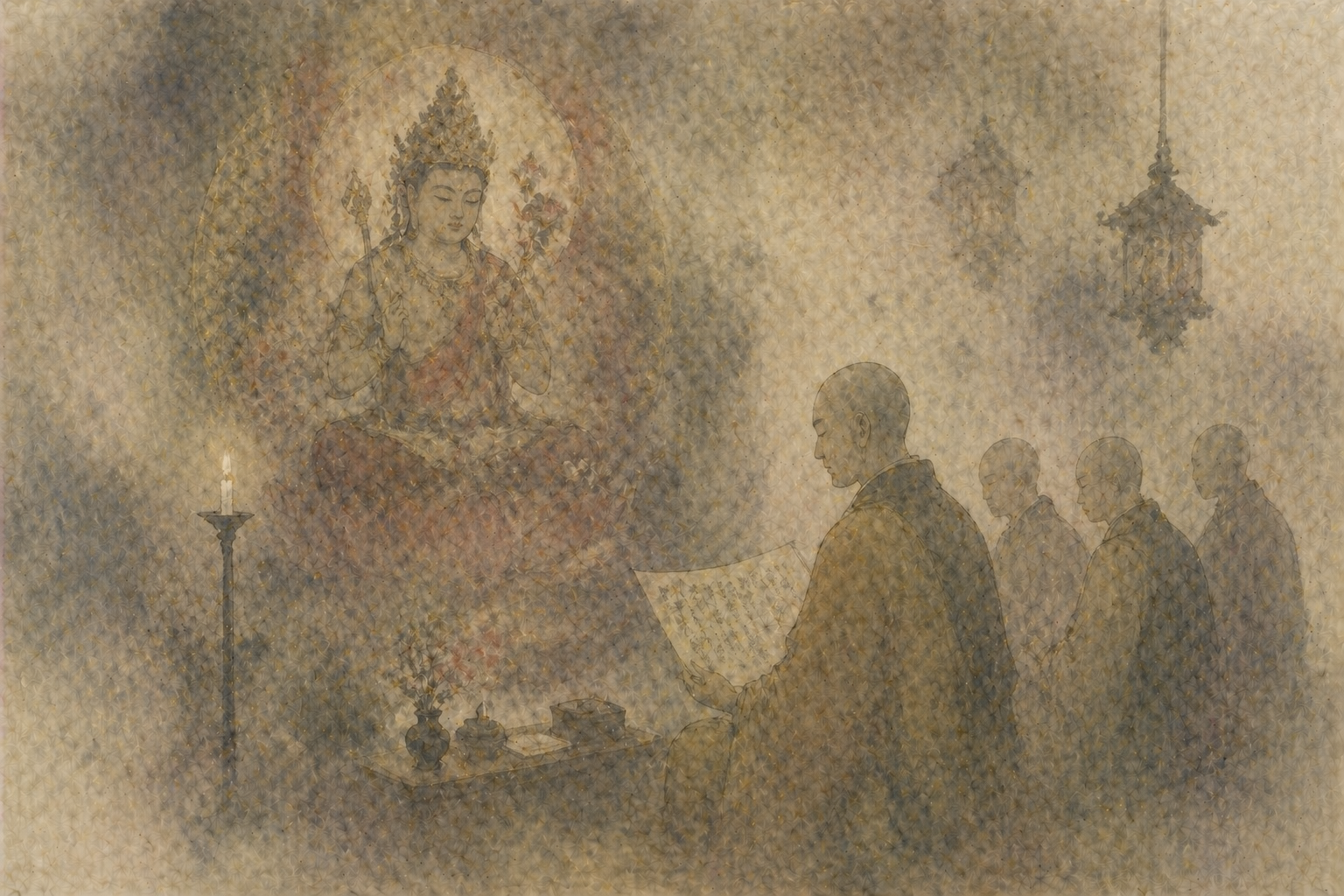
In practice, the service often includes chanting or recitation, a brief talk or words of remembrance, incense, and offerings. These actions are not meant to be magical tricks. They are deliberate gestures that express relationship: “You mattered to us,” “We remember,” “We continue with care.” Even for people who don’t feel religious, the form can still function as a clear language for grief.
Shonanoka also works as a social lens. Death affects a whole network—family, friends, neighbors, coworkers—and each person carries a different version of the loss. A seven-day memorial gives the group a shared point of contact. It reduces the pressure on any one person to “say the right thing,” because the ritual itself carries much of what needs to be said.
Finally, Shonanoka is a reminder that remembrance is not a single event. The first week after a death can feel unreal; Shonanoka gently marks that time has moved, and that care can continue in a steady, ordinary way.
How Shonanoka Shows Up in Everyday Grief
In the first week, attention is scattered. You might be arranging paperwork one moment and suddenly remembering a small habit of the person who died the next. Shonanoka doesn’t stop that mental switching; it gives it a place to land. For an hour or two, the mind is allowed to be with the loss without multitasking.
People often notice how different grief feels in a group. Alone, you may replay scenes and conversations. In a memorial setting, you hear other voices—someone mentions a kindness you forgot, someone else laughs softly at a familiar story. The inner narrative loosens. Not because the pain is solved, but because it becomes shared and therefore less isolating.
Shonanoka can also reveal the body’s side of grief. Standing, bowing, offering incense, sitting quietly—these are small movements, but they interrupt the frozen feeling that sometimes follows a death. The body participates in acknowledging reality, even when the mind is still catching up.
Many people experience a subtle shift in how they relate to regret. In the first days, regret can feel like a duty: “If I don’t feel bad enough, I’m disrespectful.” During Shonanoka, the emphasis tends to move from self-judgment to appreciation. You may still feel regret, but it sits alongside gratitude rather than replacing it.
There is also the practical relief of structure. When you don’t know what to say, the service gives you something to do: arrive, greet, sit, listen, offer incense, bow, leave. That sequence can be surprisingly supportive for people who feel emotionally clumsy or afraid of “making it worse.”
After Shonanoka, the house can feel quieter in a new way. Visitors may be fewer, phone calls slow down, and daily life resumes. The memorial doesn’t prevent loneliness, but it can soften the drop-off by confirming: “We did not just rush past this. We paused. We remembered.”
For some, Shonanoka becomes the first moment they can speak to the deceased internally without forcing it—just a simple, private sentence: “Thank you,” “I’m sorry,” or “I’ll take care of them.” The ritual doesn’t demand that sentence; it makes room for it.
Common Misunderstandings About Shonanoka
Misunderstanding 1: “Shonanoka is only for very religious families.” In reality, many families who rarely visit temples still choose to hold Shonanoka because it provides a respectful, culturally familiar way to gather and mark the first week.
Misunderstanding 2: “If we can’t do it on the exact 7th day, it doesn’t count.” Timing matters as a guideline, but families often adjust for travel, work, and the temple’s schedule. The intention—remembrance and support—remains the heart of the observance.
Misunderstanding 3: “It’s mainly about what the deceased needs.” Shonanoka is also clearly for the living. It helps relatives coordinate, grieve, and express care in a way that doesn’t rely on perfect words.
Misunderstanding 4: “I have to know the etiquette perfectly.” Most temples and families expect guests to be unsure. Simple respect—quiet presence, following the room, and asking when needed—is usually enough.
Misunderstanding 5: “If we already did something at the funeral, Shonanoka is redundant.” When Shonanoka is combined with the funeral, it’s typically done intentionally as part of the same set of observances. If you’re unsure what was included, it’s normal to ask the family or the temple directly.
Why Shonanoka Still Matters in Modern Life
Modern life is fast, and grief is often treated like an inconvenience—something to “process” quickly so you can return to normal. Shonanoka quietly resists that pressure. It says: one week matters. A human life deserves more than a rushed goodbye.
It also supports families in a practical way. The first week after a death is full of decisions, and those decisions can create friction. A memorial gathering can reduce conflict by giving everyone a shared purpose for a short time: show respect, express thanks, and be present.
For people who feel disconnected from tradition, Shonanoka can be a gentle re-entry point. You don’t have to adopt a new identity or claim certainty about spiritual questions. You can simply participate in a form that has helped many people hold loss without collapsing into it.
And for those who are far away, the idea of Shonanoka can still guide a small act of remembrance: lighting a candle, offering a quiet bow, sending a message of support to the family, or making a donation in the person’s name. The point is not scale; it’s sincerity.
Conclusion: A Seven-Day Pause That Helps the Heart Catch Up
Shonanoka is the first seven-day memorial after a death, but it’s more than a date on a calendar. It’s a humane pause built into the early days of loss—one that helps families remember together, express gratitude, and steady themselves for what comes next. If you’re unsure how to participate, aim for simple respect: show up if you can, follow the lead of the family, and let the ritual carry what words can’t.
Ask a Buddhist priest
Have a question about Buddhism?
In the GASSHO app, you can ask questions about Buddhist teachings, daily concerns, and how to understand Buddhism in everyday life.
Frequently Asked Questions
- FAQ 1: What does Shonanoka mean in Japanese Buddhism?
- FAQ 2: When is Shonanoka held—exactly seven days after death?
- FAQ 3: Is Shonanoka the same thing as the funeral?
- FAQ 4: Why is Shonanoka important?
- FAQ 5: What typically happens during a Shonanoka service?
- FAQ 6: Where is Shonanoka usually held?
- FAQ 7: Who is expected to attend Shonanoka?
- FAQ 8: What should I bring to Shonanoka if I’m invited?
- FAQ 9: What should I wear to Shonanoka?
- FAQ 10: If Shonanoka was done on the day of the funeral, do we do it again on day seven?
- FAQ 11: How is Shonanoka different from the 49th day memorial?
- FAQ 12: Can Shonanoka be done privately at home?
- FAQ 13: What if I can’t attend Shonanoka—how can I show respect?
- FAQ 14: Is Shonanoka only a Japanese custom, or is it found elsewhere?
- FAQ 15: How do you pronounce Shonanoka?
FAQ 1: What does Shonanoka mean in Japanese Buddhism?
Answer: Shonanoka (初七日) refers to the first seven-day memorial observance after a person’s death, commonly marked with a short service and offerings.
Takeaway: Shonanoka is the first memorial milestone in the week after death.
FAQ 2: When is Shonanoka held—exactly seven days after death?
Answer: Often it is held on the 7th day after death, counting the day of death as day one, but families may adjust the date for scheduling and travel while keeping the observance’s intent.
Takeaway: The “seven days” is a guideline, and timing can be flexible.
FAQ 3: Is Shonanoka the same thing as the funeral?
Answer: No. Shonanoka is a memorial observance after death, while the funeral is the primary farewell rite; however, in some cases Shonanoka is performed on the same day as the funeral for practical reasons.
Takeaway: Shonanoka is distinct, though it may be combined with the funeral schedule.
FAQ 4: Why is Shonanoka important?
Answer: Shonanoka gives family and friends a structured moment to remember the deceased, express gratitude, and support one another during the intense first week of grief.
Takeaway: It matters because it supports the living while honoring the dead.
FAQ 5: What typically happens during a Shonanoka service?
Answer: A Shonanoka service commonly includes chanting or recitation, incense offering, brief remarks, and simple offerings; the exact format depends on the family and the temple.
Takeaway: Expect a short, respectful service centered on remembrance.
FAQ 6: Where is Shonanoka usually held?
Answer: Shonanoka may be held at a temple, at the family home, or at a funeral hall, depending on local custom and what is easiest for the family.
Takeaway: The location varies; the intention stays the same.
FAQ 7: Who is expected to attend Shonanoka?
Answer: Immediate family often attends, and extended relatives or close friends may be invited; attendance expectations depend on the family’s wishes and circumstances.
Takeaway: Follow the invitation and the family’s guidance.
FAQ 8: What should I bring to Shonanoka if I’m invited?
Answer: Common choices include condolence money (if appropriate in that context) or a simple memorial gift; when unsure, ask the family what is customary for their Shonanoka gathering.
Takeaway: Bring a modest, respectful offering—or ask what’s preferred.
FAQ 9: What should I wear to Shonanoka?
Answer: Attire is typically subdued and formal or semi-formal (often similar to funeral attire), but expectations vary; when in doubt, choose conservative, dark clothing.
Takeaway: Keep it simple, dark, and respectful.
FAQ 10: If Shonanoka was done on the day of the funeral, do we do it again on day seven?
Answer: Usually no—if the family and temple intentionally performed Shonanoka together with the funeral, that typically fulfills the observance; confirm with the family or temple if you’re uncertain.
Takeaway: Combined Shonanoka is generally considered completed, but verify if unsure.
FAQ 11: How is Shonanoka different from the 49th day memorial?
Answer: Shonanoka marks the first week after death, while the 49th day memorial marks a later, widely observed milestone; families often treat Shonanoka as the first step in a longer memorial rhythm.
Takeaway: Shonanoka is the first milestone; the 49th day is a later major one.
FAQ 12: Can Shonanoka be done privately at home?
Answer: Yes. If circumstances prevent a formal gathering, families may observe Shonanoka at home with a simple offering, a moment of silence, or a brief recitation, sometimes coordinated with a temple if desired.
Takeaway: Shonanoka can be meaningful even in a quiet, home-based form.
FAQ 13: What if I can’t attend Shonanoka—how can I show respect?
Answer: You can send a condolence message, offer support to the family, or make a small memorial offering according to what the family finds appropriate; sincerity matters more than formality.
Takeaway: If you can’t attend, a simple, respectful gesture still counts.
FAQ 14: Is Shonanoka only a Japanese custom, or is it found elsewhere?
Answer: The seven-day memorial pattern appears in broader Buddhist cultures, but “Shonanoka” as a term and many associated practices are specifically rooted in Japanese Buddhist memorial customs.
Takeaway: The idea is wider, but Shonanoka is distinctly Japanese in name and style.
FAQ 15: How do you pronounce Shonanoka?
Answer: It’s commonly pronounced “sho-na-no-ka,” corresponding to the Japanese reading of 初七日; pronunciation can sound slightly different depending on regional speech and context.
Takeaway: Say it in four beats: sho-na-no-ka.