



Obon vs Higan: What Is the Difference in Japanese Buddhism?
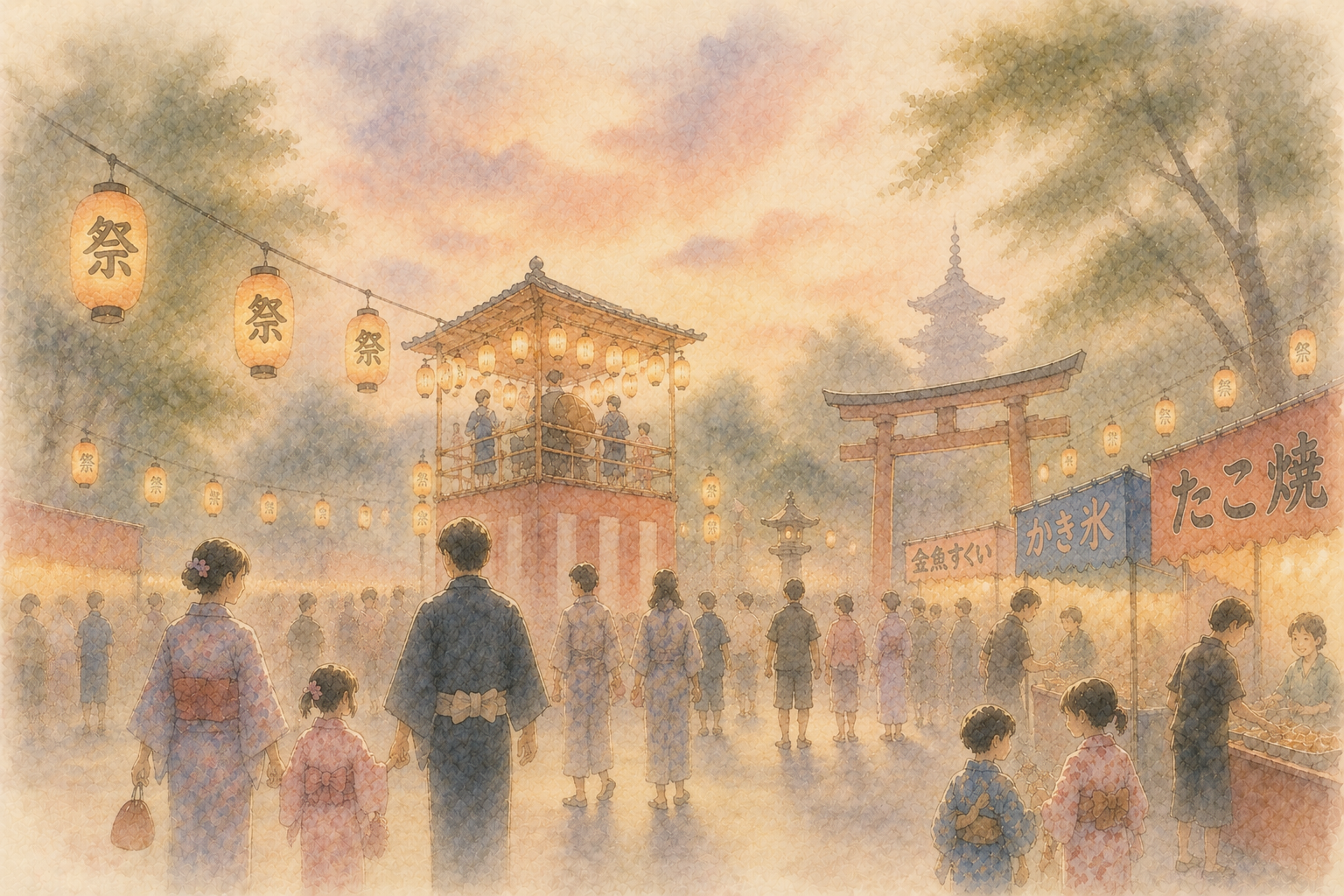
Quick Summary
- Obon is a summer period focused on welcoming and honoring ancestors through home and community rituals.
- Higan happens around the spring and autumn equinoxes and emphasizes reflection, gratitude, and “crossing over” through practice.
- Obon tends to feel family-and-festival oriented; Higan tends to feel quiet-and-contemplative in tone.
- Obon commonly includes welcoming/farewell fires, lanterns, dances, and home altars; Higan commonly includes grave visits and temple services.
- Both are widely observed in Japan and often overlap in practice: remembering the dead and caring for the living heart.
- If you’re unsure which is “more Buddhist,” the practical answer is: both can be, depending on how you show up.
Introduction
If Obon and Higan blur together for you, you’re not alone: both involve ancestors, both can include grave visits, and both sit right on the fault line between “religious observance” and “family custom.” The difference becomes clear when you stop treating them as competing holidays and start seeing them as two distinct ways Japanese Buddhism supports ordinary life—one through welcome and reunion, the other through balance and reflection. This guide is written for Gassho, a Zen/Buddhism site focused on clear, practice-oriented explanations.
Think of Obon as a time when remembrance moves outward—into the home, the neighborhood, the shared meal, the light in the evening. Think of Higan as a time when remembrance turns inward—toward what you’re carrying, what you’re clinging to, and what you can release in order to meet life more cleanly.
Neither is “better,” and neither requires you to hold special beliefs. What matters is the direction of attention each season invites, and how that attention changes the way you relate to loss, gratitude, and responsibility.
A Clear Lens for Obon vs Higan
A helpful way to understand Obon vs Higan is to treat them as two lenses for the same human reality: we live because others lived, and we will also be someone others remember. Both observances make that reality workable—not as an idea, but as something you can feel and respond to without being overwhelmed.
Obon leans into relationship. The mood is often warm, communal, and tangible: cleaning, preparing, offering, gathering. The “teaching,” if you want to call it that, is that love and obligation are not opposites. You can honor those who came before you through simple acts of care in the present.
Higan leans into balance. Set at the equinoxes, it naturally points to the middle—between extremes, between seasons, between habits that pull you off-center. The “teaching” here is that remembrance is not only about the past; it’s also about how you live now: what you repeat, what you avoid, and what you can meet directly.
Seen this way, Obon is remembrance expressed as welcoming, while Higan is remembrance expressed as recalibrating. Both can include prayer, offerings, and temple visits, but the underlying emphasis—reunion versus reflection—helps you tell them apart.
GASSHO
Ask and learn about Buddhism in daily life.
GASSHO is a Buddhist community app where you can learn Buddhist teachings and ask questions to the head priest of Kongosanmaiin Temple on Mount Koya.
How the Difference Shows Up in Everyday Feeling
In Obon season, you may notice your attention naturally moving toward names, faces, and stories. A small detail—an old photo, a familiar dish, the smell of incense—can bring a person back into the room in a quiet way. The mind doesn’t have to force memory; memory arrives on its own.
That arrival can trigger mixed reactions: warmth, guilt, tenderness, irritation, longing. Obon practice, at its simplest, is noticing those reactions without turning them into a private drama. You acknowledge what’s here, and you do the next caring thing—clean a space, make an offering, send a message to family, or sit for a moment of gratitude.
Higan season often feels different. Instead of being pulled primarily into personal history, you may become more aware of your current patterns: how quickly you judge, how often you rush, how easily you numb out. The equinox timing can feel like a natural pause button—an invitation to look honestly at what’s been driving you.
In that pause, the mind may try to bargain: “I’ll reflect later,” “I’m too busy,” “I’m not the kind of person who does religious things.” Higan practice can be as plain as seeing that bargaining as bargaining—just another movement of avoidance—and returning to one grounded action, like visiting a grave, attending a service, or offering a few minutes of quiet attention.
Obon can bring up the question, “How do I stay connected?” Higan can bring up the question, “What am I doing with my time and heart?” Neither question needs a perfect answer. The point is to let the season reveal what you’re already carrying.
Both observances also highlight something practical: grief and gratitude don’t follow schedules, but schedules can support grief and gratitude. When the calendar gives you a container, you don’t have to wait for the “right mood.” You simply participate, and the inner meaning often catches up later.
Over time, you may notice a subtle shift: remembrance stops being only a feeling and becomes a form of responsibility. Not heavy responsibility—more like a steadying one. Obon steadies through connection; Higan steadies through clarity.
Common Mix-Ups That Make Obon and Higan Confusing
Misunderstanding 1: “They’re basically the same ancestor holiday.” They overlap, but their center of gravity differs. Obon is typically framed as welcoming and sending off ancestral spirits, with home-based and community rituals. Higan is tied to the equinoxes and leans toward reflection, balance, and memorial observances that often feel quieter.
Misunderstanding 2: “Obon is cultural, Higan is religious.” In real life, both are braided from temple customs, family habits, regional traditions, and personal meaning. Either can be deeply Buddhist in spirit if it leads to gratitude, ethical care, and a more honest relationship with impermanence.
Misunderstanding 3: “If I can’t do the full ritual, it doesn’t count.” Many people can’t travel, can’t visit graves, or don’t have a home altar. The heart of both seasons is attention and intention: remembering, offering respect, and letting that remembrance shape how you speak and act.
Misunderstanding 4: “It’s about pleasing ancestors so life goes well.” Some folk beliefs exist, but a grounded approach is simpler: these observances train humility and gratitude. They remind you that life is supported by countless conditions—family, community, food, labor, time—and that you can respond with care rather than entitlement.
Misunderstanding 5: “If I feel nothing, I’m doing it wrong.” Feeling can be present or absent. What matters is showing up. Sometimes the most sincere moment is a plain, unromantic act—cleaning a grave, lighting a candle, or offering a short bow—done without trying to manufacture emotion.
Why Knowing the Difference Helps in Daily Life
Understanding Obon vs Higan helps you choose the right kind of support at the right time. When you need reconnection—with family, with roots, with gratitude—Obon’s outward, relational energy fits naturally. When you need re-centering—after stress, conflict, or drift—Higan’s reflective tone can be a gentle reset.
It also prevents a common modern problem: turning remembrance into a vague mood instead of a lived practice. Obon gives you concrete actions that express care. Higan gives you a seasonal checkpoint to examine habits and soften what has become rigid.
Most importantly, both seasons offer a way to meet impermanence without collapsing into either sentimentality or avoidance. You remember the dead, and you also remember your own life is moving. That remembrance can make ordinary choices—how you spend evenings, how you speak to relatives, how you handle resentment—feel more honest and less performative.
If you live outside Japan, the difference still matters because it helps you adapt respectfully. You can honor the spirit of Obon through welcome and offering, and honor the spirit of Higan through reflection and balance, without needing to imitate every detail.
Conclusion
Obon vs Higan isn’t a contest between two “Japanese Buddhist holidays.” It’s a practical distinction between two seasonal invitations: Obon asks you to welcome and honor your ancestors through connection and care; Higan asks you to pause at the equinox and re-balance your life through reflection and remembrance.
If you’re unsure where to start, keep it simple. For Obon, do one act of welcome and one act of gratitude. For Higan, do one act of remembrance and one act of honest self-checking. Small, sincere actions are enough to let the season do its work.
Ask a Buddhist priest
Have a question about Buddhism?
In the GASSHO app, you can ask questions about Buddhist teachings, daily concerns, and how to understand Buddhism in everyday life.
Frequently Asked Questions
- FAQ 1: What is the main difference between Obon and Higan?
- FAQ 2: Are Obon and Higan both about ancestors?
- FAQ 3: When do Obon and Higan happen in Japan?
- FAQ 4: Why does Obon sometimes fall in July and sometimes in August?
- FAQ 5: What does “Higan” mean, and how does that relate to Obon vs Higan?
- FAQ 6: Do people visit graves during Obon or Higan?
- FAQ 7: Is Obon more of a festival than Higan?
- FAQ 8: Are Obon and Higan strictly Buddhist, or also cultural?
- FAQ 9: What are typical home practices for Obon compared with Higan?
- FAQ 10: Can you observe Obon and Higan if you don’t have a family altar or a grave to visit?
- FAQ 11: Is Higan observed twice a year, and does Obon have an equivalent second season?
- FAQ 12: If I can only choose one, should I prioritize Obon or Higan?
- FAQ 13: Do temples do different services for Obon vs Higan?
- FAQ 14: Why are the equinoxes important for Higan in the Obon vs Higan comparison?
- FAQ 15: What’s a simple, respectful way to explain Obon vs Higan to someone new to Japanese Buddhism?
FAQ 1: What is the main difference between Obon and Higan?
Answer: Obon is a summer period centered on welcoming and honoring ancestors through home and community rituals, while Higan occurs at the spring and autumn equinoxes and emphasizes reflection, balance, and memorial observances.
Takeaway: Obon leans toward reunion; Higan leans toward recalibration.
FAQ 2: Are Obon and Higan both about ancestors?
Answer: Yes, both involve remembering the dead, but Obon often highlights welcoming and sending off ancestors, while Higan often highlights equinox-time remembrance paired with self-reflection and gratitude.
Takeaway: Both remember ancestors, but the emphasis and season differ.
FAQ 3: When do Obon and Higan happen in Japan?
Answer: Obon is typically observed in mid-July or mid-August depending on region, while Higan is observed around the spring and autumn equinoxes (usually March and September).
Takeaway: Obon is summer; Higan is equinox-based twice a year.
FAQ 4: Why does Obon sometimes fall in July and sometimes in August?
Answer: Regional timing differences come from how local areas historically adopted calendar changes; some follow dates closer to the old lunar timing (often August), while others observe in July.
Takeaway: Obon timing varies by region due to calendar history.
FAQ 5: What does “Higan” mean, and how does that relate to Obon vs Higan?
Answer: “Higan” is commonly understood as “the other shore,” pointing to crossing beyond confusion through practice; in Obon vs Higan terms, Higan’s meaning aligns with reflection and re-centering rather than the welcoming focus typical of Obon.
Takeaway: Higan’s name itself points to inner orientation and balance.
FAQ 6: Do people visit graves during Obon or Higan?
Answer: Many people visit graves during both. Obon grave visits often feel tied to “coming home” and family gatherings, while Higan grave visits often align with equinox services and a quieter mood of reflection.
Takeaway: Grave visits happen in both, but the surrounding tone differs.
FAQ 7: Is Obon more of a festival than Higan?
Answer: Often, yes. Obon commonly includes community events such as dances and lanterns in many areas, while Higan is usually less festival-like and more focused on memorial services and personal reflection around the equinox.
Takeaway: Obon is frequently more outward and communal than Higan.
FAQ 8: Are Obon and Higan strictly Buddhist, or also cultural?
Answer: Both are intertwined with Japanese culture and family life as well as Buddhist temple observances. In practice, Obon vs Higan is less about “religious vs cultural” and more about different seasonal forms of remembrance and care.
Takeaway: Both are lived at the intersection of Buddhism and culture.
FAQ 9: What are typical home practices for Obon compared with Higan?
Answer: Obon commonly includes preparing the home, making offerings, and welcoming/sending-off gestures (often with lights or incense), while Higan home practice is often simpler—quiet offerings, remembrance, and aligning with equinox services or grave visits.
Takeaway: Obon tends to be more “hosting”; Higan tends to be more “pausing.”
FAQ 10: Can you observe Obon and Higan if you don’t have a family altar or a grave to visit?
Answer: Yes. For Obon, you can set aside a clean space for a candle or incense and offer a moment of gratitude; for Higan, you can use the equinox as a time for reflection, remembrance, and a small act of kindness dedicated to those who came before you.
Takeaway: The heart of Obon vs Higan is intention, not equipment.
FAQ 11: Is Higan observed twice a year, and does Obon have an equivalent second season?
Answer: Higan is observed around both the spring and autumn equinoxes. Obon is typically observed once a year in summer, though local customs and memorial days can add other remembrance moments throughout the year.
Takeaway: Higan is biannual; Obon is generally annual.
FAQ 12: If I can only choose one, should I prioritize Obon or Higan?
Answer: Choose based on what you need: Obon is well-suited for family connection and honoring ancestors through welcoming rituals, while Higan is well-suited for equinox-time reflection and re-balancing your daily conduct.
Takeaway: Pick Obon for connection, Higan for reflection—or do a small version of both.
FAQ 13: Do temples do different services for Obon vs Higan?
Answer: Many temples hold memorial services for both, but Obon services often align with the season of welcoming ancestors and community gatherings, while Higan services align with the equinox and may emphasize reflection and remembrance in a quieter register.
Takeaway: Both have temple services, shaped by different seasonal meanings.
FAQ 14: Why are the equinoxes important for Higan in the Obon vs Higan comparison?
Answer: The equinoxes symbolize balance—day and night in near-equality—which naturally supports Higan’s emphasis on re-centering, moderation, and reflective remembrance, contrasting with Obon’s summer emphasis on welcoming and reunion.
Takeaway: Higan is anchored in seasonal balance; Obon is anchored in ancestral welcome.
FAQ 15: What’s a simple, respectful way to explain Obon vs Higan to someone new to Japanese Buddhism?
Answer: You can say: “Obon is a summer time to welcome and honor ancestors through family and community rituals; Higan is an equinox time to remember the dead while also reflecting on how to live with more balance and clarity.”
Takeaway: Obon = welcoming remembrance; Higan = equinox reflection and remembrance.