



How Buddhism Explains Mental Loops That Keep Repeating
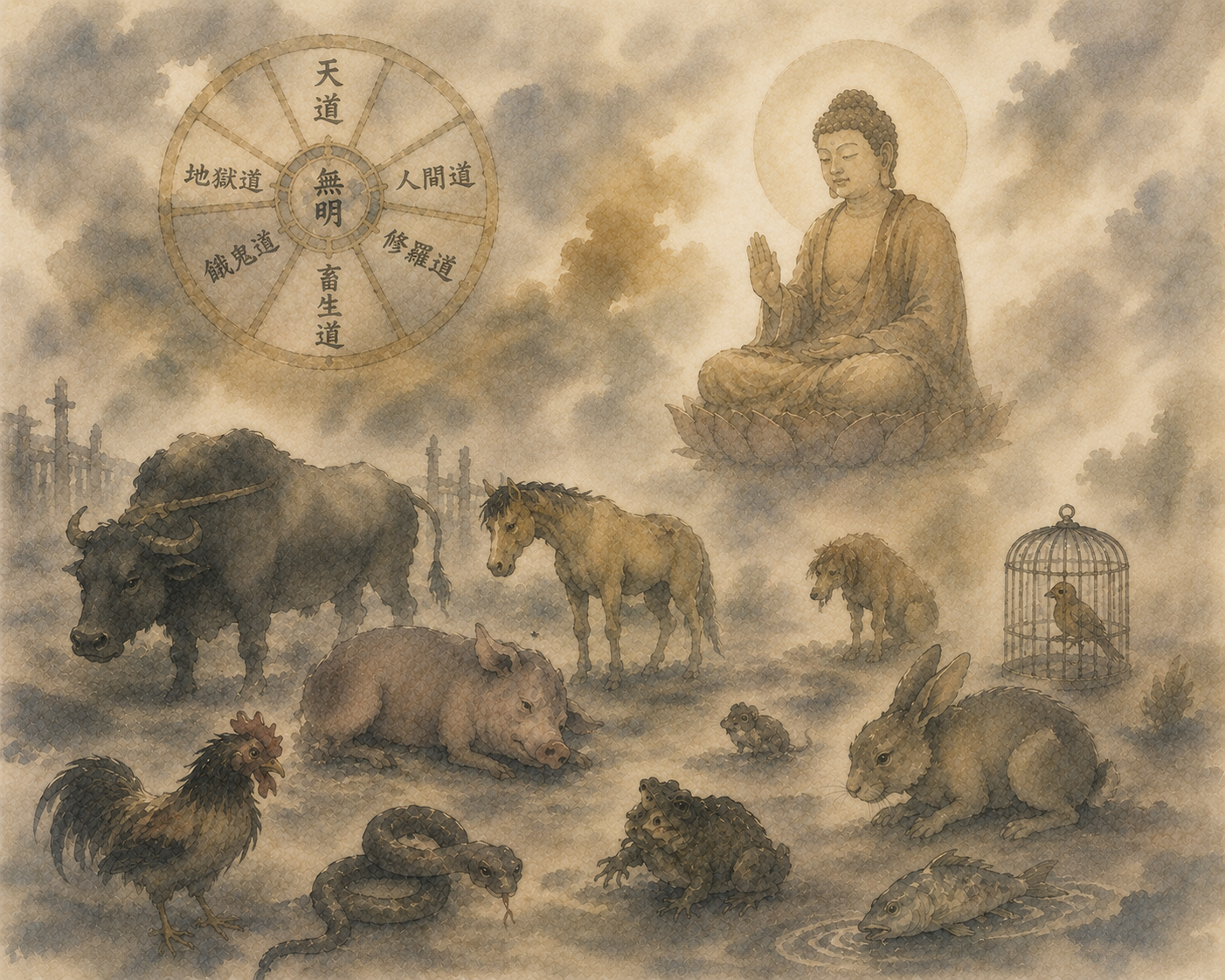
How Buddhism Explains Mental Loops That Keep Repeating
Quick Summary
- Mental loops in Buddhism are understood as repeatable patterns of attention, feeling, and reaction—not personal failures.
- A loop keeps going because it is being fed: by craving, resistance, or confusion about what’s happening right now.
- The goal isn’t to “win” against thoughts; it’s to see the loop clearly enough that it loses momentum.
- Noticing the body’s signals (tightness, heat, restlessness) often reveals the loop earlier than analyzing the story.
- Small interruptions—pause, label, soften, return—work better than big dramatic “mind hacks.”
- Compassion matters because shame and self-judgment are often secondary loops that keep the first one alive.
- Daily life is the practice field: conversations, scrolling, planning, and replaying are where loops show their mechanics.
Introduction
You can know a thought is unhelpful and still get dragged through it again: the replayed argument, the future catastrophe, the same self-critique with slightly different wording. What makes it so frustrating is the sense that you’re “choosing” it—when it often feels more like the mind is choosing you. At Gassho, we write about Buddhist practice in plain language for modern minds that get stuck in modern loops.
From a Buddhist angle, the problem isn’t that thoughts appear; it’s that the mind learns a groove and then keeps running it because it expects a payoff—relief, control, certainty, or a stable identity. Seeing that expectation clearly is often more effective than trying to replace the thought with a better one.
A Buddhist Lens on Why Thoughts Repeat
Buddhism tends to treat “mental loops” less as mysterious intrusions and more as conditioned patterns. A thought repeats because conditions support it: a trigger, a mood, a body sensation, a memory, and a familiar reaction that follows. When those conditions line up, the loop runs—sometimes in seconds, sometimes for hours.
One helpful lens is to notice how a loop is built from a chain: contact (something happens), feeling tone (pleasant, unpleasant, neutral), and then the urge to grasp, push away, or check out. The content of the thought (“I messed up,” “They don’t respect me,” “What if it goes wrong?”) can be loud, but the engine is often the push-pull of wanting and not wanting.
Another key point is that a loop can function like a strategy. Rumination can feel like problem-solving. Replaying a conversation can feel like protection. Self-criticism can feel like motivation. Even when the strategy fails, the mind repeats it because it has repeated it before—and familiarity can masquerade as usefulness.
In this view, freedom doesn’t come from forcing silence. It comes from understanding the loop as an impersonal process: conditions arise, a pattern activates, and awareness can learn to relate differently. That shift—from “this is me” to “this is a pattern”—is often the first real loosening.
GASSHO
Ask and learn about Buddhism in daily life.
GASSHO is a Buddhist community app where you can learn Buddhist teachings and ask questions to the head priest of Kongosanmaiin Temple on Mount Koya.
What Mental Loops Feel Like in Real Life
A loop often starts innocently. You remember something you said. You feel a small jolt of embarrassment. The mind offers a quick replay “just to check.” That replay brings another jolt, and now the mind wants a cleaner ending—an imagined better line, a stronger defense, a different outcome.
Notice how quickly the body gets involved. The chest tightens, the jaw sets, the stomach drops, the shoulders lift. Even if the story is about the past or future, the body is reacting in the present. This is why mental loops can feel urgent: the nervous system is treating imagination like immediate reality.
Then comes narrowing. Attention collapses around the loop’s topic. You might still be doing your day—washing dishes, answering emails—but the mind is “elsewhere,” running the same track. The loop can even borrow new evidence: a neutral text message becomes proof, a delayed reply becomes a verdict.
Often there’s a hidden demand inside the loop: “I need certainty.” “I need them to understand.” “I need to not feel this.” The mind keeps circling because it’s trying to satisfy that demand through thinking. But thinking rarely delivers the kind of certainty or emotional safety the loop is asking for.
At some point you may notice a second loop: judging yourself for looping. “Why am I still on this?” “I should be over it.” This adds tension and makes the original loop feel more personal and more shameful, which—ironically—gives it more fuel.
When the loop loosens, it’s usually not because you found the perfect counter-argument. It loosens because awareness returns: you recognize “this is looping,” you feel the body, you allow the unpleasantness to be there, and the mind no longer needs to keep spinning to avoid it. The story may still appear, but it doesn’t have the same grip.
Misunderstandings That Keep the Loop Going
Misunderstanding 1: “If I understand the loop intellectually, it should stop.” Insight helps, but loops are also habits of attention and emotion. You can understand the pattern and still feel the pull. The practical shift is learning to notice earlier and feed it less.
Misunderstanding 2: “Buddhism says I should get rid of thoughts.” The point isn’t to eliminate thinking; it’s to see thinking clearly and stop being compelled by it. A quiet mind is not a moral achievement. A workable relationship with the mind is.
Misunderstanding 3: “If I let the feeling be there, I’m agreeing with the thought.” Allowing a feeling is not endorsing the story attached to it. You can let embarrassment be present without concluding you’re a failure. You can let anger be present without deciding to act from it.
Misunderstanding 4: “The loop is my true self showing up.” Buddhism often points in the opposite direction: what repeats is not a fixed self, but a conditioned pattern. Treating it as identity (“I’m an anxious person,” “I’m a jealous person”) can lock it in place.
Misunderstanding 5: “I need to fight the loop harder.” Aggressive inner resistance can become more fuel. A calmer approach—recognize, soften, return—often interrupts the cycle more reliably than mental wrestling.
Why This Understanding Helps in Daily Life
Mental loops don’t just waste time; they shape how you speak, decide, and relate. When you’re caught in a loop, you’re more likely to send the reactive message, avoid the honest conversation, or seek quick relief through distraction. Seeing the loop as a process gives you a small gap—enough to choose a different next step.
This lens also reduces self-blame. If a loop is conditioned, then it can be met with curiosity: “What set this off?” “What feeling am I trying not to feel?” “What am I demanding from this moment?” That curiosity is not passive; it’s a practical way to stop feeding the pattern with panic and shame.
In ordinary moments, you can experiment with simple interruptions. Name what’s happening (“planning,” “replaying,” “judging”). Feel the body for three breaths. Relax the forehead or jaw. Then return to what’s actually in front of you. These are small moves, but they change the loop’s economics: less fuel, less payoff, less repetition.
Over time, you may notice that the “topic” of the loop changes, but the structure stays similar: an unpleasant feeling tone, a demand for certainty, and a rush into story. Recognizing the structure is powerful because it works across situations—work stress, relationship tension, social anxiety, or self-image.
Conclusion
Buddhism explains mental loops in a surprisingly practical way: they repeat because conditions repeat, and because the mind expects thinking to deliver relief, control, or certainty. The way out is not perfect thinking, but clearer seeing—of feeling tone, bodily urgency, and the grasping or resisting that keeps the wheel turning.
If you take one thing with you, let it be this: a loop is not a verdict about you. It’s a pattern you can learn to recognize, soften, and stop feeding—one ordinary moment at a time.
Ask a Buddhist priest
Have a question about Buddhism?
In the GASSHO app, you can ask questions about Buddhist teachings, daily concerns, and how to understand Buddhism in everyday life.
Frequently Asked Questions
- FAQ 1: In mental loops Buddhism, what exactly is “looping”?
- FAQ 2: How does Buddhism explain why the same thoughts keep repeating?
- FAQ 3: Are mental loops in Buddhism considered “bad” or “wrong”?
- FAQ 4: What role does craving or aversion play in mental loops Buddhism?
- FAQ 5: In mental loops Buddhism, is the goal to stop thoughts completely?
- FAQ 6: How can I tell the difference between problem-solving and a mental loop in Buddhism?
- FAQ 7: What is a simple Buddhist-style way to interrupt a mental loop?
- FAQ 8: In mental loops Buddhism, why does the body matter so much?
- FAQ 9: Does Buddhism say mental loops come from a “self” that is broken?
- FAQ 10: How does mindfulness relate to mental loops Buddhism?
- FAQ 11: Why do mental loops in Buddhism often get stronger when I try to suppress them?
- FAQ 12: In mental loops Buddhism, what does it mean to “not feed” a loop?
- FAQ 13: Are mental loops Buddhism calls “rumination” the same as intrusive thoughts?
- FAQ 14: How does compassion help with mental loops Buddhism describes?
- FAQ 15: When should I seek professional help alongside mental loops Buddhism practices?
FAQ 1: In mental loops Buddhism, what exactly is “looping”?
Answer: In a Buddhist framing, what “loops” is a conditioned sequence: a trigger, a feeling tone (pleasant/unpleasant/neutral), and a habitual reaction like grasping, resisting, or spacing out—followed by repetitive thinking that tries to manage the feeling.
Takeaway: A loop is a repeatable process, not a personal flaw.
FAQ 2: How does Buddhism explain why the same thoughts keep repeating?
Answer: Buddhism points to conditioning: when similar causes and conditions appear (stress, insecurity, certain memories, certain sensations), the mind runs the same learned strategy. Repetition happens because the mind expects some payoff—relief, certainty, or control—even if it rarely arrives.
Takeaway: Repetition is often habit plus hoped-for relief.
FAQ 3: Are mental loops in Buddhism considered “bad” or “wrong”?
Answer: They’re usually treated as sources of suffering when they’re compulsive, but not as moral failures. The emphasis is on understanding how they arise and how to relate to them skillfully, rather than condemning yourself for having them.
Takeaway: The issue is compulsion and distress, not “wrongness.”
FAQ 4: What role does craving or aversion play in mental loops Buddhism?
Answer: Craving (wanting things to be different) and aversion (not wanting what’s here) often power the loop. The mind keeps thinking to get rid of discomfort or to secure a desired outcome, and that push-pull keeps the cycle energized.
Takeaway: Loops are frequently fueled by “must have” or “must not.”
FAQ 5: In mental loops Buddhism, is the goal to stop thoughts completely?
Answer: Not necessarily. The practical aim is to see thoughts as thoughts—events in awareness—so they don’t automatically dictate your mood or behavior. Thoughts can still arise without becoming a repetitive, gripping loop.
Takeaway: The goal is freedom from compulsion, not a blank mind.
FAQ 6: How can I tell the difference between problem-solving and a mental loop in Buddhism?
Answer: Problem-solving tends to be specific and concludes with a next step. A loop tends to repeat the same emotional charge and storyline without producing new information or action, often leaving you more tense or stuck.
Takeaway: If it repeats without resolution and increases tension, it’s likely looping.
FAQ 7: What is a simple Buddhist-style way to interrupt a mental loop?
Answer: A simple sequence is: notice “looping,” feel the body for a few breaths, soften obvious tension (jaw, shoulders, belly), and return attention to one present task. The key is reducing fuel rather than arguing with the thought.
Takeaway: Name it, feel it, soften, and return.
FAQ 8: In mental loops Buddhism, why does the body matter so much?
Answer: Because loops are not only cognitive; they’re also physiological. The body often signals the loop early through tightness, heat, restlessness, or shallow breathing. Meeting those sensations directly can reduce urgency and weaken the loop’s momentum.
Takeaway: The body often reveals the loop before the story does.
FAQ 9: Does Buddhism say mental loops come from a “self” that is broken?
Answer: Typically, no. Buddhism often frames the sense of a fixed self as something the mind constructs, and loops as conditioned patterns within that construction. Seeing the loop as impersonal (“a pattern is happening”) can reduce identification and shame.
Takeaway: Loops are patterns in experience, not proof you’re broken.
FAQ 10: How does mindfulness relate to mental loops Buddhism?
Answer: Mindfulness is the capacity to notice what’s happening as it’s happening—thought, feeling tone, body sensation, urge—without immediately following it. That noticing creates a small gap where the loop can be seen and not automatically continued.
Takeaway: Mindfulness adds a gap between trigger and reaction.
FAQ 11: Why do mental loops in Buddhism often get stronger when I try to suppress them?
Answer: Suppression can add resistance and fear, which are more conditions that energize the loop. The mind also keeps checking whether the thought is gone, which ironically reintroduces it. A softer approach—acknowledge and allow—often reduces the rebound effect.
Takeaway: Fighting the loop can become extra fuel for the loop.
FAQ 12: In mental loops Buddhism, what does it mean to “not feed” a loop?
Answer: It means not adding the usual extra ingredients: repeated rehearsal, catastrophic elaboration, self-judgment, or compulsive checking. You still acknowledge the thought and the feeling, but you stop supplying attention in the same habitual way.
Takeaway: Acknowledge the loop without investing in its storyline.
FAQ 13: Are mental loops Buddhism calls “rumination” the same as intrusive thoughts?
Answer: They can overlap, but they’re not identical. Rumination is often repetitive thinking that feels purposeful (reviewing, analyzing), while intrusive thoughts can feel more sudden and unwanted. In both cases, a Buddhist approach emphasizes noticing, not identifying, and not escalating the reaction.
Takeaway: Different forms, similar practice: notice and don’t escalate.
FAQ 14: How does compassion help with mental loops Buddhism describes?
Answer: Compassion reduces the secondary loop of self-attack (“I shouldn’t be like this”), which often intensifies the original loop. A kinder inner tone can lower threat signals in the body, making it easier to observe the loop without being pulled into it.
Takeaway: Kindness can remove the extra layer that keeps looping alive.
FAQ 15: When should I seek professional help alongside mental loops Buddhism practices?
Answer: If loops are persistent and impair sleep, work, relationships, or safety—or if they involve intense anxiety, depression, trauma symptoms, or compulsions—professional support can be important. Buddhist practices can complement therapy, but they shouldn’t replace needed clinical care.
Takeaway: Use Buddhist tools, and get support when loops significantly disrupt life.