



The Lotus in the Mud: A Buddhist Story About Growth Through Difficulty
Quick Summary
- In lotus in the mud Buddhism, the “mud” points to real-life difficulty, not a moral failure.
- The lotus image is a lens: growth can happen because of conditions, not in spite of them.
- This story emphasizes working with experience as it is—messy, mixed, and changing.
- “Mud” includes stress, grief, shame, conflict, and ordinary frustration—not just big trauma.
- The point isn’t to romanticize suffering; it’s to stop wasting it through avoidance and self-blame.
- A practical takeaway: notice your reactions, soften the fight, and choose one small skillful response.
- The lotus in the mud is about dignity: you don’t need perfect conditions to begin.
Introduction
If “lotus in the mud” sounds like a pretty slogan that ignores how hard life can be, you’re not wrong to be skeptical—people often use it to paper over pain or to pressure you into “being positive.” In Buddhism, the lotus in the mud is less about optimism and more about accuracy: it names the uncomfortable truth that growth is conditioned by the very stuff we’d rather not feel, and it offers a grounded way to relate to that fact without turning suffering into a virtue. At Gassho, we focus on practical Buddhist perspectives you can test in daily life.
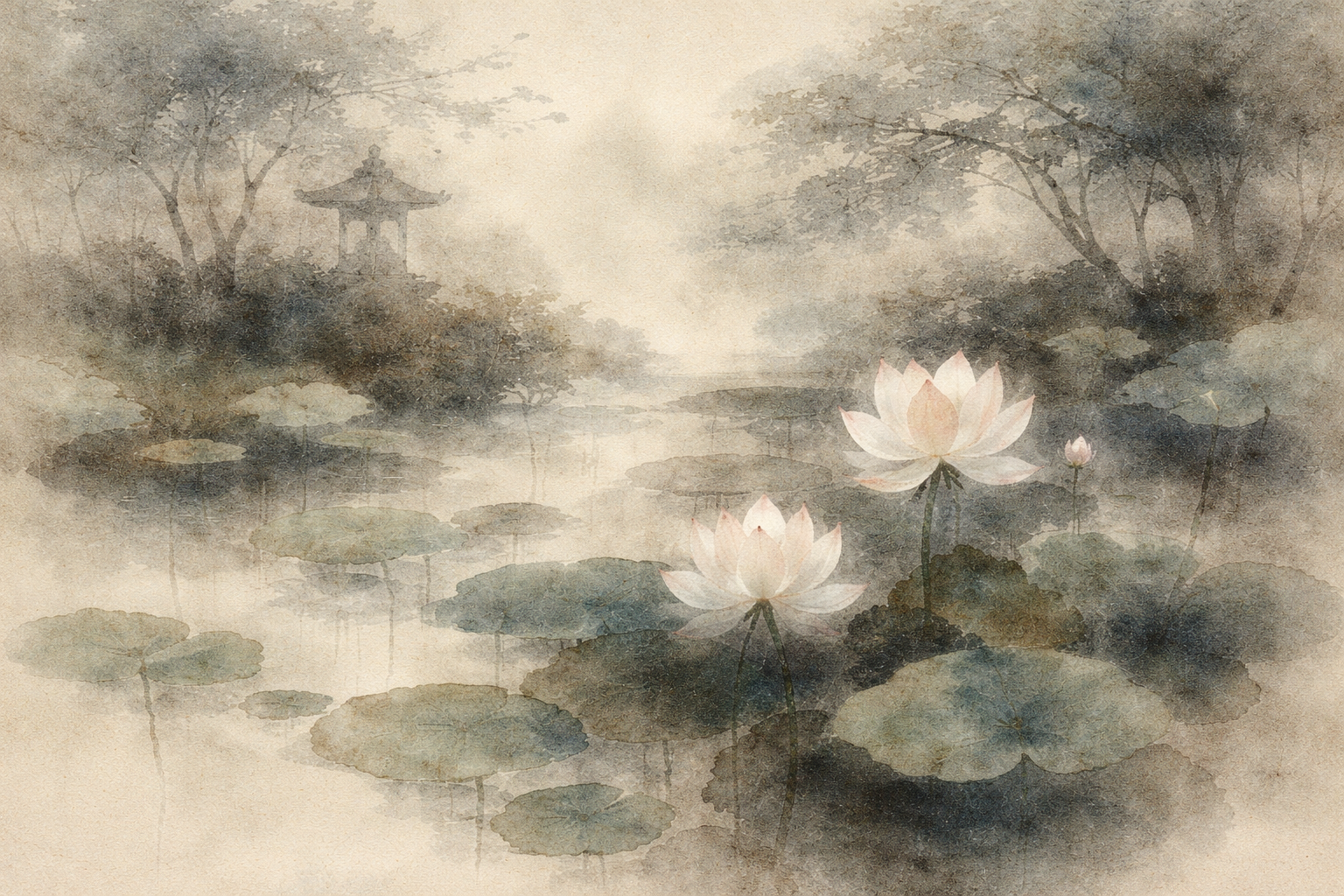
The lotus is a plant that rises from murky water and opens into a clean bloom. In Buddhist imagery, that contrast becomes a story about the human mind: clarity can appear in the middle of confusion, and kindness can show up right inside irritation. The “mud” is not an enemy to defeat; it’s the condition we start from.
When people search “lotus in the mud Buddhism,” they’re often looking for something specific: a way to make sense of difficulty without denying it, and a way to change without pretending they’re already fine. The lotus image helps because it doesn’t demand that you become someone else first—it asks you to work with what’s already here.
The Lotus in the Mud as a Buddhist Lens
In lotus in the mud Buddhism, the central perspective is simple: what you experience is shaped by conditions, and changing your relationship to conditions changes what becomes possible. The lotus doesn’t bloom by rejecting the mud; it blooms because the mud is part of the ecosystem that supports life. In the same way, difficult emotions and tangled situations can become material for insight and compassion when they’re met clearly.
This isn’t a belief that “everything happens for a reason” or that pain is secretly good. It’s a way of seeing cause-and-effect in the mind. When stress arises, certain habits arise with it—tightening, blaming, rehearsing, numbing, controlling. The lotus image points to another option: staying close enough to experience to learn from it, without drowning in it.
The “mud” includes anything that feels unwanted: disappointment, jealousy, resentment, grief, boredom, shame, anxiety, and the ordinary friction of being human with other humans. Buddhism doesn’t ask you to pretend these states aren’t there. It asks you to notice how they operate, how they pull attention, and how they shape speech and action.
The “lotus” is not a trophy or a permanent state. It’s a moment of wise response: a little more honesty, a little less reactivity, a little more care. Seen this way, the story is not about becoming flawless; it’s about becoming less compelled.
GASSHO
Ask and learn about Buddhism in daily life.
GASSHO is a Buddhist community app where you can learn Buddhist teachings and ask questions to the head priest of Kongosanmaiin Temple on Mount Koya.
What “Mud” and “Bloom” Look Like in Real Life
“Mud” often shows up as a body signal before it becomes a story: a tight chest, a clenched jaw, a restless urge to check your phone, a heat in the face when you feel criticized. The mind quickly adds meaning—“I’m failing,” “They don’t respect me,” “This will never change.” The lotus image invites you to pause at the level of direct experience and see the chain forming.
In an argument, the mud might be the instant need to win. You can feel how attention narrows, how you stop listening, how you start collecting evidence. A “lotus” moment isn’t dramatic; it might be noticing that narrowing and choosing one breath before speaking. That breath doesn’t solve the relationship, but it changes the next sentence—and the next sentence changes the next minute.
At work, the mud can be comparison: someone else gets recognition and your mind starts running a private trial. You might notice the impulse to dismiss them, or to inflate your own effort, or to withdraw. The bloom here could be naming the feeling honestly (“envy is here”), then returning to what’s actually needed: one clear task, one helpful message, one boundary, one request.
In grief, the mud is not just sadness—it’s the secondary suffering that comes from fighting sadness: “I shouldn’t be like this,” “I’m behind,” “I’m burdening people.” The lotus in the mud perspective doesn’t rush you out of grief. It helps you stop adding extra layers of self-judgment, so the natural pain can move through with less resistance.
In shame, the mud can feel like a full identity: “This is who I am.” The lotus image suggests a different angle: shame is a condition arising in awareness, not a final verdict. When you can hold shame as an experience—sensations, thoughts, urges—you gain a little space. In that space, repair becomes possible: apologizing, making amends, asking for help, or simply not repeating the same harm.
In daily stress, the mud is often speed. You rush, you multitask, you live slightly ahead of yourself. A lotus moment might be washing one dish without hurrying, walking to the next room without planning the next five steps, or listening to someone without preparing your reply. These are small, but they retrain the mind toward steadiness.
Over time, you may notice a practical shift: difficulty still arrives, but it becomes less personal and less absolute. Not because you’ve “transcended” anything, but because you’re learning to see reactions as reactions. The lotus doesn’t deny the mud; it simply doesn’t confuse mud for the whole world.
Common Misreadings of the Lotus in the Mud
One misunderstanding is that the lotus in the mud means you should be grateful for suffering. That can become a subtle form of self-gaslighting, especially when pain is fresh. Buddhism doesn’t require gratitude on command. It points to the possibility that even unwanted conditions can be met in a way that reduces harm.
Another misreading is using the image to bypass emotions: “I’m a lotus, so I shouldn’t feel angry.” But anger, fear, and sadness are part of the mud—real data about needs, boundaries, and loss. The practice is not to erase them; it’s to relate to them without letting them drive the whole vehicle.
Some people take the story as a promise that hardship automatically produces wisdom. It doesn’t. Difficulty can also produce bitterness, numbness, or cruelty if it’s met with isolation and rumination. The “bloom” depends on conditions too: support, honesty, rest, reflection, and choices that interrupt harmful patterns.
Finally, the lotus image can be misused to judge others: “If you were practicing, you’d be blooming by now.” That turns a compassionate symbol into a measuring stick. In a Buddhist spirit, the image is for understanding your own mind and softening your own reactivity—not ranking anyone’s pain or progress.
Why This Story Helps When Life Feels Stuck
The lotus in the mud matters because it gives you permission to start where you are. Many people delay change until they feel calm, confident, or “ready.” But readiness is often a moving target. The lotus image says: begin in the mud—begin in the middle of the mess—because that’s the only place growth can actually take root.
It also reframes difficulty from “proof that something is wrong with me” to “a condition I can work with.” That shift reduces shame, and reduced shame makes skillful action more likely. When you’re not busy defending your self-image, you can pay attention to what’s happening and respond more cleanly.
Practically, this perspective supports three everyday moves: (1) recognize what’s present without dramatizing it, (2) feel the urge to react without obeying it immediately, and (3) choose one small action that reduces harm. None of these require special circumstances. They’re available in traffic, in emails, in family conversations, and in your own private thoughts.
Finally, the lotus story protects something important: dignity. If you believe you must be “pure” before you can be kind, you’ll wait forever. If you believe you must be free of confusion before you can be honest, you’ll keep performing. The lotus in the mud suggests a more humane standard: clarity can be partial, kindness can be imperfect, and it still counts.
Conclusion
The lotus in the mud Buddhism image isn’t a motivational poster; it’s a practical way to see how the mind works under pressure. Mud is the raw material of life—unwanted feelings, imperfect relationships, uncertain outcomes. The lotus is what happens when you meet those conditions with attention and care: less reactivity, more honesty, and small choices that reduce harm.
If you take one thing from the story, let it be this: you don’t need to wait for clean water. Start in the mud, notice what’s happening, and make the next response a little more skillful than the last.
Ask a Buddhist priest
Have a question about Buddhism?
In the GASSHO app, you can ask questions about Buddhist teachings, daily concerns, and how to understand Buddhism in everyday life.
Frequently Asked Questions
- FAQ 1: What does “lotus in the mud” mean in Buddhism?
- FAQ 2: Is the “mud” in lotus in the mud Buddhism the same as suffering?
- FAQ 3: Does lotus in the mud Buddhism mean suffering is good?
- FAQ 4: Is the lotus in the mud a literal Buddhist story or mainly a symbol?
- FAQ 5: How does lotus in the mud Buddhism relate to karma?
- FAQ 6: What is the “bloom” in lotus in the mud Buddhism supposed to represent?
- FAQ 7: How can I apply lotus in the mud Buddhism when I feel overwhelmed?
- FAQ 8: Does lotus in the mud Buddhism encourage emotional suppression?
- FAQ 9: Why is the lotus such a common symbol in Buddhism?
- FAQ 10: Is “lotus in the mud” the same idea as “no mud, no lotus” in Buddhism?
- FAQ 11: Can lotus in the mud Buddhism be used to justify staying in harmful situations?
- FAQ 12: What does lotus in the mud Buddhism suggest about shame and self-worth?
- FAQ 13: How is lotus in the mud Buddhism different from positive thinking?
- FAQ 14: What is a simple daily reflection inspired by lotus in the mud Buddhism?
- FAQ 15: Is lotus in the mud Buddhism meant for people who are struggling, or for everyone?
FAQ 1: What does “lotus in the mud” mean in Buddhism?
Answer: In Buddhism, “lotus in the mud” is an image for how clarity, compassion, and wise action can arise within difficult conditions rather than only after life becomes easy. The mud represents confusion, pain, and everyday struggle; the lotus represents a skillful response that isn’t stained by reactivity.
Takeaway: The symbol points to working with difficulty, not denying it.
FAQ 2: Is the “mud” in lotus in the mud Buddhism the same as suffering?
Answer: It overlaps with suffering, but “mud” is broader: it can include stress, conflict, shame, grief, and the messy conditions of ordinary life. It also includes the mental habits that make pain heavier, like rumination and self-blame.
Takeaway: “Mud” includes both hard circumstances and the mind’s reactions to them.
FAQ 3: Does lotus in the mud Buddhism mean suffering is good?
Answer: No. The image doesn’t claim suffering is good or desirable. It suggests that when suffering is present, it can become a condition for learning and compassion if met with awareness—without romanticizing pain.
Takeaway: The point is transformation of relationship, not praise of suffering.
FAQ 4: Is the lotus in the mud a literal Buddhist story or mainly a symbol?
Answer: It’s primarily a symbol used in Buddhist imagery and teaching language: the lotus grows from murky water yet blooms clean, making it a natural metaphor for awakening qualities arising amid confusion. People may tell it as a “story,” but its power is in what it points to rather than a single fixed narrative.
Takeaway: Treat it as a practical metaphor you can apply to experience.
FAQ 5: How does lotus in the mud Buddhism relate to karma?
Answer: In a simple sense, it aligns with cause-and-effect: conditions shape outcomes. The “mud” is a set of conditions; the “bloom” reflects how you respond within those conditions through intention, speech, and action. It’s less about fate and more about how choices influence what grows next.
Takeaway: The image emphasizes workable cause-and-effect in daily life.
FAQ 6: What is the “bloom” in lotus in the mud Buddhism supposed to represent?
Answer: The bloom represents qualities like clarity, non-reactivity, compassion, and integrity—often in small, ordinary moments. It doesn’t have to mean a permanent state; it can be a single wise pause, a truthful apology, or a kinder response.
Takeaway: “Bloom” can be a moment of skillful action, not a final achievement.
FAQ 7: How can I apply lotus in the mud Buddhism when I feel overwhelmed?
Answer: Start small: name what’s present (“overwhelm is here”), feel it in the body for a few breaths, and choose one next action that reduces harm (drink water, send one clear message, step outside, or ask for support). The “lotus” is that small shift from automatic reaction to a deliberate next step.
Takeaway: When overwhelmed, aim for one skillful next move, not a total fix.
FAQ 8: Does lotus in the mud Buddhism encourage emotional suppression?
Answer: No. The mud includes emotions, so suppressing them would be rejecting the very material the metaphor asks you to meet. The practice implied by the image is to feel emotions without being driven by them—neither stuffing them down nor acting them out.
Takeaway: The symbol supports honest feeling with less reactivity.
FAQ 9: Why is the lotus such a common symbol in Buddhism?
Answer: The lotus naturally illustrates a contrast that fits Buddhist themes: it grows from murky water yet appears clean and open. That makes it a strong visual for the possibility of wisdom and compassion arising within ordinary, imperfect human life.
Takeaway: The lotus is common because it vividly expresses “purity” without denying conditions.
FAQ 10: Is “lotus in the mud” the same idea as “no mud, no lotus” in Buddhism?
Answer: They’re closely related in meaning: both point to the way growth depends on conditions, including difficult ones. “Lotus in the mud” emphasizes where the lotus comes from; “no mud, no lotus” emphasizes that the bloom isn’t separate from its causes.
Takeaway: Both phrases highlight interdependence between difficulty and growth.
FAQ 11: Can lotus in the mud Buddhism be used to justify staying in harmful situations?
Answer: It shouldn’t be. The metaphor is about how to meet difficulty with awareness, not about tolerating abuse or avoidable harm. Sometimes the most “lotus-like” response is leaving, setting a boundary, or getting help—because that reduces harm for everyone involved.
Takeaway: Growth through difficulty doesn’t mean accepting preventable harm.
FAQ 12: What does lotus in the mud Buddhism suggest about shame and self-worth?
Answer: It suggests that painful states like shame are conditions arising in the mind, not a final identity. The “mud” can be met with honesty and care, allowing the possibility of repair and self-respect without pretending you never made mistakes.
Takeaway: Shame can be worked with as an experience, not believed as a verdict.
FAQ 13: How is lotus in the mud Buddhism different from positive thinking?
Answer: Positive thinking often tries to replace unpleasant thoughts with pleasant ones. Lotus in the mud Buddhism starts by acknowledging what’s unpleasant and then changing how you relate to it—through attention, restraint, and compassion—without forcing a cheerful narrative.
Takeaway: It’s about clear seeing and wise response, not forced optimism.
FAQ 14: What is a simple daily reflection inspired by lotus in the mud Buddhism?
Answer: Try this: “What is the mud right now (in my body, mood, or situation)? What would a small bloom look like in the next 10 minutes?” Keep the bloom concrete—one honest sentence, one pause, one act of care, one boundary.
Takeaway: Identify the mud, then choose one small, specific bloom.
FAQ 15: Is lotus in the mud Buddhism meant for people who are struggling, or for everyone?
Answer: It’s for everyone, because “mud” includes ordinary irritation, uncertainty, and disappointment—not only major crises. The image is a reminder that practice happens in real conditions, where life is mixed and imperfect.
Takeaway: The lotus in the mud applies to everyday life, not just extreme hardship.