



Who Is Kisshoten? Fortune, Beauty, and Blessings in Japanese Buddhism
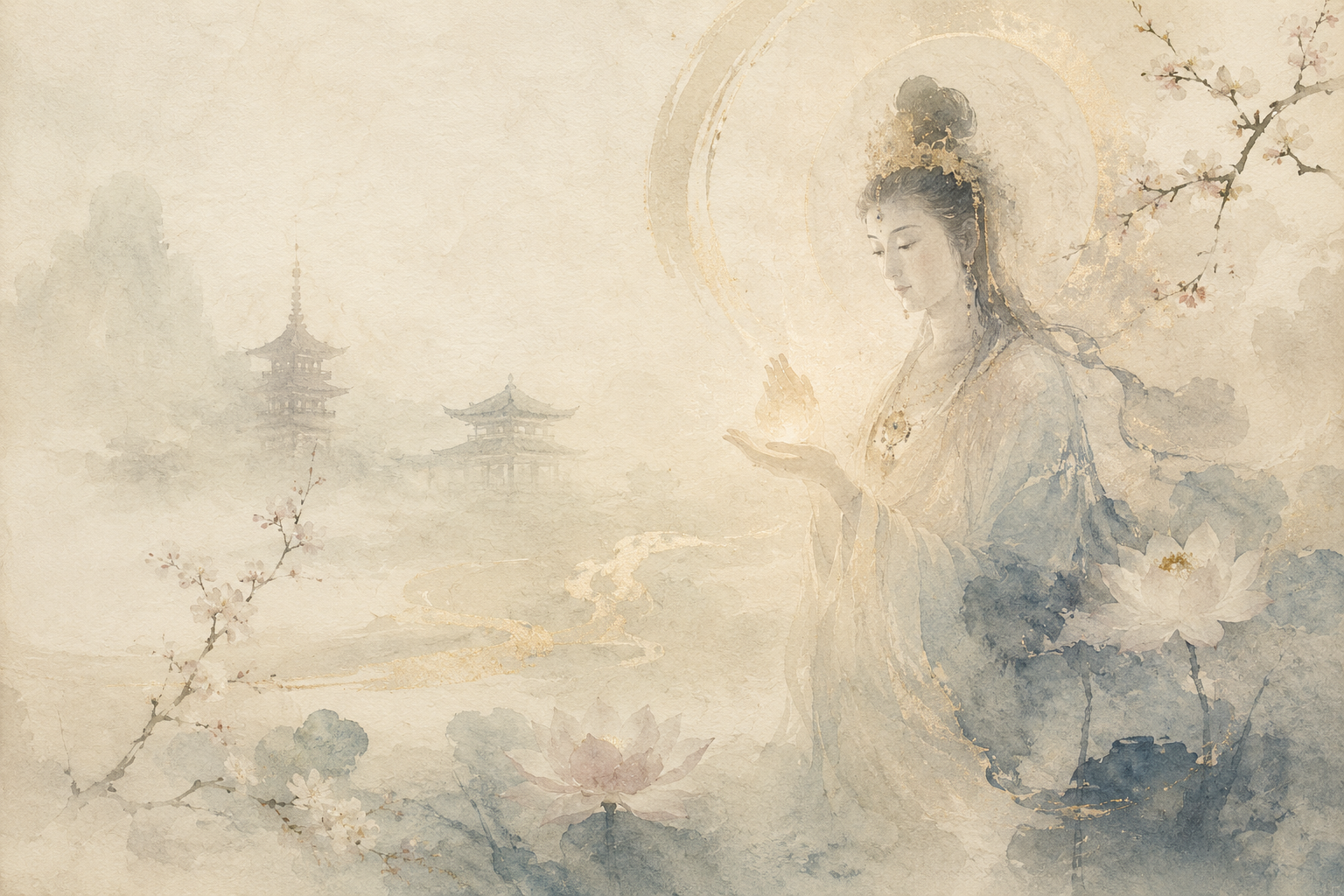
Quick Summary
- Kisshoten is a Japanese Buddhist deity associated with good fortune, beauty, and household blessings.
- She is often linked to prosperity that supports everyday life, not just “luck” in a flashy sense.
- Her imagery commonly includes jewels, a wish-fulfilling gem, or symbols of abundance and grace.
- Kisshoten is frequently connected with feminine dignity, harmony, and the “soft power” of care.
- Devotion to Kisshoten can be approached as a practical lens: what you nurture tends to grow.
- She is sometimes associated with other protective figures in Japanese temple culture, but she remains distinct.
- Thinking of Kisshoten as a reminder to align values, conduct, and gratitude makes her symbolism usable today.
You’ve probably seen the name “Kisshoten” and felt stuck between two unsatisfying options: either she’s “just a luck goddess,” or she’s so wrapped in unfamiliar iconography that you can’t tell what she actually represents in real life. Kisshoten makes more sense when you treat her as a mirror for how fortune, beauty, and blessings are cultivated through attention, relationships, and daily choices rather than as a vending machine for wishes. I write for Gassho, a Zen/Buddhism site focused on clear, practice-friendly explanations of Japanese Buddhist culture and symbols.
Who Kisshoten Is in Japanese Buddhism
Kisshoten (吉祥天) is a revered figure in Japanese Buddhism whose name points toward auspiciousness, good omens, and the kind of fortune that supports life: enough resources, stable conditions, and a sense of harmony that lets people breathe. She is also associated with beauty, but not merely as appearance—more as a quality of refinement, dignity, and the ability to bring things into balance.
One helpful way to understand Kisshoten is to see her as a symbol of “blessings that arrive when conditions are cared for.” In that sense, she represents a gentle but firm reminder: fortune is not only something that happens to you; it’s also something you participate in by how you speak, how you handle money, how you treat others, and how you respond to change.
In temple settings and religious art, Kisshoten may appear with objects that suggest abundance and protection—such as jewels or a wish-fulfilling gem—along with an overall posture of composed generosity. The point of these symbols isn’t to promise instant rewards; it’s to express a worldview where prosperity and beauty are inseparable from steadiness, gratitude, and ethical restraint.
As a lens for experience, Kisshoten invites a grounded question: what kind of “fortune” are you actually seeking—more stimulation, or more stability? More admiration, or more integrity? When you ask it that way, her presence becomes less mysterious and more practical.
GASSHO
Ask and learn about Buddhism in daily life.
GASSHO is a Buddhist community app where you can learn Buddhist teachings and ask questions to the head priest of Kongosanmaiin Temple on Mount Koya.
How Kisshoten’s Symbolism Shows Up in Ordinary Life
Think about the moment you notice you’re craving a lucky break—more money, a smoother relationship, a better outcome. Often, the mind tightens around the result. Kisshoten’s symbolism can be used as a cue to widen the frame: instead of fixating on the outcome, you look at the conditions you’re building right now.
In daily life, “fortune” frequently looks like small, unglamorous maintenance: replying to a message you’ve avoided, paying a bill on time, cleaning up a misunderstanding before it hardens. When those actions happen, the nervous system settles. You feel less chased by consequences. That steadiness is a kind of blessing, even if nobody calls it that.
Beauty, in this same practical sense, can show up as how you arrange your attention. When you slow down enough to notice tone of voice, timing, and the impact of your words, interactions become less jagged. You might still disagree, but you’re less likely to scorch the ground. Kisshoten’s “beauty” can be read as the beauty of conduct: the art of not making things worse.
There’s also the experience of receiving: a compliment, a favor, a good opportunity. Many people reflexively deflect it or feel they must “earn it” immediately. Kisshoten imagery—jewels, abundance, auspiciousness—can function as a reminder to receive cleanly. Not greedily, not suspiciously, but with simple gratitude. That shift alone changes how life feels.
When things go well, the mind often rushes to secure the good feeling: “How do I keep this?” That grasping can turn blessings into anxiety. Kisshoten’s lens suggests another move: appreciate what’s present, then return to the basics—generosity, steadiness, and respect. The “keeping” happens indirectly, through the quality of your ongoing actions.
When things go poorly, it’s easy to interpret it as a personal curse or a sign you’re failing. Kisshoten’s symbolism doesn’t require that story. It can simply prompt a check-in: what conditions are missing, what support is needed, what habit is draining you, what relationship needs repair. That’s not magical thinking; it’s a calmer way to respond.
Over time, you may notice that what you call “luck” is often the visible tip of invisible care: someone mentored you, you practiced a skill, you kept your word, you didn’t burn bridges, you saved a little. Kisshoten can be held as a quiet emblem of that invisible care—fortune as something grown.
Common Misunderstandings About Kisshoten
One common misunderstanding is that Kisshoten is only about material wealth. While prosperity is part of her sphere, the deeper theme is auspiciousness: supportive conditions for life. That can include finances, but it also includes harmony in the home, good relationships, health-supporting routines, and the kind of stability that makes generosity possible.
Another misunderstanding is to reduce “beauty” to surface-level attractiveness. In Japanese Buddhist art, beauty often points to inner qualities made visible—composure, kindness, dignity, and a mind that isn’t constantly at war with itself. Kisshoten’s beauty can be read as the beauty of a life that is not dominated by grasping.
It’s also easy to assume that devotion to Kisshoten is a promise of guaranteed outcomes. A more grounded approach is to treat her as a reminder of alignment: when your actions, values, and relationships are tended, life becomes more workable. That doesn’t eliminate uncertainty; it changes how you meet it.
Finally, some people get stuck on “Is she a goddess or a Buddhist figure?” In lived practice, the label matters less than the function: Kisshoten is a meaningful symbol through which people express gratitude, aspiration, and care for the conditions that support well-being.
Why Kisshoten Still Matters Today
Modern life trains us to chase outcomes while neglecting conditions. Kisshoten points in the opposite direction: cultivate what supports life—ethical clarity, stable routines, respectful speech, and generosity—and let “fortune” be the natural byproduct. This is especially relevant when anxiety makes everything feel scarce, even when it isn’t.
Her association with beauty is also timely. Beauty is often marketed as consumption or comparison, which tends to produce restlessness. Kisshoten suggests a quieter beauty: the beauty of restraint, of care, of not turning every interaction into a transaction. That kind of beauty is available regardless of age, status, or circumstance.
And because she is linked with blessings in the home and in daily livelihood, Kisshoten can serve as a simple checkpoint: is your life arranged in a way that supports your best intentions? If not, what one small adjustment would make your environment more honest, more stable, and more kind?
Conclusion
Kisshoten is best understood as a Japanese Buddhist symbol of auspiciousness: fortune that supports life, beauty that expresses dignity, and blessings that grow from care. If you hold her as a lens rather than a superstition, she becomes immediately relevant—pointing you back to conditions, conduct, gratitude, and the quiet work that makes life feel genuinely fortunate.
Ask a Buddhist priest
Have a question about Buddhism?
In the GASSHO app, you can ask questions about Buddhist teachings, daily concerns, and how to understand Buddhism in everyday life.
Frequently Asked Questions
- FAQ 1: Who is Kisshoten in Japanese Buddhism?
- FAQ 2: What does the name “Kisshoten” mean?
- FAQ 3: Is Kisshoten a “goddess of beauty”?
- FAQ 4: What kinds of blessings is Kisshoten associated with?
- FAQ 5: What symbols or objects are commonly shown with Kisshoten?
- FAQ 6: Is Kisshoten the same as Kichijōten?
- FAQ 7: How is Kisshoten different from Benzaiten?
- FAQ 8: Is Kisshoten part of the Seven Lucky Gods (Shichifukujin)?
- FAQ 9: What is the best way to approach devotion to Kisshoten without superstition?
- FAQ 10: What does Kisshoten represent beyond money and wealth?
- FAQ 11: Where might someone encounter Kisshoten in Japan?
- FAQ 12: Why is Kisshoten associated with household harmony?
- FAQ 13: Is Kisshoten originally Japanese?
- FAQ 14: What is a simple daily reflection inspired by Kisshoten?
- FAQ 15: How should “fortune” be understood when thinking about Kisshoten?
FAQ 1: Who is Kisshoten in Japanese Buddhism?
Answer: Kisshoten (吉祥天) is a revered figure associated with auspiciousness—good fortune, beauty, and blessings that support everyday life, especially harmony and prosperity in the household.
Takeaway: Kisshoten represents supportive fortune and dignified beauty, not just “luck.”
FAQ 2: What does the name “Kisshoten” mean?
Answer: “Kissho” (吉祥) means auspiciousness or good omen, and “ten” (天) is often used for a heavenly or divine figure in Japanese Buddhist terminology. Together, Kisshoten points to an auspicious, blessing-bringing presence.
Takeaway: Her name emphasizes auspicious conditions and blessings.
FAQ 3: Is Kisshoten a “goddess of beauty”?
Answer: Kisshoten is often described that way, but in a Buddhist cultural context “beauty” can also mean dignity, harmony, and refined conduct—not only physical appearance.
Takeaway: Kisshoten’s beauty is as much about inner qualities as outer form.
FAQ 4: What kinds of blessings is Kisshoten associated with?
Answer: She is commonly associated with good fortune, prosperity, household harmony, protection of well-being, and the kind of “auspiciousness” that makes life feel supported and workable.
Takeaway: Her blessings are often practical—stability, harmony, and supportive fortune.
FAQ 5: What symbols or objects are commonly shown with Kisshoten?
Answer: In art, Kisshoten may be depicted with jewels or auspicious treasures that symbolize abundance, value, and protection. The exact attributes vary by region and artistic tradition.
Takeaway: Her iconography often points to abundance and auspicious support.
FAQ 6: Is Kisshoten the same as Kichijōten?
Answer: Yes. “Kisshoten” and “Kichijōten” are two readings of the same Japanese characters (吉祥天). You’ll see both in English-language sources and temple materials.
Takeaway: Kisshoten and Kichijōten refer to the same figure.
FAQ 7: How is Kisshoten different from Benzaiten?
Answer: They are distinct figures with different symbolic emphases. Kisshoten is strongly tied to auspiciousness, beauty, and prosperity-supporting blessings, while Benzaiten is commonly associated with music, eloquence, and flowing qualities often linked with water and creativity.
Takeaway: Kisshoten and Benzaiten overlap in “good fortune” themes but are not the same.
FAQ 8: Is Kisshoten part of the Seven Lucky Gods (Shichifukujin)?
Answer: Kisshoten is not typically counted among the standard Seven Lucky Gods lineup, though she is closely associated with auspicious fortune and may appear in related cultural contexts depending on region and tradition.
Takeaway: She’s “luck-associated,” but usually not one of the canonical seven.
FAQ 9: What is the best way to approach devotion to Kisshoten without superstition?
Answer: A grounded approach is to treat Kisshoten as a reminder to cultivate conditions for well-being: gratitude, generosity, careful speech, and responsible handling of resources. The “blessing” is the stability those habits create.
Takeaway: Use Kisshoten as a practical mirror for how you build supportive conditions.
FAQ 10: What does Kisshoten represent beyond money and wealth?
Answer: Beyond material prosperity, Kisshoten can represent harmony, dignity, and “auspiciousness” as a whole—conditions that support a stable life, healthy relationships, and a mind less driven by scarcity and grasping.
Takeaway: Her symbolism includes emotional and relational well-being, not only finances.
FAQ 11: Where might someone encounter Kisshoten in Japan?
Answer: Kisshoten may be encountered in temple iconography, special festival displays, or cultural references to auspiciousness and household blessings. Visibility varies widely by temple and region.
Takeaway: She appears most often in temple and art contexts tied to auspicious blessings.
FAQ 12: Why is Kisshoten associated with household harmony?
Answer: Because her blessings are often understood as supportive conditions—prosperity, stability, and auspiciousness—she naturally becomes linked with the home, where resources, relationships, and daily conduct meet.
Takeaway: The home is where “fortune as conditions” becomes most visible.
FAQ 13: Is Kisshoten originally Japanese?
Answer: Kisshoten is part of a broader Buddhist cultural world in Asia, and her Japanese form reflects how Buddhist figures were adopted and expressed through Japanese language, art, and temple life over time.
Takeaway: Kisshoten is Japanese in expression, with roots in wider Buddhist culture.
FAQ 14: What is a simple daily reflection inspired by Kisshoten?
Answer: A simple reflection is: “What condition am I strengthening today—scarcity or sufficiency?” Then choose one small action that supports sufficiency, such as gratitude, tidying a neglected task, or offering help without keeping score.
Takeaway: Kisshoten can be a cue to build supportive conditions through small actions.
FAQ 15: How should “fortune” be understood when thinking about Kisshoten?
Answer: With Kisshoten, fortune can be understood less as random luck and more as auspiciousness—when supportive conditions come together through care, timing, relationships, and responsible choices, making life steadier and more harmonious.
Takeaway: Kisshoten points to fortune as cultivated conditions, not guaranteed outcomes.