



Amida Buddha vs Shaka Nyorai: What Is the Difference?
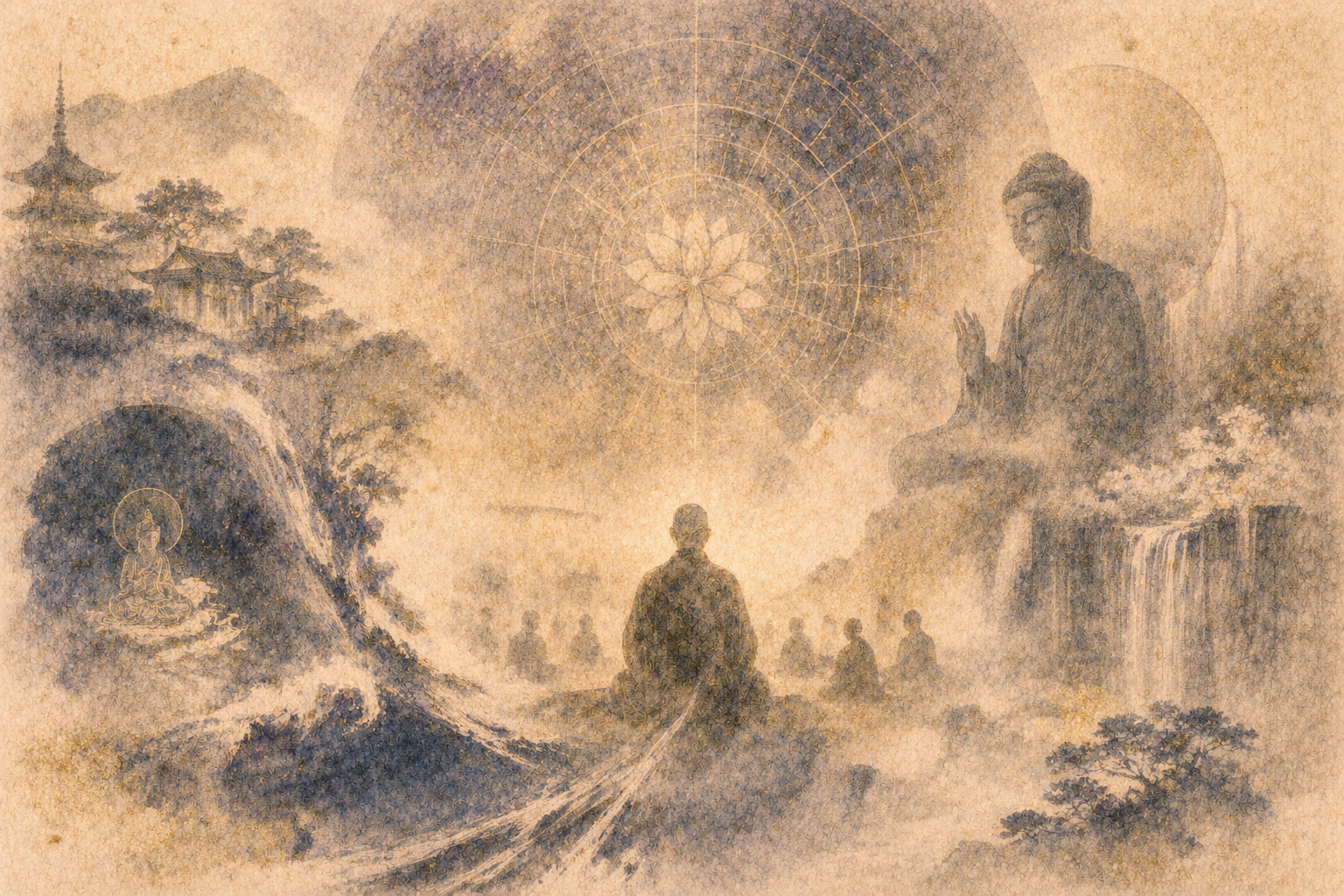
Quick Summary
- Shaka Nyorai (Shakyamuni Buddha) points to awakening through seeing clearly and practicing in this life.
- Amida Buddha points to awakening through trust, gratitude, and being supported by compassion beyond your self-centered effort.
- “Vs” is misleading: they function like two lenses—self-honesty and self-surrender—often used together.
- Shaka imagery often emphasizes teaching and grounded presence; Amida imagery often emphasizes welcome, refuge, and reassurance.
- In daily life, Shaka helps you notice causes and effects; Amida helps you soften shame and return when you feel you “failed.”
- Neither is about winning a debate; the practical question is which lens helps you meet your life with less grasping.
Introduction
If you’re stuck on “Amida Buddha vs Shaka Nyorai,” it’s usually because the two names feel like competing answers to the same question: do you wake up through your own practice, or by relying on compassion beyond you? That framing creates unnecessary stress, because it turns living symbols into a personality test—when they’re better understood as two complementary ways of meeting the same human problem: suffering, confusion, and the urge to control life. At Gassho, we focus on practical clarity—how Buddhist symbols function in lived experience, not as abstract arguments.
Amida and Shaka can be approached as “two hands” of the path: one hand learns to see clearly what you’re doing, and the other hand learns to stop making your worth depend on doing it perfectly.
Two Lenses for the Same Human Problem
A helpful way to understand Amida Buddha vs Shaka Nyorai is to treat them as lenses rather than rival figures. A lens doesn’t demand belief; it changes what you notice. Shaka Nyorai, the historical Buddha, is often felt as the lens of direct seeing: pay attention, look honestly, and understand how clinging and aversion create distress.
Amida Buddha can be felt as the lens of being met by compassion: when you’re tangled in self-judgment, fear, or exhaustion, you don’t “muscle” your way into purity—you let yourself be supported. This lens emphasizes trust, gratitude, and the release of the fantasy that you can fix yourself into being acceptable.
Put simply, Shaka highlights the clarity of cause and effect in your mind and behavior. Amida highlights the warmth that makes honesty possible without collapse. One lens can become harsh without the other; one can become vague without the other.
So the difference isn’t “which Buddha is real,” but what each name evokes in practice: Shaka evokes the teacher who points; Amida evokes the refuge that receives. Both point back to the same work—meeting this moment with less grasping and more care.
GASSHO
Ask and learn about Buddhism in daily life.
GASSHO is a Buddhist community app where you can learn Buddhist teachings and ask questions to the head priest of Kongosanmaiin Temple on Mount Koya.
How the Difference Shows Up in Ordinary Moments
Imagine you snap at someone you love. The Shaka lens tends to move your attention toward the chain of events: the tightness in your chest, the story you believed, the impulse to defend, the moment you chose a sharp tone. It’s not moralistic; it’s investigative. You learn what happened by seeing it clearly.
The Amida lens tends to move your attention toward what happens next: the wave of shame, the urge to hide, the fear that you’re “bad,” and the way that fear can keep you from apologizing. Here, compassion isn’t a reward for being good—it’s the condition that lets you return to relationship at all.
In a stressful workday, Shaka shows up as a quiet question: “What am I adding right now?” You notice how you tighten around outcomes, how you rehearse arguments, how you treat uncertainty as danger. That noticing can loosen the grip because it interrupts autopilot.
Amida shows up when you realize you can’t hold yourself together by force. You let the breath come and go without using it as a project. You allow the nervous system to be imperfect. You remember that your value isn’t identical to your performance.
When you’re trying to change a habit—doomscrolling, overeating, procrastination—the Shaka lens helps you see triggers and pay attention to the exact moment the hand reaches for the phone or the mind reaches for distraction. It’s precise, sometimes uncomfortably so, but it’s grounded.
The Amida lens helps when precision turns into self-contempt. You notice the inner voice that says, “You’ll never change.” Instead of arguing with it, you soften around it. You let compassion be present even while the habit is present, which often reduces the desperation that fuels the cycle.
In grief or loss, Shaka can feel like the permission to experience reality directly: sadness as sensation, memory as memory, love as love—without forcing a spiritual explanation. Amida can feel like being held when words fail: a simple refuge that keeps you from turning pain into isolation.
Common Misunderstandings That Create Unnecessary Conflict
One common misunderstanding is treating Shaka Nyorai as “self-power” and Amida as “other-power” in a simplistic, competitive way. In real life, honest effort and receiving support are intertwined. Even the decision to practice is influenced by conditions you didn’t create—health, upbringing, timing, and the kindness you’ve received.
Another misunderstanding is assuming Amida is only for people who “can’t do” serious practice. That turns compassion into a consolation prize. A more grounded view is that compassion is what allows practice to be honest rather than performative. Without it, practice can become another way to build a fragile identity.
On the other side, Shaka is sometimes misread as cold or purely intellectual. But the point of clear seeing is not to win arguments with yourself; it’s to reduce suffering. Clarity without kindness becomes brittle. Kindness without clarity becomes sentimental. The misunderstanding is thinking you must choose one and reject the other.
Finally, people often confuse “difference” with “contradiction.” Amida and Shaka can be different emphases—refuge and investigation—without canceling each other out. The question is not which symbol is superior, but which emphasis helps you meet your actual life more skillfully today.
Why This Comparison Matters in Daily Life
When you lean only on the Shaka lens, you may become overly focused on fixing yourself. You can start measuring your days by how “mindful” you were, turning practice into a scoreboard. That mindset often increases tension and makes setbacks feel like personal failure.
When you lean only on the Amida lens, you may drift into passivity—using “it’s all compassion” to avoid looking at patterns that harm you or others. Compassion then becomes a blanket that covers reality rather than a warmth that helps you face it.
Holding both lenses can change the tone of your inner life. Shaka helps you name what’s happening without excuses. Amida helps you stay present with what you name without collapsing into shame. Together, they support a steady kind of responsibility: not self-punishment, not self-indulgence.
This matters in relationships, too. Shaka supports listening carefully and noticing reactivity before it becomes speech. Amida supports repair—returning after you’ve been defensive, apologizing without dramatizing, forgiving without erasing boundaries.
In the end, “Amida Buddha vs Shaka Nyorai” becomes less about theology and more about emotional posture: can you be honest without being cruel to yourself, and can you be kind without turning away from truth?
Conclusion
Amida Buddha vs Shaka Nyorai is not a fight between two Buddhas; it’s a choice between two helpful emphases. Shaka Nyorai points to clear seeing—how suffering is constructed moment by moment. Amida Buddha points to refuge—how compassion makes it possible to return, again and again, without turning your life into a self-improvement trial.
If you feel tight, perfectionistic, or secretly afraid you’re failing, the Amida lens may restore warmth and steadiness. If you feel vague, avoidant, or stuck in repeating patterns, the Shaka lens may restore clarity and responsibility. Many people find that the most humane approach is letting both lenses inform the same day.
Ask a Buddhist priest
Have a question about Buddhism?
In the GASSHO app, you can ask questions about Buddhist teachings, daily concerns, and how to understand Buddhism in everyday life.
Frequently Asked Questions
- FAQ 1: Who is Amida Buddha compared to Shaka Nyorai?
- FAQ 2: Is “Amida Buddha vs Shaka Nyorai” an actual contradiction?
- FAQ 3: What does Shaka Nyorai represent that Amida Buddha does not?
- FAQ 4: What does Amida Buddha represent that Shaka Nyorai does not?
- FAQ 5: Are Amida Buddha and Shaka Nyorai the same Buddha?
- FAQ 6: Why do some temples feature Amida Buddha while others feature Shaka Nyorai?
- FAQ 7: How can I tell whether a statue is Amida Buddha or Shaka Nyorai?
- FAQ 8: Does Shaka Nyorai mean you must rely only on self-effort, unlike Amida Buddha?
- FAQ 9: Does devotion to Amida Buddha mean you don’t need to practice like Shaka taught?
- FAQ 10: Which is “more important,” Amida Buddha or Shaka Nyorai?
- FAQ 11: Can I chant “Namu Amida Butsu” and still respect Shaka Nyorai?
- FAQ 12: What is the simplest way to explain Amida Buddha vs Shaka Nyorai to a beginner?
- FAQ 13: How do Amida Buddha and Shaka Nyorai relate to compassion?
- FAQ 14: Why do people argue about Amida Buddha vs Shaka Nyorai?
- FAQ 15: How can I work with both Amida Buddha and Shaka Nyorai in daily life without mixing things up?
FAQ 1: Who is Amida Buddha compared to Shaka Nyorai?
Answer: Shaka Nyorai refers to Shakyamuni, the historical Buddha known as the teacher who awakened and taught a path of clear seeing. Amida Buddha is a Buddha figure associated with boundless compassion and refuge, often evoking the feeling of being supported rather than relying only on personal effort.
Takeaway: Shaka emphasizes “seeing and practicing,” while Amida emphasizes “refuge and compassion.”
FAQ 2: Is “Amida Buddha vs Shaka Nyorai” an actual contradiction?
Answer: Not necessarily. Many people experience them as different emphases that can work together: Shaka highlights honest observation of mind and behavior, and Amida highlights compassion that helps you return when you feel overwhelmed or ashamed.
Takeaway: It’s often a “both/and” relationship, not an “either/or.”
FAQ 3: What does Shaka Nyorai represent that Amida Buddha does not?
Answer: Shaka Nyorai commonly represents the awakened teacher in this world—direct guidance, practical instruction, and the emphasis on understanding cause and effect in your experience. While Amida can also be understood as teaching, Amida is more often approached as refuge and compassionate support.
Takeaway: Shaka is frequently felt as “the guide who points,” especially toward clear seeing.
FAQ 4: What does Amida Buddha represent that Shaka Nyorai does not?
Answer: Amida Buddha is commonly associated with unconditional compassion and the sense of being received even when you feel inadequate. Shaka Nyorai can certainly be compassionate too, but Amida is often approached specifically as a symbol of refuge, reassurance, and trust beyond self-centered striving.
Takeaway: Amida is often the stronger symbol for “being held” rather than “figuring it out.”
FAQ 5: Are Amida Buddha and Shaka Nyorai the same Buddha?
Answer: They are generally treated as distinct Buddhas in Buddhist iconography and devotion: Shaka Nyorai is Shakyamuni (historical Buddha), while Amida is Amitābha/Amitāyus (a different Buddha figure). People may still relate to both as different expressions of awakening and compassion.
Takeaway: They’re distinct figures, but both point toward liberation from suffering.
FAQ 6: Why do some temples feature Amida Buddha while others feature Shaka Nyorai?
Answer: Temples may emphasize different central images based on their history, community focus, and devotional culture. Practically, the main image shapes the “feel” of the space—Shaka often evokes teaching and grounded presence, while Amida often evokes welcome and refuge.
Takeaway: The central image often reflects the temple’s primary emphasis in practice and devotion.
FAQ 7: How can I tell whether a statue is Amida Buddha or Shaka Nyorai?
Answer: Identification often depends on hand gestures (mudras), attendant figures, and temple signage. Amida is frequently shown with welcoming or meditation gestures and may appear in triads with attendants; Shaka may be shown with teaching-related gestures or specific iconographic cues. When in doubt, check the name plaque or temple guide.
Takeaway: Look for context—mudra, attendants, and labels—rather than guessing from facial features alone.
FAQ 8: Does Shaka Nyorai mean you must rely only on self-effort, unlike Amida Buddha?
Answer: Not in a rigid way. Shaka Nyorai is associated with practice and direct insight, but practice always depends on conditions you didn’t create (support, time, health, teachings). The contrast with Amida is more about emphasis: investigation and clarity versus refuge and trust.
Takeaway: Shaka doesn’t require harsh self-reliance; it highlights clear seeing and responsibility.
FAQ 9: Does devotion to Amida Buddha mean you don’t need to practice like Shaka taught?
Answer: It doesn’t have to mean that. Many people relate to Amida as a way to soften self-judgment and sustain sincerity, which can support ethical living and mindful attention. The key is whether “refuge” makes you more honest and kind in daily life, not less engaged.
Takeaway: Amida devotion can support practice by reducing shame and strengthening return.
FAQ 10: Which is “more important,” Amida Buddha or Shaka Nyorai?
Answer: “More important” depends on what you need right now. If you’re lost in confusion and rationalization, Shaka’s emphasis on clear seeing may be most helpful. If you’re trapped in shame and despair, Amida’s emphasis on compassion and refuge may be most helpful.
Takeaway: Choose the emphasis that reduces suffering and increases honesty in your current life.
FAQ 11: Can I chant “Namu Amida Butsu” and still respect Shaka Nyorai?
Answer: Yes. Chanting can be approached as a way to steady attention, express gratitude, and return to compassion—while still valuing Shaka Nyorai as the awakened teacher who modeled and taught liberation. Respect doesn’t require exclusivity.
Takeaway: Amida practice and respect for Shaka can coexist without conflict.
FAQ 12: What is the simplest way to explain Amida Buddha vs Shaka Nyorai to a beginner?
Answer: Shaka Nyorai is the Buddha who taught a practical path of waking up through seeing clearly. Amida Buddha is a Buddha figure that symbolizes boundless compassion and refuge—being supported when you can’t rely on willpower alone.
Takeaway: Shaka = clear teaching; Amida = compassionate refuge.
FAQ 13: How do Amida Buddha and Shaka Nyorai relate to compassion?
Answer: Both relate to compassion, but they highlight it differently. Shaka’s compassion often appears as guidance: pointing out what causes suffering and how to stop feeding it. Amida’s compassion often appears as acceptance and welcome: helping you return when you feel unworthy or stuck.
Takeaway: Shaka’s compassion guides; Amida’s compassion receives.
FAQ 14: Why do people argue about Amida Buddha vs Shaka Nyorai?
Answer: Arguments often come from turning symbols into identity: “my way is the real way.” Another cause is misunderstanding the different emphases—clarity and effort versus refuge and trust—as mutually exclusive. When you bring it back to lived experience, the debate usually softens.
Takeaway: The conflict often comes from identity and oversimplification, not from practical necessity.
FAQ 15: How can I work with both Amida Buddha and Shaka Nyorai in daily life without mixing things up?
Answer: Use Shaka as the reminder to look directly: notice reactivity, see cause and effect, and take responsibility for speech and action. Use Amida as the reminder to return gently: when you fall into shame or discouragement, reconnect with compassion and begin again without drama.
Takeaway: Let Shaka support honesty and let Amida support return—two supports for the same day.