



Who Is Dainichi Nyorai? The Cosmic Buddha in Japanese Esoteric Buddhism
Quick Summary
- Dainichi Nyorai (Mahāvairocana) is the “cosmic Buddha” who symbolizes awakened awareness as the ground of all experience.
- Rather than a distant savior figure, Dainichi points to what is present before you add stories, labels, and self-judgment.
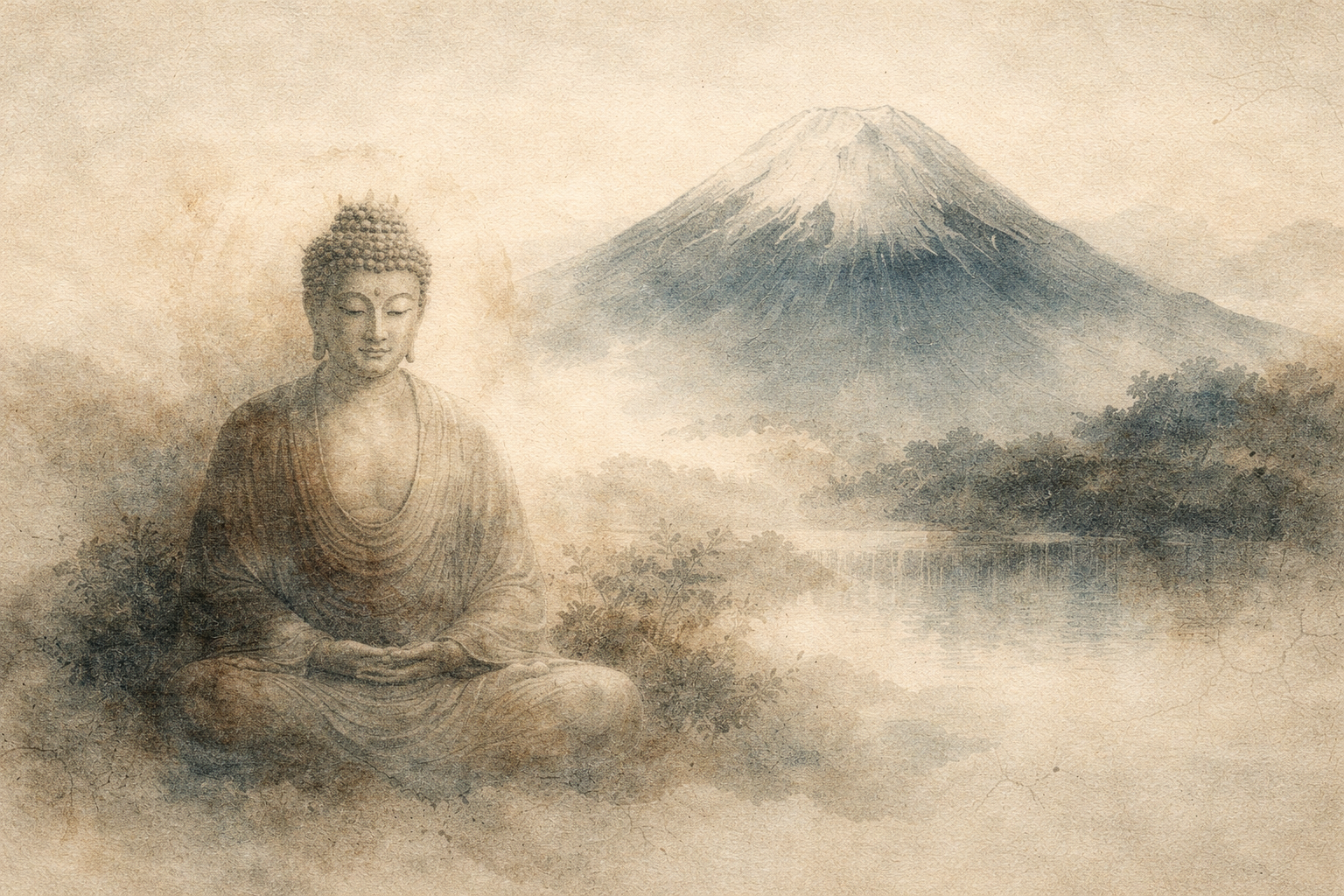
- Iconography matters: the calm posture, crown, and hand gestures are visual “instructions” for how to see.
- Mandala imagery frames life as interconnected, not as isolated problems you must solve alone.
- Practically, Dainichi Nyorai can be approached as a lens: notice, include, and respond rather than react.
- Common confusion comes from treating Dainichi as either “just a god” or “just a metaphor,” missing the experiential middle.
- You don’t need special beliefs to learn from Dainichi—only willingness to look at how mind makes a world.
Introduction
If “Dainichi Nyorai” sounds like an obscure temple name or a mysterious deity, you’re not alone—and that confusion usually comes from trying to fit him into a familiar box: either a historical Buddha, a god, or a decorative statue. Dainichi is better understood as a way of pointing to the total field of awareness and meaning that your life is already happening inside, and that shift makes the imagery suddenly practical rather than exotic. This guide is written for Gassho readers who want clear, grounded explanations without turning the topic into either superstition or academic trivia.
Dainichi Nyorai is often translated as “Great Sun Tathāgata,” and the “sun” aspect is less about worshiping a celestial object and more about illumination: what makes seeing possible in the first place. When you meet Dainichi in art or ritual language, you’re meeting a symbol for the mind’s capacity to know—before it narrows into “me versus everything else.” That’s why he’s called “cosmic”: not because he lives in outer space, but because the symbol includes everything you experience.
In Japanese contexts, Dainichi Nyorai is frequently placed at the center of mandala worlds, not as a ruler, but as the organizing principle that makes the whole picture coherent. If you’ve ever felt that your life is fragmented—work self, family self, anxious self, competent self—Dainichi imagery is a direct counterpoint: it suggests a single, inclusive clarity that can hold all those parts without collapsing into confusion.
A Clear Way to Understand Dainichi Nyorai
One grounded way to understand Dainichi Nyorai is as a lens for recognizing what is already present in experience: awareness that can include sound, thought, emotion, and sensation without needing to pick a side. This isn’t asking you to adopt a belief about the universe; it’s asking you to notice the “knowing” quality that is operating right now, even when your mind is busy.
In this lens, “cosmic” doesn’t mean distant. It means comprehensive. Dainichi represents the capacity for experience to be intelligible at all—the way a room becomes navigable when the lights are on. Thoughts and feelings still arise, but they’re seen as events within a larger field rather than as absolute commands.
That’s also why Dainichi is often depicted with regal ornaments and a composed, centered posture. The symbolism is not “power over others,” but stability and completeness: nothing is excluded, nothing needs to be pushed away to maintain clarity. The image quietly suggests that wisdom is not a mood; it’s an orientation that can hold complexity.
Seen this way, Dainichi Nyorai is not competing with everyday life. He is a reminder that the ordinary world—emails, dishes, awkward conversations, grief, joy—can be met from a wider perspective than the tight loop of self-protection. The point is not to escape the world, but to see it without the usual distortion.
GASSHO
Ask and learn about Buddhism in daily life.
GASSHO is a Buddhist community app where you can learn Buddhist teachings and ask questions to the head priest of Kongosanmaiin Temple on Mount Koya.
How the Cosmic Buddha Shows Up in Ordinary Moments
You notice Dainichi’s “cosmic” quality most clearly when your attention stops clinging to one narrow storyline. For example, you’re irritated in a meeting and your mind starts building a case: who’s wrong, what should have happened, what this says about you. Then, for a second, you simply notice irritation as irritation—heat in the chest, tightness in the jaw, fast thoughts. The room gets bigger.
In that bigger room, you can still speak up, set boundaries, or disagree. The difference is that your response is less driven by the need to defend an identity. Dainichi, as a symbol, points to that “bigger room” where action is possible without being fueled by panic.
Another everyday example is praise. Someone compliments you and the mind immediately reaches: “Keep this going. Don’t lose it.” If you can notice that grasping impulse, the compliment becomes simpler—warmth, appreciation, maybe a little embarrassment—without turning into a contract you must maintain. The experience is allowed to be complete as it is.
Or consider boredom: waiting in line, scrolling, feeling dull and restless. The usual habit is to treat boredom as a problem that must be fixed immediately. Dainichi’s lens is to include boredom fully—its texture, its impatience—without rushing to cover it. Often, what changes is not the situation but the compulsion to flee it.
When anxiety shows up, the mind tends to shrink the world to a single urgent question: “What if?” In a wider awareness, anxiety is still present, but it’s not the only thing present. There is also breathing, sound, posture, the fact of being supported by the ground, the presence of other people living their own lives. The “cosmic” aspect is simply the inclusion of more reality than the fear-story allows.
Even in conflict, this lens is practical. You can notice the moment you stop listening and start preparing your next argument. That noticing is already a small return to clarity. It doesn’t make you passive; it makes you less predictable—less trapped in the same reactive script.
Over time, Dainichi Nyorai can function like a mental posture: upright, spacious, and unhurried. Not as a special state, but as a repeated choice to see what is happening before you decide what it means about you. That choice is available in the middle of a busy day, not only in quiet settings.
Common Misunderstandings About Dainichi Nyorai
Misunderstanding 1: “Dainichi is just a Japanese sun god.” The “sun” language can mislead people into thinking this is nature worship. In Buddhist iconography, “sun” often functions as a metaphor for illumination—what makes seeing possible—rather than a claim about a deity controlling sunlight.
Misunderstanding 2: “Dainichi is only an abstract concept, so the statues are meaningless.” The images are not random decoration. Posture, hand gestures, and placement in mandalas are meant to communicate a way of seeing and a way of relating to experience. Even if you treat it symbolically, the symbol can still train attention.
Misunderstanding 3: “Cosmic Buddha means you should ignore personal problems.” A wider perspective is not denial. It’s the opposite: it allows you to face problems without being swallowed by them. The “cosmic” frame can make room for grief, responsibility, and repair without turning them into identity.
Misunderstanding 4: “If I don’t feel anything special, I’m doing it wrong.” Dainichi’s lens is not about producing a particular feeling. Often the most relevant shift is subtle: less compulsion, more clarity, a slightly longer pause before reacting. Ordinary is not a failure; it’s the point of contact.
Why Dainichi Nyorai Still Matters in Daily Life
Dainichi Nyorai matters because modern life constantly narrows attention: notifications, performance pressure, identity branding, and the quiet fear of falling behind. The “cosmic Buddha” symbol pushes in the opposite direction—toward wholeness. It reminds you that your worth and your awareness are not identical to your latest thought.
This matters in relationships. When you’re locked into being right, you can’t actually hear the other person. A wider awareness doesn’t guarantee harmony, but it makes honesty less violent. You can name what you feel without turning it into a weapon.
It also matters for meaning. Many people feel spiritually “homeless” because they don’t want rigid belief, but they also don’t want life reduced to productivity and entertainment. Dainichi offers a middle: a contemplative orientation that is experiential, not merely ideological.
Finally, Dainichi’s imagery can be a steadying reminder that clarity is not something you earn after fixing yourself. It’s something you can touch whenever you stop fighting your moment-to-moment experience and start meeting it directly. That shift tends to make your actions simpler, kinder, and more accurate.
Conclusion
Dainichi Nyorai is called the cosmic Buddha because the symbol points to an awareness wide enough to include everything—thought, emotion, body, and world—without collapsing into reactivity. If you approach Dainichi as a lens rather than a distant figure to “believe in,” the statues and mandalas stop being exotic and start becoming practical reminders: widen the view, include what’s here, and respond from clarity.
When you meet Dainichi in Japanese Buddhist art, you’re being offered a quiet instruction: let your life be seen in full. Not perfected, not edited—seen. That alone changes how you speak, choose, apologize, and begin again.
Ask a Buddhist priest
Have a question about Buddhism?
In the GASSHO app, you can ask questions about Buddhist teachings, daily concerns, and how to understand Buddhism in everyday life.
Frequently Asked Questions
- FAQ 1: Who is Dainichi Nyorai?
- FAQ 2: What does the name “Dainichi Nyorai” mean?
- FAQ 3: Is Dainichi Nyorai the same as Mahāvairocana?
- FAQ 4: Why is Dainichi Nyorai called the “cosmic Buddha”?
- FAQ 5: How is Dainichi Nyorai different from Shakyamuni Buddha?
- FAQ 6: What does Dainichi Nyorai typically symbolize in practice?
- FAQ 7: How can I recognize a statue of Dainichi Nyorai?
- FAQ 8: What mudra is associated with Dainichi Nyorai?
- FAQ 9: Is Dainichi Nyorai a creator god?
- FAQ 10: Where is Dainichi Nyorai placed in mandalas?
- FAQ 11: What is the relationship between Dainichi Nyorai and the “Five Wisdom Buddhas”?
- FAQ 12: What does “Nyorai” mean in Dainichi Nyorai?
- FAQ 13: Can Dainichi Nyorai be approached symbolically rather than literally?
- FAQ 14: What offerings are appropriate for Dainichi Nyorai at a temple?
- FAQ 15: What is a simple way to contemplate Dainichi Nyorai in daily life?
FAQ 1: Who is Dainichi Nyorai?
Answer: Dainichi Nyorai is a Buddha figure who represents all-pervading awakened awareness—often described as “cosmic” because it symbolizes the total field in which all experiences and phenomena appear.
Takeaway: Dainichi points to inclusive clarity rather than a narrow, personal viewpoint.
FAQ 2: What does the name “Dainichi Nyorai” mean?
Answer: “Dainichi” can be read as “Great Sun,” and “Nyorai” corresponds to “Tathāgata,” a title for a Buddha. The “sun” aspect is commonly understood as illumination—what makes seeing and knowing possible.
Takeaway: The name emphasizes illumination and comprehensiveness, not sun worship.
FAQ 3: Is Dainichi Nyorai the same as Mahāvairocana?
Answer: Yes. “Dainichi Nyorai” is the Japanese name commonly used for Mahāvairocana, a Buddha who symbolizes universal awakening and illumination.
Takeaway: Dainichi Nyorai and Mahāvairocana refer to the same figure in different languages.
FAQ 4: Why is Dainichi Nyorai called the “cosmic Buddha”?
Answer: He is called “cosmic” because he represents awakening as something all-encompassing—an awareness that includes all beings and all experiences, rather than being limited to one time, place, or personality.
Takeaway: “Cosmic” means comprehensive and inclusive, not distant or otherworldly.
FAQ 5: How is Dainichi Nyorai different from Shakyamuni Buddha?
Answer: Shakyamuni is typically understood as the historical Buddha, while Dainichi Nyorai is presented as a symbolic expression of universal awakening and illumination. They function differently in imagery and teaching language, even though both are “Buddha” figures.
Takeaway: Shakyamuni emphasizes historical presence; Dainichi emphasizes universal scope.
FAQ 6: What does Dainichi Nyorai typically symbolize in practice?
Answer: Dainichi Nyorai commonly symbolizes the possibility of recognizing a clear, spacious awareness that can include thoughts and emotions without being controlled by them—an orientation of illumination and integration.
Takeaway: Dainichi is often used as a reminder to widen attention and see clearly.
FAQ 7: How can I recognize a statue of Dainichi Nyorai?
Answer: Dainichi Nyorai is often depicted with a calm, centered posture and may wear ornaments or a crown-like headdress, reflecting a regal, complete quality. He is also frequently placed centrally in mandala-based arrangements.
Takeaway: Look for a composed central figure with distinctive regal ornamentation in many depictions.
FAQ 8: What mudra is associated with Dainichi Nyorai?
Answer: Dainichi Nyorai is commonly associated with specific hand gestures (mudras) that symbolize teaching and the unity of wisdom and method. The exact mudra can vary by depiction, but it is typically distinctive and intentional rather than decorative.
Takeaway: Dainichi’s hand gestures are meant to communicate a teaching through form.
FAQ 9: Is Dainichi Nyorai a creator god?
Answer: Dainichi Nyorai is generally not framed as a creator god in the theistic sense. He is more often understood as a symbol of awakened reality or illumination—the condition that makes understanding possible—rather than a deity who creates the world by command.
Takeaway: Dainichi is typically about awakening and illumination, not divine creation.
FAQ 10: Where is Dainichi Nyorai placed in mandalas?
Answer: Dainichi Nyorai is often placed at or near the center in mandala compositions, reflecting his role as the organizing principle of illumination and the “hub” of an interconnected symbolic world.
Takeaway: Central placement usually signals Dainichi’s inclusive, unifying function.
FAQ 11: What is the relationship between Dainichi Nyorai and the “Five Wisdom Buddhas”?
Answer: Dainichi Nyorai is commonly presented as a central figure in the framework that includes the Five Wisdom Buddhas, representing the overarching illumination that the others express in differentiated ways.
Takeaway: Dainichi is often treated as the unifying center within that fivefold symbolic set.
FAQ 12: What does “Nyorai” mean in Dainichi Nyorai?
Answer: “Nyorai” is the Japanese rendering of “Tathāgata,” a title used for a Buddha. It indicates a fully awakened one, and it distinguishes Buddha figures from other categories of sacred figures in Japanese Buddhist art.
Takeaway: “Nyorai” signals that Dainichi is a Buddha (Tathāgata) figure.
FAQ 13: Can Dainichi Nyorai be approached symbolically rather than literally?
Answer: Yes. Many people relate to Dainichi Nyorai as a symbol of inclusive awareness and illumination. Approaching him symbolically can still be meaningful if it helps you notice reactivity, widen attention, and respond with clarity.
Takeaway: A symbolic approach can be practical if it changes how you meet experience.
FAQ 14: What offerings are appropriate for Dainichi Nyorai at a temple?
Answer: Common, respectful offerings may include incense, flowers, or a small monetary offering, depending on local custom. The most important element is sincerity and respectful conduct rather than the size or cost of the offering.
Takeaway: Keep offerings simple and respectful, following the temple’s local etiquette.
FAQ 15: What is a simple way to contemplate Dainichi Nyorai in daily life?
Answer: A simple contemplation is to pause and notice what is aware of your current experience—sounds, sensations, and thoughts—without immediately choosing a story about it. Let that wider “knowing” be the reference point for your next action.
Takeaway: Use Dainichi as a cue to widen awareness before reacting.