



Mala vs Rosary: Key Differences in Beads, Prayer, and Practice
Quick Summary
- A mala and a rosary are both prayer beads, but they come from different religious cultures and are used with different prayers.
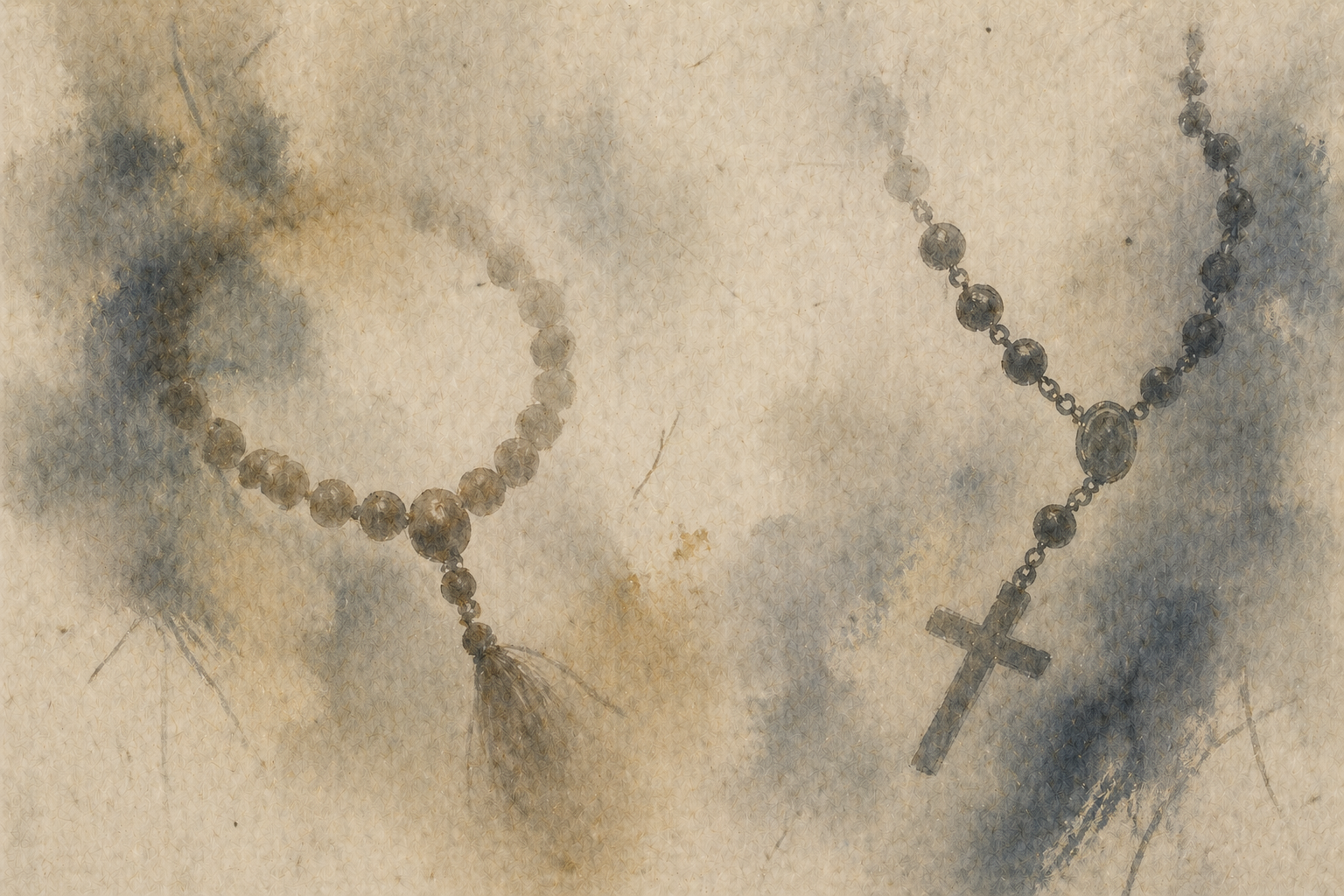
- Malas are commonly 108 beads (or fractions of 108); rosaries commonly use 5 decades (groups of 10) plus additional beads and a crucifix.
- Both tools support steady attention by giving the hands a simple, repeatable action while the mind recites.
- “Mala vs rosary” is less about which is better and more about matching the beads to the prayer practice you actually do.
- Materials and bead sizes vary widely in both; meaning comes more from intention and use than from the object itself.
- You can use either respectfully, but it helps to understand the structure so you don’t fight the counting method.
- If you want a simple choice: pick a mala for 108-style repetition, pick a rosary for decade-based Catholic prayer.
Introduction
You’re holding beads (or shopping for them) and the confusion is practical: a mala and a rosary look similar, but they don’t “count” the same, they don’t sit in the hand the same way, and they often come with different expectations about how they should be used. At Gassho, we focus on clear, grounded practice guidance rather than mystique.
When people search “mala vs rosary,” they’re usually trying to answer one of three questions: Which one fits my prayer or mantra? What do the numbers and extra pieces mean? And is it okay to use one if I’m not part of that tradition?
The good news is that both are simple tools: they help you repeat a phrase with less mental bookkeeping, so attention can settle into the words, the breath, and the feeling-tone of the practice.
A Clear Lens for Mala vs Rosary
The most useful way to understand mala vs rosary is to treat them as two different “maps” for repetition. Each map organizes your recitation into a pattern: where to start, how to group counts, and how to mark transitions. The beads aren’t the point; the pattern is.
A mala is typically built around a long cycle (often 108 beads) that supports extended repetition without frequent resets. A rosary is typically built around smaller grouped cycles (decades) that guide you through a specific sequence of prayers. Both are structured, but the structure aims at different kinds of flow.
Seen this way, the difference isn’t “Eastern vs Western” or “spiritual vs religious.” It’s a difference in how attention is paced. One design encourages a long, steady stream; the other encourages a rhythmic sequence with clear checkpoints.
If you choose based on that pacing—long-cycle repetition versus decade-based sequence—you’ll avoid most of the frustration people feel when they try to force one set of beads to behave like the other.
GASSHO
Ask and learn about Buddhism in daily life.
GASSHO is a Buddhist community app where you can learn Buddhist teachings and ask questions to the head priest of Kongosanmaiin Temple on Mount Koya.
How the Difference Feels in Real Use
In ordinary life, the first thing you notice is how quickly you lose count without beads. You start reciting, a thought interrupts, and suddenly you’re guessing whether you’re on “maybe 23” or “maybe 40.” Beads quietly remove that friction.
With a mala, the hand motion tends to become continuous. You touch a bead, say the phrase, move to the next bead, and repeat. Because the cycle is long, you can stay with a single intention for a while without needing to “switch gears.”
With a rosary, the experience often feels more segmented. You move through a set of ten, then you hit a marker bead and the practice naturally pauses or shifts. That shift can feel supportive—like a built-in breath—especially when the mind is restless.
Another lived difference is what happens when emotion shows up. If you’re anxious, a long mala cycle can feel like a gentle channel: you keep going, and the repetition slowly smooths the edges. If you’re overwhelmed, the rosary’s smaller groupings can feel more doable: “Just this decade,” then another.
There’s also the social layer. A rosary often carries a clear religious identity in public; people may recognize it immediately. A mala may be read as spiritual jewelry, which can be convenient—or it can feel vague if you want your practice to be explicit and accountable.
Finally, both reveal the same inner mechanics: the mind wanders, the fingers keep moving, and you notice you’ve drifted. That moment of noticing—without scolding yourself—is where the tool quietly does its job.
Common Mix-Ups That Make Beads Harder Than They Need to Be
One common misunderstanding in mala vs rosary comparisons is assuming they’re interchangeable because both are “prayer beads.” They can be used for counting, yes, but their layouts are optimized for different counting styles. If you try to pray a full rosary on a 108-bead mala without a plan, you may end up stopping to calculate instead of praying.
Another mix-up is treating the bead count as a magical requirement. Numbers can be meaningful within a tradition, but the practical purpose is consistency. If your attention improves with 27 beads or a single decade ring, that’s not a failure—it’s a workable container.
People also confuse “using respectfully” with “needing permission.” Respect is mostly behavioral: learn what the object is for, avoid turning it into a costume, and don’t claim an identity you’re not living. Quiet sincerity goes a long way.
Finally, many assume the beads themselves create calm. In reality, beads make it easier to return. The calm—when it appears—comes from repetition, steadiness, and the willingness to begin again after distraction.
Why Choosing the Right Beads Changes Daily Practice
When your beads match your method, practice becomes simpler. You stop negotiating with the tool and start using it. That simplicity matters on busy days when motivation is low and you need the smallest possible barrier to begin.
A mala can support a daily habit of short mantra sessions that still feel complete: one loop, half a loop, or a set number of beads. A rosary can support a daily rhythm that’s already structured: the sequence itself carries you when you don’t feel creative or inspired.
In both cases, the real benefit is not “more spiritual points.” It’s fewer opportunities to drift into mental math, self-judgment, or quitting early because you lost your place. The beads keep the practice ordinary, repeatable, and honest.
And if you practice in public spaces—walking, commuting, waiting—having a tool that fits your hand and your counting style can turn dead time into a few minutes of steady recollection.
Conclusion
Mala vs rosary isn’t a contest. A mala is typically designed for long-cycle repetition; a rosary is typically designed for decade-based prayer sequences. If you choose the beads that match your actual recitation pattern, you’ll spend less time counting and more time practicing.
Whichever you use, let the beads do one job: guide your hands so your attention can return—again and again—to the words you’re repeating and the intention behind them.
Ask a Buddhist priest
Have a question about Buddhism?
In the GASSHO app, you can ask questions about Buddhist teachings, daily concerns, and how to understand Buddhism in everyday life.
Frequently Asked Questions
- FAQ 1: What is the main difference in purpose between a mala and a rosary?
- FAQ 2: How many beads are on a typical mala vs a typical rosary?
- FAQ 3: Why do malas often use 108 beads?
- FAQ 4: Why are rosaries organized into decades?
- FAQ 5: Can you use a mala like a rosary?
- FAQ 6: Can you use a rosary like a mala for mantra repetition?
- FAQ 7: What is the “guru bead” on a mala, and what is its equivalent on a rosary?
- FAQ 8: Do malas and rosaries have different materials, and does it matter?
- FAQ 9: Is a mala always Buddhist and a rosary always Catholic?
- FAQ 10: Is it disrespectful to wear a mala or a rosary as jewelry?
- FAQ 11: Which is better for beginners: mala vs rosary?
- FAQ 12: How do you hold and move through beads on a mala vs a rosary?
- FAQ 13: Do you have to finish a full mala or a full rosary every time?
- FAQ 14: What should you do if you lose your place while using a mala or rosary?
- FAQ 15: If I’m comparing mala vs rosary for daily use, what’s the simplest way to choose?
FAQ 1: What is the main difference in purpose between a mala and a rosary?
Answer: A mala is most often used to count repeated mantras in a steady, continuous cycle (commonly 108), while a rosary is most often used to guide a structured sequence of prayers organized into decades (groups of ten) with additional prayers between them.
Takeaway: Mala supports long-form repetition; rosary supports a set prayer sequence.
FAQ 2: How many beads are on a typical mala vs a typical rosary?
Answer: A typical mala has 108 counting beads plus a larger “guru” bead (and sometimes spacers). A typical Catholic rosary has 59 beads arranged as five decades (50 small beads), plus additional beads leading to a crucifix.
Takeaway: Malas usually center on 108; rosaries usually center on five decades.
FAQ 3: Why do malas often use 108 beads?
Answer: In many contexts, 108 functions as a traditional full cycle for repetition, making it easy to commit to a consistent amount of recitation. Practically, it’s a long enough loop to settle attention without frequent stopping.
Takeaway: 108 is both a tradition-based number and a practical long counting cycle.
FAQ 4: Why are rosaries organized into decades?
Answer: Decades create manageable units of repetition (ten prayers) and provide clear transition points using larger marker beads. This supports a specific prayer flow rather than one long, unbroken count.
Takeaway: Decades make the rosary a guided sequence with built-in checkpoints.
FAQ 5: Can you use a mala like a rosary?
Answer: You can use a mala to count any repeated prayer, but it won’t automatically match the rosary’s decade structure unless you adapt your counting (for example, tracking decades mentally or using spacer beads). If you want the classic rosary flow, a rosary layout is usually easier.
Takeaway: Possible, but the structure may not align without adjustments.
FAQ 6: Can you use a rosary like a mala for mantra repetition?
Answer: Yes—many people use rosary beads to count repeated phrases, especially if the decade structure helps them stay oriented. You may simply repeat your mantra across the beads, using the marker beads as natural pauses or resets.
Takeaway: A rosary can work for mantra counting, especially if you like shorter segments.
FAQ 7: What is the “guru bead” on a mala, and what is its equivalent on a rosary?
Answer: The guru bead is a larger bead that marks the start/end of a mala cycle and is often treated as a boundary rather than a counting bead. On a rosary, the crucifix and the beads leading to it serve as a clear start point and transition into the decades, though the structure is different.
Takeaway: Both have a “start/marker,” but they function within different layouts.
FAQ 8: Do malas and rosaries have different materials, and does it matter?
Answer: Both can be made from wood, seeds, stone, glass, or metal. Material matters mainly for durability, feel in the hand, and personal meaning; it doesn’t replace consistent practice. If you’ll use them daily, choose something comfortable and sturdy.
Takeaway: Pick materials for usability and meaning, not for “power.”
FAQ 9: Is a mala always Buddhist and a rosary always Catholic?
Answer: A rosary is strongly associated with Catholic devotion, though other Christian prayer beads exist. A mala is used across multiple Indian-origin traditions and also by many modern practitioners for mantra repetition. The objects have cultural roots, but people may use them in varied ways today.
Takeaway: The associations are strong, but real-world usage can be broader.
FAQ 10: Is it disrespectful to wear a mala or a rosary as jewelry?
Answer: It depends on context and intent. Wearing either purely as fashion can feel dismissive to some people because these are devotional tools. If you wear them, it helps to understand what they are, handle them carefully, and avoid presenting them as a costume or status symbol.
Takeaway: Respect comes from understanding, intention, and how you present it.
FAQ 11: Which is better for beginners: mala vs rosary?
Answer: “Better” depends on what you plan to recite. If you want long, simple repetition, a mala’s continuous count can be straightforward. If you want a guided, decade-based structure, a rosary is clearer. The best beginner choice is the one that matches your practice so you don’t have to improvise.
Takeaway: Choose based on your recitation style, not on aesthetics.
FAQ 12: How do you hold and move through beads on a mala vs a rosary?
Answer: With a mala, many people move bead-by-bead in one direction until reaching the guru bead, then stop or reverse rather than crossing it. With a rosary, people typically move through the introductory beads and then through each decade, using the larger beads as markers between decades.
Takeaway: Malas often treat the end bead as a boundary; rosaries use markers to guide a sequence.
FAQ 13: Do you have to finish a full mala or a full rosary every time?
Answer: No. Many people set a realistic amount—one decade, a few decades, half a mala, or a timed session. Consistency matters more than completing a “perfect” count, especially when building a daily habit.
Takeaway: A smaller, steady practice is often more sustainable than forcing a full cycle.
FAQ 14: What should you do if you lose your place while using a mala or rosary?
Answer: Pause, take one breath, and resume from the bead you’re on without trying to reconstruct the exact number. The point of beads is to reduce mental strain; restarting calmly is part of the practice of returning.
Takeaway: Don’t turn counting into stress—return gently and continue.
FAQ 15: If I’m comparing mala vs rosary for daily use, what’s the simplest way to choose?
Answer: Choose a mala if you want a long, uniform loop for mantra repetition (often 108). Choose a rosary if you want a decade-based structure that guides a traditional prayer sequence. If you already have one, use it for a week and notice whether the structure supports your attention or creates extra mental work.
Takeaway: Match the bead structure to your daily recitation pattern.