



Meditation Retreat vs Daily Practice: What’s the Difference?
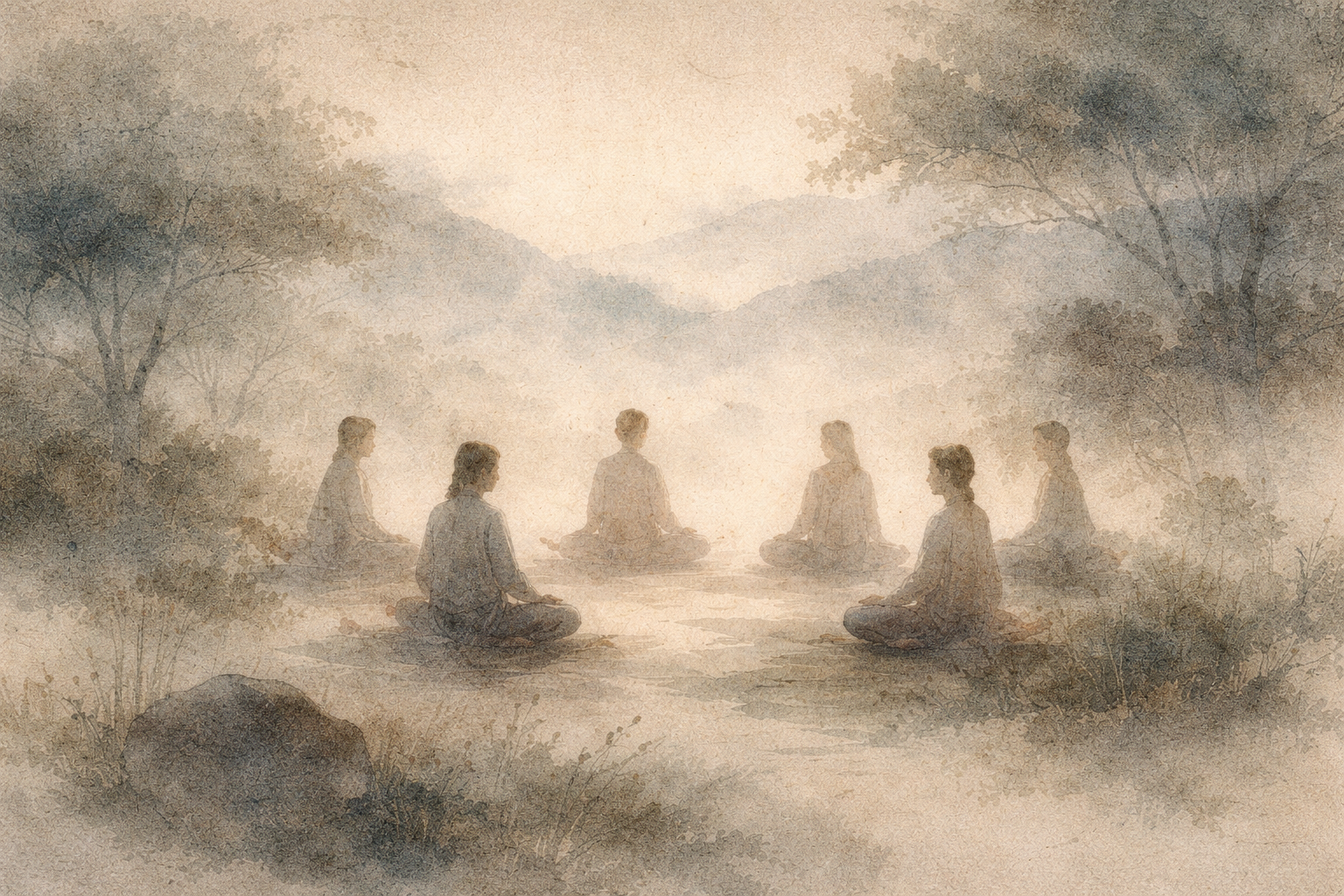
Meditation Retreat vs Daily Practice: What’s the Difference?
Quick Summary
- A retreat concentrates time, silence, and structure; daily practice spreads training across real life.
- Retreats often reveal patterns quickly; daily practice helps you work with those patterns in the moments they actually arise.
- Retreat intensity can be clarifying but also destabilizing; daily practice is gentler and easier to integrate.
- Daily practice builds consistency and trust; retreats can reset motivation and show what’s possible with fewer distractions.
- The best choice depends on your schedule, stress level, support system, and why you’re practicing.
- You don’t have to pick one forever—many people alternate: steady daily sits plus occasional retreats.
- If you’re unsure, start with daily practice and treat a retreat as an amplifier, not a replacement.
Introduction
You’re trying to decide whether a meditation retreat is “worth it” compared to simply meditating every day, and the advice you find often feels contradictory: some people say retreats are life-changing, others say daily practice is the only thing that matters. The truth is that retreat and daily practice train different muscles, and confusing them leads to unrealistic expectations and avoidable frustration. At Gassho, we focus on practical, grounded meditation guidance that fits real schedules and real minds.
Think of a retreat as a controlled environment: fewer inputs, more repetition, and a clear container for attention. Think of daily practice as training in the wild: you sit, then you live your life, and the practice has to survive contact with emails, family, traffic, and moods.
When you compare meditation retreat vs daily practice, it helps to stop asking which is “better” and start asking what each one is designed to do. They can support each other, but they don’t produce the same kind of learning.
GASSHO
Ask and learn about Buddhism in daily life.
GASSHO is a Buddhist community app where you can learn Buddhist teachings and ask questions to the head priest of Kongosanmaiin Temple on Mount Koya.
A Clear Lens for Comparing Retreats and Daily Sits
A useful way to understand meditation retreat vs daily practice is to look at the conditions around your attention. Attention isn’t just a personal trait; it’s shaped by noise, obligations, social interaction, sleep, and the number of decisions you make in a day. A retreat changes those conditions dramatically, while daily practice works within them.
On retreat, the “inputs” are simplified: fewer conversations, fewer choices, fewer screens, fewer errands. That simplification doesn’t magically create calm, but it makes patterns easier to see. When the mind can’t distract itself in its usual ways, it often shows you what it has been doing all along—planning, replaying, resisting, chasing comfort, tightening around uncertainty.
Daily practice, by contrast, is less about perfect conditions and more about continuity. You practice with the mind you have on a Tuesday morning, not the mind you hope to have in a quiet hall. The learning is often subtle: returning to the breath even when you’re tired, noticing irritation without feeding it, ending a sit without judging it as “good” or “bad.”
Seen this way, retreats are like a magnifying glass and daily practice is like steady sunlight. The magnifying glass can reveal detail quickly, but sunlight is what actually warms the ground day after day. Both can be valuable, and each has limits if used alone.
What It Feels Like in Ordinary Life
With daily practice, you might sit for ten minutes and notice the mind is already mid-conversation with someone who isn’t there. You label it as thinking, feel the breath for a moment, then you’re gone again. The “work” is not forcing silence; it’s recognizing the drift and returning without making it personal.
Later that day, the same habit shows up while you’re washing dishes: the body is here, but attention is rehearsing tomorrow. If you’ve been practicing daily, you may notice that split sooner. Noticing sooner doesn’t mean you stop thinking; it means you catch the moment of leaving and you have a choice about whether to keep going.
On retreat, that same drifting can become more obvious because there’s less to “complete” it. There’s no quick check of messages to seal the deal. So you feel the urge to escape more clearly: restlessness in the legs, a push to plan, a subtle bargaining—“If I figure this out, then I’ll be okay.”
In daily practice, emotions often arrive tied to events: a tense meeting, a family conflict, a news headline. You learn to notice the body’s response—tight jaw, shallow breath, heat in the chest—while still needing to function. The practice becomes: can I feel this without immediately turning it into a story or a reaction?
In retreat conditions, emotions can arise without an obvious trigger. That can be confusing: “Nothing is happening—why am I sad or irritated?” But it’s also informative. You begin to see how moods can be self-sustaining, how the mind searches for a reason after the fact, and how quickly a small sensation becomes a full narrative.
Daily practice also teaches you about endings. You finish a sit, stand up, and the day continues. If you’re honest, you may notice a small disappointment: “That didn’t fix me.” Over time, you learn that meditation isn’t a reset button; it’s a relationship with experience. That relationship is built in small, repeatable moments.
Retreats can make that relationship feel vivid because the feedback loop is tight: sit, walk, eat, sit again. You see how quickly you judge, compare, and grasp for results. And you also see how quickly the mind can soften when it stops negotiating with every moment.
Common Misunderstandings That Skew the Choice
Misunderstanding 1: “A retreat is the real practice; daily meditation is just maintenance.” Retreats can be powerful, but if the insights don’t translate into how you speak, work, and respond under pressure, they remain isolated experiences. Daily practice is where integration happens because it meets you where your habits actually operate.
Misunderstanding 2: “Daily practice is enough, so retreats are unnecessary.” Daily practice can absolutely be enough for a stable, meaningful path. But retreats can reveal blind spots that are hard to notice when your attention is constantly fragmented. For some people, a retreat is like hearing the same song without background noise for the first time.
Misunderstanding 3: “If I do a retreat, I should feel calm and clear the whole time.” Retreats often surface restlessness, boredom, grief, or irritation precisely because distractions are reduced. That doesn’t mean the retreat is failing; it means you’re seeing what the mind does when it can’t outsource discomfort.
Misunderstanding 4: “If daily practice feels messy, I’m doing it wrong.” Daily practice is messy because life is messy. The point is not to manufacture a special state; it’s to build familiarity with attention and reactivity. A “messy” sit can still be honest training.
Misunderstanding 5: “More intensity is always better.” Intensity can help you see patterns quickly, but it can also overwhelm your capacity to process what comes up. The best dose is the one you can integrate without turning practice into another form of pressure.
Why the Difference Matters for Your Actual Schedule
When you understand meditation retreat vs daily practice, you stop using one to punish yourself for not doing the other. If you can’t attend a retreat right now, daily practice isn’t second-best—it’s the most direct way to build steadiness and self-trust. If you do attend a retreat, it doesn’t have to become a dramatic turning point to be valuable.
Daily practice is often the best choice when your life is full: work deadlines, caregiving, health constraints, or unpredictable sleep. A short, consistent sit can reduce the “all-or-nothing” mindset and make meditation feel like something you actually do, not something you plan to do later.
A retreat can be the right choice when you need a clean break from constant stimulation, when motivation is fading, or when you want to learn what your mind does without its usual outlets. It can also be useful if you’ve been practicing daily and feel stuck in the same loops—sometimes not because you’re failing, but because you haven’t had enough uninterrupted time to see the loop clearly.
The most practical approach for many people is a rhythm: daily practice as the baseline, plus occasional retreat time (even a weekend) as a way to refresh attention and simplify inputs. The key is to plan for re-entry: after a retreat, keep the first week gentle and realistic, and protect a small daily sit so the retreat doesn’t become a memory you chase.
Ultimately, the difference matters because meditation is not only what happens when you sit down. It’s also what happens when you’re interrupted, criticized, rushed, or tired. Daily practice trains that contact point; retreats help you see the machinery behind it.
Conclusion
Meditation retreat vs daily practice isn’t a contest between “serious” and “casual.” A retreat offers concentrated conditions that can reveal patterns quickly; daily practice offers repetition inside real life, where those patterns actually play out. If you want a simple rule: build a daily baseline you can keep, then use retreats as an amplifier when your life and support system can hold the intensity.
If you’re choosing right now, choose the option that you can integrate without turning meditation into another source of strain. Consistency and honesty beat heroic effort.
Ask a Buddhist priest
Have a question about Buddhism?
In the GASSHO app, you can ask questions about Buddhist teachings, daily concerns, and how to understand Buddhism in everyday life.
Frequently Asked Questions
- FAQ 1: What is the main difference between a meditation retreat and daily practice?
- FAQ 2: Is a meditation retreat better than meditating every day?
- FAQ 3: Can daily practice replace going on retreat?
- FAQ 4: Can a retreat replace daily meditation?
- FAQ 5: Why do retreats sometimes feel harder than daily practice?
- FAQ 6: Why can daily practice feel like it’s “not enough” compared to a retreat?
- FAQ 7: How long should daily practice be if I’m not doing retreats?
- FAQ 8: How often should I go on retreat if I already meditate daily?
- FAQ 9: What should I expect to change after a retreat versus after daily practice?
- FAQ 10: If I can only choose one right now, should I pick a retreat or daily practice?
- FAQ 11: How do I integrate a retreat experience into daily practice?
- FAQ 12: Can daily practice prepare me for a meditation retreat?
- FAQ 13: Why do people say retreats create “breakthroughs” compared to daily practice?
- FAQ 14: Is it normal to feel worse on retreat than during daily practice?
- FAQ 15: What’s a realistic way to combine meditation retreat vs daily practice over a year?
FAQ 1: What is the main difference between a meditation retreat and daily practice?
Answer: A meditation retreat concentrates practice into a structured, low-distraction environment for many hours a day, while daily practice is shorter and happens alongside normal responsibilities and stimuli.
Takeaway: Retreats simplify conditions; daily practice trains continuity in real life.
FAQ 2: Is a meditation retreat better than meditating every day?
Answer: Not inherently. Retreats can deepen focus quickly, but daily practice is often better for long-term integration because it repeatedly meets you in the same contexts where stress and reactivity arise.
Takeaway: “Better” depends on whether you need intensity or integration right now.
FAQ 3: Can daily practice replace going on retreat?
Answer: Daily practice can be a complete path on its own, especially if it’s consistent and honest. A retreat isn’t required, but it can reveal patterns that are harder to notice when life is busy and attention is fragmented.
Takeaway: Daily practice can stand alone; retreats can add clarity and momentum.
FAQ 4: Can a retreat replace daily meditation?
Answer: A retreat can inspire and reset your practice, but without daily follow-through the benefits often fade because old routines quickly reassert themselves once you return to normal demands.
Takeaway: Retreats amplify; daily practice stabilizes.
FAQ 5: Why do retreats sometimes feel harder than daily practice?
Answer: With fewer distractions, the mind’s habits—restlessness, worry, self-criticism, craving for stimulation—can become more obvious. The structure can also be physically and mentally demanding compared to a short daily sit.
Takeaway: Retreat difficulty often comes from seeing the mind more clearly, not from doing it “wrong.”
FAQ 6: Why can daily practice feel like it’s “not enough” compared to a retreat?
Answer: Daily sits are shorter and surrounded by tasks, so changes can be subtle. Also, daily practice repeatedly exposes you to the same triggers, which can feel like “no progress” when it’s actually ongoing training with real-life conditions.
Takeaway: Daily practice is quieter in its effects, but often stronger for integration.
FAQ 7: How long should daily practice be if I’m not doing retreats?
Answer: Many people benefit from 10–30 minutes most days, but the best length is what you can sustain consistently. A shorter daily practice done reliably is usually more effective than occasional long sessions.
Takeaway: Choose a duration you can keep, then protect it.
FAQ 8: How often should I go on retreat if I already meditate daily?
Answer: There’s no universal schedule. Some people do a weekend retreat once or twice a year; others do longer retreats less often. The best frequency is one that supports your daily practice without creating financial, relational, or work strain.
Takeaway: Let retreats support your baseline rather than disrupt your life.
FAQ 9: What should I expect to change after a retreat versus after daily practice?
Answer: Retreats often make attention and reactivity more noticeable in a short time, while daily practice tends to change how you relate to stress in small, repeatable moments—pausing sooner, reacting less automatically, and returning to the present more often.
Takeaway: Retreats can reveal; daily practice can rewire habits through repetition.
FAQ 10: If I can only choose one right now, should I pick a retreat or daily practice?
Answer: If you can only choose one, daily practice is usually the safer foundation because it’s easier to integrate and maintain. A retreat can be excellent when you have the time, stability, and support to handle intensity and re-entry.
Takeaway: Build the daily baseline first; add retreats when conditions are supportive.
FAQ 11: How do I integrate a retreat experience into daily practice?
Answer: Keep your post-retreat plan simple: resume a modest daily sit, reduce extra commitments for a few days if possible, and focus on one or two practical carryovers (like pausing before responding or noticing body tension sooner).
Takeaway: Integration is small and concrete, not a dramatic lifestyle overhaul.
FAQ 12: Can daily practice prepare me for a meditation retreat?
Answer: Yes. Daily practice builds familiarity with posture, attention, and the habit of returning when the mind wanders. It also helps you learn your common patterns so they’re less surprising when a retreat intensifies them.
Takeaway: Daily practice is the most reliable preparation for retreat intensity.
FAQ 13: Why do people say retreats create “breakthroughs” compared to daily practice?
Answer: Because the concentrated time and reduced distractions can make mental habits easier to observe, and repeated practice periods can strengthen attention quickly. But “breakthrough” is not guaranteed and doesn’t automatically translate into daily life without continued practice.
Takeaway: Retreat insights are more likely when conditions are simplified, but they still need daily follow-through.
FAQ 14: Is it normal to feel worse on retreat than during daily practice?
Answer: It can be normal to feel more restless, emotional, or raw on retreat because there’s less distraction and more time with your own mind. If distress feels unmanageable, it’s appropriate to seek support from retreat staff or a qualified professional outside the retreat context.
Takeaway: Retreat intensity can surface difficult material; support and pacing matter.
FAQ 15: What’s a realistic way to combine meditation retreat vs daily practice over a year?
Answer: A realistic approach is a consistent daily sit (even brief), plus one or two short retreats (like a weekend) if your life allows. The goal is a sustainable rhythm: daily continuity with occasional periods of deeper simplification.
Takeaway: Consistent daily practice plus occasional retreats is a balanced, workable plan for many people.