



The Teaching Mudra Explained: What It Represents
Quick Summary
- The teaching mudra is a hand gesture that symbolizes explaining the path through lived understanding, not forceful persuasion.
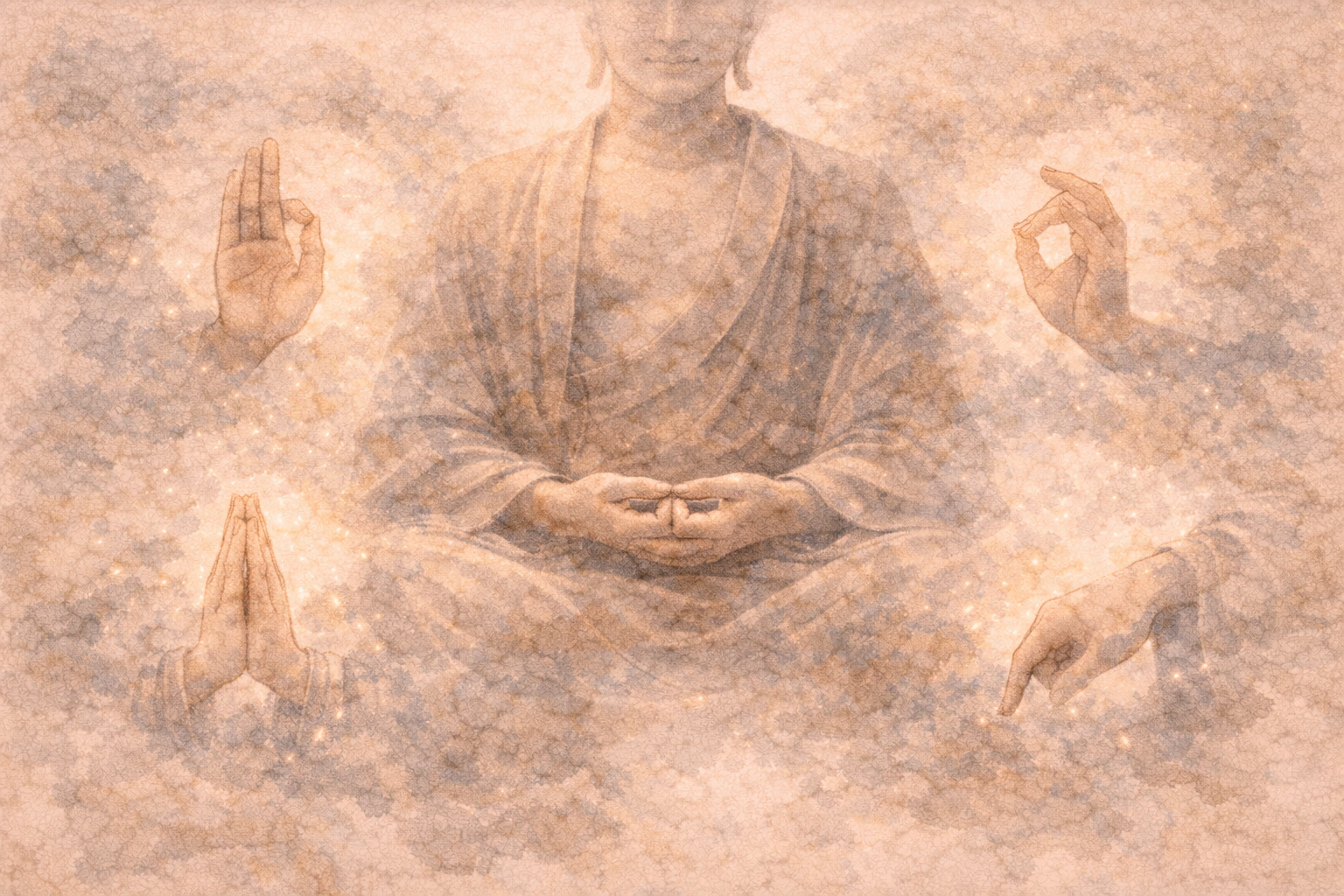
- It’s commonly shown as one hand forming a circle with thumb and index finger, with the other hand supporting or mirroring the gesture.
- The circle suggests completeness and clarity; the remaining fingers suggest what unfolds from that clarity in everyday life.
- “Teaching” here points to communication that reduces confusion—internally (self-talk) and externally (speech with others).
- You don’t need to “get it perfect” physically; the meaning is in the intention and the quality of attention.
- The gesture can be used as a quiet reminder to speak simply, listen carefully, and return to what’s true right now.
- Misunderstandings usually come from treating the mudra as a magical sign rather than a practical cue for clarity and care.
Introduction
If you’ve searched for “the teaching mudra explained,” you’re probably stuck between two unhelpful extremes: vague mystical descriptions on one side, and rigid “do it exactly like this” instructions on the other. The teaching mudra is simpler and more useful than both—its value is in what it points your attention toward when you’re trying to understand, communicate, or steady your mind. At Gassho, we focus on practical Buddhist symbolism and how it supports real-life clarity.
The word mudra means a symbolic gesture, usually made with the hands. In Buddhist art and practice, mudras function like visual shorthand: they express a quality of mind and a way of relating to experience. The “teaching mudra” is one of the best-known examples because it captures something universal—how insight becomes helpful when it can be communicated clearly and kindly.
You’ll often see the teaching mudra depicted in statues and paintings of the Buddha or other awakened figures. The exact hand position can vary by region and artistic tradition, but the core theme stays consistent: the gesture represents instruction that comes from direct seeing, not from winning arguments.
This matters because many of us struggle with the same basic problem: we know what we mean, but we can’t express it cleanly—or we speak cleanly but without warmth. The teaching mudra points to a middle way: clarity without harshness, compassion without vagueness.
A Clear Lens for Understanding the Teaching Mudra
The teaching mudra can be understood as a lens: when the mind is settled enough to see what’s happening, it can respond in a way that reduces confusion. “Teaching” doesn’t have to mean formal instruction or spiritual authority. It can mean the simple act of making something understandable—first to yourself, then to others.
In many depictions, the thumb and index finger touch to form a circle. As a symbol, a circle can suggest completeness, coherence, and a kind of “closed loop” of understanding—nothing extra needs to be added for the point to land. The other fingers extend naturally, implying that clarity isn’t sterile; it expresses itself outwardly as speech, action, and guidance.
The second hand is often positioned in a supportive way—sometimes mirroring the circle, sometimes resting near the heart or held at chest level. Read simply, this suggests that communication is not only about content (“the point”) but also about support (“the way it’s offered”). The gesture holds both: precision and care.
Seen this way, the teaching mudra isn’t a belief you adopt. It’s a reminder of a human skill: notice what’s true, simplify it without distorting it, and offer it in a way that helps rather than overwhelms.
GASSHO
Ask and learn about Buddhism in daily life.
GASSHO is a Buddhist community app where you can learn Buddhist teachings and ask questions to the head priest of Kongosanmaiin Temple on Mount Koya.
How the Teaching Mudra Shows Up in Ordinary Moments
Think about the moment you realize you’ve been mentally arguing with someone who isn’t even in the room. The mind rehearses, tightens, and tries to “win.” The teaching mudra, as a symbol, points to a different move: pause, feel what’s happening, and let the next thought be simpler and truer.
In practice, “teaching” often begins as self-instruction. You notice you’re scattered, and you quietly return to one clear thing—breath, posture, a single task, or the plain fact of how you feel. That return is a kind of inner teaching: not scolding, not dramatizing, just reorienting.
Then there’s the everyday challenge of explaining something to another person. You can feel the urge to add more words, more examples, more pressure—because you want to be understood. The teaching mudra suggests the opposite: find the simplest honest sentence, say it, and leave space for it to land.
Listening is part of this, too. When someone speaks and you’re already preparing your response, you’re not actually receiving what they’re saying. The teaching mudra can be held in mind as a cue to listen for the core point—what’s essential, what’s confused, what’s being asked for.
Notice how clarity changes your body. When you’re confused, the face tightens, the shoulders rise, the breath gets thin. When you understand—even a little—the body often softens. The gesture in Buddhist images is calm and balanced for a reason: it reflects the felt sense of steadiness that supports clear speech.
There’s also the moment you catch yourself speaking too fast, too sharply, or too vaguely. The teaching mudra points to a small reset: slow down, choose fewer words, and let your tone match your intention. “Teaching” here is not performance; it’s alignment.
Finally, consider the times you don’t need to speak at all. Sometimes the most helpful “teaching” is to stop adding commentary and simply be present. The mudra can remind you that silence can be a form of clarity when it’s not avoidance.
Common Misunderstandings About the Teaching Mudra
One common misunderstanding is treating the teaching mudra as a secret code that automatically grants wisdom. A mudra doesn’t replace attention, ethics, or understanding. It’s more like a signpost: meaningful because it points, not because it “does” something by itself.
Another confusion is assuming there is only one correct hand shape. In art, the teaching mudra appears in multiple variations. If you’re using it personally as a reminder, the exact geometry matters far less than the felt sense of steadiness and the intention to communicate clearly.
People also mistake “teaching” for preaching. The teaching mudra doesn’t imply talking down to others or trying to fix them. It suggests offering what is useful, at the right time, in the right amount—often with humility and restraint.
Finally, some assume the gesture is only relevant in formal religious settings. But the symbol is practical: it points to how we handle confusion, how we explain, how we listen, and how we correct ourselves without aggression.
Why This Symbol Matters in Daily Life
The teaching mudra matters because most suffering in daily life is amplified by miscommunication—inside our own minds and between people. When you can name what’s happening simply (“I’m anxious,” “I’m rushing,” “I don’t understand yet”), you reduce the swirl of extra stories that make things heavier.
It also supports a healthier relationship with certainty. The gesture suggests clarity, but not rigidity. You can speak clearly while staying open to being corrected. That combination—clear and revisable—is one of the most stabilizing qualities in relationships and work.
In conflict, the teaching mudra points to a practical discipline: don’t aim to dominate; aim to illuminate. That might mean asking one better question, reflecting back what you heard, or stating one boundary without adding blame.
And in private moments, it can be a gentle cue to return to basics. When you’re overwhelmed, you don’t need a grand solution. You need one clear next step, taken with care. That is “teaching” in its most grounded form.
Conclusion
The teaching mudra explained plainly is this: it’s a symbol of clarity offered with care. The circle of the fingers points to a complete, simple understanding; the calm posture points to steadiness; the overall gesture points to communication that reduces confusion rather than inflaming it.
If you choose to use the teaching mudra in your own practice, treat it as a reminder. Let it nudge you toward fewer words, truer words, better listening, and a quieter mind that doesn’t need to win in order to be clear.
Ask a Buddhist priest
Have a question about Buddhism?
In the GASSHO app, you can ask questions about Buddhist teachings, daily concerns, and how to understand Buddhism in everyday life.
Frequently Asked Questions
- FAQ 1: What is the teaching mudra, explained in simple terms?
- FAQ 2: How do you form the teaching mudra with your hands?
- FAQ 3: What does the circle in the teaching mudra represent?
- FAQ 4: Why are there different versions of the teaching mudra in statues and images?
- FAQ 5: Is the teaching mudra the same as the dharma wheel (Dharmachakra) mudra?
- FAQ 6: What does “teaching” mean in “the teaching mudra explained”?
- FAQ 7: Can I use the teaching mudra during meditation or quiet reflection?
- FAQ 8: Does the teaching mudra have to be done with the right hand?
- FAQ 9: What is the difference between the teaching mudra and the meditation mudra?
- FAQ 10: Is the teaching mudra a religious requirement or a cultural symbol?
- FAQ 11: What does the teaching mudra suggest about speech?
- FAQ 12: Can the teaching mudra be used as a reminder in daily conversations?
- FAQ 13: Does the teaching mudra have a “power” or special effect?
- FAQ 14: Why is the teaching mudra often shown at chest level?
- FAQ 15: What’s the best way to remember “the teaching mudra explained” when I see it?
FAQ 1: What is the teaching mudra, explained in simple terms?
Answer: The teaching mudra is a symbolic hand gesture that represents communicating understanding in a clear, steady, helpful way—more like illuminating than persuading.
Takeaway: It points to clarity offered with care.
FAQ 2: How do you form the teaching mudra with your hands?
Answer: A common form is touching the thumb and index finger to make a circle, with the other fingers extended naturally; the other hand may mirror the gesture or rest supportively near the chest. Variations are normal.
Takeaway: Use a relaxed circle and a calm, natural hand shape.
FAQ 3: What does the circle in the teaching mudra represent?
Answer: The circle commonly symbolizes completeness, coherence, and a clear point that “closes the loop” of confusion—understanding that doesn’t need extra force to be true.
Takeaway: The circle suggests simple, complete clarity.
FAQ 4: Why are there different versions of the teaching mudra in statues and images?
Answer: Artists and cultures depict the teaching mudra with small differences in finger position and hand placement, while keeping the same core meaning: instruction grounded in understanding and calm presence.
Takeaway: Variation doesn’t change the central message of “clear teaching.”
FAQ 5: Is the teaching mudra the same as the dharma wheel (Dharmachakra) mudra?
Answer: They’re closely related in common usage: many people refer to the Dharmachakra mudra as the “teaching mudra,” since it symbolizes teaching and turning the wheel of understanding. Some sources use “teaching mudra” more broadly for teaching-related gestures.
Takeaway: “Teaching mudra” often refers to the Dharmachakra mudra, but wording can be broader.
FAQ 6: What does “teaching” mean in “the teaching mudra explained”?
Answer: “Teaching” means expressing what reduces confusion—internally (how you guide your own mind) and externally (how you speak and listen with others)—without turning it into a power move.
Takeaway: Teaching here is clarity that helps, not preaching.
FAQ 7: Can I use the teaching mudra during meditation or quiet reflection?
Answer: Yes. You can hold the gesture gently as a reminder to return to one clear point of attention and to relate to thoughts with simplicity rather than argument.
Takeaway: Use it as a cue for steadiness and clear attention.
FAQ 8: Does the teaching mudra have to be done with the right hand?
Answer: Many depictions emphasize the right hand, but there are also two-handed forms and artistic variations. For personal use, consistency and comfort matter more than strict handedness.
Takeaway: Right-hand emphasis is common, but not a universal rule.
FAQ 9: What is the difference between the teaching mudra and the meditation mudra?
Answer: The teaching mudra symbolizes communicating understanding; the meditation mudra (hands resting together, often in the lap) symbolizes collectedness and inner stability. One points outward to expression, the other inward to settling.
Takeaway: Teaching mudra emphasizes clear communication; meditation mudra emphasizes calm stability.
FAQ 10: Is the teaching mudra a religious requirement or a cultural symbol?
Answer: It’s primarily a symbolic gesture used in Buddhist art and practice. It can be meaningful without being mandatory; many people relate to it as a cultural and contemplative symbol rather than a requirement.
Takeaway: It’s optional—use it if it supports your understanding.
FAQ 11: What does the teaching mudra suggest about speech?
Answer: It suggests speech that is simple, timely, and aimed at reducing confusion—saying enough to be clear, not so much that it becomes pressure or performance.
Takeaway: Let clarity and kindness set the tone of your words.
FAQ 12: Can the teaching mudra be used as a reminder in daily conversations?
Answer: Yes. Even without making the gesture visibly, you can recall its meaning: pause, listen, find the essential point, and respond without adding heat or extra story.
Takeaway: Remember the mudra to speak less, listen more, and clarify.
FAQ 13: Does the teaching mudra have a “power” or special effect?
Answer: Its “effect” is symbolic and psychological: it can steady attention and reinforce an intention toward clarity. It isn’t a shortcut that replaces understanding or ethical action.
Takeaway: The mudra supports your intention; it doesn’t do the work for you.
FAQ 14: Why is the teaching mudra often shown at chest level?
Answer: Chest-level placement visually emphasizes communication and sincerity—teaching that comes from steadiness and care, not from display or dominance.
Takeaway: The placement highlights teaching as grounded, heartfelt clarity.
FAQ 15: What’s the best way to remember “the teaching mudra explained” when I see it?
Answer: Use a short phrase: “Make it clear and kind.” Let the gesture remind you to simplify what you’re saying, check your tone, and leave space for understanding to arise.
Takeaway: Treat it as a cue for clear, compassionate communication.