



What Is a Mudra in Buddhism? A Beginner-Friendly Introduction
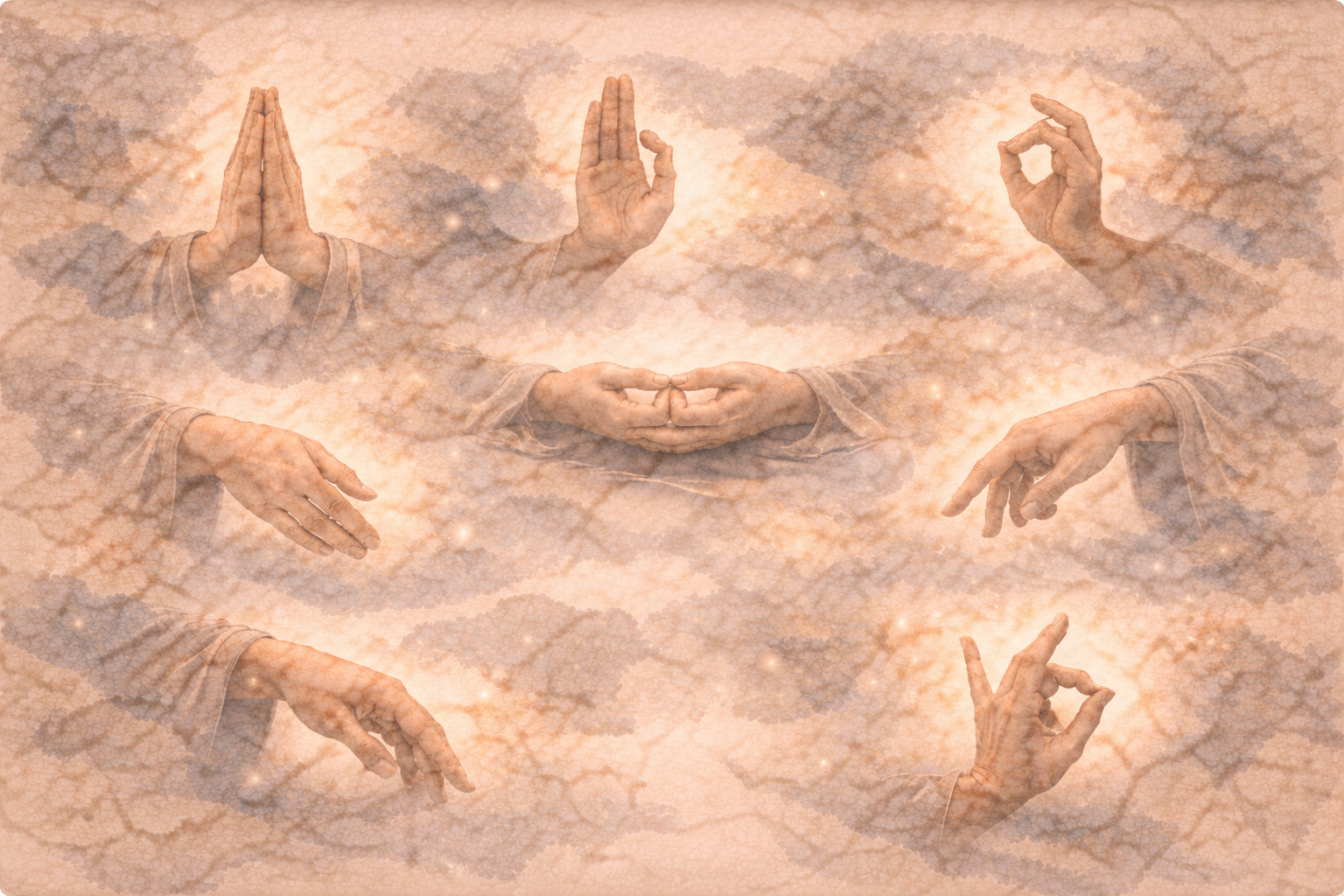
Quick Summary
- In Buddhism, a mudra is a purposeful hand gesture used to support attention, meaning, and intention.
- Mudras are not “magic signs”; they’re practical cues that shape how you sit, breathe, and focus.
- Many mudras symbolize qualities like steadiness, openness, fearlessness, or teaching.
- You’ll see mudras in meditation, ritual, chanting, and Buddhist art (statues and paintings).
- The same mudra can feel different depending on your mindset and the situation.
- Beginners can use simple, comfortable mudras without needing special knowledge.
- The best mudra is the one that helps you be present, relaxed, and sincere.
Introduction
If you’ve seen Buddhist statues with hands posed in specific ways, or you’ve heard meditators talk about “hand positions,” it’s easy to feel unsure: is a mudra a symbol, a technique, a religious rule, or something you can actually use? The honest answer is that a mudra is both simple and meaningful—simple enough to try today, meaningful enough to carry centuries of practice. At Gassho, we focus on clear, beginner-friendly explanations grounded in lived practice rather than mystique.
The word mudra is often translated as “seal” or “gesture,” but you don’t need to memorize translations to understand the point. A mudra is a deliberate way of placing the hands (and sometimes the whole body) to express an intention and support a particular quality of mind.
Some people meet mudras through meditation instructions: “Place your hands like this.” Others meet them through art: a Buddha figure touching the earth, raising a hand in reassurance, or holding a teaching gesture. In both cases, the gesture is doing two jobs at once: communicating meaning and shaping experience.
A Clear Way to Understand Mudras
A helpful lens is to see a mudra as a physical reminder that your body and mind are not separate projects. When you change the shape of your hands, you subtly change your posture, muscle tone, breathing pattern, and the “feel” of attention. That shift can make it easier to settle, to stay steady, or to remember what you’re doing.
In Buddhism, meaning is often carried through simple forms: a bow, a candle, a chant, a posture. A mudra works the same way. It’s not primarily about looking a certain way; it’s about giving your practice a clear container. The hands become a quiet signal: “This moment matters. Pay attention.”
Mudras also function as symbols. For example, a raised open palm is widely understood as reassurance or fearlessness; hands resting together can suggest collectedness and balance; a gesture of teaching can point to communication and clarity. The symbol isn’t meant to replace your experience—it’s meant to guide it, like a signpost that keeps you oriented.
Most importantly, mudras are optional supports, not tests. If a hand position makes you tense, distracted, or self-conscious, it’s not serving its purpose. In a beginner-friendly approach, the “right” mudra is the one that helps you be present without strain.
GASSHO
Ask and learn about Buddhism in daily life.
GASSHO is a Buddhist community app where you can learn Buddhist teachings and ask questions to the head priest of Kongosanmaiin Temple on Mount Koya.
How Mudras Show Up in Everyday Practice
Try this: place your hands in your lap, one resting gently in the other, and let the thumbs touch lightly. Without forcing anything, notice what happens to your shoulders. Many people feel them drop a fraction. The chest softens. Breathing becomes less performative and more natural.
Now notice attention. When the hands have a clear, stable place to be, the mind often has one less reason to fidget. You’re not constantly deciding what to do with your arms. That small reduction in “background decision-making” can make sitting feel simpler.
In daily life, mudra-like gestures happen all the time. When you clasp your hands while listening, you may become more receptive. When you point, the mind becomes directive. When you open your palms, the body signals non-threat. Buddhist mudras take this ordinary truth and use it intentionally.
You might also notice emotional tone. A steady hand position can support steadiness in mood—not by suppressing feelings, but by giving them a wider container. If anxiety is present, the mudra doesn’t “fix” it; it can help you stop feeding it with extra restlessness.
Mudras can also work as a memory cue. If you use the same simple mudra each time you meditate, the body learns: “This posture means we’re practicing.” Over time, that association can make it easier to begin, even on days when motivation is low.
And sometimes the effect is very plain: comfort. A mudra can keep the hands warm, reduce arm fatigue, and prevent subtle tension from creeping into the neck and jaw. When the body is less busy, awareness has more room.
If none of this happens for you, that’s also normal. A mudra is a gentle condition, not a guarantee. The practice is simply to notice what changes—tightness, ease, distraction, steadiness—without turning it into a verdict.
Common Misunderstandings Beginners Run Into
“Mudras are secret or supernatural.” Some traditions treat certain gestures with formality, but the basic idea is straightforward: a mudra is a deliberate gesture that supports intention and attention. You don’t need to believe in anything mystical to benefit from a stable, meaningful hand position.
“There’s one correct mudra for everyone.” In reality, bodies differ. Flexibility, injury history, and comfort vary. A mudra that causes numbness or strain is not “more authentic”—it’s just uncomfortable. A simple, relaxed position is often the most sustainable.
“If I do the mudra, I’m doing Buddhism right.” A mudra can support practice, but it can’t replace it. If the gesture becomes a way to perform spirituality or chase a special feeling, it’s no longer doing its quiet job of grounding you.
“Mudras are only for statues and ceremonies.” Mudras appear in art because they communicate meaning clearly, but they’re also practical in meditation and mindful activity. Even a simple resting of the hands can be a mudra when it’s done intentionally.
“I need to memorize lots of names.” Names can be helpful, but they’re not the point. Start with one comfortable gesture and learn what it does to your posture and attention. Understanding grows from experience.
Why Mudras Matter Beyond Symbolism
Mudras matter because they make practice tangible. When the mind is scattered, “be mindful” can feel vague. A hand gesture is specific. It gives you something you can actually do, right now, with no extra equipment and no special setting.
They also encourage consistency. A repeated mudra becomes a small ritual of beginning—like closing a door gently behind you. That consistency can reduce friction and help you show up more often, even briefly.
Mudras can support ethical and relational qualities, too. A gesture associated with reassurance can remind you to soften your tone. A gesture associated with openness can remind you to listen. The hands become a quiet prompt to embody what you value.
Finally, mudras can help you relate to Buddhist imagery with more intimacy. Instead of seeing a statue’s hands as decorative, you can recognize them as a teaching in form: a reminder that awakening is not only an idea—it’s expressed through the body, moment by moment.
Conclusion
A mudra in Buddhism is a purposeful hand gesture that supports attention and expresses meaning. It’s not a performance and not a superstition; it’s a simple way to align body and mind. If you’re new, start with comfort and sincerity: choose a gentle, steady hand position, notice what it does to your posture and awareness, and let the gesture serve the practice—not the other way around.
Ask a Buddhist priest
Have a question about Buddhism?
In the GASSHO app, you can ask questions about Buddhist teachings, daily concerns, and how to understand Buddhism in everyday life.
Frequently Asked Questions
- FAQ 1: What is a mudra in Buddhism?
- FAQ 2: Are mudras only hand gestures, or can they involve the whole body?
- FAQ 3: What does the word “mudra” mean in Buddhism?
- FAQ 4: Why do Buddhists use mudras?
- FAQ 5: Are mudras required to meditate in Buddhism?
- FAQ 6: Do mudras have fixed meanings in Buddhism?
- FAQ 7: What is the meditation mudra in Buddhism?
- FAQ 8: What is the meaning of the Buddha touching the earth hand gesture?
- FAQ 9: What does the raised open palm mudra mean in Buddhism?
- FAQ 10: Are mudras considered magical or supernatural in Buddhism?
- FAQ 11: Can I use mudras if I’m not Buddhist?
- FAQ 12: How do I choose a mudra for Buddhist meditation?
- FAQ 13: Do mudras have to be done perfectly in Buddhism?
- FAQ 14: Why do Buddhist statues show different mudras?
- FAQ 15: What should I do if a mudra feels uncomfortable or distracting?
FAQ 1: What is a mudra in Buddhism?
Answer: A mudra in Buddhism is a deliberate hand gesture (and sometimes a full-body gesture) used to express an intention and support a particular quality of attention during practice, ritual, or teaching imagery.
Takeaway: A mudra is a purposeful gesture that supports both meaning and mindfulness.
FAQ 2: Are mudras only hand gestures, or can they involve the whole body?
Answer: Many mudras are hand positions, but the broader idea can include posture and bodily gestures that “seal” an intention—how you hold the body can function like a mudra in practice contexts.
Takeaway: Mudra often means hands, but it can also point to intentional bodily gesture.
FAQ 3: What does the word “mudra” mean in Buddhism?
Answer: Mudra is commonly translated as “seal,” “sign,” or “gesture,” pointing to the idea that a specific gesture “marks” or “confirms” an intention in a visible, embodied way.
Takeaway: The term suggests a gesture that seals or signals intention.
FAQ 4: Why do Buddhists use mudras?
Answer: Mudras are used to support concentration, stabilize posture, express symbolic meaning (like reassurance or teaching), and create a consistent container for meditation or ritual.
Takeaway: Mudras are practical supports for attention and meaningful action.
FAQ 5: Are mudras required to meditate in Buddhism?
Answer: No. Mudras are optional supports. Many people meditate without a formal mudra, and many use a simple, comfortable hand position as a helpful anchor.
Takeaway: Mudras can help, but they’re not mandatory.
FAQ 6: Do mudras have fixed meanings in Buddhism?
Answer: Some mudras have widely recognized meanings in Buddhist art and practice, but meaning can also be contextual—how a gesture functions depends on the setting and the intention behind it.
Takeaway: Many meanings are traditional, but context still matters.
FAQ 7: What is the meditation mudra in Buddhism?
Answer: A common meditation mudra places the hands in the lap, one resting on the other, often with thumbs lightly touching, creating a stable and relaxed base for sitting practice.
Takeaway: The “meditation mudra” is usually a simple, steady lap-hand position.
FAQ 8: What is the meaning of the Buddha touching the earth hand gesture?
Answer: In Buddhist imagery, the earth-touching gesture is commonly understood as a sign of groundedness and resolve—calling on the earth as witness to steadiness and sincerity.
Takeaway: The earth-touching mudra symbolizes grounded commitment.
FAQ 9: What does the raised open palm mudra mean in Buddhism?
Answer: A raised open palm is often associated with reassurance, protection, or fearlessness—communicating “do not be afraid” through a calm, non-threatening gesture.
Takeaway: The open palm commonly signals reassurance and fearlessness.
FAQ 10: Are mudras considered magical or supernatural in Buddhism?
Answer: Mudras are primarily understood as meaningful, intentional gestures that shape attention and communicate symbolism. Some people may attribute additional spiritual significance, but a beginner-friendly view is that mudras work as embodied cues rather than “spells.”
Takeaway: Mudras are best understood as intentional gestures, not magic tricks.
FAQ 11: Can I use mudras if I’m not Buddhist?
Answer: Yes. If you approach them respectfully, mudras can be used as simple hand positions that support calm attention and intention, even outside a formal Buddhist identity.
Takeaway: Mudras can be practiced respectfully as attention-supporting gestures.
FAQ 12: How do I choose a mudra for Buddhist meditation?
Answer: Choose a mudra that is comfortable, stable, and easy to maintain without strain. If a gesture creates tension or numbness, simplify it—comfort and steadiness matter more than complexity.
Takeaway: Pick the mudra that supports relaxed stability, not effort.
FAQ 13: Do mudras have to be done perfectly in Buddhism?
Answer: No. A mudra is meant to support practice, not become a performance. Small variations are normal; what matters is the intention and whether the gesture helps you settle and pay attention.
Takeaway: “Perfect” form is less important than relaxed, sincere function.
FAQ 14: Why do Buddhist statues show different mudras?
Answer: Different mudras in Buddhist art communicate different themes—such as teaching, reassurance, meditation, or grounded resolve—so viewers can “read” the image as a visual teaching.
Takeaway: Statue mudras are symbolic cues that convey a teaching in form.
FAQ 15: What should I do if a mudra feels uncomfortable or distracting?
Answer: Adjust it or switch to a simpler hand position that keeps the wrists, fingers, and shoulders relaxed. A mudra should reduce distraction, not create it, so comfort is a valid guide.
Takeaway: If a mudra adds strain, simplify—supporting awareness is the goal.