



Elephant Symbol in Buddhism: Strength, Patience, and the Trained Mind
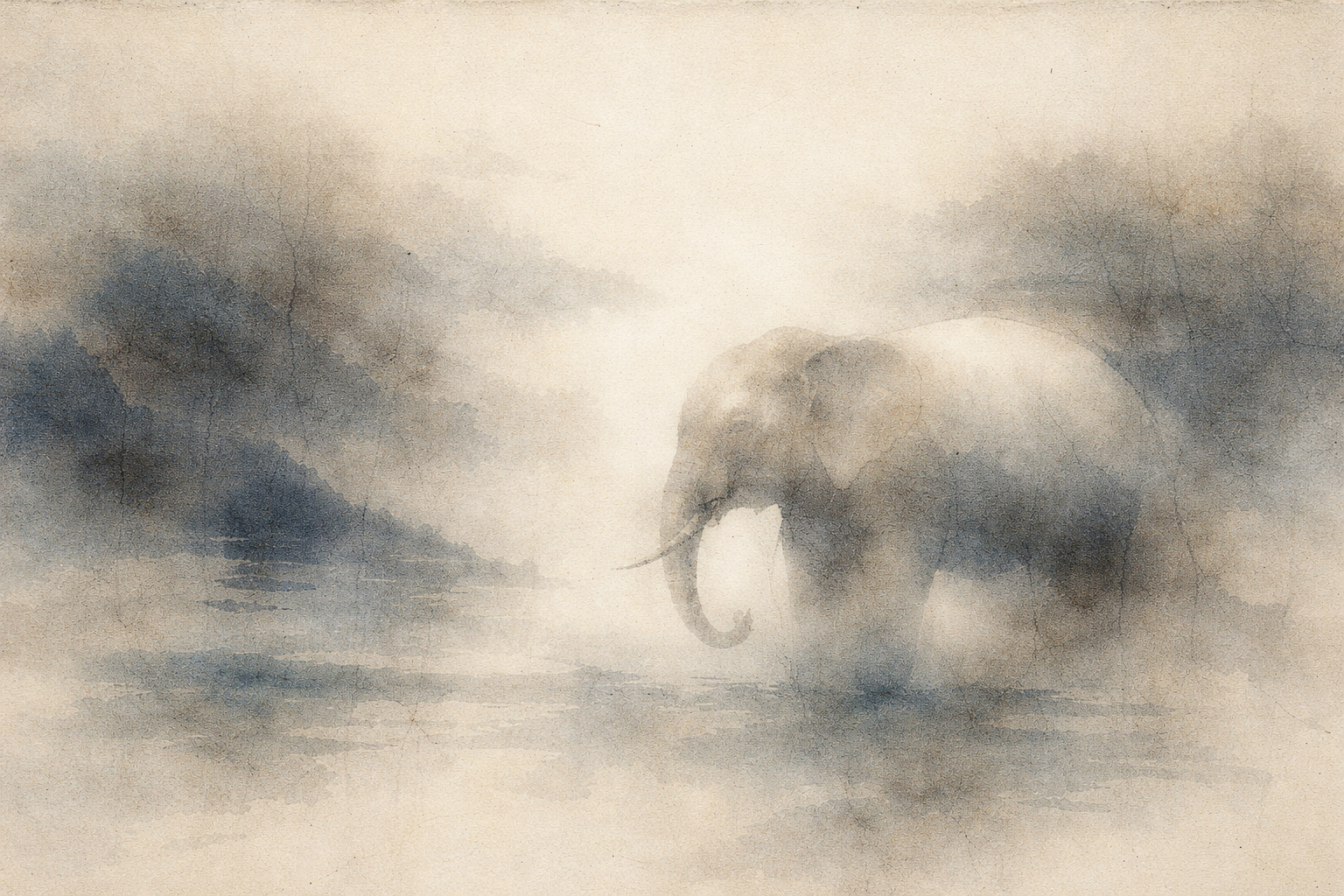
Quick Summary
- In Buddhism, the elephant often symbolizes a mind that can be trained: strong, steady, and capable of gentleness.
- Elephants appear in key Buddhist stories, especially around the Buddha’s birth, where they signal purity and auspiciousness.
- Elephant imagery points to qualities like patience, memory, dignity, and careful power rather than aggression.
- White elephants are commonly linked with clarity and wholesome intention, not “luck” in a simplistic sense.
- In art, elephants can function as visual reminders of ethical strength and grounded presence.
- The symbol varies by region, but the core theme is reliable strength guided by awareness.
- You don’t need to “believe in” symbols for them to be useful; they can work as practical cues for attention and conduct.
Introduction: The Elephant Isn’t Random—It’s a Mind Lesson
If you keep seeing elephants in Buddhist art and wonder whether it’s just cultural decoration, you’re not alone—and the answer is more specific than “it’s sacred.” The elephant is used because it captures a very particular kind of strength: power that doesn’t need to prove itself, steadiness that can be guided, and a presence that changes the room without making noise. At Gassho, we focus on Buddhist symbols as practical pointers for everyday attention, not as collectibles or superstition.
When you ask why the elephant is a symbol in Buddhism, you’re really asking what kind of inner life Buddhism values: not flashy intensity, but trained stability.
The Core Lens: Strength That Can Be Directed
A helpful way to understand Buddhist symbolism is to treat it like a mirror for experience. The elephant isn’t primarily a “mascot”; it’s a picture of the mind’s raw capacity—huge energy, huge momentum—and the possibility of guiding that capacity toward clarity and care.
Elephants are strong enough to uproot trees, yet they can also move with surprising delicacy. That combination makes them a natural symbol for inner training: the goal isn’t to become weak or numb, but to become steady enough that strength stops spilling out as reactivity.
In Buddhist contexts, the elephant often points to qualities like patience, composure, and reliability. These are not abstract virtues; they’re the felt sense of being less yanked around by impulses. The symbol says: a powerful mind is not a problem—an unguided mind is.
Because symbols can carry multiple layers, the elephant can also suggest dignity, memory, and grounded presence. But the unifying theme is consistent: strength becomes beneficial when it is paired with awareness and restraint.
GASSHO
Ask and learn about Buddhism in daily life.
GASSHO is a Buddhist community app where you can learn Buddhist teachings and ask questions to the head priest of Kongosanmaiin Temple on Mount Koya.
How Elephant Symbolism Shows Up in Ordinary Moments
Think about what happens when you’re stressed and your attention gets “big.” It fills the whole room. You notice everything wrong, everything urgent, everything that could go sideways. That’s power—but it’s not yet skillful power.
The elephant image can be a quiet prompt: can this much energy be guided? In a tense conversation, you might feel the urge to interrupt, correct, or win. The symbol points to another option: pause, feel the weight of your body, and let your words come from steadiness rather than force.
In daily life, “elephant mind” can look like stubbornness—digging in, refusing to budge. But it can also look like loyalty to what matters: staying with a difficult task, keeping a promise, returning to what’s true even when it’s inconvenient. The difference is whether the strength is serving clarity or serving ego.
Notice how quickly the mind can charge: one email, one comment, one memory, and suddenly you’re trampling through your day. Elephant symbolism invites a different relationship with momentum. Instead of pretending you have no strong reactions, you acknowledge them and steer them.
There’s also a gentleness lesson here. Real steadiness doesn’t need to announce itself. When you’re secure, you don’t have to dominate. In a family setting, that might mean listening fully before responding. At work, it might mean being firm without being sharp.
Even your attention can become more “elephant-like” in a simple way: less scattered, more whole. You read one page without checking your phone. You wash one dish without rehearsing an argument. You walk to your car without narrating your life. Not dramatic—just grounded.
Over time, the elephant becomes less a religious image and more a practical cue: strong doesn’t have to mean harsh, and calm doesn’t have to mean passive.
Common Misunderstandings About Elephants in Buddhism
Mistake 1: “It’s only about good luck.” In some cultures, elephants are associated with auspiciousness, but Buddhist use is usually more pointed: it’s about wholesome qualities—purity of intention, steadiness, and ethical strength—rather than a charm that guarantees outcomes.
Mistake 2: “The elephant is a Buddhist god.” The elephant is a symbol and a storytelling element in Buddhist traditions. It’s not a requirement to worship an elephant figure to understand the teaching being pointed to.
Mistake 3: “White elephant means rare and magical, so it must be supernatural.” White elephants in Buddhist stories often function as a visual shorthand for purity, nobility, and auspicious conditions. You can read that psychologically: clarity and goodness are possible, and they matter.
Mistake 4: “Elephant symbolism is the same everywhere.” Regional art and local culture shape how elephants appear. The consistent thread is not a single definition, but a family resemblance: strength, stability, and a mind that can be guided.
Mistake 5: “Symbols are childish, so they’re not ‘real’ Buddhism.” Symbols are tools for memory and attention. Even if you prefer a minimalist approach, imagery can still function as a helpful reminder of how you want to respond under pressure.
Why This Symbol Still Matters in Daily Life
Modern life rewards speed, hot takes, and constant stimulation. The elephant symbol quietly argues for something else: slow power. Not sluggishness—just the kind of steadiness that doesn’t get hijacked by every trigger.
It also reframes self-control. Instead of “clamping down” on yourself, you learn to guide yourself. The elephant isn’t a picture of repression; it’s a picture of capacity under wise direction.
And it’s a reminder about ethics. A large animal must move carefully because its impact is real. In the same way, when your words carry weight—because you’re a parent, a leader, or simply someone others trust—carefulness isn’t weakness. It’s responsibility.
Finally, elephant symbolism can soften the way you relate to your own mind. If you feel “too much”—too intense, too reactive, too stubborn—the symbol suggests you may not be broken. You may simply need training, patience, and a clearer direction.
Conclusion: The Elephant Points to Trained Calm, Not Decoration
So why is the elephant a symbol in Buddhism? Because it’s an honest portrait of human potential: enormous inner force that can either trample or protect, depending on whether it’s guided by awareness. When you see an elephant in Buddhist imagery, you can read it as a simple question aimed at your day: is your strength being steered—or is it steering you?
Ask a Buddhist priest
Have a question about Buddhism?
In the GASSHO app, you can ask questions about Buddhist teachings, daily concerns, and how to understand Buddhism in everyday life.
Frequently Asked Questions
- FAQ 1: Why the elephant is a symbol in Buddhism in the first place?
- FAQ 2: What does an elephant symbolize in Buddhism beyond “good luck”?
- FAQ 3: Why is the white elephant important in Buddhist symbolism?
- FAQ 4: How is the elephant connected to stories about the Buddha’s birth?
- FAQ 5: Does the elephant in Buddhism represent the mind?
- FAQ 6: Why do elephants symbolize patience and steadiness in Buddhism?
- FAQ 7: Is the elephant a symbol of compassion in Buddhism?
- FAQ 8: Why are elephants shown in Buddhist temples and art?
- FAQ 9: Do elephants symbolize wisdom in Buddhism?
- FAQ 10: Why is the elephant sometimes linked with royalty in Buddhist contexts?
- FAQ 11: Is the elephant symbol the same in all Buddhist countries?
- FAQ 12: Why do some Buddhist images show elephants supporting structures or thrones?
- FAQ 13: Does Buddhism teach people to worship elephants because they are symbols?
- FAQ 14: What is the simplest explanation of why the elephant is a symbol in Buddhism?
- FAQ 15: How can I use elephant symbolism in Buddhism as a daily reminder?
FAQ 1: Why the elephant is a symbol in Buddhism in the first place?
Answer: The elephant is used because it vividly represents strong energy that can be trained—steady, patient, and powerful without being aggressive. In Buddhist imagery, that becomes a reminder of a mind that can be guided by awareness rather than driven by impulse.
Takeaway: The elephant points to strength under wise direction.
FAQ 2: What does an elephant symbolize in Buddhism beyond “good luck”?
Answer: Beyond auspiciousness, elephants commonly symbolize stability, dignity, patience, and ethical strength—qualities of a mind that is grounded and dependable. The emphasis is less on luck and more on inner steadiness and wholesome power.
Takeaway: It’s a character symbol, not a charm.
FAQ 3: Why is the white elephant important in Buddhist symbolism?
Answer: White elephants are often associated with purity of intention and auspicious conditions, especially in stories connected to the Buddha’s birth. “White” functions as a visual cue for clarity and nobility rather than a claim that the animal is magical.
Takeaway: White elephant imagery highlights purity and auspiciousness.
FAQ 4: How is the elephant connected to stories about the Buddha’s birth?
Answer: In traditional accounts, the Buddha’s mother dreams of a white elephant, which signals an auspicious and pure birth. In symbolic terms, the elephant underscores the themes of dignity, strength, and wholesome conditions surrounding awakening.
Takeaway: Birth narratives use the elephant as a sign of noble qualities.
FAQ 5: Does the elephant in Buddhism represent the mind?
Answer: Often, yes—elephant symbolism can be read as a picture of the mind’s power and momentum. A calm, well-guided elephant suggests attention that is steady and usable; an unruly elephant suggests attention that is reactive and hard to steer.
Takeaway: The elephant can be a mirror for how your attention behaves.
FAQ 6: Why do elephants symbolize patience and steadiness in Buddhism?
Answer: Elephants move with weight and deliberation, and they’re known for endurance. Buddhist symbolism draws on those observable traits to point toward patience, composure, and the ability to stay present without being rushed by emotion or pressure.
Takeaway: The elephant is a visual shorthand for durable calm.
FAQ 7: Is the elephant a symbol of compassion in Buddhism?
Answer: It can be, indirectly, because compassion needs steadiness to be reliable. Elephant imagery often suggests gentle strength—power that protects rather than harms—which aligns with compassionate action that is firm, patient, and non-reactive.
Takeaway: Elephant symbolism can support the idea of gentle, protective strength.
FAQ 8: Why are elephants shown in Buddhist temples and art?
Answer: Temples and art use elephants as teaching images: reminders of grounded presence, dignity, and a mind that can be trained. They also reflect local cultures where elephants were familiar symbols of royal strength and stability, adapted into Buddhist visual language.
Takeaway: Elephant images function as both cultural and practical reminders.
FAQ 9: Do elephants symbolize wisdom in Buddhism?
Answer: Elephants can suggest wisdom in the sense of mature, measured power—acting carefully because impact is real. While “wisdom” is expressed through many symbols, elephants often imply the steadiness and discernment needed to use strength responsibly.
Takeaway: The elephant can point to mature, careful discernment.
FAQ 10: Why is the elephant sometimes linked with royalty in Buddhist contexts?
Answer: In many Asian cultures, elephants were associated with kingship, stability, and protection. Buddhist art sometimes borrows that association to communicate inner “nobility”: a dignified, ethical strength that supports rather than dominates.
Takeaway: Royal elephant imagery can be read as a metaphor for inner dignity.
FAQ 11: Is the elephant symbol the same in all Buddhist countries?
Answer: No. The elephant’s meaning shifts with local history and artistic traditions, but it commonly retains a core theme: steadiness, strength, and auspiciousness. The details vary; the “trained power” message often remains recognizable.
Takeaway: Meanings vary by region, but the central motif is stable strength.
FAQ 12: Why do some Buddhist images show elephants supporting structures or thrones?
Answer: Depicting elephants as supports emphasizes stability and reliability—what “holds up” a wholesome life. Symbolically, it suggests that strong foundations (patience, restraint, steadiness) support what is most valued.
Takeaway: Supporting elephants symbolize dependable foundations.
FAQ 13: Does Buddhism teach people to worship elephants because they are symbols?
Answer: Elephant symbolism in Buddhism is generally used as a teaching aid and cultural motif, not as a requirement to worship an animal. You can appreciate the symbol as a reminder of trained calm and ethical strength without treating it as an object of devotion.
Takeaway: The elephant is mainly a pointer, not a demand for worship.
FAQ 14: What is the simplest explanation of why the elephant is a symbol in Buddhism?
Answer: Because it captures the idea of powerful energy becoming gentle and useful when guided. That’s a practical image for the mind: strong feelings and strong will can become steady, kind, and clear when directed by awareness.
Takeaway: The simplest meaning is “power guided by awareness.”
FAQ 15: How can I use elephant symbolism in Buddhism as a daily reminder?
Answer: When you notice yourself rushing, reacting, or pushing, use the elephant as a cue to slow down and steer your energy: feel your feet, soften your jaw, and choose a response that is firm but not forceful. The symbol works best as a prompt for steadiness in ordinary moments.
Takeaway: Let the elephant remind you to guide strength with calm.