



The Mala Beads Symbol in Buddhist Practice
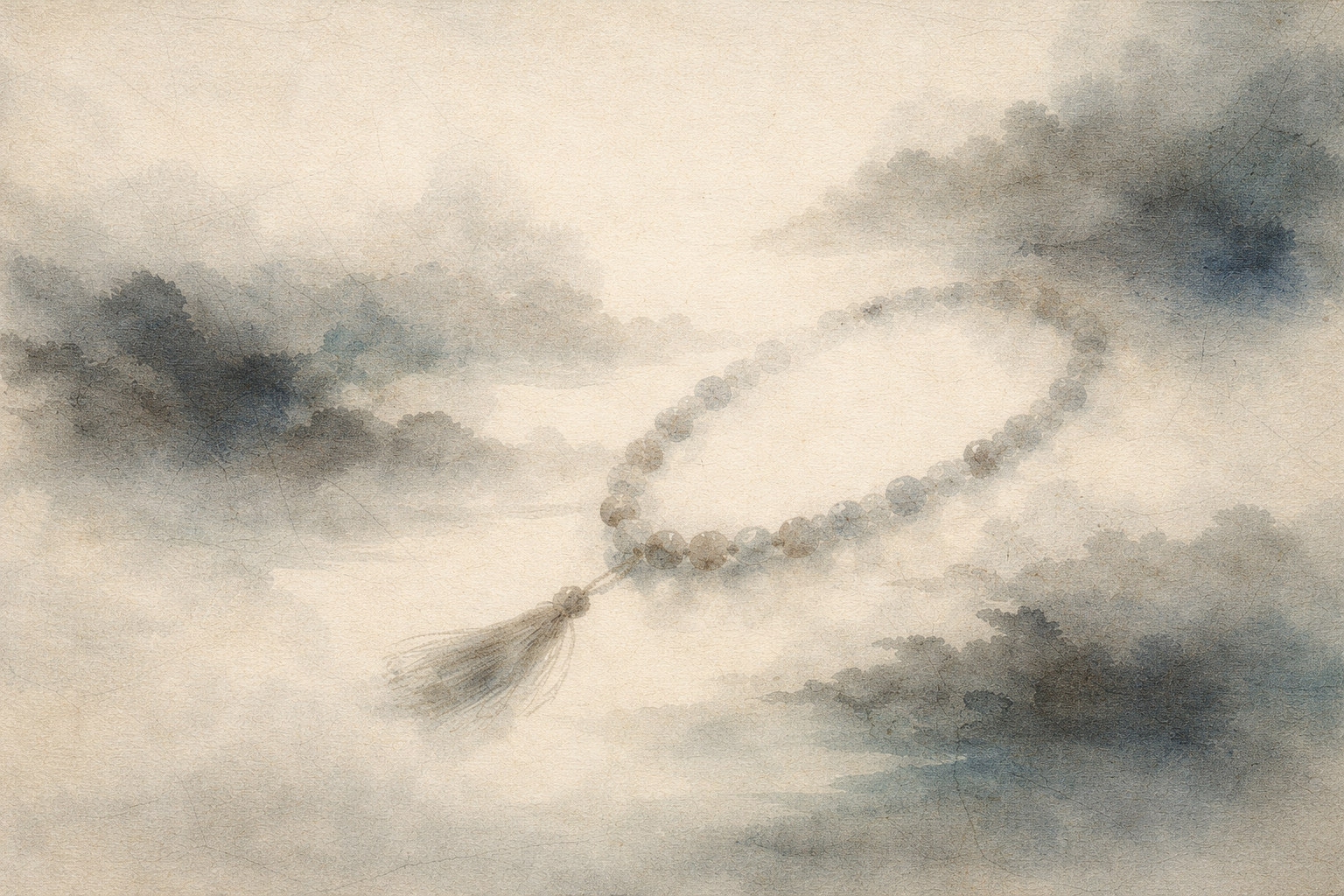
Quick Summary
- The mala beads symbol in Buddhist practice points to steady attention, not superstition.
- Beads are a tactile way to “count” presence—one moment, one recitation, one breath.
- The circular strand symbolizes continuity: returning again and again without self-blame.
- Numbers (often 108) are less about math and more about committing to repetition.
- A “guru bead” or marker bead functions as a pause point—an intentional reset.
- Wearing a mala can be meaningful, but its core symbolism is practice, not display.
- The most important “meaning” is how it changes your relationship to distraction and intention.
Introduction
You’re holding mala beads (or thinking about buying them) and the confusion is practical: are they a sacred symbol, a counting tool, a fashion item, or all three—and what does “symbol” even mean in Buddhist practice without turning it into magical thinking. The cleanest way to understand the mala is this: it symbolizes repetition with awareness, a willingness to return, and a gentle structure for the mind that drifts. I write for Gassho with a focus on lived, everyday Buddhist practice and clear symbolism without mystification.
The mala beads symbol in Buddhist practice isn’t primarily about what the beads “contain.” It’s about what they invite you to do: touch one bead, make one sincere recitation (or one breath), and then move on—without bargaining, without drama.
That’s why malas show up across many Buddhist cultures: the hand learns what the mind forgets. When attention slips, the beads quietly say, “Start again here.”
A Clear Lens for What Mala Beads Symbolize
As a symbol, a mala points to the basic rhythm of practice: intention, repetition, and return. You choose a phrase, a name, a vow, or a simple breath-count, and you repeat it—not to force a special state, but to train steadiness. The beads symbolize that steadiness by giving it a physical form you can feel.
The strand itself is a quiet teaching. It’s circular: you come back to where you started. That circle can be read as continuity, but also as humility—practice is not a straight line where you “graduate” from distraction. You loop, you notice, you return.
The individual beads symbolize moments that are small enough to be honest. One bead is manageable. One sincere recitation is doable. Instead of making practice into a vague ambition (“I should be more mindful”), the mala turns it into a sequence of concrete, repeatable actions.
Even the marker bead (often called the “guru bead” in some contexts) can be understood symbolically without importing heavy beliefs: it’s a built-in pause. It marks a boundary where you stop, acknowledge what you’ve done, and choose how to continue—often by turning around rather than “crossing over,” which reinforces the idea of respect and deliberate movement.
GASSHO
Ask and learn about Buddhism in daily life.
GASSHO is a Buddhist community app where you can learn Buddhist teachings and ask questions to the head priest of Kongosanmaiin Temple on Mount Koya.
How the Symbol Shows Up in Ordinary Moments
In real life, the mala’s symbolism becomes obvious the moment your mind wanders. You’re reciting, counting, or breathing, and suddenly you realize you’ve been planning dinner or replaying a conversation. The beads don’t scold you. They give you a place to resume: the bead under your thumb.
That small physical contact changes the texture of attention. Instead of trying to “hold focus” with willpower, you let touch and movement share the job. The symbol becomes embodied: practice is not only an idea in your head; it’s something your hands can do.
Many people notice a subtle shift in how they relate to counting. Counting can become anxious (“Did I do it right?”), but the mala can also soften that. Each bead is a simple agreement: this one, now. When you lose count, you don’t have to turn it into a failure story. You just return to a bead and continue.
The strand also highlights pacing. If you rush, the beads rush with you. If you slow down, the beads slow down. That makes the mala a mirror: it reflects your inner speed, your impatience, your tendency to “get through” practice instead of inhabiting it.
In everyday settings—waiting in a car, walking, sitting before sleep—the mala can symbolize a choice point. You can spiral into rumination, or you can do one bead’s worth of returning. The action is small enough to fit into ordinary life without needing a perfect environment.
Even when the mala is not used for formal recitation, it can function as a reminder symbol. Feeling it on your wrist or in your pocket can cue a micro-reset: relax the jaw, soften the shoulders, notice the breath, and let the next moment be simpler than the last.
Over time, the symbolism becomes less conceptual and more practical. The mala doesn’t “mean” something you have to interpret correctly. It means what it does to your attention: it makes returning normal.
Common Misunderstandings About Mala Beads
One common misunderstanding is treating the mala as a lucky charm. In Buddhist practice, the mala beads symbol is closer to a training aid than a talisman. If you find yourself hoping the beads will protect you while you avoid the work of attention, that’s a sign to return to the simplest use: one bead, one sincere repetition.
Another misunderstanding is thinking the “right” material is the whole point. Wood, seeds, stone, bone, crystal—different cultures use different materials, and people attach different associations to them. But symbolically, the core function remains: supporting repetition and recollection. Material can matter personally, but it’s not the heart of the symbol.
People also get stuck on the number, especially 108. While 108 has traditional resonances and is widely used, the deeper symbolism is commitment to repetition rather than numerology. If 27 or 54 beads helps you practice consistently, the symbol is still doing its job.
A final misunderstanding is using the mala as a performance of spirituality. Wearing a mala isn’t wrong, but the symbol can be diluted when it becomes mainly an identity signal. A helpful check is simple: does it make you kinder, steadier, and more willing to return—or does it make you more concerned with how you look?
Why This Symbol Matters in Daily Life
The mala beads symbol in Buddhist practice matters because it turns an invisible skill—returning attention—into something you can actually do with your body. That matters on stressful days when “just be mindful” feels like an impossible instruction.
It also supports honesty. A mala doesn’t let you pretend you practiced when you didn’t, and it doesn’t let you exaggerate what happened. You touched beads, you repeated, you wandered, you returned. That straightforwardness is calming.
In relationships and work, the same symbolism applies. You lose your temper, you notice, you return. You get defensive, you feel it, you return. The beads are a small model of repair: not perfection, but repeated re-alignment.
Finally, the mala can protect practice from mood. When motivation is high, you can do many beads. When motivation is low, you can do a few. The symbol remains intact: practice is measured by returning, not by forcing yourself into a particular feeling.
Conclusion
The mala beads symbol in Buddhist practice is simple and demanding in the best way: it symbolizes repetition with awareness, the humility to begin again, and the decision to make attention tangible. If you use a mala, let it be less about what it “represents” in theory and more about what it trains in you—one bead at a time.
Ask a Buddhist priest
Have a question about Buddhism?
In the GASSHO app, you can ask questions about Buddhist teachings, daily concerns, and how to understand Buddhism in everyday life.
Frequently Asked Questions
- FAQ 1: What is the mala beads symbol in Buddhist practice?
- FAQ 2: Do mala beads symbolize prayer, meditation, or both?
- FAQ 3: Why is 108 beads symbolic on a Buddhist mala?
- FAQ 4: What does the “guru bead” or marker bead symbolize?
- FAQ 5: Do mala beads symbolize protection in Buddhist practice?
- FAQ 6: What do different mala bead materials symbolize in Buddhism?
- FAQ 7: Is wearing a mala necklace disrespectful, symbolically speaking?
- FAQ 8: What does it symbolize to move one bead at a time?
- FAQ 9: Do mala beads symbolize a vow or intention?
- FAQ 10: What is the symbolic meaning of a mala being circular?
- FAQ 11: If I lose count, does that change the mala beads symbol in Buddhist practice?
- FAQ 12: Do mala beads symbolize mindfulness even without a mantra?
- FAQ 13: What does it symbolize to keep mala beads in a pocket or bag?
- FAQ 14: Is a wrist mala symbolically different from a full 108-bead mala?
- FAQ 15: What is the simplest way to honor the mala beads symbol in Buddhist practice?
FAQ 1: What is the mala beads symbol in Buddhist practice?
Answer: It symbolizes repeated returning: using a physical strand of beads to support steady attention through mantra, recitation, or mindful counting. The “meaning” is less about mystical power and more about training consistency and recollection.
Takeaway: The mala symbolizes the habit of returning, not a supernatural object.
FAQ 2: Do mala beads symbolize prayer, meditation, or both?
Answer: In Buddhist practice they can symbolize both: devotion expressed through recitation and the meditative discipline of sustained attention. The shared symbolic thread is repetition done deliberately, bead by bead.
Takeaway: The mala’s symbolism bridges devotion and attention-training.
FAQ 3: Why is 108 beads symbolic on a Buddhist mala?
Answer: 108 is a traditional number used to represent completeness in repetition and commitment to practice. Many people treat it as a meaningful standard rather than a requirement; the symbolism is “enough repetitions to shape the mind.”
Takeaway: 108 mainly symbolizes completeness and commitment, not numerology you must perfect.
FAQ 4: What does the “guru bead” or marker bead symbolize?
Answer: It symbolizes a pause point and a boundary: a moment to stop, acknowledge the cycle, and intentionally begin again. Practically, it prevents mindless looping and adds a small ritual of respect and reset.
Takeaway: The marker bead symbolizes deliberate turning back to awareness.
FAQ 5: Do mala beads symbolize protection in Buddhist practice?
Answer: Some people culturally associate malas with protection, but symbolically in practice the “protection” is often understood as protection from distraction and reactivity—because the beads keep bringing you back to your chosen focus.
Takeaway: The most reliable protection the mala symbolizes is protection from wandering attention.
FAQ 6: What do different mala bead materials symbolize in Buddhism?
Answer: Materials can carry associations (simplicity, durability, remembrance, or personal resonance), but the central symbol remains the same: repetition and recollection. If a material supports sincerity and steadiness, it’s serving the symbol well.
Takeaway: Material symbolism is secondary to the mala’s core meaning of steady repetition.
FAQ 7: Is wearing a mala necklace disrespectful, symbolically speaking?
Answer: It depends on intention and context. Symbolically, wearing a mala can function as a reminder of vows and practice, but it can also drift into display. A respectful approach is to treat it as a practice object first, not a fashion statement.
Takeaway: Wearing a mala can be respectful if it remains a reminder of practice, not performance.
FAQ 8: What does it symbolize to move one bead at a time?
Answer: It symbolizes meeting experience in manageable units: one breath, one phrase, one moment. This counters the mind’s tendency to rush ahead, judge, or demand a big result.
Takeaway: One bead at a time symbolizes realism and presence.
FAQ 9: Do mala beads symbolize a vow or intention?
Answer: Yes. Because the mala is used for repeated recitation or mindful counting, it naturally symbolizes “I will return to this intention again and again.” The strand becomes a physical anchor for an inner commitment.
Takeaway: A mala often symbolizes commitment made practical through repetition.
FAQ 10: What is the symbolic meaning of a mala being circular?
Answer: The circle symbolizes continuity and returning: practice doesn’t end with one good session, and it doesn’t collapse with one distracted session. You come back, and you keep coming back.
Takeaway: The circle symbolizes return without self-punishment.
FAQ 11: If I lose count, does that change the mala beads symbol in Buddhist practice?
Answer: Losing count is part of what the mala is for. Symbolically, it reveals distraction and offers a simple way to resume. The meaning isn’t “perfect counting,” but repeated returning when you notice you’ve drifted.
Takeaway: Losing count doesn’t break the symbol—it activates it.
FAQ 12: Do mala beads symbolize mindfulness even without a mantra?
Answer: They can. Even if you’re not using a formal mantra, the beads can symbolize mindful repetition—such as counting breaths or silently repeating a simple phrase of intention. The key is consistent, deliberate attention.
Takeaway: The mala can symbolize mindfulness through any sincere, repeatable focus.
FAQ 13: What does it symbolize to keep mala beads in a pocket or bag?
Answer: It often symbolizes readiness to return: a portable reminder that practice can happen in small moments. The symbolism is less “carrying a sacred object” and more “carrying a cue to recollect.”
Takeaway: Keeping a mala close can symbolize practical readiness to practice.
FAQ 14: Is a wrist mala symbolically different from a full 108-bead mala?
Answer: The symbolism is similar—repetition and return—while the scale changes. A wrist mala can symbolize “short, frequent returns” in daily life, while a longer mala can symbolize extended, sustained repetition.
Takeaway: Wrist and full malas share the same symbol; they emphasize different practice rhythms.
FAQ 15: What is the simplest way to honor the mala beads symbol in Buddhist practice?
Answer: Use it sincerely: choose a short recitation or breath-count, move bead by bead, and when you notice distraction, return without judgment. Treat the mala as a reminder of attention and intention rather than an object to impress others with.
Takeaway: The simplest respect is sincere use—repeat, notice, return.