



The Treasure Vase Symbol in Buddhism: Meaning and Abundance
Quick Summary
- The treasure vase symbol in Buddhism points to abundance that supports awakening: health, resources, time, and supportive conditions.
- It’s less about “getting rich” and more about removing scarcity-thinking that tightens the heart and mind.
- The vase is often shown as full and inexhaustible, suggesting generosity and steady replenishment through wise causes.
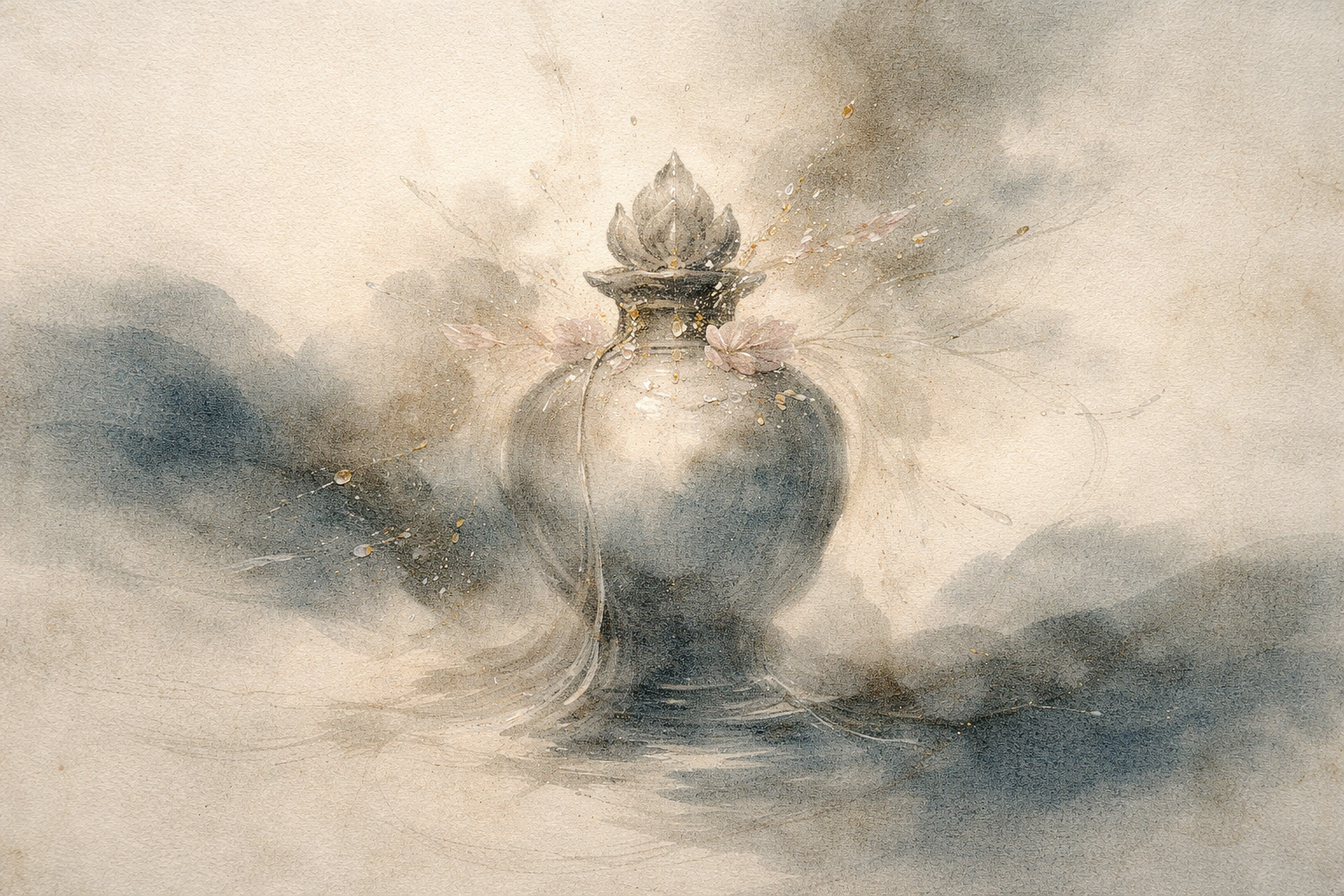
- Common depictions include a rounded vessel, a narrow neck, and jewels or lotuses overflowing—each detail carries a practical message.
- As a contemplative image, it trains attention toward gratitude, sufficiency, and ethical ways of creating well-being.
- Misreadings usually come from treating it as a luck charm or a promise of instant outcomes.
- Used well, the symbol becomes a reminder to give, simplify, and protect the conditions that let life feel workable.
Introduction
If you’ve seen the treasure vase symbol in Buddhism on an altar, painting, or ritual object, the confusion is understandable: it looks like a “wealth” icon, yet Buddhist practice is supposed to loosen grasping, not decorate it. The key is that the vase points to a different kind of abundance—conditions that make clarity and kindness easier—rather than a fantasy of endless acquisition. At Gassho, we focus on symbols as practical lenses for lived experience, not as superstition or status.
The treasure vase is often described as full, sealed, and inexhaustible, which can sound mystical until you read it psychologically: when the mind stops leaking energy through craving and fear, life feels more resourced. This doesn’t deny real financial stress; it reframes what “enough” means and how it’s created.
Seen this way, the vase becomes a compact teaching: cultivate causes that support well-being, protect what’s wholesome, and let generosity circulate rather than stagnate. The “treasure” is not just objects—it’s the steady capacity to meet life without collapsing into scarcity.
A Clear Lens for Understanding the Treasure Vase
The treasure vase symbol in Buddhism can be understood as a lens for how support and abundance actually function in human life. When we feel resourced, we tend to act with patience, share more easily, and make choices that don’t sabotage tomorrow. When we feel deprived, we narrow, hoard, and react—often creating the very instability we fear.
The vase image gathers this into one visual: a stable container (your life and conduct), a protected opening (discernment about what you take in and what you pour out), and contents that are “precious” (time, attention, health, relationships, learning, and material support). It suggests that abundance is not only something you receive; it’s something you steward.
Importantly, the symbol doesn’t require you to adopt a belief about cosmic rewards. It works as a practical reminder that causes have effects: generosity tends to build trust, ethical behavior reduces hidden costs, and gratitude reduces the constant sense of lack. The “inexhaustible” quality can be read as the way wholesome habits keep producing workable conditions.
So the treasure vase is not a command to desire more; it’s an invitation to notice what already supports you, to stop wasting it, and to create conditions that support others too. In that sense, it’s a symbol of abundance that doesn’t depend on greed.
GASSHO
Ask and learn about Buddhism in daily life.
GASSHO is a Buddhist community app where you can learn Buddhist teachings and ask questions to the head priest of Kongosanmaiin Temple on Mount Koya.
How the Symbol Shows Up in Ordinary Moments
In daily life, “scarcity” often appears first as a bodily feeling: tightness in the chest, a clenched jaw, a quickened urgency. The treasure vase symbol can function like a mental cue to pause and ask, “What am I assuming I don’t have right now?” Sometimes it’s money, but often it’s time, appreciation, control, or certainty.
You might notice it when you open your inbox and immediately feel behind. The mind starts counting deficits: unread messages, unfinished tasks, missed opportunities. Bringing the vase to mind isn’t about pretending everything is fine; it’s about shifting from panic-accounting to realistic stewardship: “What’s the next kind action I can take with the resources actually here?”
It can show up in conversations too. When someone else speaks about their success, scarcity-thinking turns it into a threat: “If they have more, I have less.” The vase lens suggests another possibility: abundance can be non-competitive when it’s rooted in goodwill. You can feel envy arise, name it, and still choose a response that doesn’t harden you.
At home, the symbol can be a check on consumption. Reaching for another purchase, another snack, another distraction—sometimes it’s simple enjoyment, and sometimes it’s an attempt to fill a vague emptiness. The vase image gently asks whether the “container” is being cared for: sleep, movement, clean space, honest relationships, and a mind not constantly overstimulated.
It also appears when you’re tempted to give from depletion. People often confuse generosity with self-erasure. The treasure vase suggests a balanced flow: a vessel that holds enough to pour without cracking. In practice, that can mean setting a boundary, saying no, or giving in a way that is sustainable.
And sometimes it’s as small as noticing what is already present: a working body today, a friend who replies, a meal, a quiet hour. The mind that recognizes these “treasures” tends to waste less energy on resentment. That shift doesn’t solve every problem, but it changes the texture of the day.
Over time, the symbol becomes less like an object you look at and more like a habit of attention: returning to sufficiency, returning to wise causes, returning to the question, “What supports clarity and kindness right now?”
Common Misunderstandings About the Treasure Vase
Misunderstanding 1: “It’s a Buddhist version of a money magnet.” The treasure vase is often associated with prosperity, but the deeper point is supportive conditions—material stability included, yet not isolated from ethics, relationships, and mental well-being. If the symbol becomes permission for greed, it’s being read backwards.
Misunderstanding 2: “If I have the symbol, good things must happen.” Symbols don’t replace causes. The vase is meaningful when it reminds you to cultivate conditions: generosity, responsibility, and attention to what actually helps. Without that, it’s decoration.
Misunderstanding 3: “Abundance means never feeling fear or lack.” Even a wise person can feel anxiety when bills are due or health is uncertain. The vase points to how you relate to those feelings—whether you tighten into panic or respond with steadiness and practical steps.
Misunderstanding 4: “It’s only about material wealth.” Many people miss the most immediate “treasures”: time, attention, trust, and the ability to repair harm. These are often more decisive for a good life than a sudden windfall.
Misunderstanding 5: “Generosity means giving everything away.” The vase is a container; it implies care, limits, and sustainability. Giving that destroys your stability usually creates future resentment and less capacity to help.
Why This Symbol Matters in Daily Life
The treasure vase symbol in Buddhism matters because scarcity is not only an economic condition; it’s also a mental habit that shapes perception. When the mind is trained to see only what’s missing, it becomes reactive, suspicious, and easily manipulated. A symbol that repeatedly points you back to sufficiency can be quietly protective.
It also reframes “abundance” as something ethical and relational. When you treat your resources—money, time, influence—as something to steward, you naturally ask better questions: “What’s enough?” “What’s harmful?” “What supports others without feeding my ego?” That shift can change spending, work choices, and how you show up in relationships.
Practically, the vase can become a simple daily prompt: protect the container (health and stability), keep the opening clear (discernment and boundaries), and let the contents circulate (generosity and gratitude). This is not lofty; it’s a way to make life feel less brittle.
Finally, it offers a dignified alternative to both shame and magical thinking. You don’t have to blame yourself for hardship, and you don’t have to pretend a symbol will fix it. You can work with what’s real—while keeping the heart oriented toward openness rather than fear.
Conclusion
The treasure vase symbol in Buddhism is best read as a reminder of supportive abundance: the conditions that let wisdom and compassion take root. Its message is simple but demanding—stop leaking life through craving and panic, care for the container of your days, and let what you have circulate in a way that benefits others.
If you keep the symbol close—on an altar, in art, or simply in memory—use it as a cue to return to what is workable right now: one honest step, one generous act, one moment of gratitude that doesn’t deny difficulty. That’s a form of treasure that tends to grow the more it’s used.
Ask a Buddhist priest
Have a question about Buddhism?
In the GASSHO app, you can ask questions about Buddhist teachings, daily concerns, and how to understand Buddhism in everyday life.
Frequently Asked Questions
- FAQ 1: What is the treasure vase symbol in Buddhism?
- FAQ 2: What does the treasure vase symbolize beyond money or riches?
- FAQ 3: Why is the treasure vase often shown as overflowing?
- FAQ 4: Is the treasure vase considered a sacred object or just decorative art?
- FAQ 5: What do the common design elements of a Buddhist treasure vase represent?
- FAQ 6: Is the treasure vase symbol connected to the idea of “merit” in Buddhism?
- FAQ 7: Does the treasure vase symbol promise good luck or guaranteed prosperity?
- FAQ 8: How is the treasure vase symbol used in Buddhist practice?
- FAQ 9: What is the difference between the treasure vase and other “wealth symbols” in Buddhism?
- FAQ 10: Can the treasure vase symbol be interpreted psychologically?
- FAQ 11: Is it disrespectful for non-Buddhists to display the treasure vase symbol?
- FAQ 12: What does it mean when the treasure vase is sealed or capped in images?
- FAQ 13: Is the treasure vase symbol associated with healing or longevity?
- FAQ 14: How can I reflect on the treasure vase symbol in Buddhism without turning it into wishful thinking?
- FAQ 15: What is a simple daily-life takeaway from the treasure vase symbol in Buddhism?
FAQ 1: What is the treasure vase symbol in Buddhism?
Answer: The treasure vase is a symbolic vessel representing abundance and supportive conditions—such as health, longevity, resources, and circumstances that help wholesome qualities grow.
Takeaway: It points to “support for a good life,” not just material wealth.
FAQ 2: What does the treasure vase symbolize beyond money or riches?
Answer: Beyond finances, it can symbolize inner and relational “treasures” like contentment, stability, trust, learning, and the capacity to be generous without fear.
Takeaway: The vase is about sufficiency and support, not consumerism.
FAQ 3: Why is the treasure vase often shown as overflowing?
Answer: Overflowing jewels, lotuses, or auspicious items visually communicate inexhaustible benefit—an image of abundance that continues when its causes are maintained (care, ethics, generosity).
Takeaway: Overflow suggests ongoing support rather than a one-time gain.
FAQ 4: Is the treasure vase considered a sacred object or just decorative art?
Answer: It can be both, depending on context. In some settings it’s treated as a meaningful sacred symbol used in ritual or devotion; in others it’s simply an artistic motif. The key is the intention and understanding brought to it.
Takeaway: Meaning comes from how it’s related to, not only how it looks.
FAQ 5: What do the common design elements of a Buddhist treasure vase represent?
Answer: While details vary, the vessel often suggests stability and containment; a narrow neck suggests protection and discernment; and precious contents suggest valuable supports like well-being, resources, and virtue.
Takeaway: The parts of the vase can be read as a practical map of stewardship.
FAQ 6: Is the treasure vase symbol connected to the idea of “merit” in Buddhism?
Answer: It’s commonly associated with the idea that wholesome actions and intentions create supportive results. The vase can be a visual shorthand for the benefits that come from generosity, ethical conduct, and care.
Takeaway: The vase often points to abundance arising from wholesome causes.
FAQ 7: Does the treasure vase symbol promise good luck or guaranteed prosperity?
Answer: As a symbol, it doesn’t function like a guarantee. It’s better understood as a reminder to cultivate conditions for well-being and to relate to resources wisely rather than magically.
Takeaway: It’s a contemplative cue, not a contract with the universe.
FAQ 8: How is the treasure vase symbol used in Buddhist practice?
Answer: People may use it as an altar symbol, a focus for reflection on generosity and gratitude, or as part of ceremonies that emphasize well-being and the removal of obstacles. Usage varies by community and culture.
Takeaway: Its practical role is to orient the mind toward supportive abundance.
FAQ 9: What is the difference between the treasure vase and other “wealth symbols” in Buddhism?
Answer: The treasure vase is specifically a container of inexhaustible treasures and supportive conditions, often emphasizing preservation and steady benefit. Other symbols may emphasize generosity, auspiciousness, or protection in different ways.
Takeaway: The vase highlights sustained support and careful stewardship.
FAQ 10: Can the treasure vase symbol be interpreted psychologically?
Answer: Yes. Psychologically, it can represent a mind that feels resourced: attention that isn’t constantly drained by craving, and a stable “container” of habits that supports calm and clear choices.
Takeaway: The vase can be a tool for shifting from scarcity to sufficiency.
FAQ 11: Is it disrespectful for non-Buddhists to display the treasure vase symbol?
Answer: It’s generally respectful to display it with care, avoid treating it as a joke or a mere “money charm,” and learn its meaning. When in doubt, keep the presentation simple and sincere.
Takeaway: Respect comes from intention, context, and basic understanding.
FAQ 12: What does it mean when the treasure vase is sealed or capped in images?
Answer: A sealed or capped vase can suggest that the treasures are protected and not wasted—an image of conserving what is wholesome and preventing “leakage” through careless habits or compulsive grasping.
Takeaway: Sealing points to protection, boundaries, and preservation.
FAQ 13: Is the treasure vase symbol associated with healing or longevity?
Answer: It is often linked with well-being themes, including health and long life, because these are considered fundamental “supports” for practice and for benefiting others.
Takeaway: Abundance includes health and time, not only possessions.
FAQ 14: How can I reflect on the treasure vase symbol in Buddhism without turning it into wishful thinking?
Answer: Use it as a prompt to name what already supports you, identify what you’re wasting (time, attention, money, goodwill), and choose one concrete action that strengthens stability or generosity today.
Takeaway: Keep the symbol grounded in causes, choices, and real-life stewardship.
FAQ 15: What is a simple daily-life takeaway from the treasure vase symbol in Buddhism?
Answer: Treat your life like a vessel: protect your basic stability, keep your commitments clean, and let resources circulate through gratitude and giving rather than fear and hoarding.
Takeaway: Abundance grows when it’s cared for and shared wisely.