



The Golden Fish Symbol in Buddhism: Meaning, Freedom, and Liberation
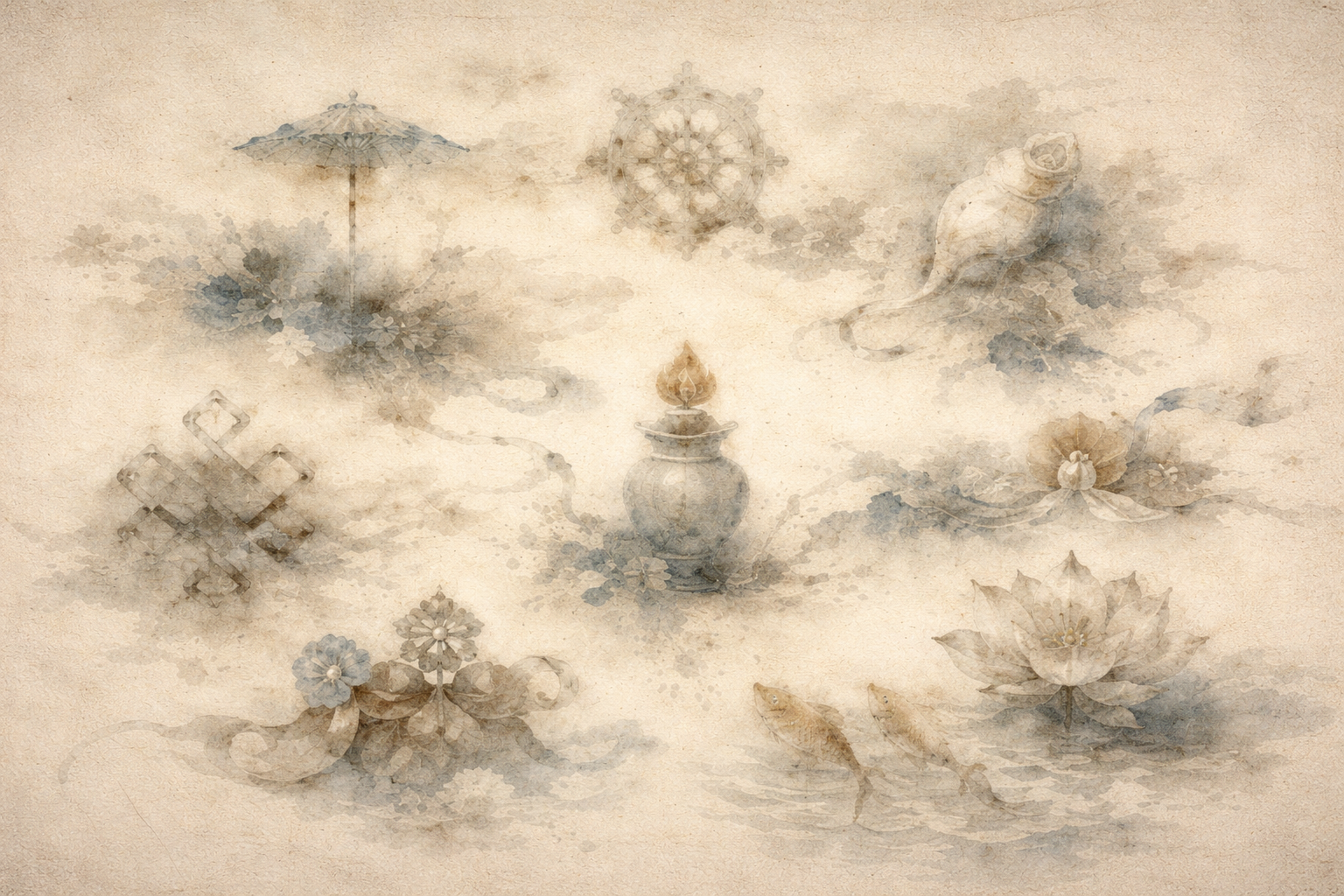
Quick Summary
- The golden fish symbol in Buddhism points to freedom: moving through life without drowning in fear, craving, or resistance.
- It’s commonly shown as a pair of golden fish, emphasizing ease, balance, and unhindered movement.
- The image contrasts “fish out of water” panic with the feeling of being at home in experience, even when life is messy.
- Gold suggests value and clarity, not luxury; it highlights what’s worth cultivating in the mind.
- In art, the fish often appear among auspicious symbols, but the practical message is simple: learn to swim in your own mind.
- Misreadings are common: it’s not a promise of constant happiness, and it’s not a “good luck charm” that replaces practice.
- You can use the symbol as a daily cue to soften, notice reactivity, and choose a freer response.
The Golden Fish Symbol in Buddhism: Meaning and Freedom
You’ve probably seen the golden fish symbol in Buddhism on temple art, jewelry, or images of auspicious emblems—and the meaning can feel oddly vague: is it luck, wealth, protection, or something deeper? The most useful way to read it is as a picture of inner freedom: the ability to move through experience without being trapped by panic, grasping, or constant self-defense. Gassho is a Zen/Buddhism site focused on clear, practice-oriented explanations of Buddhist symbols and meaning.
GASSHO
Ask and learn about Buddhism in daily life.
GASSHO is a Buddhist community app where you can learn Buddhist teachings and ask questions to the head priest of Kongosanmaiin Temple on Mount Koya.
A Clear Lens for Understanding the Golden Fish
The golden fish symbol in Buddhism works best as a lens rather than a belief: it invites you to notice what it feels like when the mind can “swim” naturally in the conditions of life. Fish don’t negotiate with water. They don’t need to prove they belong there. They move, adjust, and continue—responsive rather than rigid.
In that sense, the symbol points to a kind of freedom that is not dependent on perfect circumstances. Freedom here doesn’t mean escaping responsibilities or avoiding discomfort; it means not being internally cornered by what arises. Thoughts, emotions, and pressures still appear, but they don’t automatically become a prison.
The “golden” quality adds an important nuance. Gold suggests something precious and luminous: clarity, worth, and a mind that isn’t dulled by confusion. It’s less about material wealth and more about the value of a mind that can meet life directly, without constantly tightening around it.
Often the image is a pair of fish. Read simply, the pair can suggest balance and mutuality: freedom isn’t only a private feeling, it shows up in relationship—how we move with others, how we stop thrashing, how we stop turning every moment into a struggle for control.
How Freedom Shows Up in Ordinary Moments
Think of a normal day when something small goes wrong: a delayed message, a critical tone, a plan that collapses. The mind can react like a fish out of water—flopping, urgent, certain that something is terribly wrong. The body tightens, attention narrows, and the story becomes: “I can’t handle this.”
Now imagine the same moment with a little more inner space. The problem is still there, but the mind doesn’t immediately clamp down. You notice the surge of irritation or worry as a surge. You feel it in the body. You recognize the impulse to fire off a reply, to defend, to fix everything instantly.
This is where the golden fish symbol in Buddhism becomes practical: it reminds you that you can stay “in the water” of experience. Instead of treating discomfort as an emergency, you let it be information. You don’t have to obey the first reaction.
In conversation, this can look like pausing before speaking. You hear the edge in someone’s voice and notice your own urge to sharpen back. For a second, you feel the choice-point: tighten and strike, or soften and respond. Freedom is that choice-point becoming visible.
At work, it can show up as a shift from frantic multitasking to steady attention. The mind that is “swimming” can prioritize without panic. It can do one thing fully, then the next, without turning every task into a threat to your identity.
In private, it can be as simple as noticing how often you brace against your own feelings. Sadness arises and the mind tries to outrun it. Restlessness arises and the mind tries to drown it in scrolling. The fish image suggests another option: stay present, keep moving gently, and don’t make the feeling into a catastrophe.
Even joy can be a place to practice this symbol. When something good happens, the mind often grasps: “Don’t change. Stay.” The golden fish points to enjoyment without clinging—appreciation that doesn’t immediately turn into fear of loss.
Common Misunderstandings That Flatten the Symbol
One common misunderstanding is treating the golden fish as a simple “good luck” emblem. While it can appear among auspicious symbols, its deeper value is psychological and ethical: it points to a mind that isn’t trapped. If you wear or display the image, it works best as a reminder, not a substitute for attention and conduct.
Another misreading is assuming the symbol promises constant happiness. Fish still swim through currents, cold water, and storms. Likewise, freedom in the Buddhist sense doesn’t erase difficulty; it changes your relationship to difficulty so you don’t add unnecessary suffering through resistance, rumination, or compulsive control.
People also sometimes reduce “golden” to wealth or prosperity. That interpretation can be tempting, but it misses the point: the symbol is about what is genuinely valuable—clarity, steadiness, and the capacity to respond rather than react. If prosperity appears, fine; the symbol’s core message still aims at inner release.
Finally, the pair of fish is sometimes over-literalized into a single fixed meaning (for example, only romantic partnership). The image can include relationship, but it’s broader: it can suggest harmony, interdependence, and the way freedom expresses itself in how we move with the world, not against it.
Why the Golden Fish Still Matters in Daily Life
Modern life creates a constant sense of being “out of water”: notifications, comparison, urgency, and the pressure to curate a self. The golden fish symbol in Buddhism quietly challenges that atmosphere. It suggests that the most important freedom is internal: the ability to remain at home in your own experience.
As a daily cue, the symbol can support three simple shifts. First, from tightening to softening: notice where you clench and allow a little release. Second, from story to sensation: come back to what is actually happening in the body and breath. Third, from compulsion to choice: see the moment where you can respond with a bit more patience, honesty, or restraint.
It also reframes success. Instead of measuring life by how often you “win” or feel comfortable, you can measure it by how often you stay present and workable. That’s a quieter metric, but it’s more stable—and it tends to improve relationships, decision-making, and self-respect.
Conclusion
The golden fish symbol in Buddhism is a compact teaching about freedom: not the fantasy of a problem-free life, but the real capacity to move through changing conditions without drowning in reactivity. Whether you encounter it in temple art or on a small personal object, let it point you back to a simple question: “Am I flopping in panic right now, or can I swim?”
Ask a Buddhist priest
Have a question about Buddhism?
In the GASSHO app, you can ask questions about Buddhist teachings, daily concerns, and how to understand Buddhism in everyday life.
Frequently Asked Questions
- FAQ 1: What is the golden fish symbol in Buddhism?
- FAQ 2: Why are there usually two golden fish instead of one?
- FAQ 3: What does “golden” mean in the golden fish symbol in Buddhism?
- FAQ 4: Is the golden fish symbol in Buddhism about good luck?
- FAQ 5: What does the golden fish symbolize about suffering?
- FAQ 6: Is the golden fish symbol connected to the Eight Auspicious Symbols?
- FAQ 7: Does the golden fish symbol in Buddhism represent enlightenment?
- FAQ 8: What is the difference between the golden fish symbol and koi fish imagery?
- FAQ 9: Where do you typically see the golden fish symbol in Buddhist art?
- FAQ 10: What does the golden fish symbol in Buddhism mean for daily practice?
- FAQ 11: Is the golden fish symbol in Buddhism associated with water?
- FAQ 12: Can the golden fish symbol in Buddhism be worn as jewelry?
- FAQ 13: Does the golden fish symbol in Buddhism mean prosperity?
- FAQ 14: How can I explain the golden fish symbol in Buddhism to a beginner?
- FAQ 15: What is a respectful way to use the golden fish symbol in Buddhism at home?
FAQ 1: What is the golden fish symbol in Buddhism?
Answer: The golden fish symbol in Buddhism is an auspicious emblem that points to freedom and ease—often described as the ability to move through life without being trapped by fear, craving, or resistance.
Takeaway: Read the golden fish as a reminder of inner freedom, not just decoration.
FAQ 2: Why are there usually two golden fish instead of one?
Answer: The symbol is commonly shown as a pair, which can suggest balance, harmony, and unhindered movement in relationship with the world rather than isolated freedom.
Takeaway: The pair emphasizes freedom that stays steady in connection, not only in solitude.
FAQ 3: What does “golden” mean in the golden fish symbol in Buddhism?
Answer: “Golden” typically signals preciousness and clarity—what is truly valuable in Buddhist practice—rather than a literal promise of money or luxury.
Takeaway: Gold points to inner worth and clarity more than material wealth.
FAQ 4: Is the golden fish symbol in Buddhism about good luck?
Answer: It can be treated as auspicious, but its deeper meaning is practical: it represents liberation from constricting mental states and the ability to live with more ease and responsiveness.
Takeaway: “Auspicious” here is best understood as supportive of freedom, not superstition.
FAQ 5: What does the golden fish symbolize about suffering?
Answer: The golden fish symbol in Buddhism suggests not adding extra suffering through panic and resistance—like a fish that can breathe and move freely in water rather than struggling as if it’s out of its element.
Takeaway: The symbol highlights the difference between pain and the extra struggle we pile on top.
FAQ 6: Is the golden fish symbol connected to the Eight Auspicious Symbols?
Answer: Yes. The golden fish commonly appears among the Eight Auspicious Symbols in Buddhist art, where it contributes the theme of freedom, well-being, and unhindered movement through life’s conditions.
Takeaway: The golden fish is often part of a larger symbolic set, but it keeps its core message of freedom.
FAQ 7: Does the golden fish symbol in Buddhism represent enlightenment?
Answer: It’s better understood as pointing toward liberation and ease rather than functioning as a technical badge of enlightenment; it’s a symbol that encourages a freer relationship to experience.
Takeaway: Treat it as a direction for practice, not a claim about status.
FAQ 8: What is the difference between the golden fish symbol and koi fish imagery?
Answer: Koi imagery often emphasizes perseverance and worldly success themes in broader Asian art, while the golden fish symbol in Buddhism is more specifically tied to auspicious symbolism and the idea of inner freedom and unhindered movement.
Takeaway: Koi can be cultural and varied; the Buddhist golden fish points more directly to liberation.
FAQ 9: Where do you typically see the golden fish symbol in Buddhist art?
Answer: You may see it on temple murals, thangka-style paintings, carved architectural details, ritual objects, and sets depicting auspicious emblems, often presented as two fish facing each other.
Takeaway: Context matters—look for it among other auspicious symbols and temple iconography.
FAQ 10: What does the golden fish symbol in Buddhism mean for daily practice?
Answer: It can serve as a cue to notice reactivity and return to a freer response—softening the body, widening attention, and choosing actions that aren’t driven by panic or grasping.
Takeaway: Use the symbol as a reminder to “swim” rather than thrash.
FAQ 11: Is the golden fish symbol in Buddhism associated with water?
Answer: Yes, its meaning relies on the natural ease of a fish in water, which becomes a metaphor for being at home in experience—moving with conditions rather than fighting them.
Takeaway: Water imagery supports the theme of ease and adaptability.
FAQ 12: Can the golden fish symbol in Buddhism be worn as jewelry?
Answer: It can, and many people do, but it’s most meaningful when worn as a personal reminder of freedom and ethical responsiveness rather than as a charm expected to control outcomes.
Takeaway: Wearing it is fine—just keep the meaning practice-centered.
FAQ 13: Does the golden fish symbol in Buddhism mean prosperity?
Answer: Some people interpret it that way because it is “auspicious,” but a more grounded Buddhist reading emphasizes richness of mind—clarity, ease, and liberation from constriction—over financial promise.
Takeaway: If you link it to prosperity, prioritize inner prosperity first.
FAQ 14: How can I explain the golden fish symbol in Buddhism to a beginner?
Answer: You can say: “It’s a symbol of freedom—like a fish that moves naturally in water. It reminds us to live with less panic and more ease, even when life changes.”
Takeaway: Keep it simple: freedom, ease, and unhindered movement.
FAQ 15: What is a respectful way to use the golden fish symbol in Buddhism at home?
Answer: Place it where it functions as a reminder to act with clarity and steadiness—such as a small print or object in a quiet space—and avoid treating it as a tool for superstition or manipulation of results.
Takeaway: Use the symbol to support mindful living, not magical thinking.