



Buddhism vs Yoga Philosophy: Two Paths to Inner Peace
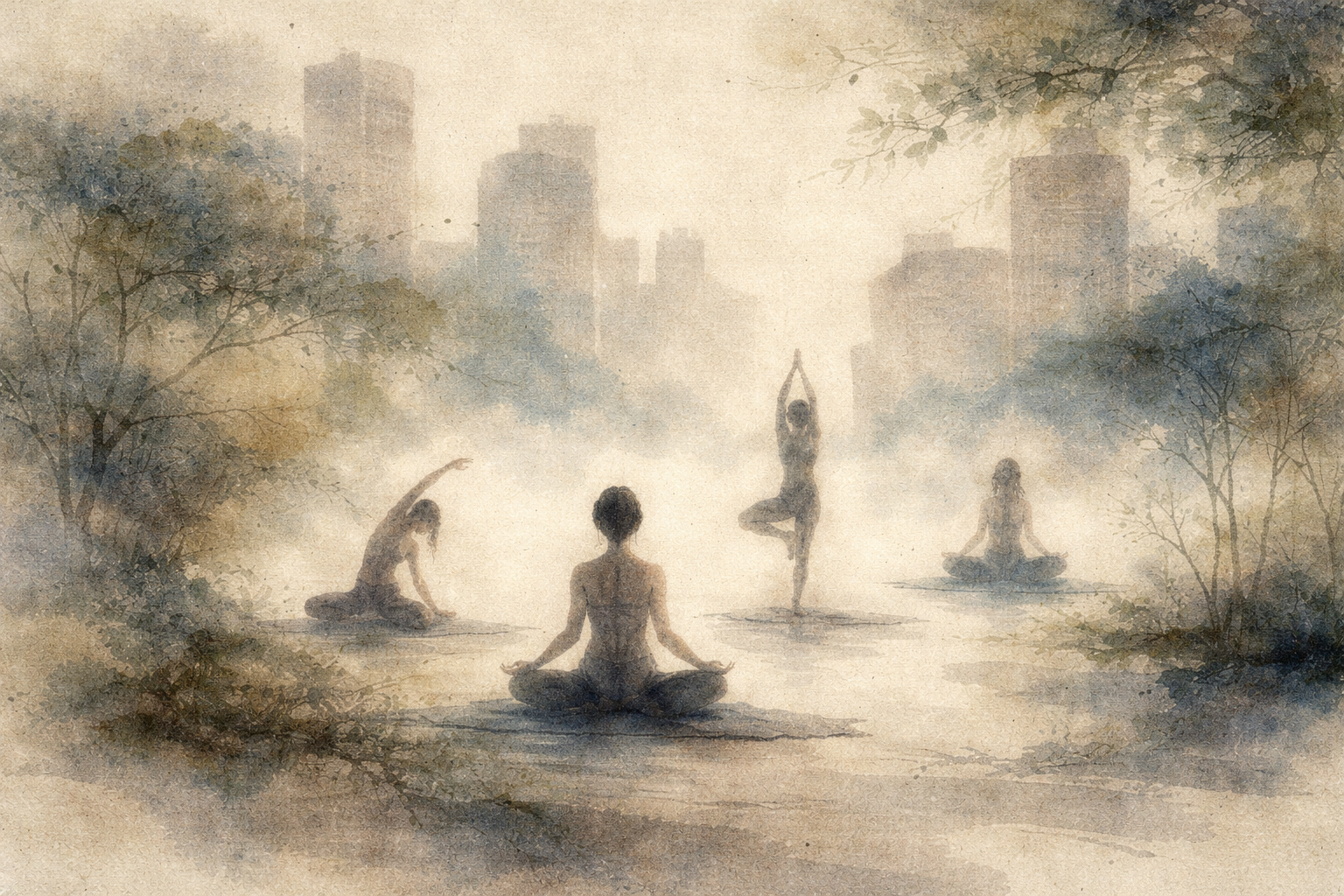
Buddhism vs Yoga Philosophy: Two Paths to Inner Peace
Quick Summary
- Buddhism vs yoga philosophy is less about “which is right” and more about which lens helps you suffer less in daily life.
- Buddhism tends to emphasize seeing clearly how craving and resistance create stress, then loosening that grip.
- Yoga philosophy tends to emphasize steadying the mind and aligning life with disciplined practice and ethical restraint.
- Both value ethics, attention training, and compassion, but they often describe the “self” and “freedom” in different ways.
- In practice, Buddhism often trains non-clinging; yoga philosophy often trains integration and steadiness.
- You can explore both without mixing them into a blur—clarity comes from knowing what each practice is aiming at.
- The best choice is the one that makes you more honest, less reactive, and kinder in ordinary moments.
Introduction
If you’re comparing Buddhism vs yoga philosophy, you’re probably stuck on a practical question: they both promise inner peace, they both talk about the mind, and yet they don’t always sound compatible—especially around “self,” desire, and what liberation even means. I write for Gassho, a Zen/Buddhism site focused on clear, everyday practice rather than vague spirituality.
It also doesn’t help that modern yoga is often presented mainly as posture practice, while Buddhism is often presented mainly as meditation—two partial pictures that make the philosophies look farther apart (or more identical) than they really are.
A useful way forward is to treat both as working lenses: each lens highlights certain causes of stress and offers a method to respond, and you can test those methods in the middle of your real life.
GASSHO
Ask and learn about Buddhism in daily life.
GASSHO is a Buddhist community app where you can learn Buddhist teachings and ask questions to the head priest of Kongosanmaiin Temple on Mount Koya.
The Core Lens: What Each Tradition Trains You to Notice
In Buddhism, the central lens is often: stress is amplified by the mind’s habit of clinging—grabbing what feels good, pushing away what feels bad, and building a solid story of “me” around both. Inner peace is approached by seeing these movements clearly and relaxing the compulsion to follow them. The emphasis is less on adopting a new identity and more on noticing how experience is constructed moment by moment.
In yoga philosophy, the central lens is often: the mind becomes turbulent and scattered, and that turbulence distorts perception and behavior. Inner peace is approached by steadying and clarifying the mind through disciplined practice—ethical commitments, attention training, and a life oriented toward inner integration. The emphasis is frequently on cultivating stability so that awareness is less pulled around by impulses.
Both lenses care about suffering and freedom, but they can feel different in tone. Buddhism often sounds like “stop feeding the fire,” while yoga philosophy can sound like “build a steady flame.” One highlights releasing fixation; the other highlights harnessing and refining the mind’s energies.
Neither approach has to be treated as a belief system you must “agree with.” They work best when you treat them as experiments: when you’re stressed, what happens if you observe craving and resistance directly (Buddhist lens)? What happens if you simplify, restrain, and stabilize attention (yoga lens)? The results are what matter.
How the Differences Show Up in Ordinary Moments
Imagine you’re criticized at work. A Buddhist-leaning approach might start with: notice the heat in the body, the tightening in the chest, the story that says “I’m being attacked,” and the urge to defend. The practice is to see the chain reaction without immediately obeying it.
In a yoga-philosophy-leaning approach, you might also notice the reaction, but the next step often emphasizes containment and steadiness: regulate the breath, keep the mind from spiraling, and return to a chosen inner posture of restraint and clarity. The focus is on not letting the mind’s waves dictate speech and action.
Now consider desire—scrolling, snacking, shopping, or chasing praise. Through a Buddhist lens, the key observation is how wanting promises relief but often produces agitation: the mind contracts around “I need this.” You practice recognizing the texture of craving and letting it pass without turning it into a command.
Through a yoga philosophy lens, the observation may center on how desire disperses attention and weakens inner stability. You practice simplifying inputs, strengthening discipline, and choosing actions that support a calmer, more coherent mind. It can feel like training the mind the way you’d train a muscle: repeatedly returning to what you’ve chosen.
In relationships, Buddhism often emphasizes seeing projections: how quickly we turn a person into a role—ally, threat, source of validation—and then react to our own mental image. The practice is to meet the person more directly by loosening the story.
Yoga philosophy often emphasizes how relationships are shaped by habits and ethics: truthfulness, non-harming, moderation, and the willingness to pause before acting. The practice is to live in a way that reduces inner conflict, because inner conflict fuels outer conflict.
In both cases, inner peace isn’t a special mood you manufacture. It’s what becomes possible when reactivity is interrupted—either by clearly seeing clinging as it forms, or by stabilizing the mind so impulses don’t run the show.
Common Misunderstandings That Blur the Comparison
Misunderstanding 1: “Yoga philosophy is just stretching, and Buddhism is just sitting.” Modern yoga classes often focus on posture, and modern mindfulness often focuses on stress relief. But both traditions include ethics, attention training, and a broader view of how to live. Comparing them fairly means comparing the philosophies, not the most popular modern entry points.
Misunderstanding 2: “They teach the same thing, just with different words.” There is overlap—especially around ethics, concentration, and compassion—but the frameworks can diverge in how they describe the self, the roots of suffering, and what “freedom” points to. If you flatten the differences, you lose the practical guidance each lens offers.
Misunderstanding 3: “Buddhism is pessimistic; yoga philosophy is positive.” Buddhism can sound blunt because it names dissatisfaction directly, but the point is pragmatic: identify the cause, test the remedy. Yoga philosophy can sound uplifting because it emphasizes integration and steadiness, but it is also rigorous about discipline and restraint. Neither is about mood; both are about training.
Misunderstanding 4: “If I combine them, I’ll get faster results.” Mixing can be helpful, but only if you know what you’re mixing. If you use yoga practices to calm the mind but use a Buddhist lens to investigate clinging, that can be coherent. If you mash together concepts about self and liberation without clarity, you can end up confused and stuck.
Misunderstanding 5: “One is spiritual and the other is psychological.” Both can be lived in a grounded, practical way. The real question is: which set of practices makes you less reactive, more honest, and more compassionate when life presses you?
Why This Comparison Matters in Daily Life
When you’re overwhelmed, the difference between Buddhism vs yoga philosophy becomes concrete: do you need to see the mechanism of clinging more clearly, or do you need to stabilize a scattered mind so you can function without being dragged around by impulses? Many people need both, but not always in the same moment.
If your main struggle is rumination—replaying conversations, rehearsing future disasters—Buddhist-style investigation can reveal how the mind keeps re-gripping the same story. The relief comes from recognizing the grip and softening it, again and again, without drama.
If your main struggle is restlessness—too many inputs, too little steadiness—yoga philosophy’s emphasis on restraint, routine, and attention training can be immediately supportive. The relief comes from fewer inner collisions: less contradiction between what you value and what you do.
Ethically, both paths point toward a similar outcome: fewer harmful reactions. But they may motivate that outcome differently—one by seeing how harm arises from confusion and clinging, the other by strengthening self-regulation and alignment with chosen principles.
Practically, you can use the comparison as a diagnostic tool. When you’re suffering, ask: “Is this moment asking for clearer seeing, or steadier mind?” That question alone can turn philosophy into something usable.
Conclusion
Buddhism vs yoga philosophy isn’t a contest; it’s a choice of emphasis. Buddhism tends to aim at freedom through seeing and releasing clinging, while yoga philosophy tends to aim at freedom through steadiness, discipline, and integration of the mind.
If you want a simple way to decide where to start, choose the approach that best addresses your most frequent form of suffering: tight grasping and story-making, or scattered attention and inner inconsistency. Then practice long enough to get real feedback from your own life.
Inner peace becomes less mysterious when it’s treated as a skill: noticing what fuels agitation, and repeatedly choosing what reduces it.
Ask a Buddhist priest
Have a question about Buddhism?
In the GASSHO app, you can ask questions about Buddhist teachings, daily concerns, and how to understand Buddhism in everyday life.
Frequently Asked Questions
- FAQ 1: What is the main difference in aim between Buddhism vs yoga philosophy?
- FAQ 2: Do Buddhism and yoga philosophy teach the same kind of inner peace?
- FAQ 3: How do Buddhism vs yoga philosophy differ in how they talk about the “self”?
- FAQ 4: Is meditation the main practice in Buddhism compared to yoga philosophy?
- FAQ 5: In Buddhism vs yoga philosophy, which one is more focused on ethics?
- FAQ 6: Can someone practice yoga while following Buddhism, or does that conflict philosophically?
- FAQ 7: Which is more practical for stress: Buddhism vs yoga philosophy?
- FAQ 8: How do Buddhism vs yoga philosophy approach desire and attachment?
- FAQ 9: Is yoga philosophy considered part of Buddhism or separate from it?
- FAQ 10: What does “liberation” mean in Buddhism vs yoga philosophy?
- FAQ 11: Which is more about the mind: Buddhism vs yoga philosophy?
- FAQ 12: Do Buddhism vs yoga philosophy disagree about suffering?
- FAQ 13: How should a beginner choose between Buddhism vs yoga philosophy?
- FAQ 14: Can Buddhism vs yoga philosophy be combined without mixing the philosophies?
- FAQ 15: What’s a simple daily practice difference between Buddhism vs yoga philosophy?
FAQ 1: What is the main difference in aim between Buddhism vs yoga philosophy?
Answer: Buddhism often emphasizes understanding and releasing clinging that produces stress, while yoga philosophy often emphasizes steadying and integrating the mind through disciplined practice and ethical restraint.
Takeaway: Buddhism leans toward insight into grasping; yoga philosophy leans toward mental steadiness and integration.
FAQ 2: Do Buddhism and yoga philosophy teach the same kind of inner peace?
Answer: They can point to similar felt outcomes—less reactivity, more clarity—but they often describe the route differently: Buddhism highlights non-clinging and clear seeing, while yoga philosophy highlights stabilization, restraint, and consistent practice.
Takeaway: The destination can feel similar, but the training emphasis differs.
FAQ 3: How do Buddhism vs yoga philosophy differ in how they talk about the “self”?
Answer: Buddhism commonly analyzes the “self” as a changing process built from habits of identification, while yoga philosophy often speaks in terms of refining the mind and aligning life with a deeper, steadier awareness. People experience this difference as “deconstructing identity” versus “stabilizing identity around clarity.”
Takeaway: Buddhism tends to question solidity of self; yoga philosophy tends to cultivate steadiness and alignment.
FAQ 4: Is meditation the main practice in Buddhism compared to yoga philosophy?
Answer: Meditation is important in Buddhism, but it’s typically paired with ethics and wisdom in daily conduct. Yoga philosophy also includes meditation and concentration practices, alongside ethical commitments and disciplined living; modern posture-focused yoga is only one slice of that picture.
Takeaway: Both include meditation; neither is “only meditation” or “only postures.”
FAQ 5: In Buddhism vs yoga philosophy, which one is more focused on ethics?
Answer: Both are strongly ethical, but they may frame ethics differently: Buddhism often treats ethics as reducing harm and supporting clarity, while yoga philosophy often treats ethics as restraint and alignment that stabilizes the mind and life.
Takeaway: Ethics is central to both; the rationale and language can differ.
FAQ 6: Can someone practice yoga while following Buddhism, or does that conflict philosophically?
Answer: Many people combine physical yoga with Buddhist practice without conflict. The potential tension is usually philosophical—how you interpret self, liberation, and ultimate aims—so it helps to be clear whether you’re doing yoga as body-mind training or adopting yoga philosophy as your primary worldview.
Takeaway: Combining practices can work if you keep the aims and concepts clear.
FAQ 7: Which is more practical for stress: Buddhism vs yoga philosophy?
Answer: Buddhism can be very practical for stress rooted in rumination, grasping, and resistance, because it trains you to notice and release those patterns. Yoga philosophy can be very practical for stress rooted in restlessness and scattered attention, because it emphasizes steadiness, routine, and restraint.
Takeaway: Match the approach to the kind of stress you most often experience.
FAQ 8: How do Buddhism vs yoga philosophy approach desire and attachment?
Answer: Buddhism often focuses on how craving and clinging create dissatisfaction and trains non-attachment through clear seeing. Yoga philosophy often focuses on moderating impulses and cultivating discipline so the mind becomes less driven by desire and more stable.
Takeaway: Buddhism emphasizes insight into craving; yoga philosophy emphasizes restraint and steadiness around impulses.
FAQ 9: Is yoga philosophy considered part of Buddhism or separate from it?
Answer: They are historically distinct traditions with different frameworks, even though they share some practices and vocabulary around attention and ethics. In modern life, they often meet in the same person’s routine, but conceptually they remain separate paths.
Takeaway: They overlap in methods, but they are not the same tradition.
FAQ 10: What does “liberation” mean in Buddhism vs yoga philosophy?
Answer: In Buddhism, liberation is commonly framed as freedom from the compulsions of clinging and the suffering that follows. In yoga philosophy, liberation is commonly framed as freedom through inner mastery and steadiness—less identification with mental turbulence and more established clarity.
Takeaway: Both aim at freedom, but they describe the mechanism of freedom differently.
FAQ 11: Which is more about the mind: Buddhism vs yoga philosophy?
Answer: Both are deeply about the mind. Buddhism often emphasizes investigating how experience is constructed (thought, feeling, perception, reaction), while yoga philosophy often emphasizes training the mind toward steadiness and coherence through disciplined practice.
Takeaway: Both are mind-centered; Buddhism leans investigative, yoga philosophy leans stabilizing.
FAQ 12: Do Buddhism vs yoga philosophy disagree about suffering?
Answer: They don’t usually disagree that humans suffer; they differ in how they explain the causes and what to emphasize in response. Buddhism often highlights clinging and misperception as key drivers, while yoga philosophy often highlights mental turbulence and lack of restraint as key drivers.
Takeaway: Shared concern, different explanatory focus.
FAQ 13: How should a beginner choose between Buddhism vs yoga philosophy?
Answer: Choose based on what you need most right now: if you’re caught in tight mental stories and emotional grasping, Buddhist-style observation and letting go may help; if you’re scattered and inconsistent, yoga philosophy’s emphasis on discipline and steadiness may help. You can also try each for a few weeks and judge by reduced reactivity and increased kindness.
Takeaway: Pick the lens that addresses your most frequent pattern of distress.
FAQ 14: Can Buddhism vs yoga philosophy be combined without mixing the philosophies?
Answer: Yes. Many people keep the philosophies distinct while combining methods: for example, using breath and concentration training from yoga contexts while using Buddhist inquiry to examine clinging and reactivity. The key is not forcing the concepts to match when they don’t.
Takeaway: Combine methods carefully; keep conceptual clarity.
FAQ 15: What’s a simple daily practice difference between Buddhism vs yoga philosophy?
Answer: A Buddhist-leaning daily practice might emphasize noticing grasping and releasing it in real time (during emails, conversations, and cravings). A yoga-philosophy-leaning daily practice might emphasize consistent routines that stabilize attention—regular breath work, ethical reflection, and disciplined limits on distractions.
Takeaway: Buddhism trains moment-to-moment non-clinging; yoga philosophy trains steadiness through consistent discipline.